Growing with Purpose
How Mayor Closser and His Team Are Balancing Expansion, Infrastructure, and Small-Town Charm
For Mayor Patrick Closser, the story of London, Ohio is one of balance—preserving the tight-knit community spirit that defines the city while embracing the opportunities of rapid growth.
“We’re a town of about 10,500 right now,” he says, “but we’re growing every day. Growth brings change, and change can be tough for some, but the community has really embraced it. People see the new faces, the new businesses, and they’re excited.”
Ideally located along Interstate 70, London offers a small-town lifestyle within easy reach of metropolitan amenities—just 20 minutes from Hilliard and 30 from downtown Columbus. That accessibility, combined with a surge in residential and commercial investment, has put the city on a clear upward trajectory. “We’re still London,” Closser emphasizes. “We have that small-town feel, but now with more options—more retail, more restaurants, and more things to do.”
Retail Momentum: From Aldi to Starbucks and Beyond
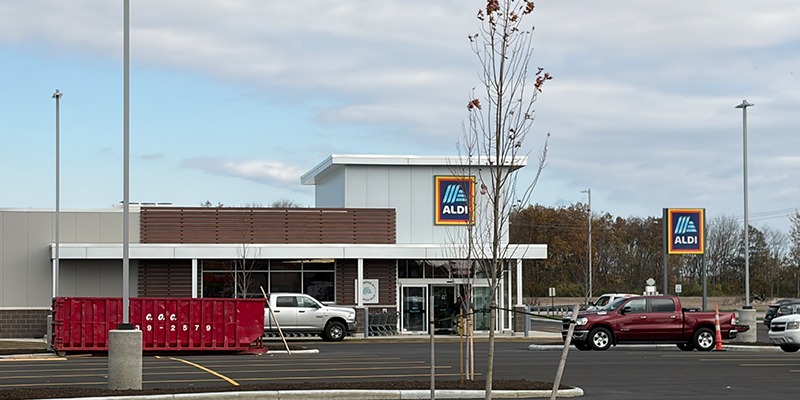
London’s recent retail growth tells the story of a community on the rise. The much-anticipated Aldi supermarket opened in early November. “When a company like Aldi comes in, it’s a signal,” says Closser. “It tells other national brands that London is a city on the move.”
That signal worked quickly. Starbucks has already begun building, Scooter’s Coffee has started demolishing their site in London, and Walmart—eager to capitalize on the momentum- remodeled to include a Dunkin’ Donuts café inside. “It’s a new concept for them,” the Mayor notes. “Walmart’s following the same trend as Target with Starbucks—it creates a full experience for shoppers.”
The city’s retail energy is also fueling downtown revitalization, where investment and community creativity are transforming London’s historic core.
Downtown Renaissance: West 40 Social and a Designated Outdoor District
Led by The Westwood Collective, a Hilliard development group, London’s downtown has undergone a visible transformation. “They’ve been buying and renovating historic buildings the right way—thoughtfully and professionally,” Closser says. “And it’s paying off. Foot traffic is up, and other property owners are following suit.”
Among Westwood’s centerpiece projects is West 40 Social, an outdoor gathering space featuring a bar, restaurant, yard games, and live entertainment, with space for food trucks and private events. “It’s exactly the kind of social hub downtown needed,” the Mayor says.
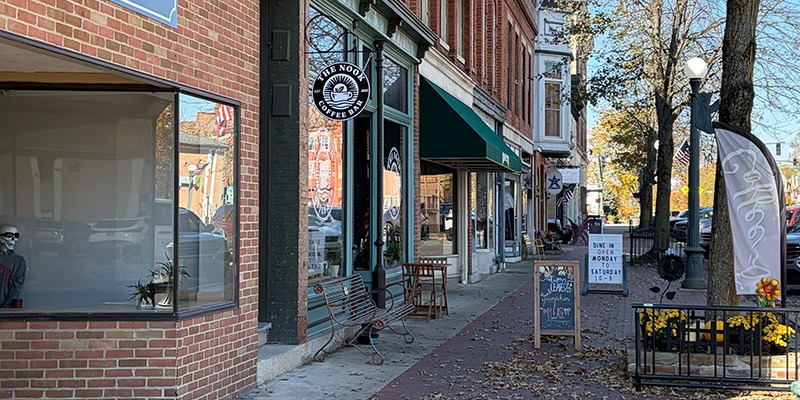
To complement that momentum, the city has launched a Designated Outdoor Refreshment Area (DORA)—an outdoor area where visitors can enjoy adult beverages from participating restaurants while browsing shops or listening to live music. “It’s about creating a destination experience,” Closser explains. “People come downtown, they walk, they mingle, they stay.”
Community Pride in Action
London’s revitalization has been as much grassroots as it has been governmental. A civic group known as London Ohio 1811 Downtown District has been instrumental in beautification—organizing cleanup days, maintaining sidewalks, and keeping the city’s historic charm intact.
“They take ownership,” says Closser. “They’re out there raking leaves, painting lamp posts, hanging string lights—it’s that pride of place that makes London feel special.”
The group’s improvements, from the vintage-style streetlights to the Edison bulb canopy over Main Street, have made downtown an inviting evening destination. “At night, it’s beautiful,” Closser says. “It feels like a small city that’s truly alive.”
Trails, Connectivity, and Green Space
London’s sense of connection extends beyond its streets. The city is working closely with the Friends of Madison County Parks and Trails to complete a missing link in its Rails-to-Trails network—an effort years in the making. “Right now, the trail stops on one side of downtown and picks up on the other,” explains Closser. “Our goal is to bridge that gap and bring cyclists and walkers directly into downtown.”
The project involves collaboration with Norfolk Southern to acquire an abandoned rail spur. “We’re in the final stages of negotiation,” he says. “If all goes well, we’ll have a continuous trail running through downtown by next summer.”
Housing Boom: Meeting Demand Across Price Points
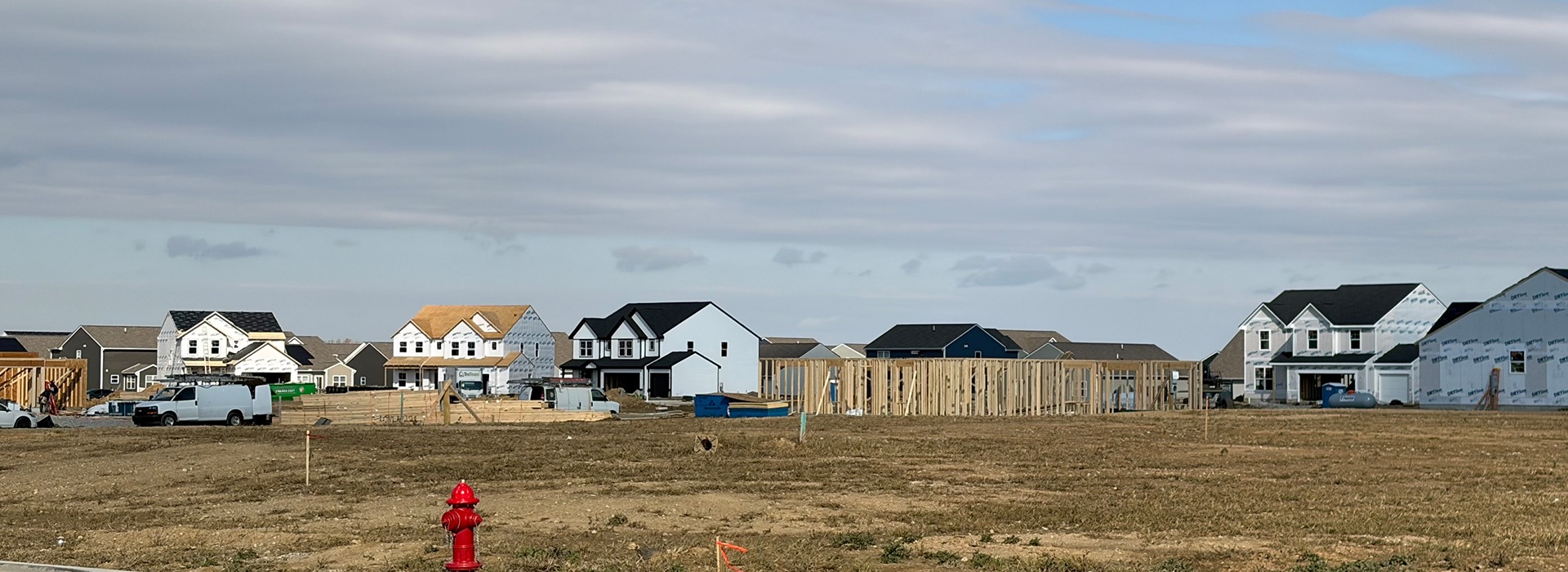
Perhaps no story captures London’s growth better than housing. Two major developments—London Landing and Johnson’s Creek—are reshaping the city’s residential landscape.
London Landing, by Arbor Homes, includes 266 single-family houses, roughly 170 of which are already complete. “They can’t build fast enough,” says Closser. “Homes started in the high 200s and are now selling around $370,000.”
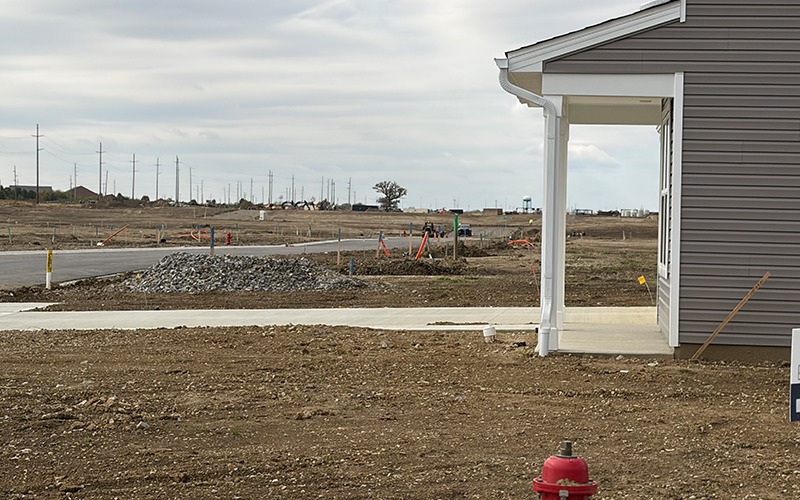
Even larger is Johnson’s Creek, a 870-home development led by D.R. Horton and MI Homes. Model homes are now under construction, and crews are hard at work installing utilities and grading the site. “It’s massive,” Closser says. “We’ve got trucks running all day moving dirt and stone—it’s like a construction symphony out there.”
Despite brisk sales and rising prices, the city is intent on maintaining attainable housing options. “We recognize not everyone can afford a $400,000 home,” Closser explains. “So we’ve been working with developers on projects that create affordability without sacrificing quality.”
One example is The Madison Reserve, a planned 240-home Arbor Homes development featuring smaller lots and homes priced around $230,000. “It’s about giving teachers, young professionals, and first-time buyers a chance to live here,” Closser says. “It’s workforce housing done right.”
Mixed-Use Growth and Senior Living
Not all new development is strictly residential. The Somerset Crossing project will bring 288 smaller-footprint homes—many geared toward residents 55 and older—along with retail frontage on Lafayette Street. “It’s a smart design,” Closser says. “Retail up front, housing behind, and amenities in between.”
Built by K. Hovnanian Homes, Somerset Crossing will include roughly $4–5 million in amenities, from recreation areas to walking paths. The development’s design aligns with the city’s broader goal of blending residential convenience with nearby services like healthcare and banking.
Healthcare, too, is expanding. Madison Health, in partnership with Ohio State University, completed a $20 million hospital expansion a decade ago and recently opened both a new urgent care center and primary care office near Walmart—strengthening the city’s healthcare infrastructure to match its population growth. Madison Health has also seen a recent partnership with The James Cancer Network, bringing even more comprehensive health care to London.
Infrastructure and Planning for the Future
With growth comes responsibility, and London is taking a proactive approach to utilities and infrastructure. “We didn’t want to get caught in the same position as other communities that suddenly had to halt development because they ran out of capacity,” Closser says.
To prepare for expansion, the city joined the Mid-Ohio Water and Sewer District, partnering with neighboring jurisdictions on shared resources. “We’re investing $20–30 million in a sewer expansion right now,” the Mayor explains. “That will support our housing growth and ensure we’re ready for the next phase.”
London also maintains two one-million-gallon water towers and now has interconnects with Mid-Ohio’s system for mutual support during drought or peak demand. “We’re being proactive,” Closser says. “We’re making sure we can sustain growth before it happens.”
Electricity, gas, and broadband are also secure. The city works closely with Ohio Edison and other providers to ensure reliability, while multiple telecom firms deliver high-speed internet across the community.
Incentives and Economic Collaboration
London is also cultivating a business-friendly reputation through incentives and collaboration. “We implemented a citywide Community Reinvestment Area (CRA) to help attract new business,” says Closser. “It gives us flexibility to work with developers and retailers on tax abatements.”
The city’s first Tax Increment Financing (TIF) district and New Community Authority (NCA) have been key tools in supporting growth. “Those mechanisms help fund infrastructure for housing developments while also supporting essential services like fire, EMS, and police,” Closser explains. “It’s about sustainable growth that benefits everyone.”
Investing in Safety and City Services
Public safety remains a cornerstone of London’s growth strategy. The city has broken ground on a new $10 million police headquarters, funded through a combination of local and federal dollars—including a $5 million federal grant.
“The walls are up, and we expect to have it under the roof before winter,” says Closser. “It’s a major investment in our safety services and in the people who protect our community.” Completion is expected in late spring or early summer 2026.
Roads, Schools, and Smart Design
As new homes and businesses come online, road design and traffic management are becoming top priorities. “Our new comprehensive plan focuses heavily on roads and mobility,” Closser explains. “We’re exploring roundabouts, widening projects, and traffic flow improvements to keep people moving efficiently through the city.”
Developers are also required to maintain flexible easements for future road widening. “We’re asking builders to think ahead,” he says. “We don’t want to be boxed in ten years from now.”
Equally important is collaboration with London City Schools. “I meet with the superintendent weekly,” Closser says. “We look at every project together and make sure it’s right for both the city and the schools. Growth is good for everyone, but it has to be done responsibly.”
Looking Ahead
When asked about his top priorities for the next 18 to 24 months, Closser doesn’t hesitate.
“Roads,” he says. “Getting people around safely and efficiently.” Beyond that, the focus will remain on infrastructure readiness, retail expansion, and maintaining the character that makes London unique.
“We’re not trying to be the next Hilliard or Dublin,” he says. “We’re going to be London—our own version of success.”
With record-breaking housing starts, a revitalized downtown, and infrastructure projects that look decades ahead, the city’s path is clear. London is growing, but it’s doing so with foresight, community spirit, and a deep sense of identity.
“Not everyone will agree on every decision,” Closser admits, “but they know we’re doing it for the right reasons—with the best intentions for the city and its future.”
In London, Ohio, that future looks bright, bustling, and unmistakably its own.
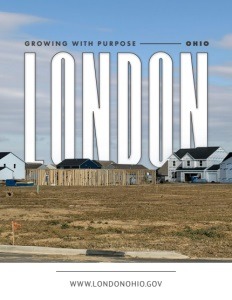
Click The Cover To View Or Download The Brochure
AT A GLANCE
Who: London, Ohio
What: A charming community that is experiencing growth in housing, commercial and is working off a masterplan to balance this growth moving forward.
Where: Madison County, Ohio
Website: www.londonohio.gov
PREFERRED VENDORS/PARTNERS

The Westwood Collective: www.westwoodcollective.com
The Westwood Collective fills voids in community through unique real estate development. With a team rooted in Central Ohio, Westwood has listened to what community members want in their hometowns. Through feedback gained from neighbors, Westwood has reshaped the local real estate landscape while maintaining the integrity, excellence, and originality the company was founded upon.