Transformation Through Conservation
Adaptive Reuse and the Future of Design in Hawai‘i
Group 70 International (G70) has long been recognized as one of Hawai‘i’s most trusted voices in design—an organization where cultural understanding, technical expertise, and community-centred thinking intersect. What began in the early 1970s as a small, ambitious design studio has steadily evolved into a multidisciplinary firm shaping many of the Islands’ most meaningful places.
Today, as G70 prepares to mark its 55th anniversary, the company stands at an essential moment of renewal. At the heart of the company is Linda Miki, Vice Chair and CEO, whose leadership reflects the firm’s forward-looking spirit that has defined it for decades.
Founders’ Vision, Modern Leadership
G70 traces its roots to the early 1970s, when founders Gus Ishihara, Gordon Tyau, and Francis Oda established Group 70 International with a simple goal: to elevate design in Hawai‘i. The firm began as a design architecture practice supporting others; however, it quickly recognized the need for a more holistic approach to address the Islands’ cultural, environmental, and social complexities. “We were originally designers for other architects,” Miki says. “Our founding fathers eventually decided to provide full-service work, and through their vision, G70 evolved into a multidisciplinary firm.”
That vision shapes G70 today. The firm blends architecture, planning, interior design, civil engineering, and cultural resource management to tackle Hawai‘i’s multifaceted challenges with depth and flexibility. Its leadership evolution reflects that breadth: former president Charles Kaneshiro (architect) now serves as Chairman, Kawika McKeague (cultural planner) as President, and Ryan Char (civil engineer) steps in as COO. “They are an excellent combination,” Miki says. “Together we form a solid C-Suite team. The transition balances continuity with new energy, grounding the firm in cultural knowledge while strengthening its capacity for future growth with 16 Principal leaders.”
Initiative Meets Opportunity
Miki’s leadership journey at G70 is closely tied to the firm’s evolution. Early in her career, she distinguished herself by identifying ways to strengthen operations—most notably a 15-page proposal to modernize G70’s CAD production system. Rather than set it aside, the firm’s leaders, Francis Oda, Norman Hong and Sheryl Seaman, empowered her to implement it. “There was a lot of opportunity for growth,” she recalls. “They were open to new ideas and willing to try different things.” That openness propelled her from intern architect to CAD manager, then associate, and ultimately principal.
In 2008, amid Hawai‘i’s economic uncertainty, Miki stepped into the role of President and COO. Instead of slowing down, she launched Hi’ialoakuäpapa Sustainable Marketplace of the Pacific, a sustainable design showroom that brought clients together with local innovators, artisans and technology partners. “Some people thought we were crazy for opening a sustainability center during a downturn,” she says. “But it shared a vision of sustainable stewardship and financially helped us and our partners through those challenging years.”
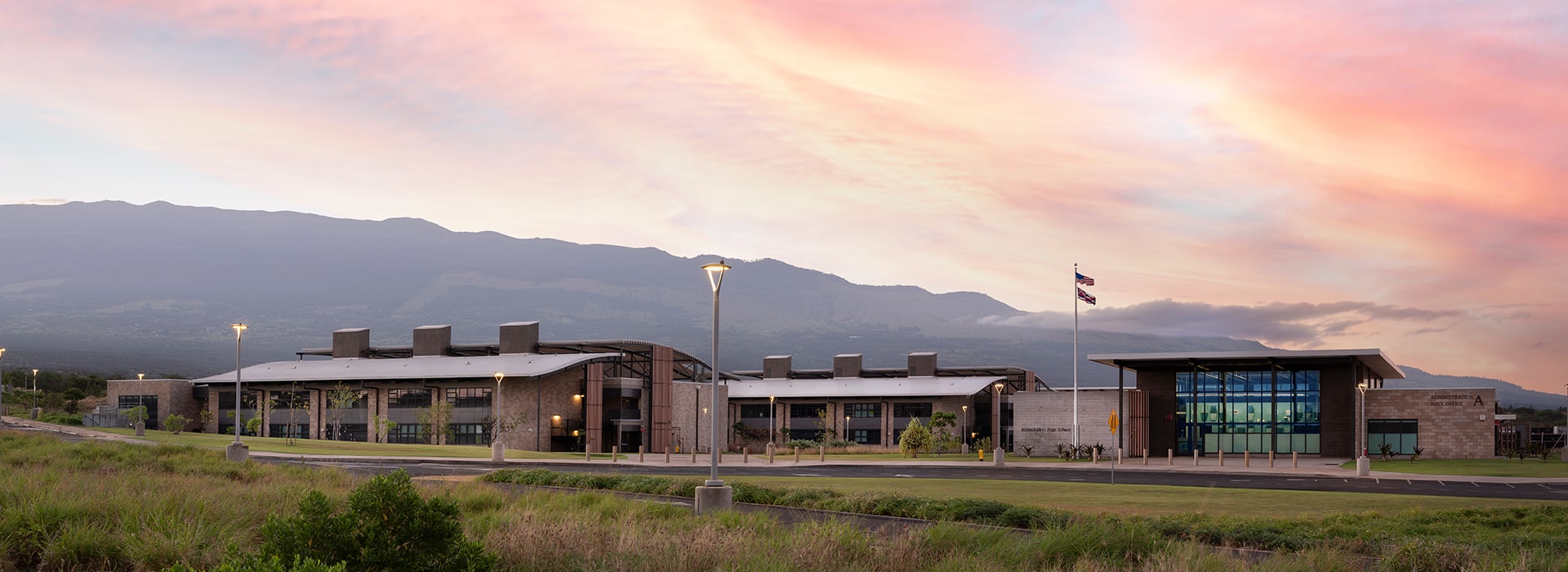
This era also marked the beginning of G70’s many sustainability “firsts” in Hawai‘i—from the state’s first LEED Platinum school and first LEED Platinum lab facility to the first LEED Platinum commercial interior, along with landmark projects such as the nation’s first net-zero affordable housing community and new net-zero, HI-CHPS–certified educational environments.
Finding Home in an Unexpected Place
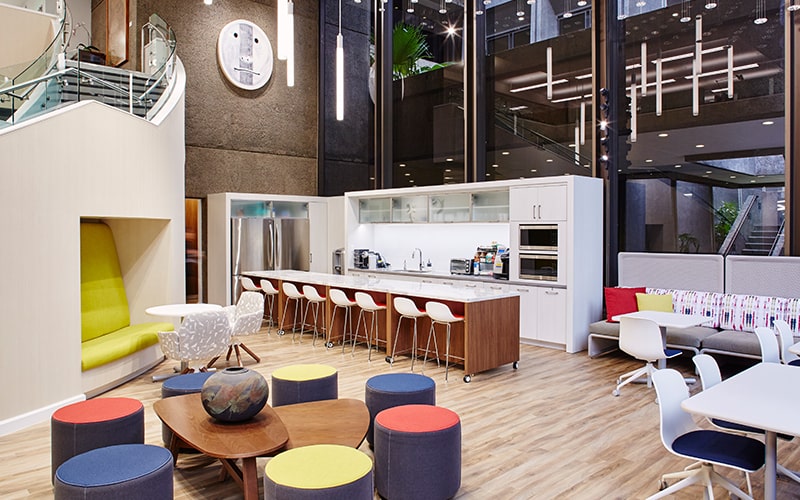
One of G70’s most distinctive collaboration stories involve its own headquarters. In searching for a new office, traditional tower suites didn’t fit the firm’s personality. Miki wanted something connected to the street and the daily life of Honolulu. Standing inside Bank of Hawai‘i’s main branch, inspiration struck: convert part of their central financial center into G70’s new home.
“It was probably a proposal the bank had never seen before,” Miki says. But the idea resonated, and the transition became a model of adaptive visioning. The resulting office spans the mezzanine and tower levels, combining high security, natural light, and open collaboration zones. With G70’s new mobile systems already in place, the firm transitioned seamlessly into hybrid work during COVID-19. The headquarters now symbolizes G70’s adaptability and partnership-driven mindset.
Where People Come First
G70’s identity has always been defined by its people. Family, faith, and mutual support shape the firm’s operations, with a strong emphasis on wellbeing and flexibility. “We are very family-oriented,” Miki says. “Work is important, but taking care of yourself and your family is also very important.”
The group practice model ensures seamless teamwork, with colleagues stepping in when needed. This approach has earned G70 repeated recognition as a Great Place to Work and a top workplace for women. Despite its size and scope, the firm continues to function as a unified, supportive community.
This people-first philosophy also extends outward. Through the G70 Foundation, the firm has donated approximately $1.2 million to more than 150 grant recipients since 2003, alongside ongoing annual support to organizations such as the Waikiki Community Center, Habitat for Humanity, and the Hawai‘i Foodbank. Looking ahead, G70 plans to deepen its hands-on contributions by leveraging staff expertise directly to support local nonprofits.
Designing with Cultural Integrity
For G70, cultural integrity is not an add-on to good design; it is the foundation from which design begins.
Guided by Native Hawaiian cultural practitioners within the firm, including President Kawika McKeague and in-house artist and cultural strategist Kaili Chun, G70 approaches each project by first listening to place. That means spending time with kūpuna, lineal descendants, community members, cultural practitioners, historians, and local organizations to understand the moʻolelo (stories), ʻōlelo Hawaiʻi (Hawaiian language), and living practices that shape each ʻāina. In this work, G70 serves as a bridge between communities and the formal processes of planning and design, helping carry community knowledge, protocol, and aspiration into built form.
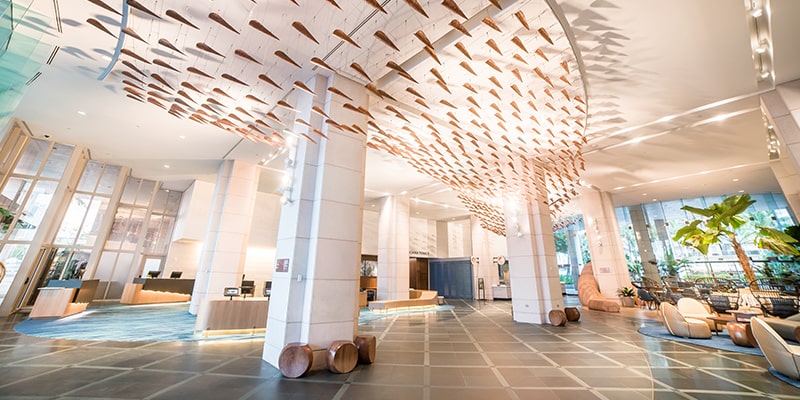
One powerful approach is Hulali i ka lā (Glistening in the Sun), a permanent art installation by Chun in the Prince Waikiki lobby. Composed of more than 800 hand-hammered copper forms, the work recalls a schooling pattern of hinana fish that once traveled through the brackish waters of Piʻinaio Stream. The pieces are suspended to trace the historic course of the stream making the buried waterway legible again in the heart of a contemporary hotel lobby. The installation was created through workshops with hotel staff, executives, and long time guests who were invited to hammer and inscribe their copper hinana, with a name, memory, or intention from its maker.
“It’s beautiful,” Miki says. “People come back and feel a real connection to the place.” For G70, Hulali i ka lā is more than an artwork; it is a contemporary act of ancestral reconnection.
Adaptive Reuse as the Blueprint
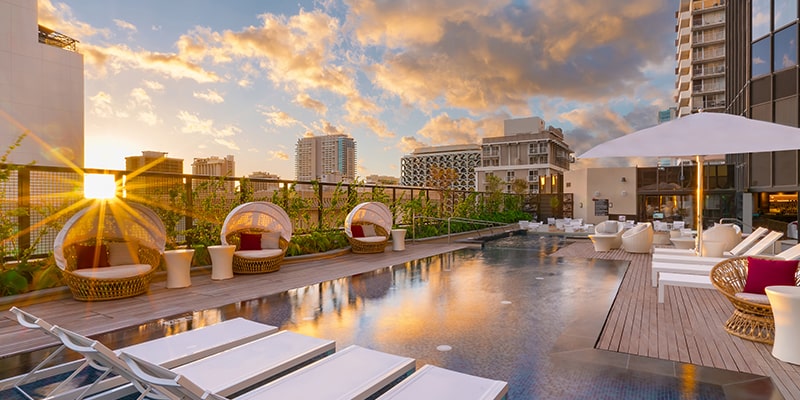
Looking ahead, G70 sees a future shaped by adaptive reuse, sustainable infrastructure, and comprehensive community visioning. Hawai‘i’s limited land availability means new construction will become increasingly rare, making adaptive reuse critical to meeting evolving needs. “There are not going to be a lot of new builds in Hawai‘i,” Miki explains. “Adaptive reuse is going to be at the forefront.” G70’s conversion of an office building into the Hyatt Centric Waikiki embodies this philosophy, transforming an underutilized office structure into a modern hotel with activated street-level retail and a reimagined rooftop.
Beyond transformative building projects, G70 is increasingly sought after for long-term strategy, master planning, and cultural visioning. Clients rely on the firm not only for design but also for guidance in navigating complex planning processes, community engagement, and sustainability goals. “People come to us for strategies,” Miki says. “What’s exciting is seeing a master plan come to fruition.” As the firm refines its short- and long-term goals, upcoming (often confidential) projects position G70 to help shape the next generation of resilient, community-centred environments.
A Leader in Sustainable Innovation
In a state as environmentally sensitive as Hawai‘i, sustainability is more than a design consideration—it is a necessity. G70 has long delivered LEED-certified buildings, net-zero educational facilities, and climate-responsive community environments. The firm’s portfolio reflects ongoing innovation in materials, renewable energy integration, water efficiency, and environmentally responsive site planning.
“We want to continue to be a leader in this area,” Miki says. “We’ve created innovations on many of our projects, and sustainability continues to be integrated in our designs.”
The firm is also expanding its renewable energy and civil engineering portfolio, including large-scale photovoltaic initiatives and long-term master plans designed for resilience in a warming climate.
Design Powered by Technology
Although rooted in cultural values, G70 is a highly modern, technologically sophisticated practice. The firm has evolved from hand drafting to CAD to advanced BIM modeling, supported by cloud-based systems and international production teams. Collaboration stretches across California, the Philippines, and Indonesia, enabling a near-24-hour workflow. “When it’s 3 p.m. here, it’s 8 a.m. for them,” Miki explains.
“Technology makes it easier to share project information from the cloud.” G70’s Indonesian and Philippine partners execute much of the firm’s BIM modeling, while the Hawai‘i team guides design, planning and technical production.
When it comes to artificial intelligence, the firm remains intentionally cautious. Many projects involve confidential information, sensitive community consultations, and proprietary data. This deliberate approach reflects the firm’s dual commitment to innovation and responsibility.
Shaping Spaces That Connect Us
As G70 steps confidently into its next chapter, the firm remains anchored by its core values of faith, collaboration, cultural respect, sustainability, and community impact. With Miki and the 15 Principal strong leadership team guiding its future, G70 is positioned to navigate Hawai‘i’s most pressing design challenges while continuing to honor its past.
“We want people to experience beautiful connection—to each other, and to the special uniqueness of each place,” Miki says. “That’s what makes our work meaningful.”
Click The Cover To View Or Download The Brochure
AT A GLANCE
Who: Group 70 International (G70)
What: A Hawai‘i-based multidisciplinary design firm that blends architecture, planning, engineering and cultural resource work to create sustainable, community-rooted places.
Where: Honolulu, Hawai’i
Website: www.g70.design
PREFERRED VENDORS/PARTNERS
Randolph H. Murayama & Associates, Inc.: rma-randy@hawaii.rr.com
The firm of Randolph H. Murayama and Associates organized in 1976 (State of Hawaii), does mechanical planning, design and construction management for universities, medical facilities, office, residential, commercial, industrial, and institutional projects. The firm consults with architects or as a direct consultant to private, state, city and federal agencies.