Resilient by Design
Expanding Innovation, Strengthening Student Supports, and Building Community Capacity
In the Freehold Borough Schools, progress has never been passive. It has been earned through persistence, community advocacy, and a leadership mindset grounded in a simple belief: students and staff deserve more, even when the path to securing it is difficult.
Superintendent Dr. Asia Michael describes the district’s defining characteristic as resilience. After decades of underfunding that limited opportunities and slowed progress, Freehold Borough fought back—supported by a previous superintendent’s efforts to challenge the state and pursue fair funding. That advocacy changed the district’s trajectory, allowing leadership to expand learning spaces, increase resources, improve professional development, and create more opportunities for students and staff alike.
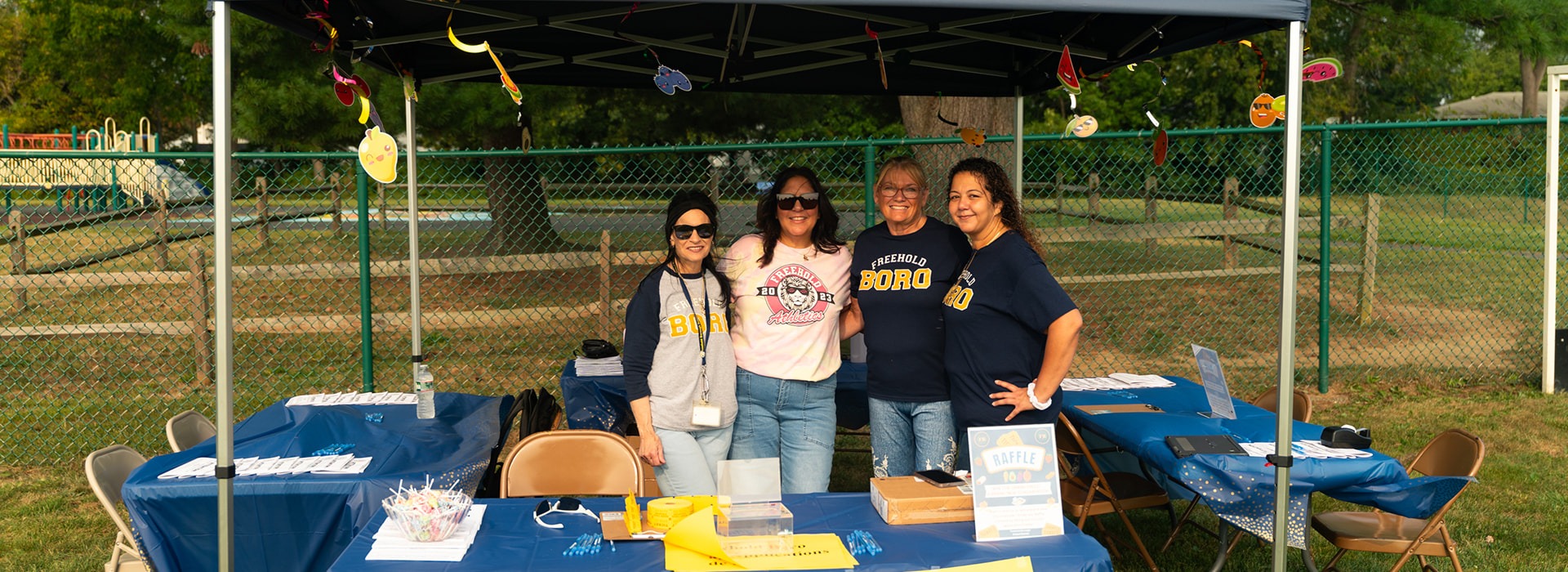
Serving approximately 1,500 students, Freehold Borough is diverse and deeply community-oriented. The district supports multilingual learners, including families who speak Spanish as their primary language, and it continues to strengthen systems that ensure students and families can access education, resources, and support without barriers. Michael notes that community involvement is not something the district has to chase. Local organizations routinely reach out asking what families need, and support arrives quickly, whether through coat drives, food support, holiday assistance, or other immediate needs that affect student well-being and readiness to learn.
Director of Curriculum and Instruction Dr. Samuel dela Cruzunderscores that this community advocacy runs deep. He points out that the same community members who support families today were instrumental years ago in helping the district go to Trenton and fight for better funding. In Freehold Borough, community partnership is not a secondary element of success. It is part of the operating model.
That partnership extends beyond local generosity into broader professional networks and regional collaboration. Michael, Dela Cruz, and Assistant Superintendent of Business Patrick Pisano each maintain active county and state affiliations that allow them to collaborate with peers, share best practices, and respond more effectively to shared challenges. Pisano notes that organizations such as NJASBO and Monmouth County ASBO provide practical, scenario-based support across New Jersey’s complex funding and operational environment. For Freehold Borough, these external connections strengthen internal capacity, helping leadership stay informed, anticipate policy shifts, and refine district strategy.
A strong example of local collaboration is the district’s partnership with the borough itself. Freehold Borough Schools is a 100 percent walking district, which makes student safety and municipal infrastructure a critical shared responsibility. Michael describes a Safe Routes to School grant secured by the borough after multiple attempts. The grant brought approximately $1 million to improve sidewalks, signage, and lighting, including key areas around school campuses where students cross a county road and move through poorly lit spaces. Pisano emphasizes that this kind of partnership matters because the borough consistently considers the district when planning town changes, recognizing that every student in the district walks to and from school every day.
Innovation has become another defining area of growth, particularly through the district’s participation in Digital Promise. Michael explains that Digital Promise provides Freehold Borough with access to a national network of districts working on modern learning initiatives—an especially valuable resource for a smaller district with significant needs and limited flexibility. The district pursued entry through a rigorous interview process, emphasizing its work in innovation, career readiness, multilingual learner support, and its strategic approach to artificial intelligence. After a first-round attempt that did not align with logistical requirements, the district applied again and was accepted quickly, a milestone Michael describes as meaningful validation that even a small district can lead with big ideas.
A key component of that innovation strategy is Freehold Borough’s methodical rollout of generative AI. Dela Cruz explains that the district chose a phased approach designed to build understanding and capacity before pushing AI tools into classrooms. In the first year, the district focused on administrators, partnering with leadership organizations to provide professional development around what AI is, how it impacts schools, and how it can support instructional leadership and staff. In the second year, the district expanded training to teachers, focusing on how AI can help with planning, assessment, and classroom practice. The intent is to build a foundation of informed, safe, and purposeful use—recognizing that while AI carries risk, it also offers real potential for instructional efficiency and improved learning outcomes when implemented responsibly.
Leadership sees equity as central to this work. Michael and Dela Cruz emphasize that equity in Freehold Borough means ensuring all students have access to resources and opportunity regardless of background, language, or circumstance. They note that the district is comfortable naming equity directly and building programming around it, viewing it as essential rather than controversial. That clarity, they believe, resonated strongly during the Digital Promise selection process and continues to shape how innovation is approached across the district.
Teacher excellence and teacher support are equally central to Freehold Borough’s identity. The district is celebrating the recognition of Gillian Ober, an ESL teacher named State Teacher of the Year. Michael describes Ober’s work as an example of what Freehold Borough values most: personalized attention, differentiated instruction, and a deep commitment to understanding students and families beyond academic performance. Ober’s approach reflects a larger district mindset, where multilingualism is treated as an asset rather than a limitation. Michael notes that Ober reinforces the idea that being multilingual is a superpower, helping students who may initially feel hesitant about language differences gain confidence and belonging.
Dela Cruz explains that the district’s instructional model is rooted not only in standards and data, but in understanding the student as a whole person. Academic performance, he notes, often reflects social and emotional well-being. Freehold Borough teachers are trained to recognize that learning barriers are not always academic. They may stem from stressors at home, family responsibilities, or the complex realities students manage outside school. The district invests in professional development that helps teachers understand student backgrounds, respond with appropriate support, and build classroom environments where students can succeed.
The district’s ML program also reflects that inclusive philosophy through a co-teaching model at the elementary level, rather than the more traditional pull-out structure. In this approach, ML students remain immersed in core instruction while receiving language support inside the classroom, enabling stronger integration, more consistent exposure to grade-level learning, and greater belonging among peers. Michael notes that external visitors observing classrooms often cannot distinguish between the general education teacher and the ESL teacher, reflecting how integrated the approach has become.
Teacher support is formalized through a multi-year onboarding and development program for educators new to the district. Dela Cruz explains that Freehold Borough intentionally supports year one, year two, and year three teachers with structured transition support, resources, and guidance. The philosophy is simple: adult success equals student success. When staff feel supported and equipped, students benefit.
Student mental health and social-emotional learning remain a major focus as well. The district expanded guidance staffing and invested in trauma-informed professional development through grants such as the DREAMS grant. Additional funding supports wellness initiatives including outdoor physical activity infrastructure and broader staff training. Freehold Borough also partners with community organizations to provide student counseling services and family support, including YMCA-based counseling hours and connections through organizations such as PerformCare and other local wellness partners.
The district has also implemented meaningful student-centered programs that foster peer support and emotional awareness. Dela Cruz highlighted a year-long initiative called Shoulder Check, rooted in a message of checking in on others and building intentional support networks among students. The program included bracelet exchanges, class identity-building, and structured conversations about mental health, belonging, and looking out for peers. Leadership describes it as an example of supporting students emotionally while also strengthening social connection and friendships.
Career readiness is another area where Freehold Borough is intentionally building exposure early, even as a sending district whose students ultimately attend the Freehold Regional High School District. Michael explains that the district’s Career Café model brings local professionals into schools not simply to talk about careers, but to provide hands-on experiences. Students rotate through stations where they practice real-world skills and get tangible exposure to what different roles require.
Emergency services participation has been a strong example, with students learning skills such as applying a tourniquet, practicing bleed response, and experiencing the physical reality of wearing firefighting gear and moving through tight spaces. Students also explore vehicles and equipment, bridging the gap between “career talk” and “career understanding.” The district complements these experiences by bringing high school representatives to speak with sixth and seventh graders about magnet programs and the application process, ensuring students and families understand options early.
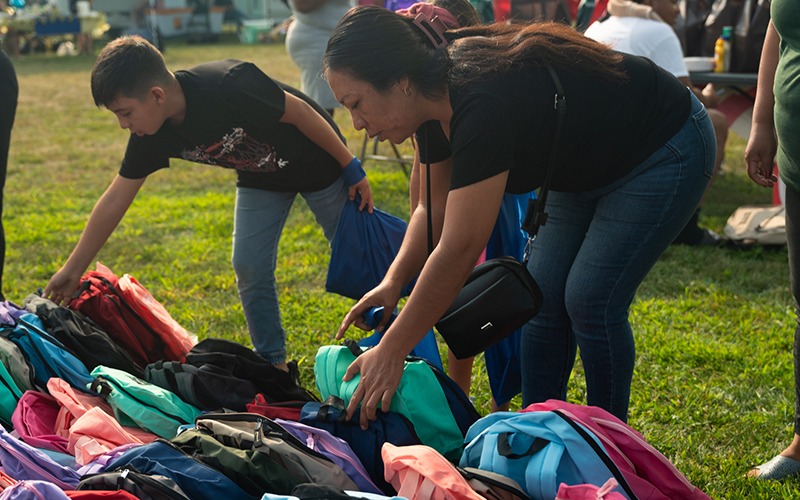
Community engagement is also reinforced through district-wide events that connect families to resources. Michael described the district’s first Back to School Bash as a major success, bringing together 39 organizations and distributing hundreds of backpacks, food support, clothing, counseling connections, and practical assistance such as help completing free lunch applications.
For families where English is not a primary language, having direct support with paperwork and resource navigation can be the difference between access and missed opportunity. The district has already set a date for next year’s event, signaling that the model will continue as a recurring community anchor.
From an operational perspective, Pisano outlines substantial recent capital investment and a clear forward plan. The district recently completed a major project adding 16 new classrooms, totaling roughly 12,000 square feet. Designed by Remington & Vernick Engineers and built by Vanas Construction, the project remained on timeline and was described as highly competitive during bidding, with final bids separated by a narrow margin. Leadership was involved down to classroom-level design details, including modular walls that allow spaces to flex between traditional classrooms and small group instruction rooms.
Additional planned projects include multiple restroom upgrades, a library modernization designed around flexible seating and updated technology, and playground and outdoor fitness additions supported through state mental health grant funding. Pisano also notes that the district’s Freehold Learning Center presents a unique long-term facility challenge. Built with an open-space plan common in the 1970s, it includes dozens of classroom areas without full-height walls.
The district views closing in those spaces to create traditional classrooms and hallways as an important future improvement to better support learning and classroom structure for preschool through second grade.
Safety and security remain front and center. Pisano described active collaboration with local police, routine walkthroughs, and clear lockdown procedures. The district is also modernizing building wayfinding and numbering to strengthen emergency response precision, ensuring that police and first responders can identify wings and room locations quickly through digital access, including maps available directly on phones.
Looking ahead, Freehold Borough’s priorities remain aligned with its identity. Michael emphasizes continued community partnership and resource support for families, including ongoing food assistance and deeper engagement with local seniors through initiatives like a pen pal program designed to connect students with older residents and strengthen intergenerational ties.
Dela Cruz reinforces that student success remains the foundation, paired with teacher support, continued innovation, and responsible growth in technology integration. Pisano highlights the importance of stable state funding tied to enrollment, ongoing awareness of construction activity in the borough that could impact student population, and the need to control long-term cost drivers such as health benefits, which represent one of the district’s largest expense categories.
All three leaders also emphasize that none of this work happens in isolation. They credit the strength and dedication of the Board of Education, administrators, and staff as essential to execution. In Freehold Borough, resilience is not simply a story of surviving underfunding. It is an operational discipline, a community culture, and a forward-looking strategy that continues to expand what students can access, experience, and achieve.
AT A GLANCE
Who: Freehold Borough Schools
What: A diverse and student-centered district looking to embrace opportunities for its students
Where: Monmouth County, New Jersey
Website: www.freeholdboro.k12.nj.us
PREFERRED VENDORS/PARTNERS

Arthur J. Gallagher & Co.: www.ajg.com
A tailored approach to risk management. At Gallagher, insurance and risk management is about the entire school district. Having experts help manage your risk means your district can focus on what it does best — educating students. Our commitment to the highest service standards makes it easy for you to do business with us.