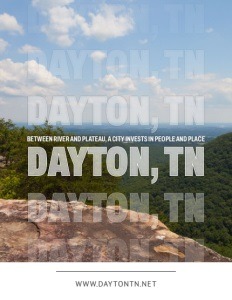
Between River and Plateau, A City Invests in People and Place
A Century of History, a Strong Industrial Base, and a Lifestyle-First Strategy Define the Next Chapter
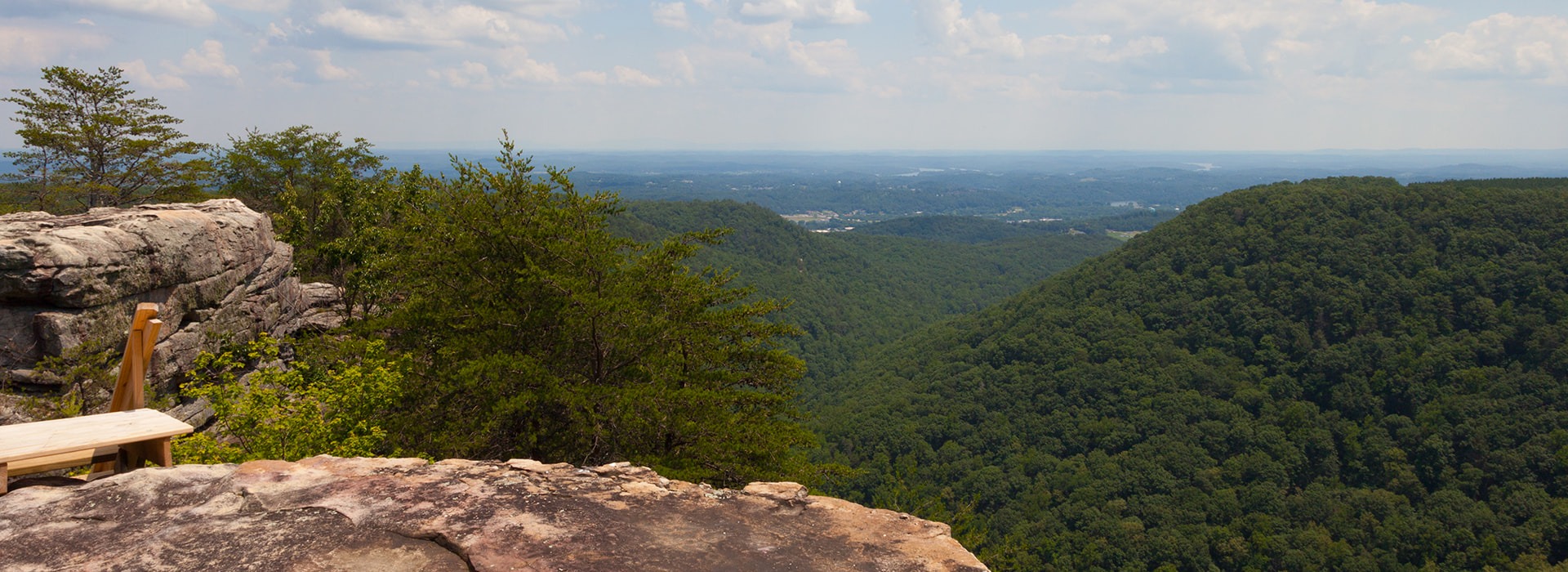
Nestled in a valley framed by the Tennessee River to the east and the Cumberland Plateau to the west, the City of Dayton, Tennessee, sits in a landscape that almost does the marketing on its own. Water and mountain, blueway and ridgeline, parks and trails all converge around a community that has learned how to turn its geography into both an asset and an identity.
“We’re uniquely situated,” says City Manager David Shinn. “Directly to our east is the Tennessee River, and to the west is the Cumberland Plateau. We’re in the valley between those two landmarks, and it provides a natural beauty that we try to use to enhance quality of life for the people who live here and for those who visit.”
Dayton’s roots run deep. The city is known around the world as the site of the Scopes Trial, the landmark 1925 court case that tested the teaching of evolution in public schools and cemented Dayton’s place in history. Its local character, however, is shaped just as much by its foundation in agriculture and coal mining. The work ethic forged in fields and mines has carried forward into today’s manufacturing and service industries. It is a town where history is present, but the focus is firmly on what comes next.
Sports, College, and a New 60-Acre Hub
What comes next is especially visible on a large, strategically chosen tract of land that Dayton and Rhea County purchased together. The total parcel covers more than 80 acres; about 20 of those acres were given to the State of Tennessee and are now home to a new Chattanooga State community college campus under the Tennessee Board of Regents. That campus, slated to open in early 2026, will anchor the education and workforce side of the site.
The remaining 60 acres are reserved for a major recreation and sports complex that the city is carefully planning with the county. The vision includes a soccer complex, an amphitheater, and a range of outdoor amenities that will take full advantage of the land’s natural beauty. It is a project that will serve residents, families, and visiting teams and tourists alike.
The college and the recreation complex are not standalone projects. They are being designed as part of a broader network of greenways and blueways that is reshaping how people move through and experience Dayton. In practical terms, that means trails that connect neighborhoods, downtown, and parks; in strategic terms, it means building a lifestyle that encourages people to stay.
Connecting River, Trail, and Town
Dayton’s downtown sits right on Richland Creek, a tributary that flows into the Tennessee River. Around the creek, the city has assembled a generous expanse of land used for parks and trails, creating a green corridor that runs within a short walk of the courthouse square. The aim now is to stitch these pieces together into a seamless system.
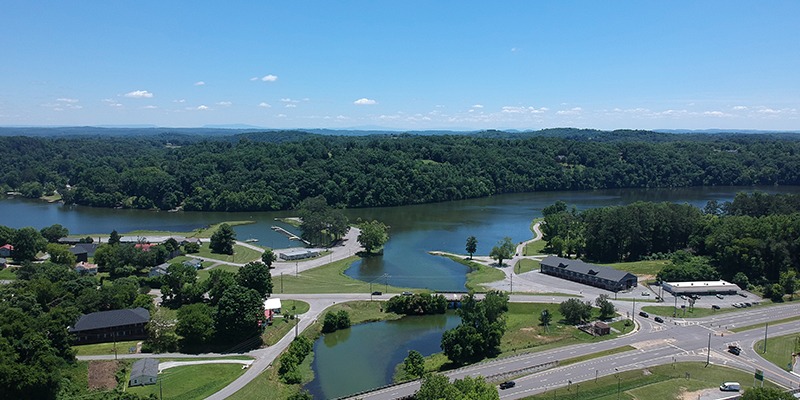
One of the most ambitious elements of that system is the city’s participation in the Tennessee RiverLine project, an effort led by the University of Tennessee and the Tennessee Valley Authority to link hundreds of miles of riverfront communities from Kentucky, through Tennessee and Alabama, and back up through Tennessee as a continuous “blueway” for paddling and water recreation. Dayton is a designated RiverLine community and sees the initiative as a way to bring visitors to its waterfront, while giving residents a more direct relationship with the river that defines their eastern horizon.
At the same time, the city is looking westward toward the Cumberland Trail. A trailhead for this major hiking route lies just a few miles outside downtown. A nonprofit has been formed with the goal of creating a trail that would run from the heart of Dayton out to that trailhead, passing along or near the 60-acre recreation development. This would effectively connect the valley floor to the plateau crown by way of walkable, bikeable paths, giving residents and visitors alike a unique way to experience the region’s topography.
The University of Tennessee has been a significant partner in these efforts, providing both vision and support in weaving together the river, the city, and the surrounding countryside. For Dayton, that partnership reinforces the idea that the town is not operating in isolation but is part of a larger, connected landscape.
Workforce Pipelines and a Lifestyle Strategy
Across North America, communities are grappling with workforce shortages and shifting employment expectations. Dayton is no exception, but it has chosen a distinctly collaborative approach to the problem. While the University of Tennessee serves as a regional academic anchor, it is the new Chattanooga State campus—a Tennessee College of Applied Technology facility—that is most directly tied to the city’s workforce strategy.
“Their main goal is to work closely with our industries in the industrial park to help transition students into the workforce,” explains Vice Mayor Caleb Yawn. Programs and curricula are being developed in direct conversation with local employers, ensuring that graduates walk into jobs with skills that are immediately relevant. For industry, it is a reliable pipeline. For students, it is a clear path from classroom to career without leaving the community.
Dayton understands that keeping young people and attracting new residents takes more than jobs. It also takes a lifestyle that supports families at different stages of life. That is why investments in recreation—pickleball courts, futsal courts, enhanced sidewalks, improved walking tracks, and upgraded parks—are treated not as luxuries but as core infrastructure. The goal, as Yawn puts it, is to give people “the things they need, instead of having to go outside to other towns and move away.”
Downtown as a Living Hub
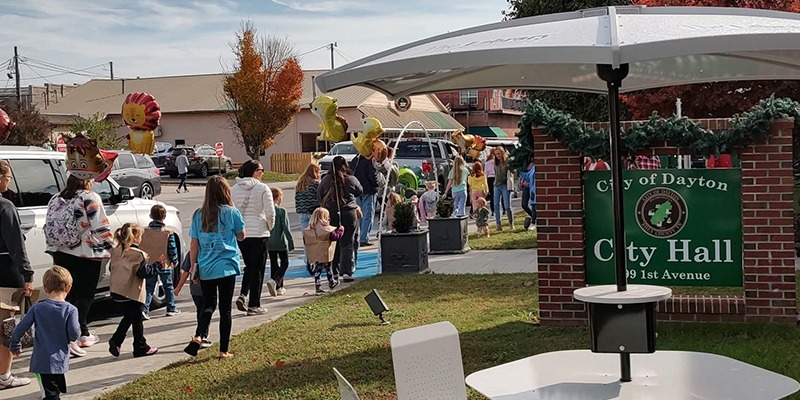
Dayton’s downtown revitalization efforts converge around its historic courthouse, built in the late 1800s and still the architectural anchor of the city center. The surrounding courthouse square is the heart of Main Street Dayton, a nonprofit organization aligned with the State of Tennessee’s Main Street program. Its mission is to make downtown more pedestrian friendly and to attract people not only for shopping, but also for arts, entertainment, and recreation.
Just a couple of blocks from the courthouse is the RC3 community center, which offers programming for every age group, from toddlers to seniors in the Silver Sneakers program. Another few blocks away, a wooded creek way features a walking track of roughly two miles. The proximity of these amenities to the courthouse square is deliberate. By clustering activity around the traditional civic core, the city is turning downtown into what Shinn calls a “living, breathing place” rather than a set of buildings that go dark after business hours.
New recreation amenities, from courts to trails, are planned with that same intent. The idea is to build a network of experiences that draw people downtown—not just for errands, but for daily life.
Industry, Incentives, and Room to Grow
Dayton’s economy rests on a solid base of industry and manufacturing. Local employers have weathered economic cycles, and the city is not in the position of having to reinvent its base from scratch. Instead, the emphasis is on aligning workforce training with employer needs, maintaining a strong business climate, and making strategic decisions about what kinds of companies fit Dayton’s values and environment.
Chattanooga State’s TCAT campus is a key part of that alignment, with custom training tailored to manufacturers in the city’s industrial park. Dayton also offers tax incentives for companies locating or expanding in the city and seeks to provide what Shinn describes as an equally important incentive: a workforce that is not just skilled, but happy to live and work where they are.
There is still room to grow. The industrial park has acreage available for additional companies, and Rhea County holds land just outside the city limits that could be annexed if a project warranted it. While manufacturing remains a cornerstone, the city is open to a range of business types, prioritizing quality jobs and environmental responsibility. Some potential projects have been turned away after closer inspection of their environmental impacts. The message is clear: growth is welcome, but not at any cost.
Critical Infrastructure and City-Owned Utilities
Underpinning all of this is a strong foundation of infrastructure. Dayton is unusual in that it owns all of its utilities: water, wastewater, and electric. That structure gives the city significant control over planning, investment, and coordination.
One of the most significant infrastructure projects currently underway is a new wastewater treatment plant, the result of a multi-year effort that is now coming to fruition. While water and sewer pipes are often out of sight and out of mind for residents, they are central to development. Without modern, reliable water and sewer systems, housing and industry cannot expand. With them, the city can say “yes” when opportunity knocks.
On the transportation side, Dayton maintains an annual schedule for resurfacing and improving local streets, with projects budgeted and prioritized each year. Beyond city streets, a state highway that serves as a major eastern artery into town is slated for a major upgrade. Over the next four or five years, the State of Tennessee will straighten and widen the route, making it safer and more efficient for everyday drivers and freight alike. For manufacturers and logistics operators, this improved access will be a tangible advantage.
Housing: A Healthy, Diversified Pipeline
In many communities, housing availability has become a bottleneck for growth. Dayton, by contrast, is seeing a steady and diversified stream of new housing projects that are keeping pace with demand.
Several developments are underway or recently completed. One subdivision, which brought 60 to 70 new homes to the market, is almost fully sold, with only a handful of homes still available. Another development, currently in the process of being annexed into the city at the developer’s request, will add around 40 homes. A separate project adjoining the industrial park is expected to deliver about 60 homes along with a series of apartment buildings, placing residents close to employment opportunities.
Off Highway 27, a new neighborhood of smaller, one- and two-bedroom homes is being built, with roughly 30 to 35 houses planned. A manufactured home development is also moving forward, with space for about 40 units; an agreement is already in place for about half of those sites. Several new apartment complexes have recently been completed and are reportedly full.
The result is a mix of housing types and price points that can accommodate different budgets and life stages. That mix is one reason Yawn believes Dayton does not always feel the sharper economic swings that hit larger nearby cities. The town is big enough to offer variety, but small enough to be resilient.
Recreation as a Core Investment
As Dayton looks ahead to the next two years, a unifying theme emerges across its plans: investing in recreation and lifestyle as core components of community development. Shinn notes that four different recreation projects are in the planning stages, ranging from soccer facilities to amenities for wiffle ball, disc golf, and paddlesports.
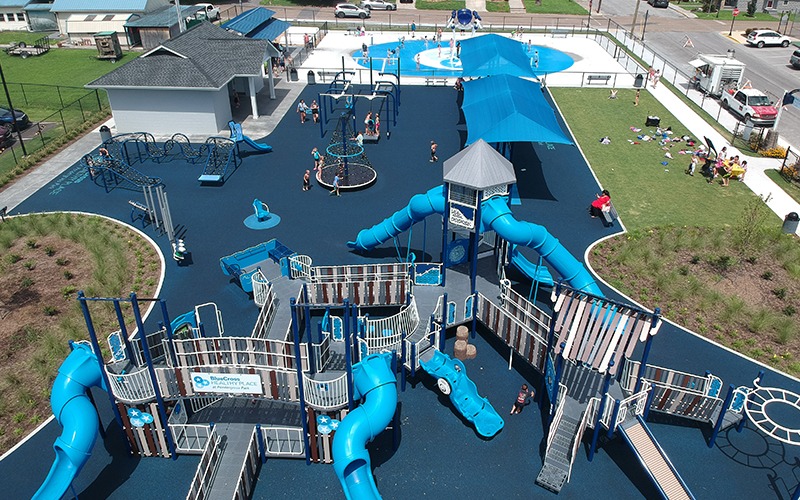
This focus has already begun to reshape daily life. A partnership with Blue Cross Blue Shield of Tennessee led to a dramatic renovation of Pendergrass Park, including the installation of a modern splash pad. The revitalized park quickly became a favorite gathering place, routinely filled with families and the sound of children playing from morning to evening.
Dayton is also working closely with RC3 on a significant expansion of its facility, which will include an indoor pool, a larger fitness center, and enhanced programming. As a lake community, the city values the ability to offer swim lessons and water safety education to children, ensuring they can enjoy the river and area lakes safely. The new aquatic resources will also support therapeutic uses, giving the local hospital and healthcare providers a new tool for patient rehabilitation. For older residents, the pool and expanded fitness options will provide additional opportunities for exercise and social connection. For nearby Bryan College, the new facility opens the door to launching a swim team, adding another layer of athletic and student life.
Yawn returns repeatedly to the same idea: recreation, amenities, and public spaces are not side projects. They are investments in the lives of Dayton’s residents. With a strong industrial base already in place, the city has the freedom to concentrate much of its current energy on lifestyle, knowing that the community’s economic backbone is sound.
Looking Forward, Anchored in Community
Dayton’s story today is one of balance. The city is honoring its history without being constrained by it, leveraging geography without becoming complacent, and supporting industry while insisting on environmental responsibility. It is expanding housing without losing its sense of scale, and it is building trails, parks, and facilities that treat recreation and wellness as essential, not optional.
From the Scopes Trial courthouse to the future Chattanooga State campus, from Richland Creek to the Tennessee River and up to the Cumberland Trail, Dayton is stitching together a narrative in which people, place, and opportunity reinforce one another. Over the next few years, as sports fields open, trails connect, highways are improved, and new homes fill with families, that narrative will become increasingly visible on the ground.
For Shinn, Yawn, Senior Recorder Michelle Horton, and the rest of the city’s leadership, the guiding principle is simple: invest in the things that make life better for the people who are already here, and the rest—visitors, employers, and new residents—will follow.
Click The Cover To View Or Download The Brochure
AT A GLANCE
Who: Dayton, Tennessee
What: A dynamic city focused on quality of life for its residents and projects that are geared towards growth
Where: Southeast Tennessee
Website: www.daytontn.net
PREFERRED VENDORS/PARTNERS

Allen & Hoshall: www.allenhoshall.com
Allen & Hoshall is a full-service architecture and engineering firm founded in 1915, delivering integrated design services in architecture, civil, structural, mechanical, electrical, plumbing, surveying, utilities, and landscape architecture. With a client-focused approach and strong regional expertise, we support public and private projects throughout Tennessee and the surrounding region.
