Anchoring Modern Innovation in Historic Values
High-Speed Logistics and a Tradition-Bound Work Ethic Converge to Transform This Appalachian Riverfront into a Premier Destination for Business and Residential Growth.
Established in 1788 as the gateway to the Northwest Territory, Marietta is the historic anchor of Washington County. Situated in the Mid-Ohio Valley, the region balances its legacy as “Ohio’s First City” with a modern economic engine. Jesse Roush, President and CEO of the Southeastern Ohio Port Authority, explains that the local identity is defined by a deep-rooted Midwest culture. “We see many family groups that have been here for multiple generations,” Roush says. “You recognize local family names on our road signs, and that shows how much we value the family unit and our shared heritage.”
This sense of continuity creates a unique environment where six public school districts function as vital community hubs. Because the county is largely rural, many areas lack a traditional city base, leaving schools to fill that role. Washington County Commissioner Charlie Schilling notes that the residents rally around these institutions, especially during high school sports seasons. “Our communities truly center on our schools,” Schilling remarks. “Whether it is Friday night football or winter basketball games, the support creates a special atmosphere. It is more than entertainment; it is the glue that holds our various townships together.”
Beyond social cohesion, this background produces a workforce with a distinct competitive edge. While many regions face labor shortages, Schilling observes that the local population maintains a rigorous professional standard. “Everybody deals with headcount challenges, and we certainly experience that here,” Schilling states. “However, the people we do have want to work hard and remain loyal to their employers.” Roush adds that this reliability is a primary selling point when attracting investment. “The work ethic in Washington County is taken very seriously. Our people provide a stable foundation that gives us a major advantage in the regional market.”
Strengthening State and Local Ties
The Southeastern Ohio Port Authority has matured into the primary economic engine for the region, amplifying its presence in state-level discussions. Roush explains that the organization has evolved from a support role into a strategic leader that coordinates development across the county’s diverse industrial sites. “Being the lead economic entity allows us to focus our messaging and deliver a unified voice to the Ohio General Assembly,” Roush says.
This influence is evidenced by his appointment to the newly formed Ohio River Commission. “The commission recognizes the river as a vital logistics asset rather than just a border. My role ensures Washington County has a direct hand in shaping the policies that affect our fifty-five miles of shoreline.”
Simultaneously, the Board of Commissioners pursues legislative changes to protect local revenue streams from federal land usage. Schilling points to the progress of Ohio House Bill 522, which addresses the distribution of royalties from the Wayne National Forest. “We want to ensure the mineral rights and royalties generated here stay in our county to fund schools and infrastructure,” Schilling asserts. The proposed Federal Mineral Royalty Clearing Fund would prevent these dollars from being diverted into the state general fund.
Schilling notes that building rapport with future leadership remains a priority. “We are already engaging with the incoming gubernatorial administration to ensure they understand the opportunities here. We want to hold the administration to their word regarding regional parity. Whenever it is said that Ohio should thrive from corner to corner, we want to see that actioned through the elimination of red tape for our local business sectors.”
Transforming Downtown Marietta
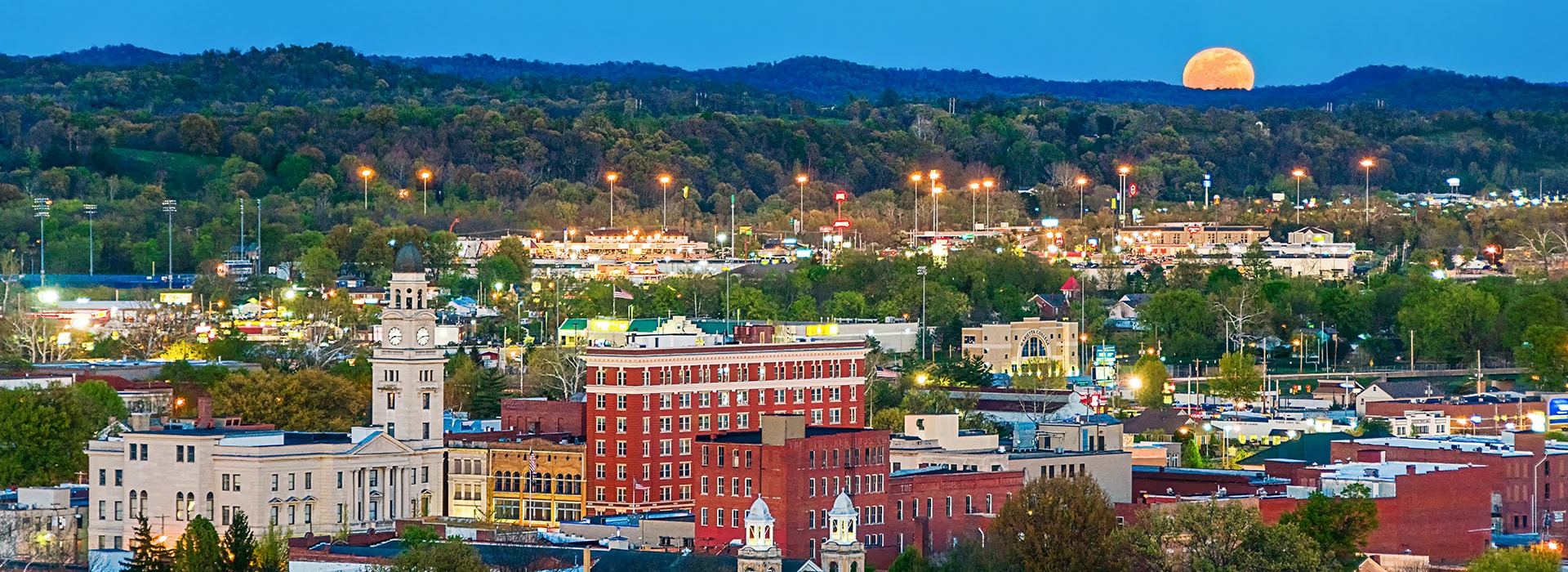
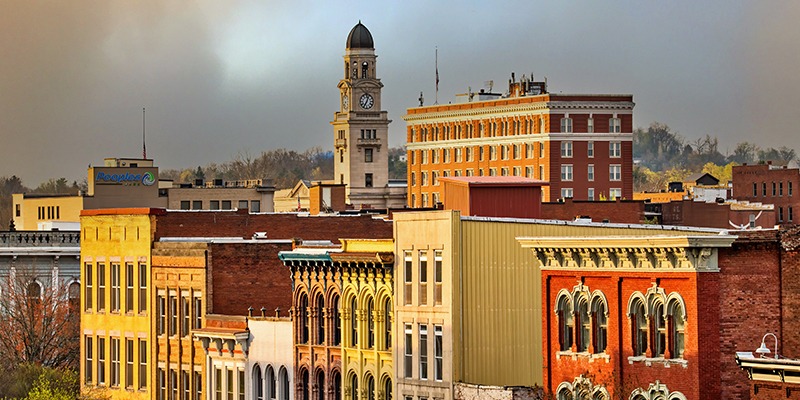
Marietta’s downtown business district is the geographic heart of the county, currently experiencing a shift from retail expansion toward residential density. Roush points out that storefront occupancy is no longer the primary challenge for the city. “Most of our first floors are full, which is a great problem to have, but it means we have to look upward to the second and third stories,” Roush says. Under the Enrich Marietta master plan, the city is prioritizing the conversion of historic upper-floor spaces to meet modern demand. “We need downtown residential options to support a high-skilled workforce that wants to walk to a local brewery or a coffee shop after work,” Roush notes.
A major private investment is currently revitalizing three prominent downtown buildings, totaling approximately 100,000 square feet of mixed-use space. Schilling emphasizes that these developments are essential for retaining talent within the region. “We are seeing developers take these massive, underutilized structures and turn them into modern apartments and professional offices,” Schilling states, noting that this revitalization aligns with efforts by the Restore & Thrive Committee to improve the city’s aesthetic appeal ahead of the America 250 celebrations. “Maintaining that quaint, beautiful river town feel is a priority,” Schilling says. “When you provide quality housing in a walkable historic district, you create an environment where young professionals actually want to put down roots.”
Bridges, Rail, and River Synergy
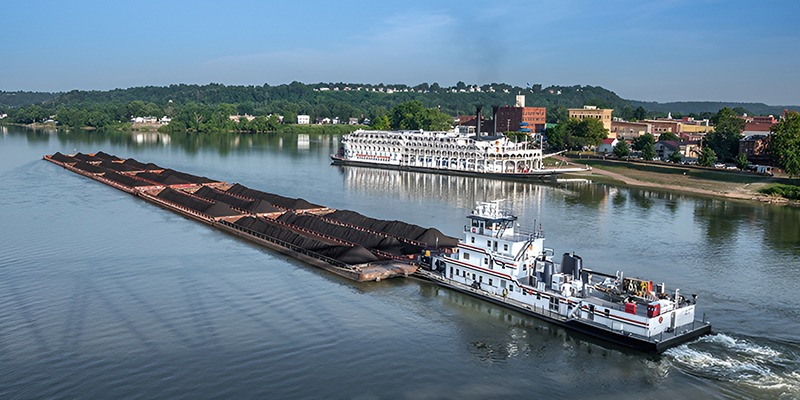
Washington County leverages its unique position on the Ohio River to transform legacy industrial sites into modern multimodal hubs. Roush identifies the redevelopment of two former coal-fired power plant sites, including the Muskingum River plant, as a primary component of the regional strategy. “These locations possess the heavy power infrastructure and river-to-rail access that modern manufacturers require,” he says.
By converting these decommissioned plants into port facilities, the county attracts energy-intensive industries seeking logistics flexibility. Schilling explains that the integration of water, rail, and road transport reduces overhead for complex supply chains. “We are focusing on assets that provide a long-term economic return,” he notes. “A site offering both a navigable waterway and direct rail service is a premier destination for manufacturing.”
Central to this logistics network is the restoration of the Historic Harmar Bridge, a rare piece of American engineering. Originally built in the 19th century, it is the last hand-cranked swinging railroad bridge in the country. Schilling describes the project as a critical link for the county’s walkability and tourism. “The bridge connects the Harmar Village district directly to downtown Marietta, facilitating the flow of foot traffic that supports local businesses,” he says. Roush adds that the bridge acts as a link between the county’s industrial past and its future as a recreational hub. “We are turning a historic relic into a functional piece of infrastructure,” he remarks. “This project demonstrates our ability to preserve our heritage while solving modern connectivity issues for residents and visitors alike.”
Rural Infrastructure and the “Hidden Gem” Housing Strategy
Growth reaches beyond the city limits, fueled by targeted infrastructure investments. In the western reaches of the county, specifically within Warren and Dunham townships, the board of commissioners oversees a $15 million sewer expansion project. “We are investing heavily in infrastructure to open up land for both industrial and residential expansion,” Schilling explains. These projects aim to support townships that have historically lacked central services.
Schilling adds that providing reliable utilities is a prerequisite for attracting private developers to rural areas. “When we put the pipes in the ground, we remove a major barrier for builders,” he states. “We want the western part of our county to grow in a structured way that supports long-term residency.”
A centerpiece of the county’s residential strategy is the 300-acre County Home property, which local leaders describe as a “hidden gem” for future development. Roush explains that the site is currently being evaluated to serve a specific demographic. “We are looking at how that acreage can support a senior housing or independent living facility,” he says. “There is a clear gap in our market for residents who want to downsize without leaving the community they love.”
Meanwhile, the broader housing market shows signs of stabilization as new stock becomes available. Schilling observes a steady increase in new construction. “Inventory is starting to tick up, and we are seeing new builds in the $400,000 to $500,000 range,” he remarks. “This activity demonstrates confidence in our local economy and a desire for people to return home to the valley.”
Trades, Technology, and Recovery
The Appalachian Ohio Manufacturers Coalition (AOMC) bridges local industry and the classroom, focusing on long-term workforce sustainability. Roush emphasizes that the coalition’s work begins with early exposure to technical careers to spark interest before students finalize their career paths. “The AOMC has been instrumental in reaching out to middle school students to introduce them to the trades before they even enter high school,” he says.
“We utilize tools like a Portable Tech Trailer to bring CNC machining and advanced welding equipment directly to the students.” A proactive strategy aims to demystify manufacturing for younger generations. “We are showing these students that modern industrial roles are high-tech, high-paying careers,” Roush adds. “By aligning our vocational curriculum with the specific needs of our local employers, we create a direct pipeline from the classroom to the factory floor.”
Recognizing that a robust workforce must be inclusive, the county has pioneered a recovery-to-work initiative to support residents overcoming substance abuse or legal challenges. Schilling notes that these individuals represent an untapped talent pool for regional businesses looking for loyal employees. “We have a specialized program that focuses on individuals in the justice system or those currently in recovery,” he explains. “The objective is to provide them with the training and professional support necessary to transition back into the workforce successfully.”
This social investment is paired with the intellectual resources of The Center for Appalachian Innovation. “The institute provides the data-driven research we need to refine our regional economic strategies,” Roush states. “Having a local academic partner allows us to analyze labor trends in real-time. The partnership ensures our development efforts are designed to meet the future demands of the Mid-Ohio Valley.”
Beating the Trend through Quality of Life
Leadership in Washington County actively works to reverse state projections that forecast a population shift toward the “Three Cs”: Cleveland, Columbus, and Cincinnati. “We are determined to beat the trend and keep our residents here by focusing on superior quality of life,” Roush says. The regional strategy centers on making the county an irresistible destination for both families and retirees.
“Investing in unique recreational assets provides the amenities that bigger cities often lack,” Roush notes. One such asset is the Belpre NFL Flag Football league, which has grown into one of the largest programs in the nation. “When you have a league like Belpre’s, it becomes a major draw for families,” Schilling says. “People stay where their children are thriving and where they feel a sense of belonging.”
To further this recreational push, the county is exploring the development of a state-of-the-art regional aquatic center. “An aquatic facility acts as a year-round anchor for physical wellness and social interaction,” Roush states. Quality amenities often convince a young professional to choose Marietta over a larger urban center.
“We operate with a mindset that removes obstacles for the private sector,” Schilling remarks. Success depends on a unified, team-oriented approach to governance that prioritizes long-term growth over short-term wins. “Our goal is to ensure that when people talk about Ohio thriving from corner to corner, they see Washington County as the model for regional growth,” Schilling adds. “We are building a community that is actively competing for the future.”
AT A GLANCE
Who: Washington County, OH
What: A historic county serving as a regional hub for manufacturing, river-based logistics, and community-centered development.
Where: Southeastern Ohio
Website: www.washingtongov.org