Charming, Scenic and a Great Place to Call Home
A Historic Community with a Vibrant Future
The town of Sturbridge is known for its scenic landscape, unique attractions, and unmistakable New England charm. With a population just under 10,000, it blends a quaint rural character with a diverse economic base, welcoming visitors from across the country while supporting a thriving community of small businesses, manufacturers, and outdoor enthusiasts.
“Sturbridge is a beautiful community in South Central Massachusetts, with a very traditional, historic common,” Town Administrator Robin Grimm describes. “We have close to 30 miles of manicured trails, and those are matched with this very eclectic small business, mom and pop store, kind of environment, in the setting of a classic New England town with beautiful rolling hills, just east of the Berkshires.”
A Unique and Diverse Community
Unlike many historic mill towns, Sturbridge does not have a traditional downtown. Instead, its commercial life stretches along a heavily traveled state road that brings both opportunity and challenge. Town Planner, Jean Bubon explains, “Our Main Street is really a state highway, so it is combined with route 20 and route 131. Where the state really wants to move the traffic in a fast way, we want people to slow down and be able to walk safely. We have divergent goals, I would say.”
Working closely with MassDOT, Sturbridge is focusing on safer pedestrian crossings, stronger trail connections, and improvements that make Route 20 feel like a place to stop and explore. “We are hoping to see some more green space along the highway, traffic calming measures, and some sidewalks where people can walk from shop to shop,” Bubon expands.
Already, Sturbridge has built a recognizable sense of place. “Despite not having that downtown, it is so aesthetically welcoming,” portrays Grimm. “For a town that is along a pretty busy state highway, it is the wayfinding signs, the little things to make those connections, that make it feel like you have a town center.”
A Local Economy with Tourism at the Heart
Sitting at the intersections of route 90 and 84, Sturbridge has become affectionately termed, “The Crossroads of New England.” As a town that attracts visitors year round with its restaurants, breweries, campgrounds, shops, and destinations, this location has been central to its evolution as a tourist community.
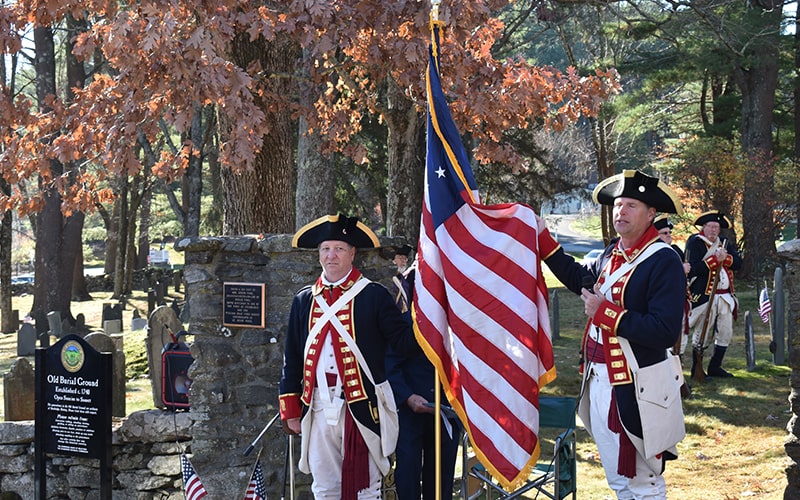
“We have a number of hotels ranging from beautiful boutique colonial style rooms to the Hampton Inns of the world, and then the traditional motels for the people who do driving trips with families who are looking for something a little more affordable,” details Grimm. “We have campgrounds, which have become very popular, and a lot of tourism comes in through campers who come for a week or two weeks or three weeks, and that goes right through foliage season.” Old Sturbridge Village, a living history museum replicating early 19th century farm life, is an anchor destination that draws visitors from around the country.
With more than 125 visitor and hospitality related businesses, and a very low vacancy rate, Sturbridge is among the top communities in Massachusetts for percentage of revenue derived from local hotel and restaurant taxes. “We very much are rooted in tourism. It is part of what makes us special,” Grimm acknowledges.
Connection and Community
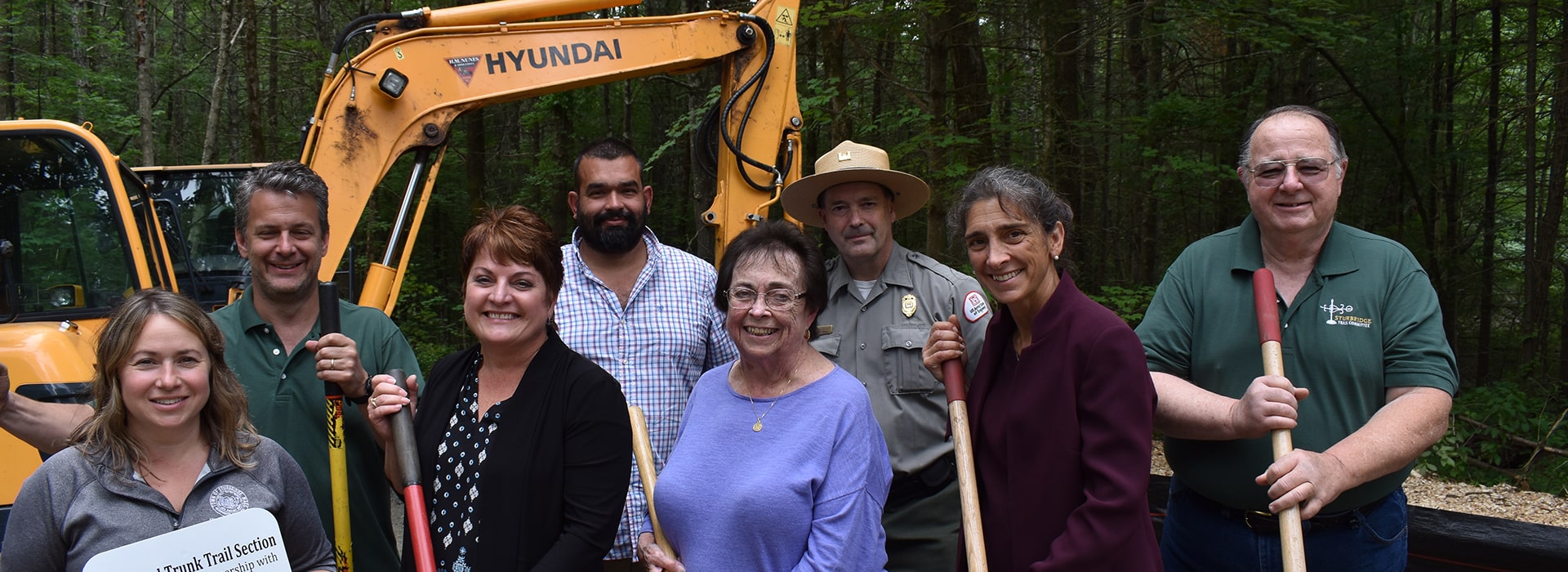
One of Sturbridge’s strongest assets is its miles of beautifully maintained trails. A newly updated guidebook and map helps visitors explore the growing system, and trailheads have been incorporated into the town’s tourism marketing.
Terence Masterson, Economic Development and Tourism Coordinator emphasizes, “Trails are an important part of the tourism package because it gives visitors an outdoor recreational outlet for biking, jogging, walking. We’re very happy to put the two together, especially when you’ve got entities trying to book events and meetings and public gatherings. It’s an outdoor recreational opportunity to offer people if they come to stay here for a series of days.”
The town is also home to creative endeavours that highlight its natural areas, including a new local initiative, the Acorn Longevity Project, inspired by a popular Block Island tradition. “We have a local pottery company that’s making giant acorns, about eight inches, and they’ve planted them along the trails,” Grimm elaborates. “You can register it on a website when you find it, and you can keep it. We’re very excited about it, to see who that brings in and from where.”
A key project supporting both tourism and local business activity is the 501 Main Street parking lot, with additional plans for a pedestrian bridge across the Quinebaug River in the near future. The new lot, combined with the planned bridge, would allow access to the river and the future Grand Trunk Trail system.
“It really is serving multiple purposes,” Grimm says. “If you go into the commercial tourist district at night and you visit our restaurants, you’ll see the parking lot is full. And we hope that eventually, we’ll find people parking there to take their bikes or just take a hike across the bridge and go walk on the beautiful trail system.”
Supporting Business and Industry
Along with a thriving visitor economy, and vibrant small businesses, Sturbridge has a strong base of light manufacturing, high-tech production, and medical instrument companies that anchor its local workforce. Bubon says, “It is extremely important for us to have those businesses locally and in the region. We have a very skilled workforce, and businesses want to be here, and they want to expand here.”
A major part of that success comes from the town’s coordinated and business friendly permitting approach. The planning department, conservation, building, public works, health department, and economic development, and public safety staff work closely together to keep the process predictable and efficient.
“We’ve realized that we really need to work with these industries as a team. And if we all get together in the same room, then it makes the process run much more smoothly,” Bubon says.
Pre-application review meetings help resolve issues early, and cross-department communication is standard practice. “All the staff get together once a month, and we talk about issues that are ongoing in regards to permitting,” she conveys. “We invite the applicants to come meet with us before they formally submit an application, so we’re able to iron out any glitches before they spend all that money and finalize all their plans and come to the boards.”
Grimm says it is this collaborative mindset that shapes the town’s “one stop” approach. “It really is a team effort, we just want to make this as easy as possible,” she relays, adding that Sturbridge often works with small and mid-sized developers who appreciate the ability to get information quickly.
“They’re sending their engineers along to do the work, and these guys are coming in, and basically they can get all their answers in one building in one day and decide if a project can even work.” The town also plays an important liaison role when projects involve state agencies like MassDOT, since so much development occurs along Route 20. “We try to be that middleman for those projects, to make it a little bit easier,” Grimm says.
Masterson emphasizes how this unified approach sets Sturbridge apart. When two recent companies explored relocation or expansion, the town brought partners to the table immediately. “We brought the state in along with us, and provided that company with a one stop presentation,” he notes.
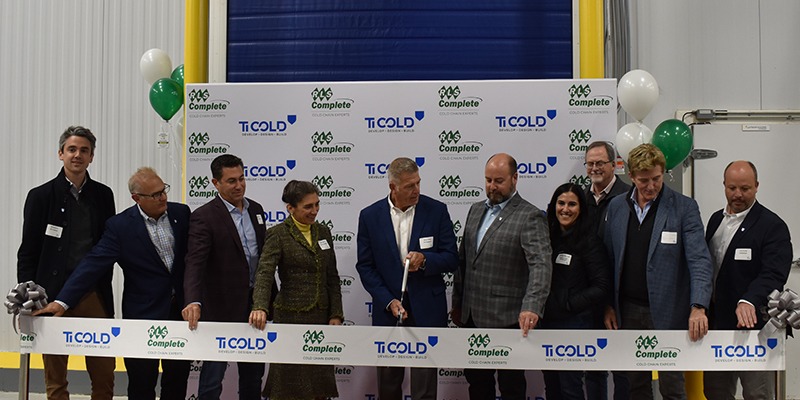
This coordinated process allowed the business to evaluate incentives, cost reductions, and abatements all at once. He outlines a recent project where a 40,000 square foot industrial building received all necessary approvals within months, and that past projects, including New England Cold Storage and CORE X, have also benefited from the town’s hands-on, collaborative approach.
When it comes to Tax Increment Financing agreements, Sturbridge remains selective, focusing on projects that bring strong employment benefits. “We do not take TIFs lightly,” Bubon says. “The difference in Sturbridge is that as fast as we have a piece of property, we fill it up. So, for the right project, for the right type of job creation, when it is that perfect chemistry, then I think we’ve been very agreeable to that.”
Planning for the Future
As Sturbridge looks ahead, supporting local enterprises through upcoming Route 20 revitalization will be a priority. Grimm says, “The next few years is really going to be a matter of assisting our small businesses as we work through a lot of these construction projects.”

From a planning perspective, the town’s goals will remain active and forward looking.
“Our plans don’t sit on shelves. We actually accomplish the goals,” Bubon asserts. Updating the master plan, pursuing redevelopment of a long-vacant mill property, and expanding affordable housing programs will all help to make sure that residents can continue to enjoy a high quality of life in Sturbridge.
“I think we’re doing a lot of things right,” Bubon concludes.
“I’d like to see things continue in that vein, as we keep preserving what makes us so unique and what creates the character that makes people want to come here and want to stay here.”
Click The Cover To View Or Download The Brochure
AT A GLANCE
Who: Sturbridge, Massachusetts
What: A vibrant town embracing progress and preservation
Where: Worcester County, Massachusetts
Website: www.sturbridge.gov
PREFERRED VENDORS/PARTNERS

Anderson Motors, Inc.: www.andersonmotors.com
Family-owned since 1964, Anderson Motors is New England’s trusted source for Blue Bird and Micro Bird products. With two generations of expertise, we deliver quality, service, and community commitment, supporting youth programs, local initiatives, and transportation leaders across the region. Anderson Motors continues to drive New England forward.