At the Heart of the Community
How This District’s K–8 Model Powers Whole-Child Learning, STEAM, and Sustainability
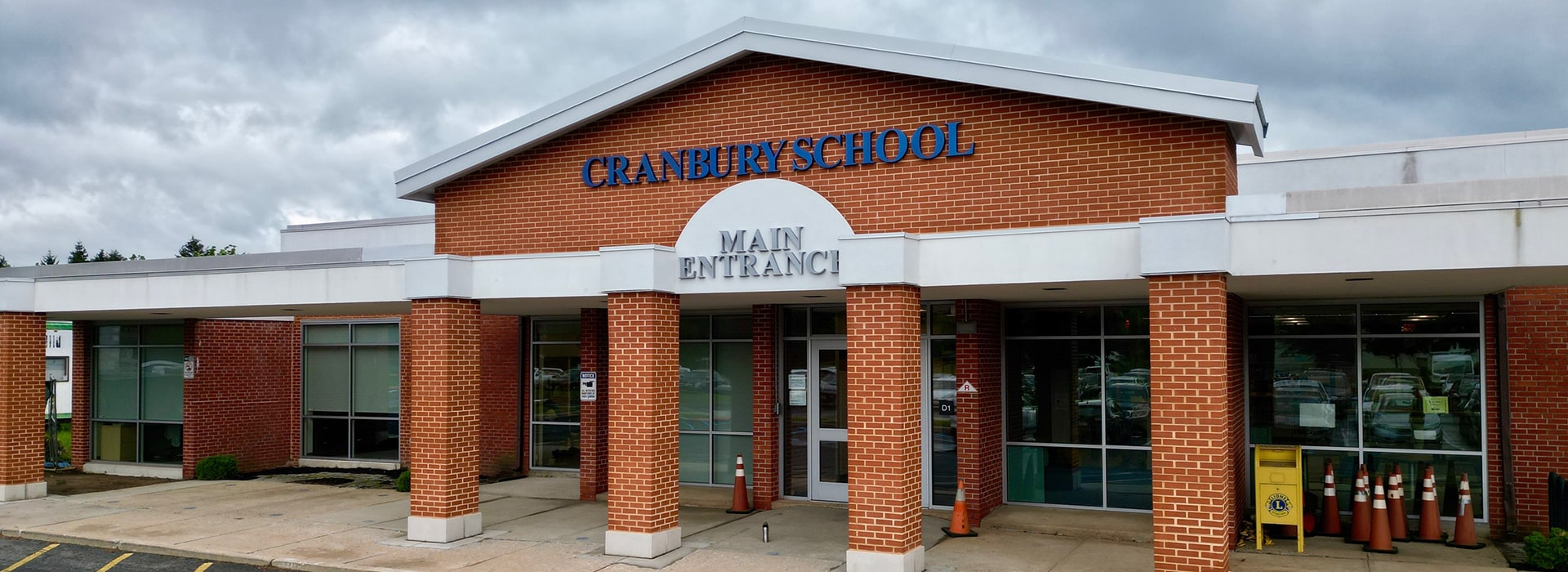
In Cranbury, New Jersey, the school is more than a building—it is the heart of the community. From pancake breakfasts to pumpkin festivals, graduation ceremonies, and civic gatherings, the K–8 Cranbury School remains a centerpiece of small-town life, where relationships, learning, and local pride converge. Superintendent Dr. Jennifer Diszler sums up the district’s guiding philosophy in a simple phrase: “Kids first, every day.”
“Every decision we make runs through that lens,” she says. “Cranbury School is physically and truly the heart of our community.”
With one building housing all students from Pre-kindergarten through eighth grade, Cranbury enjoys a unique advantage—a true sense of continuity. Teachers and staff know students by name and by story, following their academic and personal growth over nearly a decade. The result is an intimate, nurturing environment that allows for early intervention, smoother transitions, and stronger relationships.
Board of Education President Pramod Chivate calls the district’s governance “student-first, always,” noting that the board’s alignment around that principle has never wavered in his 14 years of service. “Everything we do,” he says, “is focused on what’s best for our students, and our community partners are part of that effort.”
This collaboration between school and town is central to Cranbury’s identity. Local events often take place on school grounds, community organizations volunteer alongside staff, and residents of all ages remain deeply involved. “It really does take a village,” Dr. Chivate says, “and in Cranbury, that village is alive and well.”
A Tradition of Excellence
Cranbury earned National Blue Ribbon School recognition in 2016, and as the ten-year mark approaches, the district is positioning itself for a return to that honor. Dr. Diszler emphasizes that the goal is not the accolade itself but the quality of the work that underpins it.
“We’re doing the right things for the right reasons,” she says. “Our efforts in curriculum, social-emotional learning, sustainability, and STEAM education create a culture of excellence. If that also makes us a strong Blue Ribbon contender again, all the better.”
That culture of excellence stems from intentional investment in both people and place. Following a successful referendum, the district launched its Full STEAM Ahead initiative, focused on modernizing learning environments while maintaining fiscal responsibility. Business Administrator Karin Weiner explains that rising post-2020 construction costs required creativity and careful planning, but the vision—to enhance student opportunity through updated facilities—never wavered.
“We worked hard to make sure these new spaces aren’t just beautiful but purposeful,” she says. “Each one connects to real instruction and hands-on learning.”
Learning Spaces That Inspire
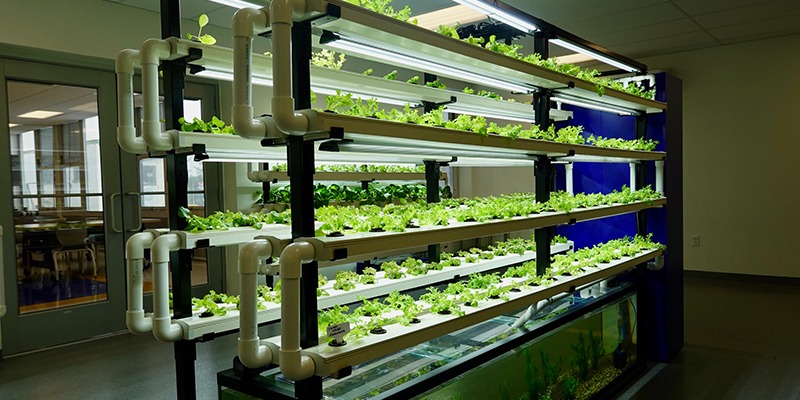
The referendum funded several transformative additions, including a dedicated STEAM Lab, Maker Space, Academic Commons, and updated aquaponics and hydroponics systems.
The STEAM Lab and Maker Space provide environments designed for experimentation and exploration, with materials and tools that allow students to design, prototype, test, and refine their ideas.
The Academic Commons reimagines the traditional library as a flexible hub for collaboration, research, multimedia production, and quiet reflection—a space that encourages teamwork while celebrating independent learning.
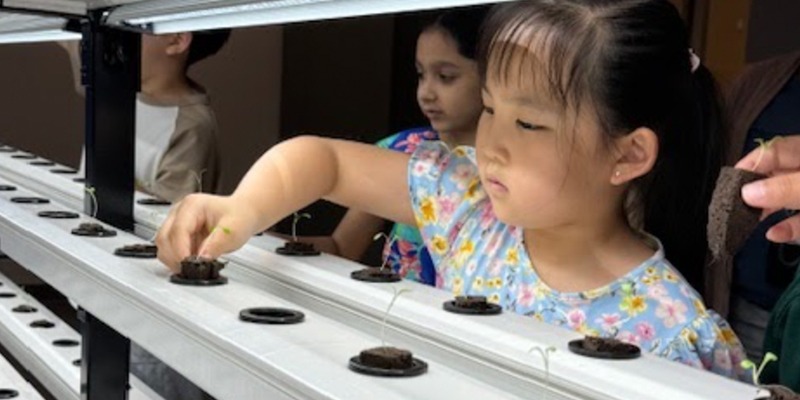
Meanwhile, the aquaponics and hydroponics installations offer students a living, hands-on science lab. Redesigned to be more accessible for younger learners, these systems let even kindergartners observe plant cycles, aquatic ecosystems, and the role of sustainability in daily life.
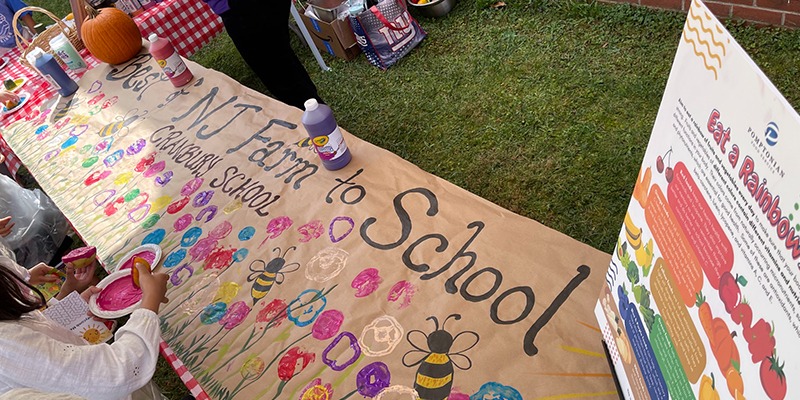
Weiner credits community partnerships and local philanthropy for helping bring these projects to life. The Cranbury Education Foundation provided financial support, while the district’s food-service partner found creative ways to incorporate student-grown produce into the cafeteria menu which ultimately led to winning Farm to School Award for the State of NJ. Facilities partners also helped the school achieve Sustainable Jersey Silver status through energy audits and efficiency planning.
From Kindergarten Coders to Eighth-Grade Engineers
While construction was underway, the district also began strengthening its curriculum to ensure the new facilities would translate into deeper learning. Supervisor of Curriculum, Instruction, and Assessment Shanna Weber describes this as a multi-year evolution designed to weave science, technology, and creativity throughout the K–8 journey.
Computer science now begins in kindergarten, where students learn basic computing concepts and use Bee-Bot robots to explore programming logic. They work in pairs—one as navigator, one as driver—learning the foundations of sequencing, testing, and problem-solving. By the upper elementary years, they progressed to block-based JavaScript coding and Ozobot programming on iPads, advancing to more complex design and coding in middle school.
Industrial arts and engineering form a parallel track, starting as early as kindergarten with projects that combine craftsmanship and problem-solving.
Students learn to use tools safely and build tangible projects like birdhouses and carousels before tackling physics-inspired challenges such as rubber-band cars and hot-air balloons. By eighth grade, the program culminates in a robotics course featuring LEGO Mindstorms and SeaPerch underwater robots, complete with 3D-printed custom components.
The district’s sustainability focus threads through every subject. Students study environmental systems through the aquaponics lab, test light cycles and nutrient systems, and participate in real-world projects that link science to community responsibility. A culminating elective, Sustainable Cranbury, serves as a capstone for environmental literacy and civic engagement.
“Our new spaces let kids do science,” Weber explains. “They’re designing, building, testing, failing, and trying again. The maker mindset now starts in kindergarten and continues right through robotics and sustainability in eighth grade.”
Relationships at the Core
If the STEAM initiative represents Cranbury’s innovation, its heartbeat remains the strength of its relationships. Dr. Diszler launched an initiative called “Every Student Seen,” which embodies the district’s whole-child philosophy. Faculty members review photo boards of every learner and mark their level of connection—from face and name recognition to academic knowledge to “I know this student’s story.”
“It was a powerful exercise,” Diszler recalls. “It showed us where we could build stronger relationships, especially with students who joined the district later. We used that insight to ensure every child feels known and valued.”
That spirit extends to the staff culture. Dr. Diszler describes her leadership approach as connected autonomy—the idea that teachers have freedom to innovate but remain anchored by collaboration. “People here don’t feel isolated,” she says. “They feel like they’re part of something larger.”
A Culture of Communication and Trust
Cranbury’s small-town character is built on transparency and consistency. Families know they will receive a Thursday newsletter from the school, while residents without children can subscribe to community updates that keep them in the loop. The district maintains strong partnerships with the Town Council, local police, public library, and Princeton Public Schools, where many Cranbury graduates continue their education.
Dr. Diszler also invests personally in community relationships. She visits senior groups, speaks at local events, and invites residents to tour the school to see how it has evolved. “Many of our community members grew up here,” she says. “They want to see how the school is changing while holding onto what makes Cranbury special.”
That sense of mutual trust is strengthened by a responsive Board of Education, which, according to Chivate, listens carefully to residents and keeps students at the center of every conversation. The result is a civic ecosystem where the school reflects the community, and the community reflects the school.
Looking Ahead
Over the next three years, Cranbury’s strategic priorities focus on four interconnected goals. The first is to deepen curriculum and instructional alignment across all new learning spaces, ensuring that STEAM, aquaponics, and the Academic Commons deliver measurable results and equitable access. The second centers on school culture and climate, emphasizing inclusivity, collaboration, and well-being for students and staff alike.
A third priority involves fiscal responsibility and facilities management—continuing energy-efficiency upgrades and preventive maintenance to sustain high-quality learning environments while managing rising costs. Finally, as enrollment grows, the district is committed to maintaining its small-town character by welcoming new families and preserving the close-knit culture that defines Cranbury.
“We’ll keep our ear to the ground,” Dr. Diszler says. “Cranbury is special. Our job is to protect that—and to help our students become the kind, resilient, community-minded people this town values.”
In a time when education often feels defined by scale and speed, Cranbury proves that small can be mighty. Here, relationships fuel innovation, spaces reflect purpose, and the heart of the town beats within the walls of its school—a community where every student, every story, and every opportunity truly matters.
Click The Cover To View Or Download The Brochure
AT A GLANCE
Who: Cranbury School District
What: A leading and community driven school district that puts its students first
Where: New Jersey, USA
Website: www.cranburyschool.org
PREFERRED VENDORS/PARTNERS
Drop the Beet Farms: www.dropthebeetfarms.com
Our mission is to inspire all individuals to engage in environmentalism, sustainable agriculture, and local food production through an interaction with living food. We pride ourselves in developing functional, visually stunning aquaponics and hydroponics systems that improve the aesthetics of any space. Farm Without Limits, and start growing sustainable food for your community!