Always Rooted in Community
How This Engaging School District is Aligning Career Readiness, Student Well-Being, and Regional Opportunity
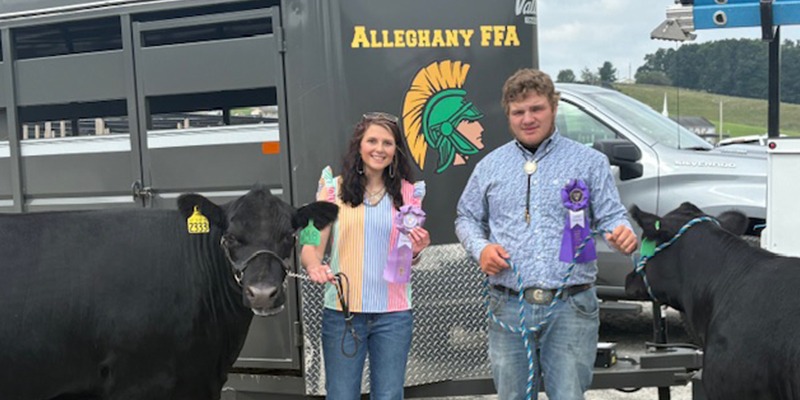
Nestled in the Blue Ridge Mountains of northwestern North Carolina, Alleghany County Schools serve as both an educational cornerstone and an economic driver for the region. With approximately 1,400 students across pre-K through grade 12, three elementary schools, and one high school, the district is also the county’s largest employer, deeply tied to the community’s agricultural heritage while actively building pathways into modern industries such as healthcare, energy, and skilled trades.
Superintendent Melissa Weaver describes the district’s identity as grounded in place. Alleghany County’s economy is shaped by cattle operations, Fraser fir Christmas trees, pumpkins, vegetable production, and forestry. Rather than separating education from that reality, the district uses it as a starting point for preparing students for life after graduation, whether that means a four-year college, a trade credential, military service, or direct entry into the workforce. The goal is both practical and long-term: develop the talent that will sustain the county’s future while helping students see the range of options available to them early.
Supporting the Whole Student
Weaver notes that Alleghany County Schools has taken a layered approach to student support, recognizing that learning outcomes are closely tied to mental health, belonging, and stability. The district provides counselors in all schools and offers telehealth options alongside contracted support from a community mental health agency. Guidance lessons and character education are embedded throughout the system, while additional school-based programs focus on helping students who are struggling or at risk.
Weaver also highlights that at the high school level, an “A Team” mentoring model connects students with adult support, strengthening relationships and contributing to strong graduation rates and low dropout numbers. District leaders note that teachers themselves play an essential role in this support network, often serving as mentors through consistent relationship-building and frequent communication with families.
Trojan TRAX: Mentorship as a Community Commitment
A defining initiative in Alleghany County is Trojan TRAX, a district-wide mentorship program sponsored by the Alleghany Educational Foundation. Beginning in eighth grade, every student is paired with a vetted community mentor-an approach that intentionally extends support beyond only at-risk learners. Mentors meet with students four times a year during the school day, helping them explore goals, career interests, and postsecondary planning, while also connecting students to school-based and external resources when needed.
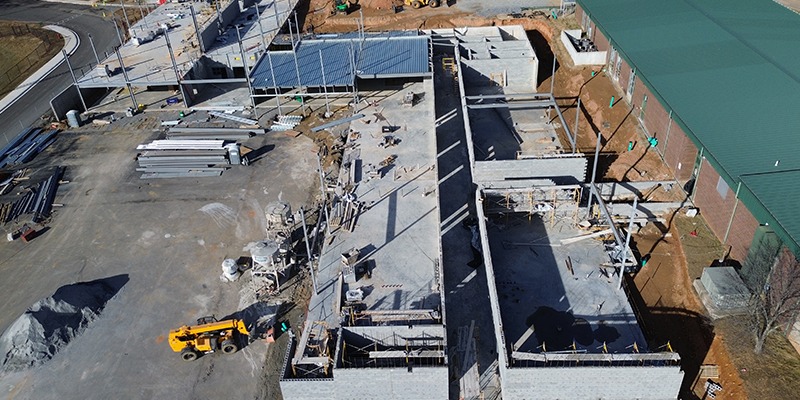
New state of the art high school is currently being built by J.M. Cope Construction
The program’s strength is continuity. Students now entering their junior year have been supported through multiple years of mentorship, allowing conversations to evolve from general aspiration to concrete planning around academics, testing, dual enrollment, scheduling, and future options. For a rural district, Trojan TRAX has become a powerful bridge between education and community investment.
Career Pathways Built with Local Industry
Weaver points out that Career and Technical Education is a central pillar of Alleghany County Schools’ strategy, and it is continuously shaped through ongoing collaboration with the community. The district holds business advisory committee meetings twice per year, along with pathway-specific departmental committee meetings, ensuring that programming remains aligned with workforce realities. This feedback loop supports two goals: meeting employer needs and helping students envision themselves building careers locally so they will return to the county after education or training.
Agriculture remains a cornerstone pathway, but the district has expanded trades programming aggressively in response to a generational workforce shift.
Career and Technical Education Director Dana Russell explains that many trades professionals in the area are reaching retirement age, creating an urgent need to develop new local talent. In a rural mountain region where it is difficult to attract large outside contractors, local trades businesses rely on skilled workers who can eventually take leadership roles or start their own companies.
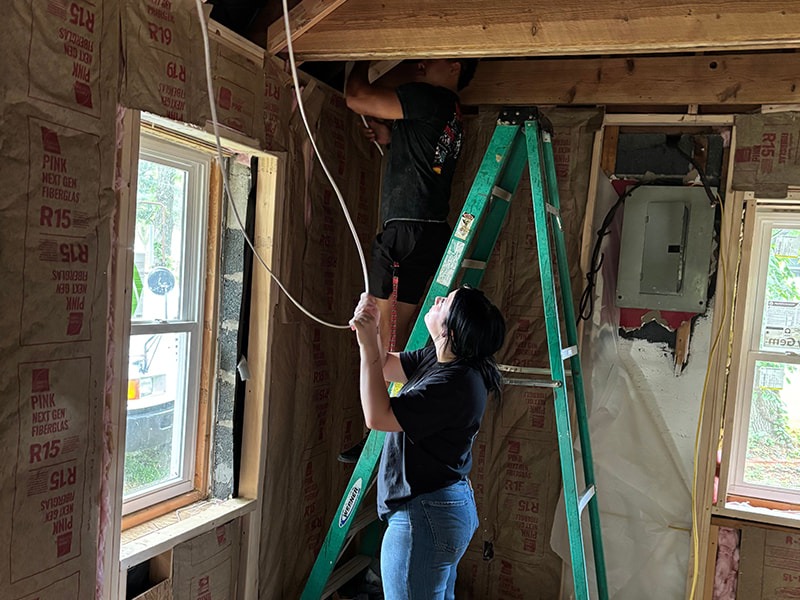
In response, the district expanded offerings beyond its strong carpentry and construction programming to include electrical training and, more recently, a masonry pathway launched last year. The masonry program has seen immediate student enthusiasm and early recognition, strengthened by the recruitment of an experienced former industry leader who transitioned into teaching. The district views these programs not as electives, but as strategic workforce development tied directly to the county’s long-term stability.
Dual Enrollment with a Unique Geographic Advantage
One of the district’s strongest postsecondary partnerships, Russell offers, is with Wilkes Community College, located close enough to the high school that students can walk to campus.
This proximity supports a robust dual enrollment model that allows students to earn college credits, certificates, and, in some cases, an associate degree while still in high school.
A key barrier to participation, cost, has been removed through support from the Educational Foundation, which covers textbooks, making dual enrollment effectively free for students. In addition to degree pathways, students can pursue short-term certificate programs aligned to workforce needs, strengthening employment readiness even for those who do not plan to pursue a four-year degree.
Russell notes that this model also allows the district to broaden offerings without overextending resources. When a program cannot be delivered at the high school due to cost, staffing, or scale, the community college partnership fills gaps. After the district lost a highly valued welding instructor and saw credentialing capacity reduced, Wilkes Community College expanded welding pathway access. The college has also added HVAC programming, allowing students to continue skill development in trades that the high school currently cannot offer in-house.
STEM, Technology, and Early Career Exposure
Alleghany County Schools is a one-to-one district, providing every student with a Chromebook, supporting both classroom integration and remote learning when needed. Technology is not treated as a standalone initiative, but as an engine that supports workforce preparation and applied learning across disciplines.
At the high school level, Technology, Engineering, and Design coursework includes hands-on exposure to modern tools such as 3D printing, and the district is actively building into drone technology as a growing element of instruction. STEM exposure also begins earlier through Paxton Patterson labs at the middle school level, supporting robotics and introductory career-technical experiences.
District leaders emphasize that these early exposures matter because they allow students to see career and technical learning as both relevant and attainable. In a rural system, the goal is to expand opportunity without disconnecting students from the local economy and the real jobs available around them.
Al: Moving Toward a Responsible Approach
Like many districts, Alleghany County Schools recognizes that artificial intelligence is becoming part of both education and the workforce. Leadership notes that teacher approaches currently vary, with some educators embracing AI as a tool while requiring students to demonstrate original thinking, and others resisting AI due to academic integrity concerns.
Rather than ignoring the issue, district leadership is exploring a more consistent strategy. There is interest in developing Al coursework within STEM and computer science pathways, paired with instruction on responsible and ethical use. The district’s position is pragmatic: Al is here to stay, and students need to understand both its potential applications and its risks.
Internships and Business Partnerships
Hands-on learning is reinforced through a strong internship culture supported by local businesses and organizations, Weaver outlines that seniors can pursue semester-long career internships, gaining workplace exposure, skill development, and professional context before graduation. These internships are viewed as critical learning experiences, regardless of whether a student’s next step is direct employment, trade school, community college, or a four-year program.
The district points to broad community participation in supporting interns, including healthcare organizations, physical therapy practices, manufacturers, utilities, automotive and tire businesses, media outlets, and government agencies. Some internships have become direct pipelines into employment, particularly in specialized local sectors such as veterinary services and large-animal care. The district is exploring additional pathways such as a vet tech program, reflecting both workforce needs and the region’s unique agricultural infrastructure.
Investing in Facilities for the Next Chapter
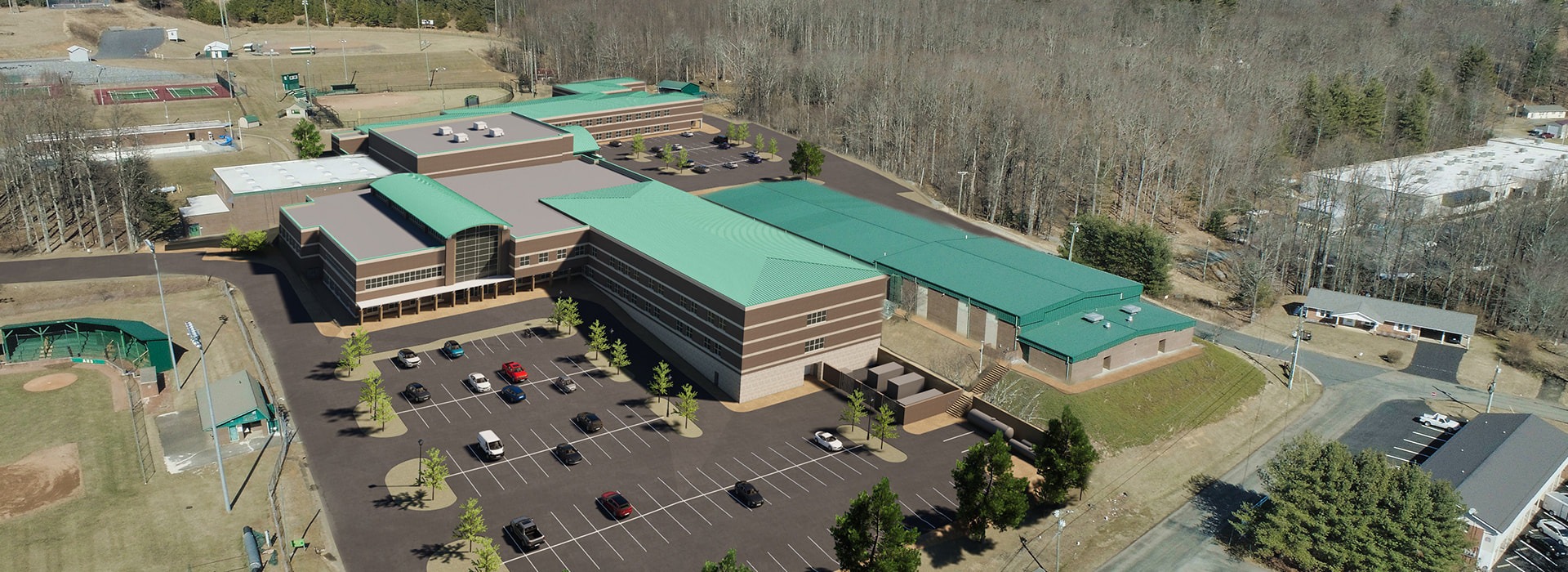
Weaver draws attention to the need to support these program expansions and points to a major capital project: the construction of a new high school campus in two phases. Phase one is projected to complete in March 2027.
Phase two, a dedicated Career and Technical Education building, is scheduled for completion in 2028. District leadership sees this investment as transformative, enabling expanded pathways, modernized learning environments, and stronger alignment with workforce development goals.
The community’s support for these investments is viewed as a critical advantage. District leaders emphasize that major projects are possible only when residents, stakeholders, and local organizations understand the long-term value of education as both a student success driver and a community sustainability strategy.
A District Built on Connection
Across mentorship, mental health supports, trades expansion, dual enrollment, STEM programming, and facilities investment, Alleghany County Schools reflect a cohesive strategy: prepare students for their next step while strengthening the community they call home.
With agriculture as its foundation and modern industries shaping its future, the district is building pathways that are both local and forward-looking, ensuring that students graduate with options, confidence, and a meaningful connection to where they come from.
AT A GLANCE
Who: Alleghany County Schools
What: A dedicated school district that is focusing on career tech expansion
Where: Alleghany County, North Carolina
Website: www.alleghanyschools.org
PREFERRED VENDORS/PARTNERS

NAPCO: www.napcousa.com
Family-owned since 1977, NAPCO USA manufactures innovative custom packaging for brands nationwide. For nearly 50 years, we’ve depended on strong public education to develop the skilled workforce that drives our success. We’re committed to supporting public schools as essential economic infrastructure for thriving communities.