Building a Student-First System for Workforce Readiness
Teacher Retention, STEM Expansion, and Community Leadership Partnerships are Shaping Suffolk’s Next Chapter
In Suffolk, Virginia, school improvement is not framed as a single initiative or a short-term campaign. It is a system-wide commitment anchored in one central principle: put students first in every decision. For Superintendent Dr. John B. Gordon III, that lens is not optional—it is the foundation of effective leadership, sustainable staff retention, and student outcomes that prepare graduates to compete in a rapidly changing economy.
“Too many times in education, decisions have been made for more of the adults than the students,” Gordon says. “That’s not the business we’re in.”
From student achievement and workforce readiness to capital investment and staff development, Suffolk City Public Schools is intentionally building a district that supports the whole child while also strengthening the community’s long-term economic future. Under Gordon’s leadership, the district is leaning into three priorities with clear urgency: deeper community partnerships, stronger teacher support and retention, and a K–12 STEM model designed to meet real workforce demand.
A Culture Built Around Staff Support and Retention
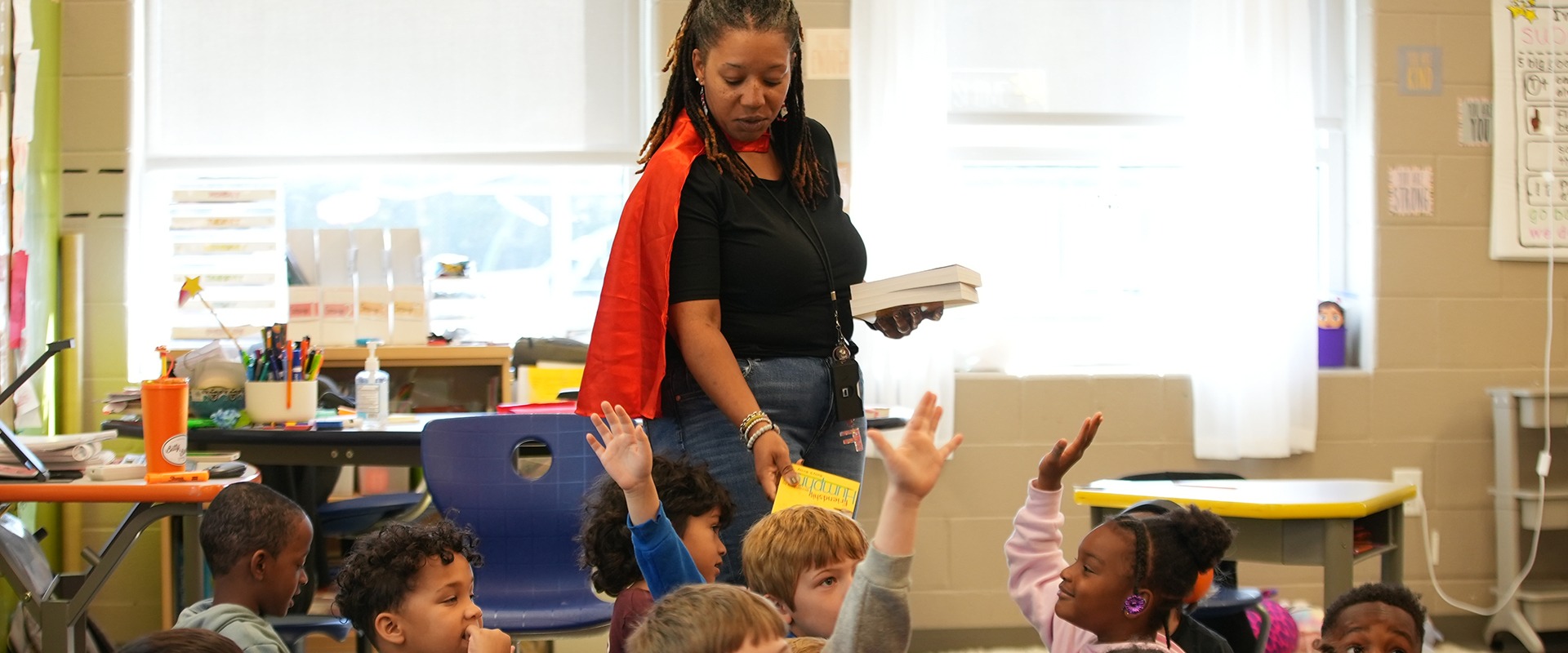
Like districts nationwide, Suffolk City Public Schools is confronting a reality that threatens student success more than any curriculum debate: staffing stability. Gordon points to research showing that nearly half of teachers leave the profession within the first three years. His response has been to build layered supports that help teachers grow, feel valued, and remain in the classroom.
One key addition is a new teacher development coach, a district-level position created to provide targeted coaching for early-career teachers, especially around classroom management. Gordon is candid about the gap many new educators face: classroom management is often not taught deeply in teacher preparation programs, and with the rise of career-switcher teachers, many new staff have not experienced traditional student teaching. The coach provides practical tools, strategies, and guidance that can make the difference between burnout and success.
Suffolk City Public Schools also supports teachers through mentorship structures within buildings, often pairing new educators with experienced colleagues and providing additional compensation for staff who take on that role. Beyond mentorship, Gordon emphasizes the importance of professional development that actually produces innovation. He strongly encourages conference participation, but with a clear expectation: teachers should bring back ideas that can be discussed and implemented, not simply attended and filed away.

Just as important is voice and accountability. Gordon holds monthly meetings with employee associations across staff groups, ensuring concerns are heard and communicated back with follow-through. He also makes these conversations visible to the school board, reinforcing a culture where feedback is not ignored or buried.
To further ensure teacher leadership remains central, Suffolk uses teachers as practitioners in district development work. Teachers help build pacing guides, develop curriculum maps, and contribute to instructional planning so the system reflects classroom reality rather than being driven solely from the central office.
Community Partnerships Treated as “Community Leadership”
Suffolk’s approach to partnerships is intentionally structured. Gordon refers to them as community leadership rather than casual partnerships because the expectation is not simply support, but participation in shared outcomes.
The district has established community leadership levels tied to contribution, and those contributions are measured broadly. A donation is not only a check; it can include school supplies, coats, boots, holiday gifts, or essential student supports, with each item assigned a dollar value. That model creates clarity for partners and allows the district to quantify return on investment through a simple metric: how many students were impacted.
At the same time, Gordon understands the brand effect. Successful organizations want to associate with success. In one of his earliest partnership moves, Suffolk signed agreements linked to Nike and Pepsi, providing brand-aligned visibility and building pride across schools and athletics.
The logic is straightforward: when students feel proud of their school identity and see respected partners attached to their system, it elevates culture, cohesion, and confidence.
That community leadership network extends into Career and Technical Education, student internships, and work-based learning—areas where employers increasingly recognize that the future workforce must be developed collaboratively.
Building a Sustainable K–12 STEM Model
Workforce readiness in Suffolk is being shaped through a district-wide STEM strategy that Gordon believes could become the first sustainable K–12 STEM model in Virginia, and potentially one of the most comprehensive in the broader region.
At the high school level, Suffolk has already built strong Project Lead the Way programs. Nansemond River High School offers Project Lead the Way engineering, while Lakeland High School offers Project Lead the Way biomedical. At the elementary level, Suffolk launched its first STEM Academy this year through a lab school partnership with the Virginia Department of Education.
Gordon’s STEM approach is intentionally developmental. In elementary school, it is exploration. In middle school, it becomes identification as students begin to see interests forming. In high school, it becomes specialization, with students developing clearer direction toward workforce entry or higher education.
This model is being driven by workforce signals. Partnerships with organizations such as Amazon, 21st Century Ed, and regional employers have made clear that STEM-related roles continue to go unfilled. Suffolk’s strategy is to provide early exposure and sustained opportunity so students can see what STEM careers look like long before they are forced to choose a path.

In practice, that includes robotics competitions, coding initiatives, 3D printing across multiple grade levels, and project-based experiences that connect learning to real-world challenges.
Gordon points to STEM camp examples where students design and code robotic solutions—such as building a “moonwalker” that must navigate obstacles through precise measurement and programming. These activities are not just engaging; they teach students how mathematics, science, and logic converge in the technologies that shape modern industry.
Technology as the Bloodstream of Instruction
Gordon views technology not as an accessory, but as the connective tissue of modern learning. It links classroom work to home reinforcement, supports collaboration, and helps students build digital citizenship skills that will be required regardless of career choice.
Suffolk uses a blended approach to curriculum resources, with roughly three quarters of textbook adoption digital and the remainder print-based for flexibility, accommodations, and accessibility. At the elementary level, Chromebooks are not sent home for the youngest students, but technology remains embedded in classroom practice through interactive environments, specialized tools, and structured learning platforms.
What matters most, Gordon emphasizes, is not the presence of devices, but how they are used to create dynamic learning environments that make school exciting and meaningful.
AI Integration: Capacity First, Then Implementation
Artificial intelligence is not treated as a novelty in Suffolk City Public Schools. It is treated as a permanent shift that must be approached thoughtfully. Suffolk participated directly with the Virginia Department of Education in generative AI work, sending nine team members through the process to build internal expertise. Those individuals then serve as district-level capacity builders, supporting teacher understanding and implementation across schools.
Suffolk also developed an AI policy aligned to state expectations, with a primary goal of eliminating false narratives. AI use is not automatically cheating; it can also be a legitimate tool for productivity, creativity, and problem-solving when used responsibly.
The district has invested heavily in teacher training on AI tools and prompt engineering, emphasizing that specificity and refinement drive quality outputs. The pitch to teachers is practical: AI can reduce workload by producing lesson frameworks, assessments, resources, and unit tests quickly—but educators remain responsible for judgment, alignment, and instructional integrity.
To support accountability, Suffolk is also implementing AI detection tools, allowing teachers to distinguish between student-generated work and AI-generated content. The district’s approach is balanced: embrace AI as part of modern learning while maintaining authenticity and critical thinking as core expectations.
Student Work Experience Through the STAR Program
Suffolk’s student engagement strategy includes direct work-based learning through its STAR Program, which allows juniors and seniors to apply for paid summer jobs within the school division aligned to student interests. Students have worked alongside electricians, locksmiths, food service professionals, communications teams, and other operational departments.
The program is intentionally structured as a professional experience, paying students above minimum wage and tying learning to real responsibilities. Gordon describes it as a pipeline builder—one that helps students see how their interests translate into careers, while also strengthening workforce awareness within the community.
Student engagement is also reinforced through expanded activities such as esports and other student-led clubs. Gordon links these opportunities directly to attendance and achievement: more engagement leads to less chronic absenteeism, which leads to stronger learning outcomes.
Capital Investment with a Focus on Replacement, Not Renovation
Facility investment remains one of Suffolk’s most demanding priorities. Gordon notes that many school buildings nationwide exceed their intended lifespan, and Suffolk has faced the realities of aging infrastructure firsthand. One of the most urgent examples has been John F. Kennedy Middle School, which had been delayed as a major project for roughly two decades while dealing with serious structural and water intrusion issues.
That changed through a layered funding strategy. The city committed $53 million. The district secured a $15.6 million state construction grant. Suffolk then redirected funds that had been planned for administrative renovation to the JFK project, bringing the total investment to roughly $75 million—while the district itself contributed a significant share through creative reallocation and prioritization.
The new John F. Kennedy Middle School is scheduled to open in the fall, with additional projects already moving forward. Northern Shores Elementary is set for expansion, and the district is finalizing site acquisition for a new Elephant’s Fork Elementary School. Suffolk is also addressing the long-term overuse of mobile units, some of which have been in place for decades beyond their intended lifespan.
Gordon’s philosophy is clear: schools should be replaced when they are no longer viable, not endlessly patched. Preventive maintenance matters, but long-term facility strategy is essential if the district is serious about student achievement and safe learning environments.
Looking Ahead: Teacher Pipelines, STEM Scale, and Keeping Focus on Students
Over the next two years, Suffolk City PublicSchools’ priorities remain anchored to the fundamentals. Recruitment and retention will require continued innovation, especially in hard-to-fill positions such as special education, math, and science. STEM expansion will continue across K–12, with increased alignment between school programs and real employment opportunities, including internships that lead directly to workforce entry.
Gordon also notes a broader challenge: keeping political extremes from disrupting the core mission of education. He believes schools must remain focused on student achievement, supportive environments, and well-rounded development—ensuring classrooms remain spaces of learning rather than battlegrounds of ideology.
Ultimately, Suffolk’s direction is driven by consistency. Students first. Strong staff support. Real partnerships. Modern tools. And clear pathways from school to career.
For Suffolk City Public Schools, that is not just a plan. It is the expectation.
AT A GLANCE
Who: Suffolk City Public Schools
What: An innovative and student centered school district focusing on academic achievement and career tech readiness for the jobs of tomorrow
Where: Suffolk County, Virginia
Website: www.spsk12.net
PREFERRED VENDORS/PARTNERS

Darden College of Education and Professional Studies at Old Dominion University: www.odu.edu/education
Nestled in Norfolk, Virginia, the Darden College of Education and Professional Studies is part of Old Dominion University, an esteemed R1 research institution. We are committed to inclusivity and high academic standards, and we aim to nurture future leaders across our programs, ranging from innovative teacher education to diverse professional studies.
