The Bulldog Learning Legacy
Community-Driven Education That Prioritizes Student Success
United by a shared Bulldog mentality, Yale Public Schools have built a district culture defined by resilience, community pride, and a clear vision for student success. Stretching across 11 townships in Michigan’s Blue Water region, the district balances its rural footprint with a unified identity that brings families, educators, and students together with remarkable consistency. Yale has long been known as a place where students feel supported both academically and personally, and that reputation continues to drive the district’s strategic direction.
Superintendent Kurt Sutton explains that the district’s philosophy centers on meeting students where they are and providing every opportunity for them to grow. “Our mission is student-focused,” he says. “We work to meet students where they are and help them realize their potential to what they could become. We want to give kids the tools, opportunities, and resources to realize that potential.” Much of that culture is upheld by staff who were once students themselves, creating a multigenerational thread of mentorship and pride. This continuity, Sutton says, reinforces the belief that Yale is not just a place to learn—it’s a place to belong.
Unity Across Rural Communities
Although the district spans a large geographic area, its sense of community is strikingly strong. Sutton notes that, even though each municipality has its own identity, the Bulldog spirit unifies families across the region. School facilities often serve as community gathering spaces, from local festivals to athletic events, and the partnership between the district and residents is woven into daily life. Sutton sees this as one of Yale’s greatest strengths: no matter the distance between households, the community consistently shows up for its students.
High School teacher, coach, parent, and alumnus Brian Bearss sees that commitment firsthand. “You can’t find a person in Yale that doesn’t have a close connection to the district,” he says. “When we travel for athletics, band, or even a mock trial, people always remark on how well Yale travels. There are almost always more Yale parents and fans there supporting our kids.” In a rural district where access to extracurriculars and community engagement can be challenging, this level of collective support is not just rare—it’s defining.
A New Foundation for Student Enrichment
A significant step forward for the district is the creation of the Yale Education Foundation, founded in May 2025. Dr. Elizabeth Kersten, Secretary of the Foundation and a Yale alumna, describes its mission as expanding access to enrichment opportunities beyond the general fund. The goal is simple but powerful: provide all students—not just some—with experiences that deepen learning and broaden horizons.
“We hope to supplement activities that benefit all students—things not covered in the general fund,” Dr. Kersten says. “We want to give students opportunities outside the classroom that shape how they see themselves as part of our school and community.” Building on the success of the existing Dupont Family Endowment, the Foundation will help extend enrichment beyond the high school to all grade levels.
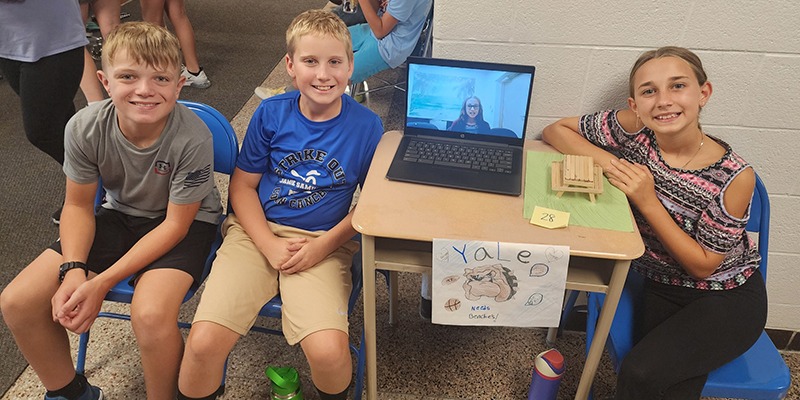
Bearss shares examples of how the Dupont Family Endowment has already transformed the student experience. E-sports has created a sense of belonging for students who may not otherwise participate in extracurricular activities. Science classes have acquired advanced equipment, such as a new telescope, and unique learning projects—such as maple syrup production—have connected students to hands-on, place-based learning. A standout moment came when the science club traveled to Ohio to view the total solar eclipse, an experience that students still describe with excitement. “It was one of those moments that changed how they see the world,” Bearss says.
Dr. Kersten hopes the Foundation will grow into a sustainable pillar of support. “Our dream is to grow this for our grandkids and great-grandkids,” she explains. “We want Yale to remain the place we want to come back to.”
Keeping Students Connected
Serving students across 11 townships means navigating transportation challenges, long distances, and varying access to after-school opportunities. But instead of becoming a barrier, this reality has strengthened Yale’s sense of shared identity. Bearss notes that the school system is likely one of the largest employers in the region, meaning nearly every family has a connection to the district through work, alumni ties, or community involvement. This cohesiveness allows the district to remain a central, unifying presence even as families live miles apart.
Virtual learning remains available when necessary, but Bearss sees a consistent desire for in-person instruction. “Our kids want to be with our teachers in our schools,” he says. The relationships students build—both with educators and each other—are a defining part of the Yale experience.
Technology with Purpose
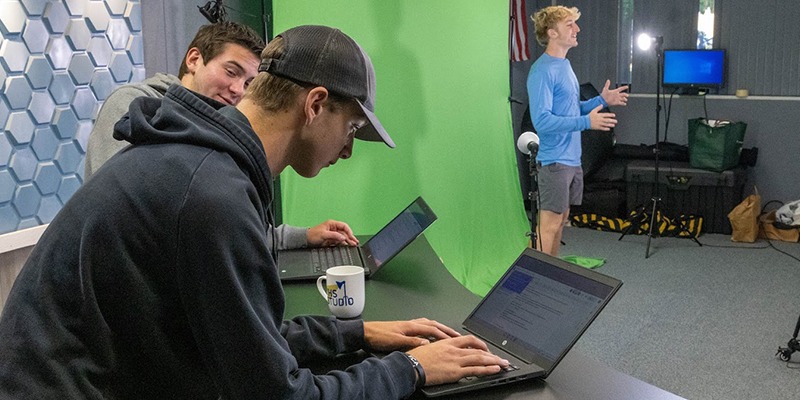
Technology at Yale is adopted with careful intention. Junior High School Principal Adam Nelson emphasizes that teachers, not tools, remain at the core of the learning experience. “We use technology to enhance instruction, not replace it,” he says. Teachers blend videos, multimedia resources, and collaborative platforms to create dynamic lessons, while students use Chromebooks to research, create content, and develop digital citizenship skills.
Artificial intelligence is becoming a powerful instructional support system. “Teachers are learning to use AI well,” Nelson explains. “It can help generate ideas, create resources, and reduce workload. And because we know students are using it, we’re figuring out how they can use it responsibly.” During professional development, teachers even built their own classroom bots—an exercise that helped them explore how AI can be used ethically and productively.
Nelson believes that, when used appropriately, AI can support students almost like a digital tutor. “If used appropriately, AI can help students process information while the teacher works with others,” he says. Rather than replacing human instruction, AI provides additional pathways for students to access help, review material, and deepen understanding.
STEM, STEAM, and Career Exploration
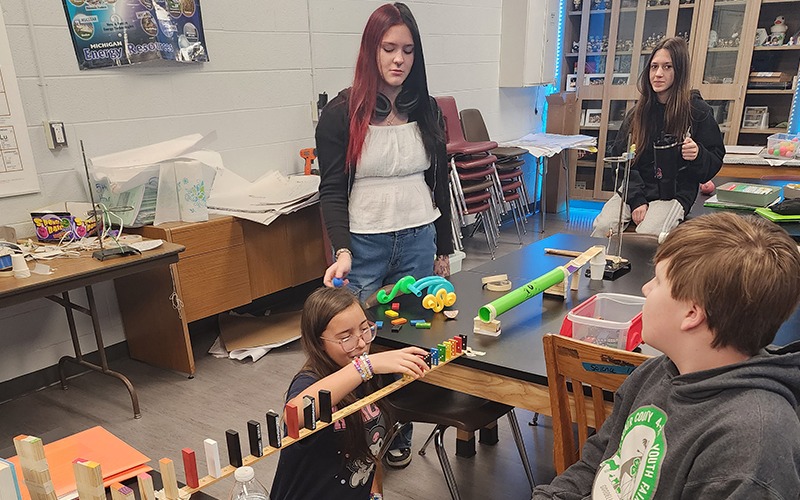
Yale’s approach to STEM and STEAM blends creativity, hands-on learning, and real-world application. Nelson highlights the district’s focus on computational thinking—teaching students how to break down complex problems, identify patterns, design processes, and recognize systems. These skills are essential across fields, from computer science to engineering to business.
At the high school level, Bearss sees students discovering new passions through practical projects. He points to an engineering project in advanced physics where students design, test, revise, and present prototypes. “Since we started this, more students pursue engineering degrees,” he says.
“Many don’t have engineers in their families, but the hands-on experience sparks that interest.” In a rural district where exposure to high-tech careers can be limited, these opportunities open doors that students may not have otherwise imagined.
Building Workforce-Ready Skills
Career and technical education is a significant strength of the district. Through St. Clair-RESA Tech, students explore fields from cybersecurity to building trades and law enforcement. Sutton explains that career exploration begins early, so students can identify interests before committing to a pathway, helping them make informed decisions with confidence.
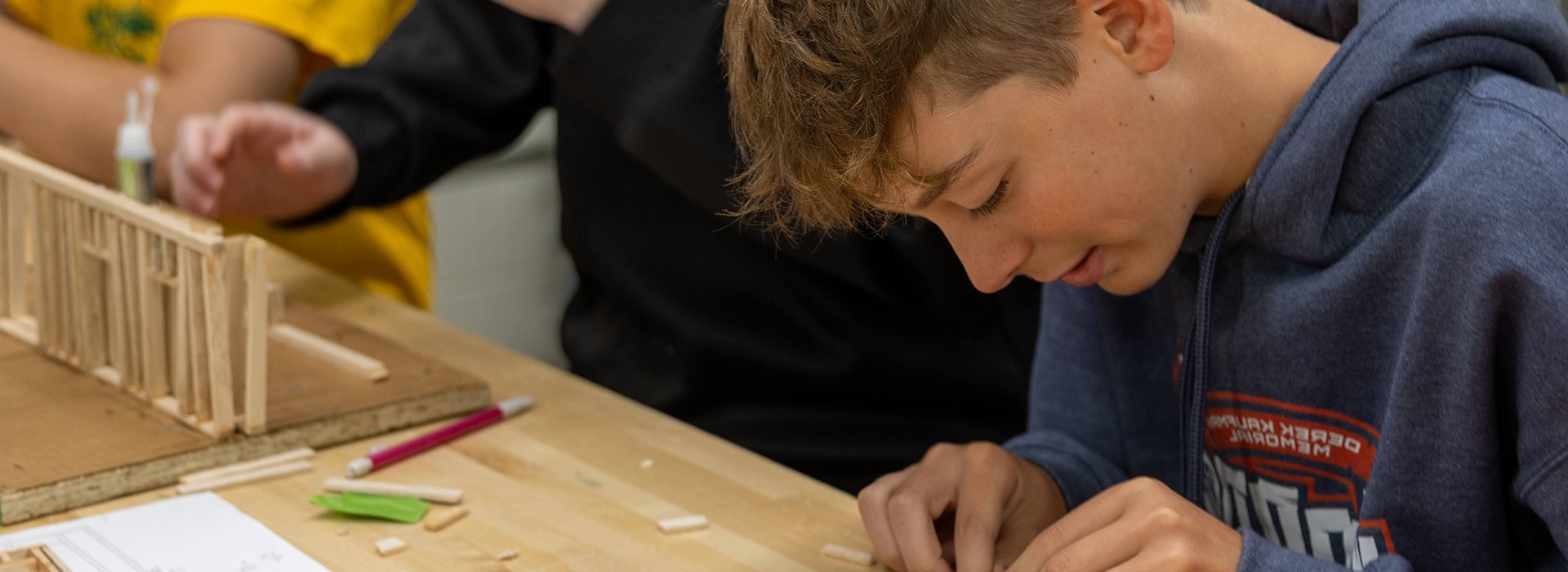
One of Yale’s standout programs is Geometry in Construction, a two-hour block where students apply geometric concepts to real construction projects. From deer blinds to storage units for the early childhood center, students experience the practical value of mathematical thinking while building teamwork, problem-solving, and trade skills.
Dual enrollment is also expanding, supported by Yale teachers who serve as SC4 adjunct professors. Students can take college courses in person at the high school—a major advantage in a district where long commutes can limit access. “One of our goals is removing barriers for kids,” Sutton says. “Having our staff teach dual-enrollment courses in person gives more kids access.”
The district is launching a Senior Interview Expo, giving students mock interviews with local businesses and community leaders. Some employers have already expressed interest in making real job offers to standout students. Bearss sees the event as a powerful opportunity to demonstrate both the labor shortage and the preparedness of Yale students.
Prioritizing Safety and Modern Learning
Safety remains Yale’s top facility priority. The district has been steadily adding secure vestibules to all buildings, with the final installation scheduled for completion next year. Long-term infrastructure improvements funded through a 2021 bond have addressed HVAC systems, roofing, and essential maintenance, ensuring buildings remain safe, efficient, and conducive to learning.
Looking ahead, a potential 2026 bond could support HVAC modernization at the high school and possibly fund a major capital project, such as a field house, auditorium, or a combination performance and athletic facility. Sutton emphasizes the importance of stewardship. “We’ve been fortunate that the community has entrusted us with funds,” he says. “We want to show we’re good stewards of that investment.”
A Vision for the Next Two Years
As the district plans for the future, Sutton explains that the Portrait of a Learner will guide academic and cultural priorities. The framework focuses on the traits employers and colleges consistently seek—communication, collaboration, adaptability, citizenship, and critical thinking. “The jobs that will pay well in five years might not exist today, but these skills will prepare students for anything,” he says.
Nelson anticipates stronger industry partnerships and expanded hands-on learning opportunities, while Bearss highlights upcoming academic shifts, such as the move to honor Top Scholars rather than naming a single valedictorian. He also sees microcredentials becoming increasingly valuable, giving students verified evidence of skills they can bring to employers or admissions offices.
Dr. Kersten emphasizes that the Yale Education Foundation aims to become a long-lasting contributor to student success. “We want to help more students for generations to come,” she says. “We’re here because the people around us are rooting for our kids.”
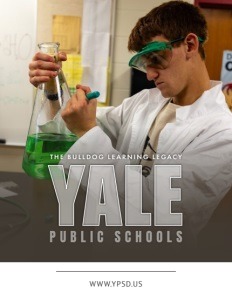
Click The Cover To View Or Download The Brochure
AT A GLANCE
Who: Yale Public Schools
What: A community-focused district dedicated to providing high-quality education, supportive learning environments, and diverse opportunities.
Where: Located in Michigan’s Blue Water region, serving students across 11 rural townships in St. Clair and Sanilac counties.
Website: www.ypsd.us
PREFERRED VENDORS/PARTNERS

Tri-County Bank: www.tri-countybank.bank
Tri-County Bank believes in genuine hometown banking—personal service, local commitment, and strong community values. We prioritize customers, teamwork, and meaningful involvement in the places we all call home. Whether you’re reaching milestones or planning ahead, we provide flexible support and lasting partnership for your financial future.
C Roy Inc.: www.yalebologna.com
C Roy Inc began 101 years ago as a small downtown butcher shop founded by Cecil Roy. Today the legacy continues with Cecil’s youngest son Richard and his family operating the business. We continue to make our famous Yale Bologna and proudly honor our heritage, community and strong support for Yale Public Schools.