Student Opportunity as Strategy
How a Small K–8 District Is Rebuilding Achievement, Expanding Career Pathways, and Reinforcing Community Pride
For Superintendent Dr. Scott, the work of education is not abstract. In the district he leads, the West Harvey-Dixmoor Public School District, the mission is rooted in one reality: for the students served here, education represents the clearest pathway to changing life outcomes.
That belief shapes the district’s priorities, from rebuilding academic performance to expanding Career and Technical Education opportunities that create real options for young people—whether those options ultimately lead to college, skilled trades, entrepreneurship, or direct workforce readiness.
Dr. Scott frames the district’s core values around exposure and opportunity. His goal is to give students access to as many meaningful pathways as possible, recognizing that learning is not one-size-fits-all. That includes differentiated instruction to support different learning modalities, but it extends further into a broader strategic view of what students need in today’s economy. Not every student is destined for a traditional college route, he explains, and the district is working to build career-focused experiences that allow students to “chart their path forward” with purpose rather than guesswork.
A Community That Has Changed, and a District That Remains
One of the defining dynamics in this district is the contrast between what the community once was and what it has become. Dr. Scott describes a place that, within his lifetime, shifted dramatically. Where there was once thriving industry, a commercial corridor, and a regional mall, there is now little economic infrastructure remaining.
The municipality itself has faced serious strain, including public discussion about the possibility of receivership. In that context, the school district has become more than an education provider. It is one of the most stable institutions left, fiscally sound and capable of acting as a community anchor.
That stability matters because it creates the foundation for rebuilding outcomes. Dr. Scott was brought in with a clear mandate: improve academic performance, strengthen staffing stability, and develop meaningful CTE programming that reflects the current reality students are living in.
Solving the Teacher Shortage Through International Recruitment
When Dr. Scott arrived, one of the challenges was staffing, including a heavy reliance on substitute teachers. To stabilize classrooms, the district moved aggressively on international teacher recruitment, leveraging a model Dr. Scott successfully implemented in prior districts.
His approach began years ago after recognizing that traditional teacher recruitment pipelines had dried up.
University job fairs were no longer producing enough candidates, and districts were being forced to find creative solutions. Dr. Scott explored J-1 visa programs and piloted international recruitment with two teachers. When it worked, the model scaled, eventually bringing more than 20 licensed international educators into classrooms.

He describes the benefits as immediate and multi-layered. International teachers often arrive with strong pedagogical preparation and real classroom experience, offering students stable instruction while improving overall quality of teaching.
The model also creates cultural exposure, expanding student awareness beyond their local environment. At the same time, Dr. Scott notes an important learning curve: behavior management in U.S. classrooms can be a significant shift for international teachers, requiring targeted professional development in discipline systems and student behavior norms that many educators from other countries have never had to navigate.
International recruitment also introduces unexpected operational realities. Districts become, in Dr. Scott’s words, part school system and part relocation support network. Incoming teachers need housing, Social Security setup, and basic stability in a new country. The district has had to coordinate those logistics to successfully place educators into classrooms and keep the pipeline functioning.
Rebuilding Social Skills Through SEL and Restorative Practices
As staffing stabilizes, the district is also addressing a challenge that is increasingly common nationwide: social and emotional skill gaps. Dr. Scott describes a student population shaped by trauma and normalized instability—conditions that limit the effectiveness of traditional discipline and consequence-based approaches.
In his words, “you can’t scare them,” and suspending students often creates greater risk because school may be the safest environment they have.
To address this, the district has embedded social emotional learning into the school day and has intentionally invested in restorative justice practices. Peace circles and conflict-resolution approaches are being used to teach students how to navigate disagreement, regulate emotion, and resolve conflict in healthier ways. Dr. Scott points directly to the role of social media and pop culture in shaping behavior, noting that schools are often left managing the fallout from weekend conflicts that spill into the building on Monday morning.
In this environment, the district is focusing on culture and climate intentionally, recognizing that achievement cannot be separated from emotional regulation, safety, and student belonging.
Career Technical Education as an Engagement Tool
For Dr. Scott, CTE is not just workforce development. It is also a strategy for engagement and attendance. He describes a proven model from prior districts where students were offered structured electives such as barbering, cosmetology, culinary arts, music production, STEM, and agriculture. The impact, he explains, was twofold.
Students gained real skills and exposure to careers, and they also gained motivation to show up, behave, and complete core academic work because participation in those pathways became a privilege tied to expectations.
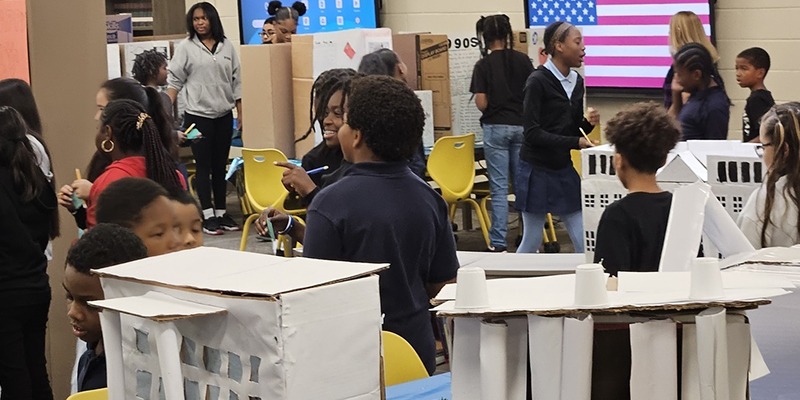
When students are excited to be in a program—cutting hair, learning production, building a project, cooking in a kitchen—they will often do what is necessary to keep that opportunity. Dr. Scott views that as a powerful lever in communities where traditional academic incentives may not be enough on their own.
The district is now building toward that next phase. CTE expansion is expected to begin moving forward in the spring as budget planning is finalized. Dr. Scott has been transparent with the board about startup costs, particularly the infrastructure needed for programs like barbering and cosmetology, where the largest investment is not instruction but the physical buildout of chairs, mirrors, stations, equipment, and compliant learning space. Other pathways, such as agriculture, are less expensive to launch, and culinary arts is more feasible given existing kitchen facilities already in the district.
The larger goal is to launch several programs quickly and build momentum, creating a pipeline of engagement and opportunity that can grow over time.
Capital Outlay: Infrastructure First, Then Expansion
The district’s capital priorities reflect both opportunity and constraint. On one hand, Dr. Scott is preparing to bring a set of CTE programs to the board for approval and funding. On the other, he is navigating legacy infrastructure issues tied to earlier work that must be corrected before the district can move forward confidently. In his words, he is sometimes forced to “go backwards to go forwards,” addressing workmanship and building-condition issues so classrooms remain comfortable, functional, and visually supportive of learning.
Another major capital initiative involves a facility that is both symbolic and community centered: an Olympic-size swimming pool located in the middle school. The pool once served not only students but the broader community, and it has been closed for roughly a decade. The board challenged Dr. Scott secured funding to reopen it, and he has made meaningful progress.
The full renovation cost is estimated at approximately $1.7 million, and a local senator—who learned to swim in the same pool as a child—has earmarked $1 million toward the project. Dr. Scott is now working to close the remaining gap and bring the pool back online as both a student resource and a community asset.
Security as a Daily Operating Reality
Like districts across the country, security has become part of daily leadership. Dr. Scott describes safety planning as constant, including vestibule improvements, daily building checks, shooter drills, and a working relationship with local law enforcement. In a reflection of local pride and connection, the police chief is also a graduate of the district, one of many examples Dr. Scott cites of how tightly interwoven the school system and the community remain.
Safety, he emphasizes, is no longer a general concept. It has become specific, operational, and persistent.
Reinforcing Identity Through Community History
One of the most compelling initiatives Dr. Scott shared is a project rooted in rebuilding pride. Recognizing that students often only know the community as it exists today, he plans to create a living “museum” experience centered on the town’s history, including the factories, downtown businesses, and commercial anchors that once defined the area.
Using archival photos and publicly available images, Dr. Scott intends to build a chronological visual experience for families during Black History Month, helping students see that their community once looked very different—and can aspire to rebuild.
In a district where local pride runs deep, that project is designed to do more than teach history. It is meant to restore belief.
Looking Ahead
When asked where he will focus the most energy over the next 18 to 24 months, Dr. Scott’s answer is direct: student achievement and Career Technical Education. Academic performance remains a top priority, alongside the development of pathways that build engagement, practical skills, and real opportunity.
Because the district serves K–8, collaboration with the high school district is also part of that forward plan. Dr. Scott has begun conversations with the high school superintendent about expanding cross-district opportunities, building on an existing model where advanced eighth-grade math students already travel to the high school for algebra. The goal is to explore what additional access and exposure could look like, helping students begin benefiting earlier from pathway opportunities that extend beyond the K–8 setting.
In a challenging community environment, this district is moving with purpose. By stabilizing staffing, strengthening SEL and restorative practices, rebuilding safety systems, launching meaningful career pathways, and reinforcing community pride through history, Dr. Scott is positioning the school system not only to improve outcomes—but to help students believe in what’s possible.
AT A GLANCE
Who: West Harvey Dixmoor Public School District
What: A growing and student focused school that is preparing students for job ready success
Where: Dixmoor, Illinois
Website: www.whd147.org
PREFERRED VENDORS/PARTNERS

Children’s Habilitation Center: www.childhabcenter.com
Children’s Habilitation Center is a nationally recognized leader in long-term pediatric habilitative care, providing highly specialized medical services, integrated therapies, and education for medically complex children. Through clinical rigor, compassionate leadership, and advocacy, CHC delivers a sustainable model of care for children traditional systems are not designed to serve.