Northern Ontario’s Gateway to Growth
How an Older Facility Transformed into a Vital Economic Engine Connecting Remote Communities and Driving Regional Prosperity.
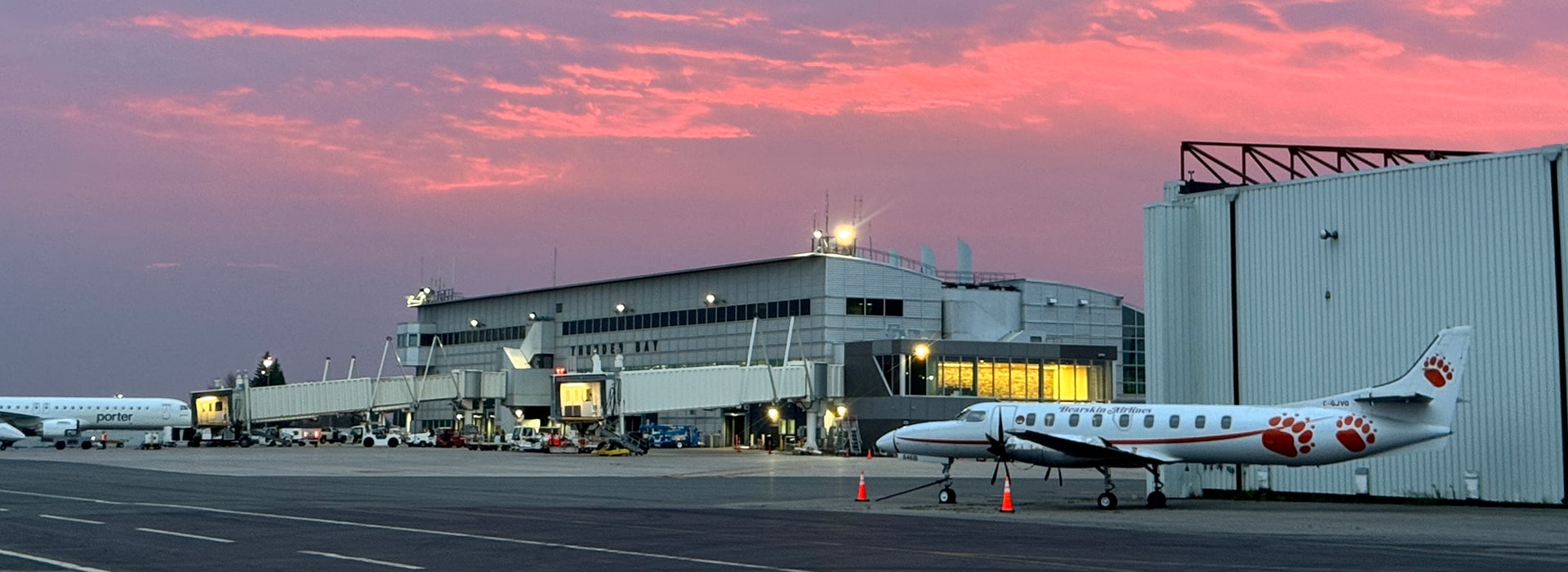
High above the northern shore of Lake Superior, where the Canadian Shield meets one of the world’s busiest grain corridors, Thunder Bay International Airport handles more than 90,000 aircraft movements annually. Originally built as Fort William Municipal Airport in 1938 to relieve Depression-era unemployment, the facility has evolved into Ontario’s fourth-busiest airport and a critical gateway for Northwestern Ontario’s 123,000 residents.
Ryan Brading, Director of Airport Operations, oversees a complex dual-runway system that serves everyone from student pilots to international carriers. “We have a precision approach runway, 07-25, which is 7,318 feet in length, and runway 12-30, our crosswind runway at 5,297 feet,” he explains. Both runways received Transport Canada-mandated Runway End Safety Areas within the last decade, enhancing the airport’s already robust safety infrastructure.
The passenger mix tells the story of Thunder Bay’s dual role as regional hub and remote lifeline. WestJet, Air Canada (including Rouge and Jazz Aviation), and Porter Airlines provide scheduled jet service, while regional carriers Bearskin Airlines, Perimeter Aviation, North Star Air, and Wasaya Airways connect 28 Northern Ontario communities that lack year-round road access.
“We provide service up to regular Airbus A321 and Boeing Max aircraft, and we’re prepared to receive larger aircraft up to 767-300 for diversions,” Brading notes. Seasonal charter flights to Mexico, the Dominican Republic, and Cuba see peak demand when temperatures plunge to 40 below. The airport also hosts Confederation College’s Aviation Centre of Excellence, a 59,000-square-foot facility voted best aviation college by Aviation Canada, whose 13-aircraft training fleet significantly boosts the airport’s movement statistics.
Economic Gateway for Northern Ontario
Thunder Bay International Airport functions as more than a transportation hub. As the westernmost port on the Great Lakes-St. Lawrence Seaway system and home to Canada’s largest grain storage facilities, the city relies on air connectivity to support industries ranging from forestry to advanced manufacturing. The airport’s economic footprint encompasses a region where 28 communities depend entirely on air service for year-round access to healthcare, education, and commerce.
“We conducted an economic impact study about 14 or 15 years ago, and we’re looking at doing another GDP analysis,” Brading says. While current figures remain in development, the airport’s role in regional prosperity is unmistakable. Passenger numbers have climbed roughly 5% year over year since the pandemic, signifying renewed confidence in business travel and tourism.
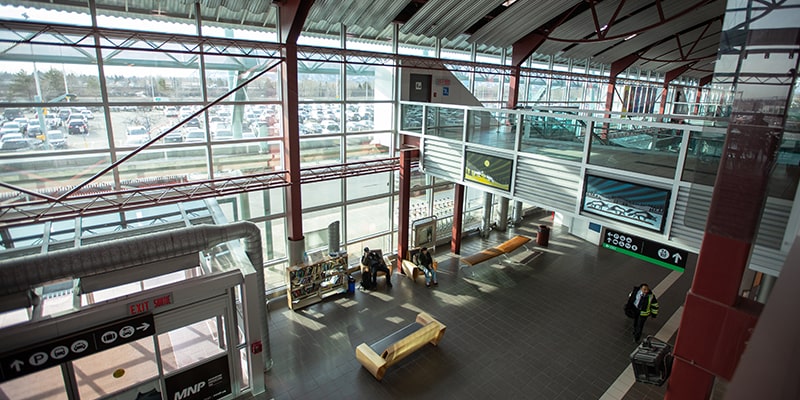
Jackie MacDonald, Director of Business Development and Revenue Management, points to the airport’s broader influence on Northwestern Ontario’s economy. The facility supports Alstom’s 553,000-square-foot manufacturing plant, which employs 500 workers producing mass transit vehicles, and connects Resolute Forest Products’ 1,500 employees to national markets. Lakehead University and Thunder Bay Regional Health Sciences Centre, each employing over 1,500 people, depend on reliable air service to attract faculty, medical specialists, and patients requiring advanced care.
The airport coordinates closely with municipal planning departments on permitting and compliance issues while partnering with emergency response organizations for coordinated exercises. “We work with the city on developing business relations for operational development and staffing levels,” Brading explains. This collaborative approach ensures the airport remains integrated into Thunder Bay’s economic development strategy, supporting a metropolitan population that has grown to over a hundred thousand while maintaining its historical role as a transcontinental transportation crossroads.
Diversifying Revenue Through Strategic Development
In addition to aeronautical fees, Thunder Bay International Airport is pursuing land development opportunities that could reshape its financial model while creating jobs for the surrounding community. “We’ve got some land development opportunities on airport property that we’re looking at pursuing,” MacDonald says. “It could be anything from hotel properties to business park type of properties or airport-adjacent business.” The strategy allows the airport to leverage its proximity to highway corridors and existing infrastructure while generating steady lease revenue independent of passenger fluctuations.
Graham Ingham, President and Chief Executive Officer, frames the approach within a broader vision for community benefit. “It’s also important to note that this type of development is good for the community too,” he says. “It’s revenue for the airport and helps us diversify our revenue streams, but it also brings jobs and tax revenue for the city of Thunder Bay.” This dual-benefit model aligns with the airport’s status as a non-profit organization, where financial sustainability directly supports operational excellence.
MacDonald outlines a careful evaluation process for potential tenants and developments. “We’re going to look at what makes the most sense for the airport,” she explains. “What are we looking to attract, what type of businesses? And then just looking at it from a lease opportunity perspective, whether it’s a ground lease or a building lease.” The airport remains one of only two facilities in Canada charging no airport improvement fee, making cost-conscious development decisions particularly important. Potential projects could mirror successful airport business parks across North America, attracting logistics companies, aviation services, and light manufacturing operations drawn to direct airfield access.
Capital Investments in Customer Experience
Thunder Bay International Airport recently completed its most ambitious infrastructure project since the authority’s formation in 1997. The $20.4 million runway rehabilitation, finished two weeks ahead of schedule in October 2022, denoted the first time the facility qualified for federal Airports Capital Assistance Program funding after pandemic-related passenger reductions temporarily lowered traffic thresholds.
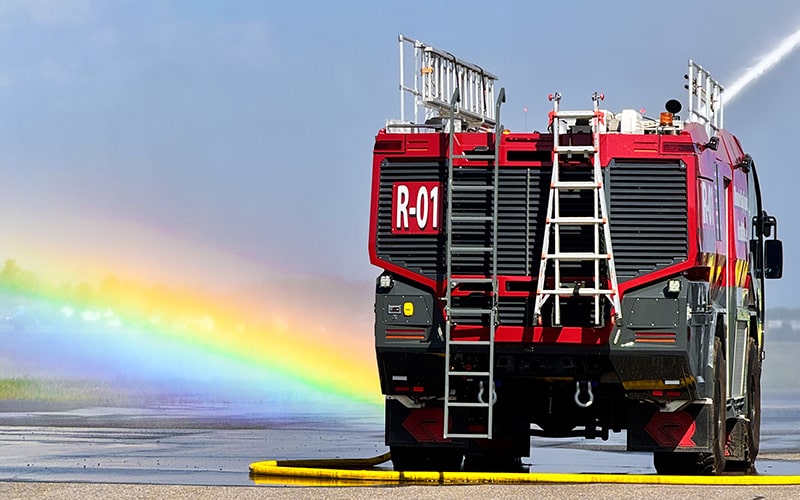
“The runway is getting repaved with 150 millimeters of new asphalt that we’re milling and applying on top,” Brading explained during the project. “We’re employing some glass grid technology to seal the asphalt so that reflective cracks don’t form.” The work included replacing 60-year-old subsurface drainage systems, installing state-of-the-art LED runway lights that improve visibility while reducing energy consumption, and creating fortified safety areas capable of supporting aircraft during runway excursions.
Current capital initiatives focus squarely on passenger convenience and operational efficiency. The airport is expanding its security screening checkpoint to reduce waiting times during peak travel periods. Check-in counter upgrades will accommodate growing passenger volumes, while departure lounge expansion addresses capacity constraints during busy winter charter seasons. Outside the terminal, parking lot improvements will add spaces and enhance traffic flow for the roughly 800,000 annual passengers the facility now serves.
“We’re also looking at runway turn pads,” Brading adds, referring to specialized pavement areas that allow aircraft to reverse direction without using excessive runway length. “These additions will improve operational flexibility while reducing taxi times and fuel consumption for airlines.” Federal funding proved instrumental in keeping the airport’s debt servicing costs manageable. “Transport Canada contributed over $12.4 million for airside improvements, while the Federal Economic Development Agency for Northern Ontario provided $1.5 million for terminal lighting, HVAC equipment, and escalator replacements,” in the three-story building that remains the only Thunder Bay facility still using escalators.”
Every Day Brings New Challenges
Ryan Brading never planned an airport career. He started in 2009 as an airport operations specialist, the frontline position responsible for snow removal, wildlife control, and ensuring runways meet exacting safety standards. Sixteen years later, he directs all operational aspects of Northwestern Ontario’s busiest airport, drawn by the industry’s unique combination of structure and unpredictability.
“I really enjoy structure. I enjoy seeing the fruits of my labor come to fruition over time and seeing how the time I invest into what I do has grown within the company over the years,” Brading says. “I really see the changes that have taken place and the positiveness that goes along with that.” The aviation sector’s regulatory framework appealed to his systematic approach, but daily operations rarely follow a script.
“What keeps me going is the opportunity to continue my growth. I learn something new every day. I contribute the best I can every single day from what I’ve learned, and I try to impart that with others in the organization,” he explains. The experience accumulated over 15 years becomes an operational asset when unexpected situations arise. “Sometimes you’ll get an off-the-wall something that you never would have anticipated, but you’ve dealt with something similar before. So, you dig down into the archives of your plans or manuals and policies; lessons learned.”
Industry networking across Canada amplifies that institutional knowledge. Attending conferences and building relationships with counterparts at other airports creates a support system where solutions to complex problems can be found through a phone call. “You’re attending conferences, you’re growing your network across Canada with other airports, and you’re really growing and learning every single day,” Brading says. “I just feel bonded with the industry, bonded with the airport. It’s a sense of personal pride and ownership in a job well done.”
A Vision for the Premier Aviation Gateway
Thunder Bay International Airport entered 2025 with a comprehensive three-year strategic business plan designed to position the facility as Northern Ontario’s leading aviation hub and economic driver. The plan establishes clear priorities across five key areas, each addressing specific operational and developmental goals that build on recent infrastructure achievements.
“We’re very much focused on growing the airport as well as supporting innovation opportunities as they present themselves,” Ingham says. Business development tops the priority list, encompassing expanded passenger service routes and non-aeronautical revenue opportunities. “Our airport authority actively pursues new carrier relationships while developing available land for commercial use, creating multiple revenue streams that reduce dependence on volatile passenger fees.”
Operational excellence forms the second priority, concentrating resources on safety, security, and customer experience. “We spend a lot of time making sure that we’re connected with our customers and that anybody that transitions through this airport, both in and out, has a very positive experience,” Ingham explains. Capital projects including terminal expansions, security upgrades, and parking improvements all serve this passenger-focused mission.
Environmental responsibility, community engagement, and employee investment round out the strategic framework. The airport recently hosted Thunder Bay’s first drone show in partnership with the city, demonstrating its role beyond traditional aviation operations. Staff expansion adds to growth ambitions. “We’ve added about 13 employees here in the last year,” Ingham notes. “We’re all very passionate about this operation and want to be recognized as a great place to work.”
The strategic plan’s overarching goal remains straightforward: “Establish ourselves as the premier aviation gateway and key economic driver for Northern Ontario,” Ingham says. With new branding launched in 2025 featuring imagery drawn from northern lights and boreal forests, the airport signals its evolution from a departure point to what its messaging now describes as “a vital thread connecting people, communities, and stories.” As passenger numbers continue recovering and infrastructure projects near completion, Thunder Bay International Airport positions itself as an essential catalyst for Northwestern Ontario’s economic future.

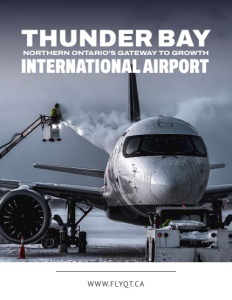
Click The Cover To View Or Download The Brochure
AT A GLANCE
Who: Thunder Bay International Airport
What: Ontario’s fourth-busiest airport serving 800,000 annual passengers with 90,000+ aircraft movements, providing commercial service and essential connectivity to 28 remote Northern Ontario communities
Where: Thunder Bay, Ontario, Canada
Website: www.flyqt.ca
PREFERRED VENDORS/PARTNERS

Bee-Clean Building Maintenance: www.bee-clean.com
Bee-Clean Building Maintenance is Canada’s leading commercial cleaning service provider with over 55 years of experience. Known for its national reach combined with local service, Bee-Clean serves diverse sectors by tailoring solutions to facility needs. We emphasize elevating Canadian spaces while offering consistent quality and cost efficiency across the country.

Thunder Bay Flight Refueling Ltd.: www.tbayflight.com
Thunder Bay Flight Refueling Ltd. is a leading fixed-base operator (FBO) providing aviation fuel and comprehensive ground services at the Thunder Bay International Airport (CYQT) in Thunder Bay, Ontario, Canada. With over 45 years of experience, the company specializes in quick-turn fuel stops and a range of facilities for various aircraft.

World Fuel Aviation: www.world-kinect.com
World Fuel Aviation delivers global fuel, logistics, and energy solutions that enhance efficiency and support sustainable operations for airlines and aviation partners. Headquartered in Miami, World Fuel Services, a World Kinect company, provides fuels, services, and renewable energy solutions across its aviation and marine divisions.

Nadin Contracting Ltd.: www.nadin.ca
Nadin Contracting Ltd. is a leading general contractor and heavy-equipment rental firm in Thunder Bay, Ontario. Founded in 1983, the company has grown to over 50 employees, delivering municipal, residential, and Commercial Development services throughout Northwestern Ontario while maintaining strong community partnerships, family values, and a highly adaptable, skilled workforce.