A District Built on Belief and Poised for Opportunity
Early Learning Innovation, Workforce-Aligned Pathways, and an Aggressive Capital Build Schedule are Shaping Student Success Across the County
In St. Lucie County, public education is not framed as a series of programs or a list of initiatives. It is framed as a belief system—one that influences every decision, every investment, and every student pathway. For Superintendent Dr. Jon R. Prince, that belief is best captured in a single line from the district’s Treasure Hunters Pledge: “All children are capable of success, no exceptions.”
“That one sentence struck me when I came to St. Lucie County Public Schools,” Prince says. “It’s the children-first mentality. It’s the efficacy that all children are capable of success. And I don’t believe everybody in public education truly believes that. If you change beliefs about kids, you can move mountains.”
Deputy Superintendent Dr. Helen Wild extends that belief into the district’s mission: ensuring all students graduate with the skills, talents, and abilities needed to be successful. Together, these principles define St. Lucie’s approach as both deeply human and highly strategic—student-first in philosophy, outcomes-first in execution.
Early Learning That Builds the Foundation for Future Pathways
St. Lucie’s belief in student success begins before kindergarten. The district offers its own VPK programs, along with exceptional student education early learning programs for three- and four-year-olds. But the approach extends beyond district walls. St. Lucie also supports private early childhood providers—an effort Wild notes is not required or fully funded, but deeply important for families and for long-term student readiness.
The district hosts an annual conference for early learning educators, bringing in keynote speakers, state-level experts, and practical guidance on kindergarten readiness, standards, curriculum expectations, and early assessments. The message is consistent: the earlier the alignment, the stronger the readiness.
In kindergarten, St. Lucie has intentionally reshaped the daily experience through an initiative called Play with Purpose, which reintroduces structured play into a modern accountability environment. Rather than treating play as free time, the district ties play to themes—often career-related themes—such as veterinary care or restaurant service. Students dress up, take roles, collaborate, build vocabulary, and develop social skills, while also learning that careers are not abstract ideas, but part of everyday life.
That kindergarten initiative has become the kickoff point for a broader district framework: classrooms to careers, a model that begins career awareness in early childhood and continues through graduation.
Career Readiness Aligned to Real Economic Demand
What differentiates St. Lucie Public Schools is the scale of career readiness options available inside comprehensive high schools—without requiring students to leave their campuses for technical schools to access meaningful credential pathways.
Dr. Prince emphasizes that career programming is not built in isolation. The district works closely with the Economic Development Council and conducts skills-gap analysis to determine which industries are growing locally and what employers need in their next workforce.
“We align our technical education programs with what the business community needs,” Prince explains. “It’s one of the most important relationships we have as a school district—second only to parents and families.”
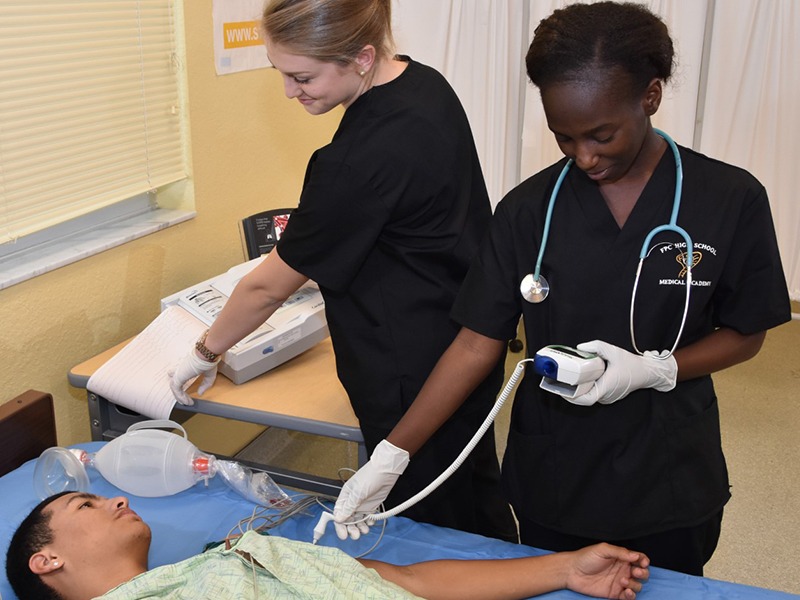
As a result, St. Lucie offers an unusually wide range of career pathways that respond directly to industry growth. A major focus is allied health, one of the fastest-growing sectors in Florida. Every high school now offers allied health pathways, including programs such as medical assisting, EKG, CNA, LPN, dental, physical therapy, and pharmacy-related training. For students who want to stay local, these pathways connect directly to stable, high-demand employment.
Other pathways reflect regional economic shifts. Global logistics, for example, has expanded rapidly due to the presence of major distribution and supply chain employers such as Amazon, Walmart distribution, and Cheney Brothers. St. Lucie built a global logistics lab, established pre-apprenticeships, secured grant funding, and brought employers into the design process to answer a simple question: what do graduates need to know on day one?
The district has taken the same approach with marine and mechanical industries. Located on Florida’s east coast, St. Lucie sits in the heart of a boating economy. The district converted an underutilized automotive space into an outboard marine lab aligned to industry needs, working alongside local partners such as the Marine Industries Association and other regional marine employers. Programs in diesel, marine, and related mechanics now connect students to real opportunities in a sector that is both local and globally relevant.
St. Lucie has also adapted quickly to community needs beyond traditional career clusters. When the county faced a shortage of 911 operators, the district expanded its criminal justice programming to include that career pipeline—reinforcing the district’s responsiveness as an economic partner.
Industry Certifications Built for Immediate Workforce Entry
St. Lucie’s career readiness model does not treat credentials as optional. It treats them as pathways to stability. Students can graduate with certifications that position them for immediate employment, particularly in logistics, health care, and technical trades.
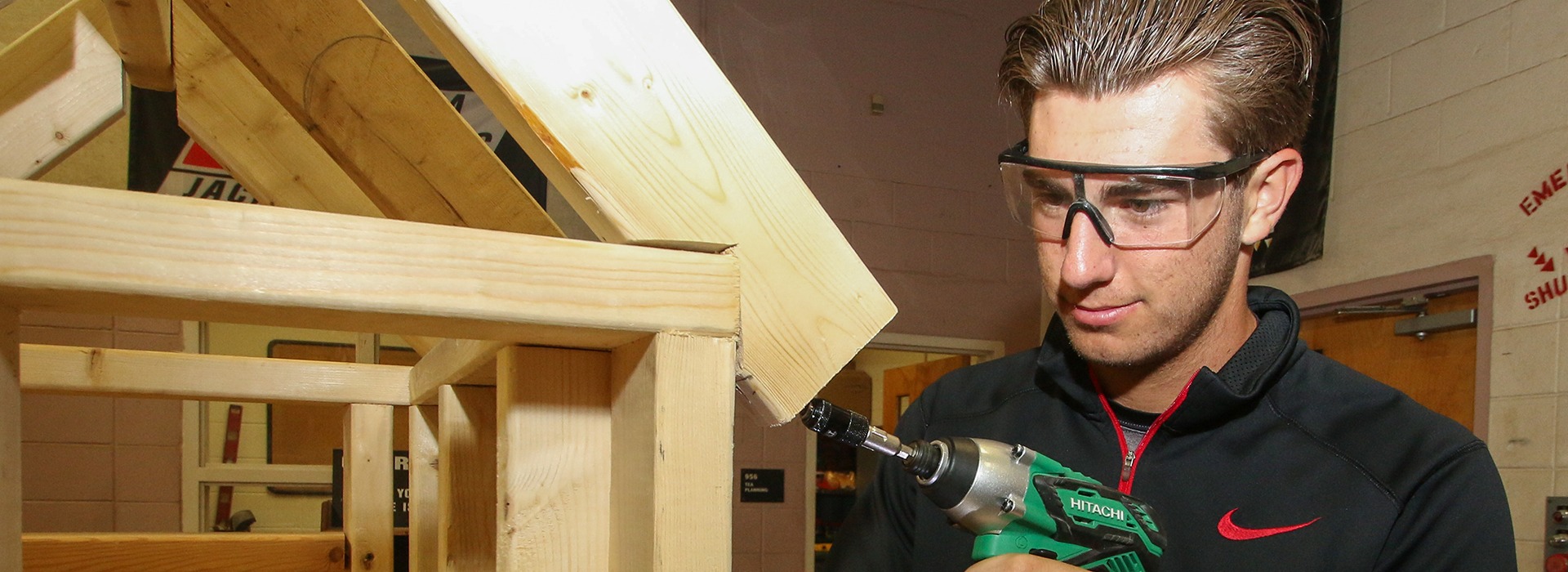
One example is forklift certification, supported by simulators that allow students to earn readiness credentials aligned to warehouse operations. Another is construction technology, built in partnership with the Treasure Coast Builders Association and local contractors. As construction demand surged, St. Lucie redesigned learning spaces with direct input from the industry.
For the district, the objective is not simply “offer programs.” The objective is offer programs that lead to real jobs, with real wages, in the local economy.
Technology Integration and the Rise of AI
St. Lucie’s approach to technology is broad and layered, extending from infrastructure and safety to instruction and emerging tech.
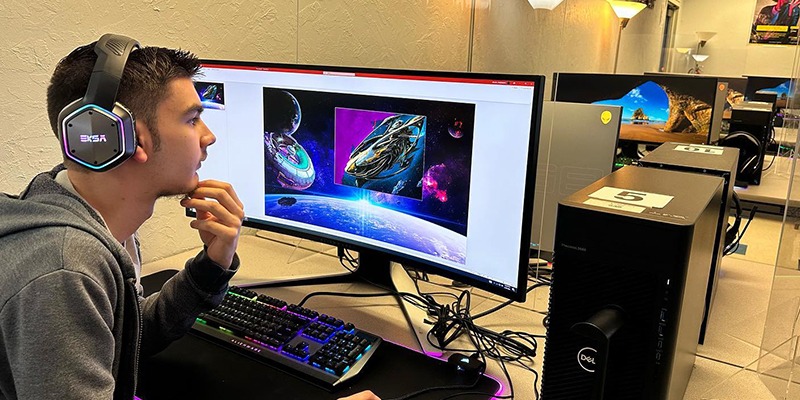
Wild describes technology as fully embedded across the system, from K–12 devices and instructional tools to 3D printing labs, robotics programs, and magnet offerings such as Samuel Gaines Academy of Emerging Technologies.
Artificial intelligence is now part of that landscape. St. Lucie is developing an explicit AI curriculum, but the district has already established foundational expectations around academic honesty, source referencing, and integrity. The district’s AI framework emphasizes that students must know how to evaluate accuracy, recognize limitations, and understand when AI is being used to support work versus replace thinking.
The district has already participated at the state level in generative AI exploration, sending team members to serve as internal AI leaders who can train and support teachers. St. Lucie also uses AI tools to increase teacher efficiency and improve instructional consistency across classrooms, including lesson plan development, assessments, unit resources, and pacing alignment.
The district’s philosophy is clear: AI is not a threat to education; it is a tool that must be harnessed responsibly to prepare students for the world they will enter.
Capital Outlay and a Build Schedule Designed for Growth
St. Lucie Public Schools is also one of Florida’s fastest-growing districts—one of only six counties in the state seeing increased enrollment. In a state where funds follow the student and families have expanding choice options, enrollment growth reflects confidence in the district’s offering.
That growth is being met with an aggressive capital plan. Dr. Prince reports that the district has roughly $300 million in capital investment underway across a three-year period, including the construction of three new schools: two high schools and one K–8 campus opening in August 2026. One high school is being built in a high-growth area, while the other is a rebuild of one of the district’s oldest high schools—reflecting a deliberate balance between expansion and reinvestment in legacy communities.
Beyond buildings, the capital story includes major investments in modern safety infrastructure, technology, and learning environment design. All teachers carry emergency response badges, and new campuses are being built with safety as a non-negotiable foundation. The district invests heavily in camera systems, audio enhancement, translation tools, and modern instructional environments.
Prince notes that even elements often overlooked in capital conversations—such as band instruments—represent significant investment when new schools open. The district’s commitment is that new facilities mean new equipment, not recycled inventory.
Lifelong Learning as a Leadership Expectation
Asked about lifelong learning, Dr. Prince’s view is direct: the most successful people are lifelong learners, and the most effective leaders evolve constantly.
“The world is changing at such a rapid rate,” he says. “Education has to keep up. If you don’t evolve, you get left behind.”
Wild echoes that mindset, emphasizing the impact of leadership decisions not only on students today, but on lives ten years from now. She describes the work as deeply fulfilling because it shapes both students and adults through decisions that create long-term opportunity.
Looking Ahead: Urgency, Agility, and Continued Partnership
Over the next 18 to 24 months, St. Lucie’s priorities remain consistent with its identity: build boldly, partner deeply, and keep students at the center.
Dr. Prince describes the district as operating with urgency and a willingness to take calculated risks to achieve long-term payoff for students. In his view, education leadership requires political will, but that will must be grounded in service—not adult convenience.
Wild highlights another differentiator: agility. Large districts are not typically described as agile, but St. Lucie is building a culture that makes rapid adaptation normal. That agility is evident in how quickly the district has converted spaces, redesigned pathways, and aligned new programming to new industries.
At the core of it all is the belief that started the conversation: all children are capable of success, no exceptions. In St. Lucie County, that belief is not a tagline. It is a strategy—and it is producing opportunity at scale.
Click The Cover To View Or Download The Brochure
AT A GLANCE
Who: St. Lucie County Public Schools
What: A district focused on student well being and future success by providing the right educational building blocks and career readiness preparation
Where: St Lucie County, Florida, USA
Website: www.stlucie.k12.fl.us
PREFERRED VENDORS/PARTNERS
Matthews Bus Alliance: www.matthewsbusesflorida.com
Matthews Bus Alliance, Inc. is a #1 Dealer for Sales, Service, Parts, Training, and Warranty for Thomas Built Buses. We own our own air conditioning company, thus no finger pointing and a 6-7 year warranty. We $ave districts time and money with rapid mobile service and lowest cost of ownership programs.
