Empowering Learners to Thrive
This Innovative District is Advancing Deeper Learning, Career Pathways, and Community-Backed Investment
In the Mendon-Upton Regional School District, a clear mission is driving both day-to-day decision-making and long-term transformation. Superintendent Dr. Maureen Cohen summarizes that mission simply: empower all learners to thrive. Just as importantly, she emphasizes the word “learners” is intentional, encompassing students and staff alike. It is a philosophy that shows up across the district’s instructional framework, wellness supports, technology strategy, and the way it engages its broader community.
That vision is guided by a five-year strategic plan now in year three. Cohen describes the district’s progress as tangible and accelerating, fueled by focused annual action steps that move the plan forward in measurable ways. The plan itself is anchored in four main areas: deeper learning, high-quality curriculum and instruction, equity and inclusion with a strong well-being focus, and community support. Together, these pillars provide the structure for a district-wide shift toward learning that is more authentic, student-centered, and connected to real-world opportunities.
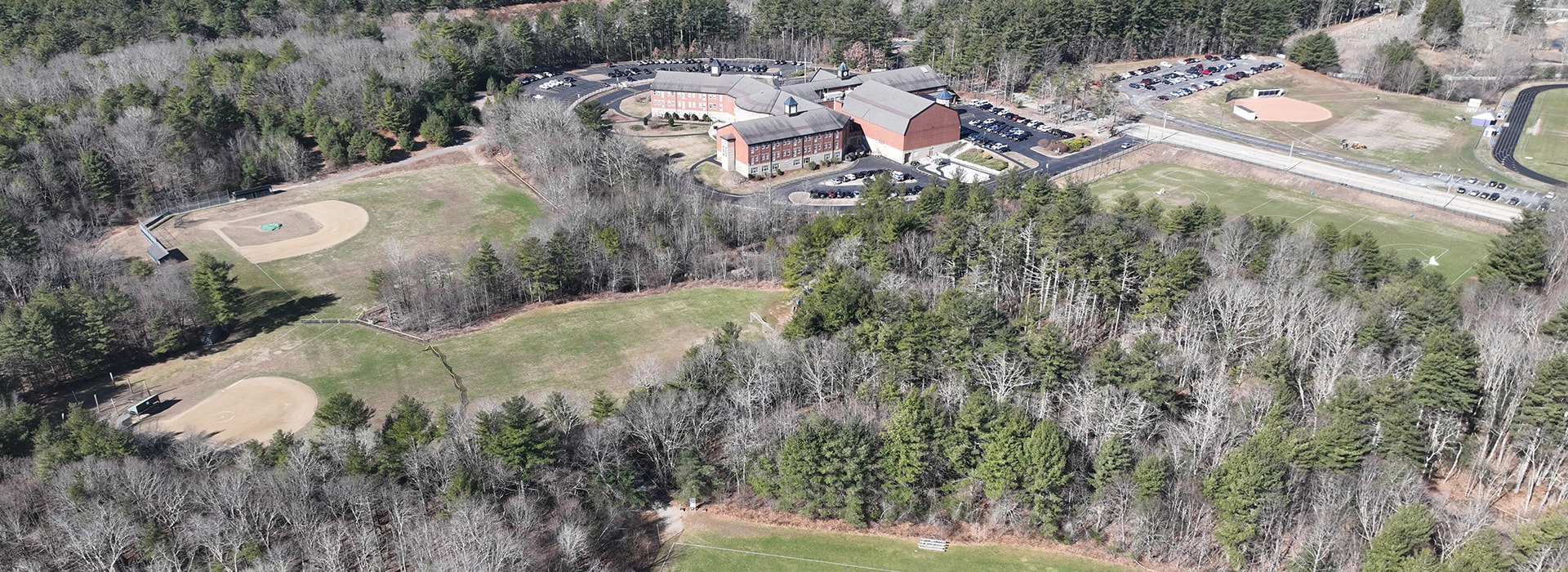
One of the most visible markers of community support arrived through a successful vote enabling nearly $30 million in facility upgrades. District leadership describes the approval as the result of deliberate relationship-building and consistent communication with residents and town officials. The package supports major improvements including a high school roof replacement and associated HVAC work, significant facility upgrades across buildings, and field improvements. Director of Finance and Operations Jay Byer notes that while debt exclusions still represent a tax increase the vote signaled a shared understanding that maintaining strong schools requires sustained investment and that facilities cannot be allowed to decline.
The district is now in the early phases of execution, with key projects moving from planning into implementation. Alongside roofing and HVAC work, upgrades include building systems and infrastructure items that improve daily functionality and learning conditions, such as energy management, facility repairs and refinements, and modernization projects that help bring older spaces forward. Leadership also referenced security-related upgrades, including efforts to expand key card access systems and other building improvements that contribute to safer, better-managed facilities. For the district, facility work is not simply about aesthetics; it is directly connected to the learning environment, staff experience, and long-term sustainability.
While capital investment is a major priority, the district’s instructional work remains at the center of its strategic plan, particularly through its deeper learning framework. Cohen describes this approach as a system for transforming teaching and learning by emphasizing student agency, reflection, revision, authenticity, and collaboration. The district has also developed a Portrait of a Learner, similar to a “portrait of a graduate,” and has been rolling it out across schools over multiple years to ensure shared language and expectations about what students should know and be able to do. As Cohen explains, the framework is now visible in classrooms through targeted project-based learning, new curricular resources, and instruction that is increasingly shaped around deeper engagement rather than surface-level completion.
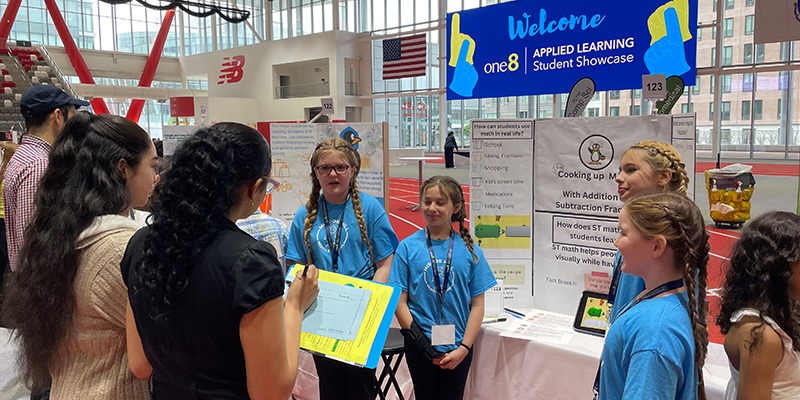
Community partnership is another major lever in this work. District leadership described ongoing efforts to bring experts and professionals into schools to interact with students, give feedback on projects, and participate in public showcases of learning. This has included civic action projects where students work directly with community members in Mendon and Upton, expanding the connection between learning and lived community experience. The outcome, according to the district, is stronger collaboration not only between schools and residents, but also between district leadership and town officials, reinforcing a shared sense that education and community growth are interconnected.
At the high school level, this connection to real-world opportunity is strongly reflected in the district’s participation in Massachusetts Innovation Career Pathways. Director of Learning and Innovation Ryan Robidoux explains that these pathways are designed around regional economic needs and high-demand careers identified by the state. Mendon-Upton has been accepted for five Innovation Career Pathways, spanning information technology, health and healthcare assisting, environmental science, and business and finance. These pathways are supported by professional partners in the region and reinforced through state grant funding that helps districts launch and sustain programming.
A particularly distinctive component of career readiness is the district’s junior internship program. Juniors spend the last three weeks of their junior year working full time at a local business or organization. The program has grown quickly, beginning with 20 students, expanding to 40, and now targeting 60 to 70 participants, with the long-range goal of expanding the experience to the full junior class. For district leadership, this is not simply a work experience program; it is a bridge between academic learning and adult expectations, giving students exposure to professional environments, accountability, and applied skill development.
The district also supports broader engagement through Inspired Learning Days, held each year. These days function as district-wide deeper learning experiences, where students participate in sessions organized by schools that often include community and professional partners. The focus is on exposure to careers, development of real-world skills, and learning that helps students understand what will be expected of them beyond the classroom.
Technology integration is designed to support this deeper learning approach from the earliest grades. Mendon-Upton is a one-to-one iPad district from kindergarten through grade 12. Robidoux explains that elementary students engage in Project Lead the Way Launch modules from kindergarten through fourth grade, providing repeated hands-on STEM and technology experiences. Robotics and interactive STEM activities begin early, building foundational comfort with design, systems thinking, and problem solving.
That progression continues into middle school through computer science opportunities and additional Project Lead the Way programming in robotics and design, including prototyping work tied to real community needs. The district intends to create a coherent continuum where early STEM exposure builds toward more specialized opportunities and, ultimately, the Innovation Career Pathways at the high school.
As technology access expands, the district has also been deliberate about protecting students through responsible software governance. Leadership referenced the district’s participation in the National Student Data Consortium that ensures software vendors have signed student data privacy agreements that ensure legal compliance with privacy laws governing the use of personal student data. In addition, classroom technology investments have continued through improvements to interactive boards and learning tools, paired with ongoing attention to network capacity to support the volume of daily connected devices across schools.
A standout program that reflects the district’s long-term commitment to innovation is its Spanish Immersion program, now approaching three decades in operation. Cohen describes the model as full immersion beginning in kindergarten, with instruction delivered entirely in Spanish through second grade before gradually shifting toward a balanced bilingual structure through upper elementary grades.
By middle and high school, the program continuation enables students to pursue high-level proficiency and earn the Massachusetts Seal of Biliteracy. The district’s elementary immersion schools are also part of the International Spanish Academies network, a recognized partnership connected to Spain, supported through collaboration with the Spanish Embassy and visiting educators from Spain. In a state where few districts offer this level of immersion programming, it remains a signature opportunity for Mendon-Upton learners.
In the strategic pillar of high-quality curriculum and instruction, the district is thrilled that their investments in data systems, state approved instructional materials, and refinement of Multi-Tiered Systems of Support are leading to tangible student growth and achievement. Out of over 300 school districts in Massachusetts, Mendon-Upton was recognized as one of only 54 districts that have surpassed pre-pandemic student achievement in math in grades 3-8. Cohen indicated that this improvement was a direct result of the introduction of high-quality instructional materials in math alongside the use of data inquiry protocols in data team meetings.
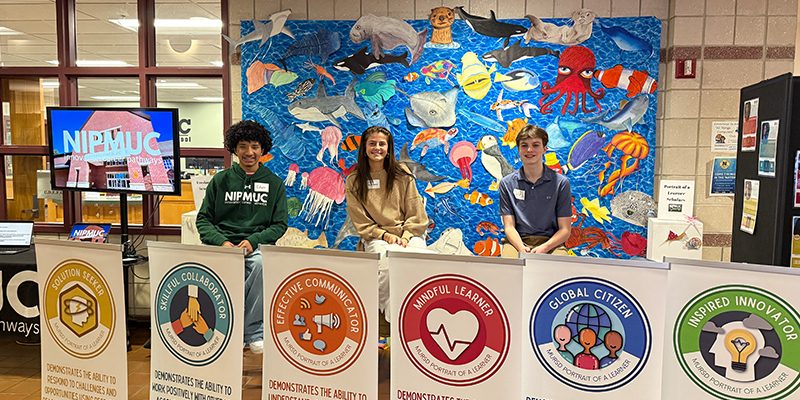
Student engagement beyond academics is another area of strength. The district reports broad participation in athletics and a strong culture of extracurricular involvement. It also maintains open enrollment for Advanced Placement courses, increasing access and participation while still supporting rigorous academic pathways. Nipmuc was just named Gold Status on the College Board AP Honor Roll. Nipmuc had 75% of seniors who took at least one AP exam during high school, 67% of seniors scoring a three or higher on at least one AP exam, and 13% of seniors who took five or more AP exams. Cohen highlighted particularly strong performing arts programs, including music and drama, as well as student success in competitive and leadership organizations. She also noted the district’s exceptional DECA program, with high participation and students reaching advanced levels in competition and leadership, including roles on the state-level DECA board.
Supporting the whole child, and the whole learner, is a strategic priority tied directly to the district’s equity and well-being focus. Cohen describes increased in-house staffing in response to evolving student needs, reducing reliance on contracted services and expanding internal capacity for counseling and therapeutic support. The district has added adjustment counselors and built additional supports at the elementary and middle school levels, including services to support students returning from home hospitalization and other transitions that require specialized care and reintegration planning.
A key innovation in the district’s approach to student well-being and belonging is its Whole Student Review process. Robidoux describes this as a system designed to help educators understand students beyond test scores and achievement data. He offered an example of a middle-to-high school transition initiative where eighth graders visited the high school and were paired with student ambassadors.
Through interviews and activities, ambassadors collected information about student interests and strengths, which later informed handwritten letters inviting new students into extracurricular opportunities aligned with their passions. The district also captured portrait-of-a-learner reflections and student self-perceptions, integrating them into a dashboard accessible to teachers. The dashboard includes scholar profiles, strengths, strategies, and family narratives about students, helping educators personalize support and build stronger relationships.
Elementary schools have also implemented multi-grade advisory structures, sometimes referred to as “families,” where students across grade levels meet regularly, strengthening connection, peer belonging, and adult-student relationships. In the district’s view, these systems are not separate from academic success; they are essential to creating the conditions where students feel known, valued, and able to take learning risks.
Looking ahead, district leadership sees several priorities coming into sharper focus over the next 18 to 24 months. Completing the capital project work remains central, as facility upgrades move from early execution to visible outcomes. Expanding partnerships and pathways will remain a parallel focus, strengthening the district’s connection to regional economic needs and student opportunity.
Another emerging priority is artificial intelligence and the broader question of how schools integrate AI responsibly and strategically. Robidoux describes the current moment as a foundational year for AI in education, where tools and supports are becoming more accessible and where districts must define both safe student use and effective teacher practice.

He is leading an AI for Teaching and Learning cohort of more than 30 educators who are piloting classroom applications and exploring what AI can do to support teaching and learning without replacing human thinking. The district is also developing a broader strategy for emerging technologies, guided by the principle of remaining human-centered, using AI as a partner for efficiency and support while keeping creativity, analysis, and judgment firmly in the hands of educators and students.
Across its strategic plan, facilities investment, deeper learning framework, pathway development, and whole-student support, Mendon-Upton is positioning itself as a district that blends innovation with strong community alignment. The work is ambitious, but the district’s leaders point to a clear advantage: a shared mission, a defined plan, and a community willing to invest in the learning environments and experiences that help every learner thrive.
AT A GLANCE
Who: Mendon-Upton Regional School District
What: A district that has a shared mission, a distinct community focus, and provides an innovative learning experience
Where: Mendon and Upton, Massachusetts
Website: www.mursd.org
PREFERRED VENDORS/PARTNERS
McClure Engineering, Inc.: www.mcclureengineers.com
McClure Engineering, Inc is a full service civil and environmental engineering company with Certified Operations for drinking water. McClure provides extensive services including permitting and overseeing public water supplies for municipal and private sector clients. Services include: design and permitting of new systems, evaluation of existing systems, developing plans for future expansion of systems, and performance monitoring for Massachusetts Department of Environmental Protection system compliance.