
A Thriving and Diversified Economy
Driving Transformative Growth Through Diversification, Innovation, and Strategic Investment
Maryland is in the midst of a deliberate and carefully structured economic transformation. For decades, the state benefited from a strong federal presence—military installations, federal agencies, and world-class research institutions provided stability and opportunity. But today, under the leadership of Secretary of Commerce Harry Coker, Jr., Maryland is recalibrating its approach to ensure long-term resilience and diversified growth.
At the helm of that effort is the Maryland Department of Commerce, whose core mandate centers on four drivers: job creation, business retention, business attraction, and capital attraction. “We want Maryland’s economy to be dictated by Marylanders,” Secretary Coker explains. “That requires diversification and strategic focus.”
Addressing Headwinds with Strategy and Resolve
Like many states, Maryland faces national and global economic uncertainty. Tariff fluctuations, trade tensions, and unpredictable federal funding streams have created planning challenges for businesses seeking certainty. More uniquely, Maryland has experienced significant reductions in the federal workforce—losing more than 15,000 federal jobs—an impact felt more acutely here than in any other state.
Additional challenges, including the tragic collapse of Baltimore’s Francis Scott Key Bridge and the reversal of plans to build the FBI headquarters in Maryland, have further underscored the need for a more diversified economic foundation.
Rather than retreat, Maryland is investing forward.
Winning the Decade
Early in the Moore-Miller Administration, state leadership introduced an economic development roadmap titled Winning the Decade. The strategy acknowledges the state’s historic overreliance on federal dollars while building on sectors where Maryland already holds a comparative advantage.
Three industry pillars anchor the roadmap and include Information Technology, Life Sciences, and Aerospace and Defense.
Within each pillar, Maryland has identified “Lighthouse Sectors”—focused areas expected to guide long-term prosperity.
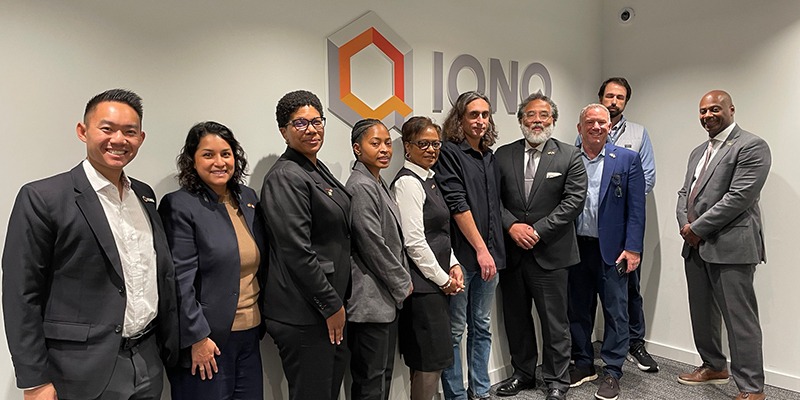
In Information Technology, the lighthouse focus is Quantum, Artificial Intelligence, and Cyber. Maryland has emerged as a national leader in quantum research and commercialization, bolstered by companies such as IonQ, a publicly traded quantum computing company that originated from research at the University of Maryland, College Park. The Discovery District in College Park is becoming a central node in what the state calls the “Capital of Quantum” ecosystem.

In Life Sciences, Maryland is advancing Computational Health—leveraging advanced data analytics to accelerate pharmaceutical development and personalize healthcare. The sector recently saw its largest private capital investment in more than a decade when AstraZeneca announced a $2 billion expansion in Montgomery and Frederick counties, reinforcing global confidence in the state’s biotech infrastructure.
Within Aerospace and Defense, the focus is on Position, Navigation, and Timing (PNT), supporting technologies such as autonomous vehicles, robotics, and drone systems. Maryland’s strength in aerospace is reinforced by workforce pipelines such as the avionics training program at the University of Maryland Eastern Shore, where students gain hands-on aircraft systems experience before entering the job market.
Building from the Local Level
While lighthouse sectors define the macro strategy, Maryland’s economic success remains grounded in local execution. Counties and municipalities are prioritizing business retention—helping existing companies expand and access job-growth incentives. Increasingly, state and local governments are coordinating unified incentive packages rather than operating independently, streamlining the process for prospective investors.
Site readiness has also become a priority. Through partnerships with entities such as the Maryland Economic Development Corporation (MEDCO), communities are ensuring that shovel-ready sites are available for companies considering relocation or expansion.
Public-private partnerships are playing an expanded role as well. With reduced federal funding streams, private capital is increasingly essential. The state has seen early dividends from a more aggressive outreach strategy, including overseas trade missions that introduce Maryland companies to global markets while attracting international investment back to the state.
One standout initiative is the Global Gateway program, which invites international companies to operate in Maryland incubators and accelerators for six months. The program provides reduced rent, coaching, and wraparound services to help companies evaluate the U.S. market. More than 50 companies have participated, with many choosing to remain in Maryland.
Workforce as a Strategic Advantage
Diversification requires talent alignment. As an ex officio member of the University System of Maryland Board of Regents and the Governor’s Workforce Development Board, Secretary Coker plays a direct role in aligning employer needs with education pathways.
Community colleges are collaborating closely with local employers to design curricula tailored to in-demand skill sets. The state has also invested heavily in cyber ranges through its Cyber Workforce Accelerator program, giving students practical experience while strengthening cybersecurity support for small businesses and public institutions.
Apprenticeships, internships, and service-year programs for recent high school graduates further expand workforce pipelines across key industries.
Manufacturing, Tourism, and Quality of Life
Beyond the lighthouse sectors, Maryland continues to support manufacturing, agriculture, tourism, and the arts. A recent announcement by Nature’s Cell—a South Korean company planning a stem cell manufacturing facility in Baltimore—signals renewed growth in manufacturing.
Tourism and arts investments remain equally vital. Tourism generates immediate economic impact, while arts and cultural programming enhance community wellness and attract residents and visitors alike. Together, they reinforce Maryland’s quality of life and competitive positioning.
A Balanced Path Forward
Unlike the federal government, Maryland must balance its budget annually. That fiscal discipline informs its strategy. Investment decisions are measured, deliberate, and aligned with long-term economic returns.
“Economic prosperity is imperative for any government,” Secretary Coker notes. “Without growth, we cannot provide the services our residents deserve.”
With a focused diversification strategy, coordinated state and local execution, expanded workforce alignment, and increased global engagement, Maryland is positioning itself for resilient and transformative growth.
The message is clear: the state is not simply adapting to change—it is defining its next chapter.
AT A GLANCE
Who: Maryland Department of Commerce
What: The state department responsible for overseeing economic activity and developing programs to incentivize business growth
Where: Maryland, USA
Website: www.commerce.maryland.gov