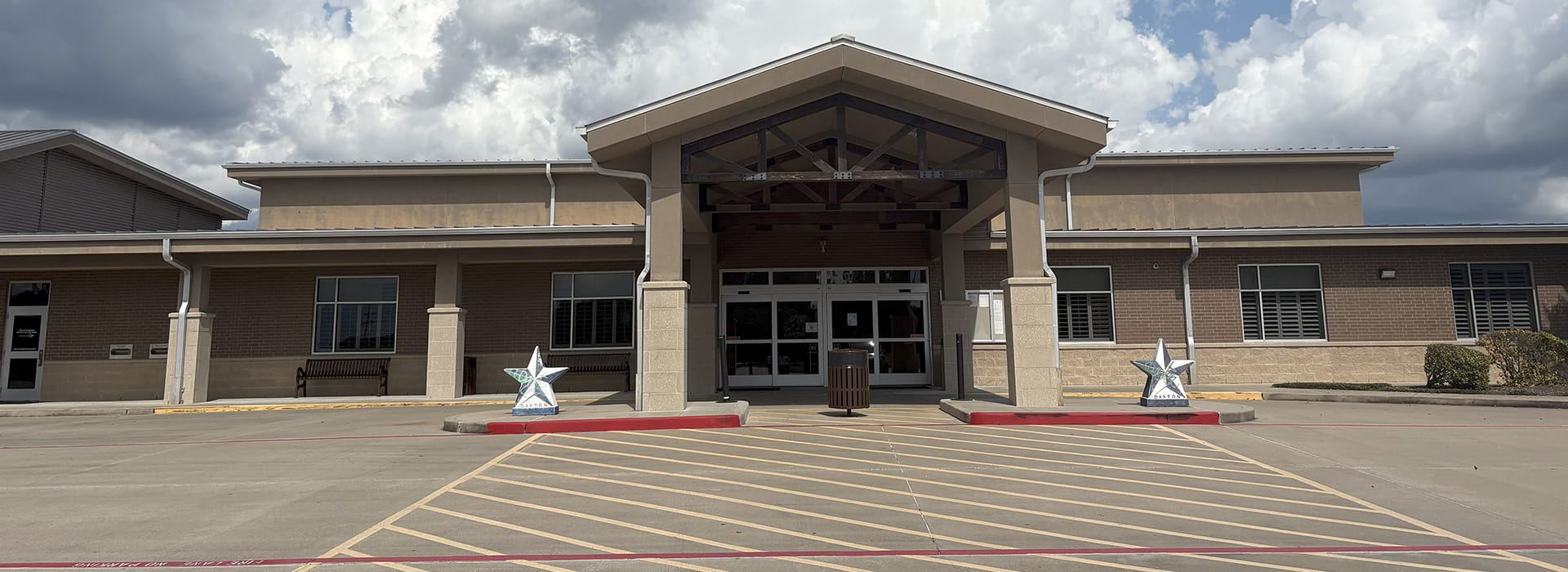
Preserving Small-Town Identity Amid Transformation
This Liberty County Community of 10,000 Welcomes Suburban Growth by Embracing What Lies Ahead
Friday nights in Dayton, Texas, still revolve around football. The church fills pews on Sunday mornings. Families visit pumpkin patches on autumn weekends, snapping photos against backdrops of harvest displays. This rhythm has defined the Liberty County community since its 1831 founding as West Liberty, three miles west of the Trinity River. Yet beneath this timeless surface, Dayton is experiencing a transformation that few small Texas towns can match.
“A friend who moved here recently quoted after one of the Dayton Enhancement Committee events that she felt like she was in a Hallmark movie,” says Lacy Cooper-Bell, Board President of the Dayton Economic Development Corporation and longtime resident. “That stuck with me and I really liked that. We’ve got a long way to go, but I very much think about that when we are looking at new ideas for things to bring in so that we keep that small town environment.”
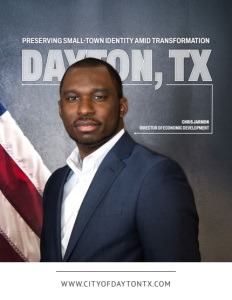
The challenge facing Dayton’s leadership is to preserve this identity while managing unprecedented growth. With a population approaching 10,000 and climbing at 4.6 percent annually, the city sits at a crossroads familiar to many rural communities within Houston’s expanding orbit. Chris Jarmon, Director of Economic Development, frames the transition clearly: “For a long time this was a rural community. Within the last three years, up through the next maybe five to ten years, what you’ll see is really a process of suburbanization.”
The Grand Parkway Effect
The catalyst for Dayton’s metamorphosis runs through the city in the form of State Highway 99, better known as the Grand Parkway. This 180-mile circumferential toll road, conceptualized in the 1960s as Houston’s third loop, has already proven its transformative power in communities along its completed segments. Dayton leaders are watching closely and planning accordingly.
“If you look at where the Grand Parkway has been built and then you fast forward five years, it just really fundamentally changes places,” Jarmon explains. “We expect that to happen to us too. Where now we have green space around the Grand Parkway, I don’t think it’ll be that way for very long.” The pattern is well-established across the Houston metro area. League City, for instance, expects the parkway to shift its identity from commuter suburb to economic hub comparable to The Woodlands.
For Dayton, the Highway 99 corridor is more than improved connectivity to outer Houston. It signals commercial opportunity on a scale the historic railroad town hasn’t seen since oil development arrived in the 1920s. The city’s downtown revitalization vision ties directly to this anticipated growth, though leaders acknowledge the timeline goes several years out. Cooper-Bell and Jarmon both emphasize that maintaining Dayton’s character through this transition requires intentional effort, supporting local businesses and hosting community events at venues like The Crossroads. The goal is sharing the city’s values with newcomers rather than watching them fade.
Housing for Every Need
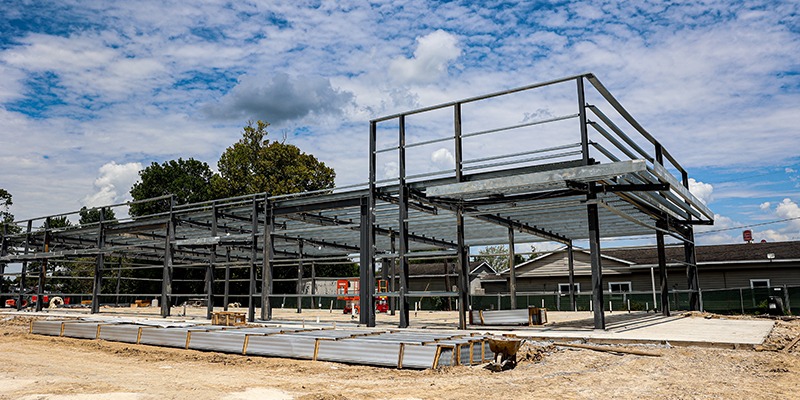
Residential construction has overtaken nearly every major thoroughfare in Dayton. Jarmon’s assessment carries no exaggeration: “They are literally everywhere. Highway 90, FM 1960, SH 146. We have a big one called Freedom Trails that’s right on the Grand Parkway. When I say we have a lot of residential developments coming online, it is not an exaggeration. They’re all over the community.”
The scale and variety distinguish Dayton from larger municipalities struggling with housing shortages. WestPointe Villages off Waco Street, built by Waterstone Development, offers homes from 1,400 to 2,000 square feet on 50-foot lots. River Ranch features multiple builders under one development. DR Horton constructed Medina on FM 1960. For buyers seeking acreage, Encino Estates and White Oak Trails off FM 1008 provide larger lots with builders like First America Homes alongside custom options. MI Homes is developing Trinity Landing on Highway 90.
“We’re very fortunate in that we don’t really have that issue,” Jarmon says of housing availability. “Whether you want to live on a 50-foot lot or want some acreage, both are available to you and everything in between.” Price points span from the low $200,000s through the $500,000s, creating genuine diversity in an increasingly expensive Houston market. Projects exist in every phase: houses rising from foundations, infrastructure being laid, land deals closed but awaiting groundbreaking. The strategy behind this residential explosion is straightforward. “Our priority from a commercial standpoint is retail development,” Jarmon notes. “How do we take all of this housing that’s coming online and then leverage it into recruiting additional retail?”
Infrastructure Partnerships
Rapid residential growth demands equally rapid infrastructure expansion; a challenge Dayton addresses through strategic partnerships rather than going it alone. The city maintains direct responsibility for water and sewer capacity, working to stay ahead of development demands. For everything else, coordination becomes the operative word.
“It’s about partnerships,” Jarmon says. “We make sure we stay in contact with Entergy and let them know what we are seeing and what’s happening. We work very closely with the school district, Dayton ISD, to let them know what’s happening, what we’re seeing so that they can plan forward internally.” The district currently serves 5,663 students across seven schools, and those numbers will climb as subdivisions fill with families.
Transportation infrastructure is a unique situation. TxDOT manages most main thoroughfares through the city, operating from an area office in nearby Liberty. The state agency is currently constructing a major railroad overpass that Jarmon believes will significantly address congestion issues. The project, slated for completion by the end of 2027, has been on TxDOT’s books for years and signifies substantial investment in Dayton’s traffic flow.
“From a transportation standpoint, from an infrastructure standpoint, it is about maintaining partnerships with all the entities that are involved,” Jarmon explains. “Making sure everybody sees what we’re seeing so that everybody can stay ahead of the curve. Working with all the various entities who have a role to play just so everybody can really stay ahead of it and make sure that the capacity is there to serve all the new folks coming in.”
Keeping Dollars Local
Ask Cooper-Bell about priorities for the next few years and her answer comes quickly and bluntly. “Definitely bringing in options for local shopping because our retail leakage is really terrible,” she says. “So many people live here, but the bottom line is they shop everywhere but here. We’ve got to give them some more options to shop and keep that money here in town. I would say that’s priority number one for probably more than a few years.”
The retail leakage problem afflicts many suburban communities, but Dayton’s situation carries particular urgency given the residential explosion underway. Thousands of new residents will need places to buy groceries, clothing, household goods, and everything else that fills daily life. Currently, those dollars flow to neighboring cities with established commercial corridors.
Jarmon sees the housing boom as leverage. “The city’s approach focuses on attracting retailers who can anchor commercial development and provide the shopping options residents want and need,” he says. “With developments spanning every major highway and price points attracting diverse demographics, Dayton can now demonstrate market depth to potential retail tenants.” The median household income of $61,307 has nearly doubled since 2000, showing economic strength alongside population growth.
The question is whether commercial development can keep pace with residential construction. Empty lots surround the Grand Parkway corridor today, but leaders expect that green space to transition rapidly as the highway’s economic impact takes hold. Creating a community where residents live, work, and shop locally rather than commuting in multiple directions is the ultimate goal. For now, giving Dayton residents reasons to keep their shopping dollars in Dayton remains the pressing challenge.
Preserving Identity Through Change
The transformation Dayton faces is not unique to this Liberty County community. Small towns across the Houston metro area have watched their populations surge, their farmland converted to subdivisions, and their downtown squares adjust to an influx of newcomers unfamiliar with local traditions. The challenge is managing growth without losing the qualities that made the place attractive in the first place.
“As you grow and develop and suburbanize, then how do you stay true to who you are and stay true to the values that make this such a great place to live and then share those values with all the new residents moving in?” Jarmon asks. “That’s the goal and the plan.” The methods are tangible rather than theoretical: hosting local events, supporting the school district, maintaining relationships with long-established businesses, supporting downtown and creating gathering spaces where old and new residents mix.
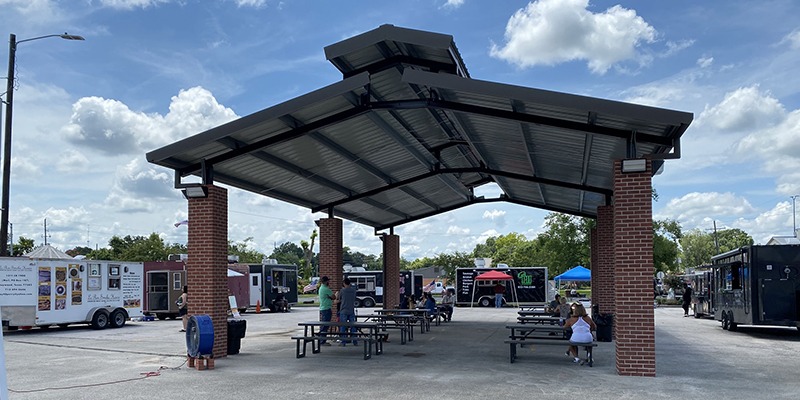
The Dayton Enhancement Committee organizes community events that reinforce the small-town atmosphere of Cooper-Bell’s friend compared to a Hallmark movie. Friday night football at Dayton High School continues drawing crowds. The Crossroads serves as a venue for gatherings that build connection across generations. These efforts represent intentional choices about what kind of community Dayton will become as it crosses the threshold from rural to suburban.
Founded in 1831 as West Liberty and home to six State Historical Markers, Dayton carries nearly two centuries of history into this next phase. The city that once prospered through sawmills, rice farming, and oil development now faces prosperity driven by proximity to Houston and the Grand Parkway’s reach. Whether Dayton can maintain its soul while embracing this suburban future will define the next decade for this rapidly growing community.
Click The Cover To View Or Download The Brochure
AT A GLANCE
Who: City of Dayton
What: A rapidly growing Liberty County community founded in 1831, experiencing transformation from rural town to Houston suburb driven by Grand Parkway development and residential construction boom
Where: Texas
Website: www.cityofdaytontx.com
PREFERRED VENDORS/PARTNERS

Gulf Inland Logistics Park: www.gulfinlandlogisticspark.com
Gulf Inland Logistics Park is a premier, Gulf Coast megasite spanning 3,800+ acres with capacity for 2,000+ railcar storage spaces. Located in Dayton, Texas, Gulf Inland offers expedient access to Gulf Coast ports, highways, and the BNSF and Union Pacific railroads. Sites for sale, lease, and build-to-suit are available now.

D.R. Horton: www.drhorton.com
D.R. Horton, founded in 1978 in Arlington, Texas, operates in 126 markets across 36 states. As the nation’s largest homebuilder since 2002, it delivers quality homes featuring livable designs, energy-efficient features, and strong warranties. Committed to innovation and craftsmanship, D.R. Horton leads in residential development. Information, pricing, and availability may change; square footage is approximate. Equal housing opportunity.

Empire Homes: www.empirehomes.com
For over 30 years, Empire Communities has crafted 38,000+ homes across North America. As a leading privately held builder, Empire creates attainable, vibrant neighborhoods in Ontario and the U.S. With 27,000 homesites in development, they remain dedicated to building spaces where dreams take root for every stage of life.
