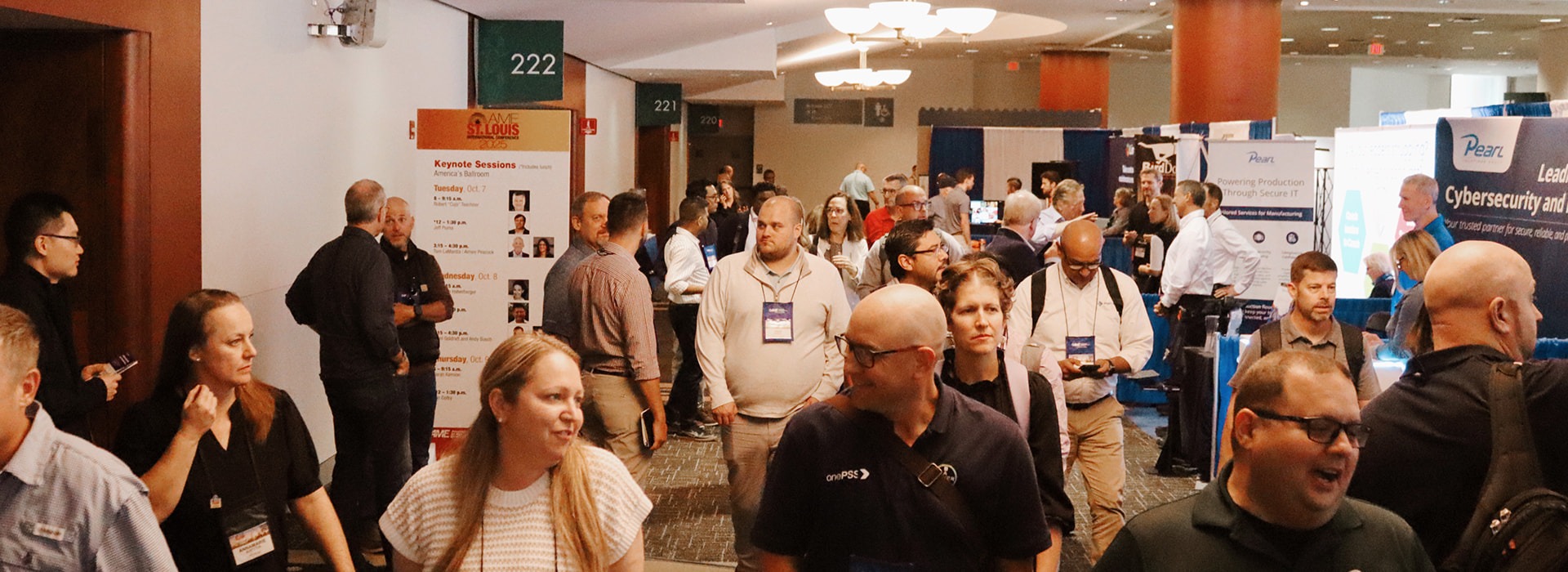
Photo Credit: Amanda Danger Art LLC
A Manufacturing Renaissance
People-Centered Leadership for a Resilient Future
After decades of global supply chain disruption, shifting economic policy and rapid technological change, manufacturers are rethinking how and where they make things. Today’s competitive landscape demands not only advanced technologies and automation but a renewed commitment to people-centered leadership, resilient supply chains, workforce development and continuous improvement.
The Association for Manufacturing Excellence (AME), a not-for-profit organization dedicated to helping manufacturers excel through the exchange of best practices and leadership development, is leading the way in addressing the opportunities ahead. AME has been a forum for leaders to share, learn, and grow since 1985, equipping organizations to thrive in an era that demands both innovation and resilience.
A Manufacturing Renaissance Rooted in People-Centered Leadership
AME’s vision is “a manufacturing renaissance driven by people-centric leadership coupled with enterprise excellence.” We believe that operational excellence is inseparable from how we lead and empower the people doing the work.
Operational improvement is often associated with tools like lean and six sigma. Yet the most successful companies recognize that technology and tools alone won’t deliver lasting results. It is leadership that listens, develops talent and builds cultures where every employee can contribute ideas and take ownership of improvement.
Leaders who embrace people-centered leadership understand that strong employee relationships create healthier, more engaged workplaces. When organizations genuinely value their people, they foster a culture where team members are motivated, committed and eager to contribute their best. According to Gallup, people-centered organizations consistently outperform their competitors because they invest in employee growth, value their input and leverage their strengths. The evidence is clear that how an organization treats its people directly leads to a culture of continuous improvement.
Operational Excellence: More Than a Set of Tools
Operational excellence is an organizational mindset and way of operating that becomes “the way we do business.” At its core, operational excellence represents the blend of strategy, process efficiency, workforce engagement and strategic alignment.
AME’s community is deeply rooted in the practitioner-to-practitioner model, where leaders share tangible experiences, challenges and lessons learned. In doing so, companies learn from real-world results, not just theory.
Organizations that pursue operational excellence are often the ones that successfully integrate change across every function, from the shop floor to the front office. They optimize workflows, reduce waste, improve quality and create better value for customers, all while developing stronger internal capabilities.
Reshoring and Smart Supply Chains in a Shifting Global Landscape
The geopolitical climate of the 2020s and the disruption of global supply chains during the pandemic led many companies to rethink where they manufacture. Reshoring, nearshoring, and LeanShoring™, together with an increased focus on Industry 4.0 innovations and enhanced educational and training offerings, provide companies and their communities with a distinct competitive advantage while boosting productivity and sustainable resilience in a fast-changing, competitive manufacturing world. Bringing manufacturing back to the U.S. has gained significant attention as a strategic priority for strengthening both competitiveness and resilience.
In advocating for such strategies, AME highlights the importance of cooperation among manufacturers, educators and policymakers to create robust training pipelines that support domestic production. These efforts are creating pathways from education to employment and building a stronger workforce ready for 21st-century production challenges.
Resilient supply chains, ones capable of adapting to changing conditions, are critical for reshoring to succeed. That resilience comes from multiple factors:
- Diversifying supplier networks reduces dependence on a single geographic region.
- Investing in regional and domestic supply sources reduces lead times and increases control over critical inputs.

Photo Credit: Amanda Danger Art LLC
Manufacturers that combine these strategies with strong internal operational excellence programs are better positioned to adapt to volatility, rapidly scale production and respond to customer needs without compromising quality.
Many companies make sourcing decisions based solely on price, often resulting in a 20-30 percent miscalculation of actual offshoring costs. The Total Cost of Ownership (TCO) estimator is a free online tool from the Reshoring Initiative that helps companies account for all relevant factors — overhead, balance sheet, risk, corporate strategy, and other external and internal business considerations — to determine the true total cost of ownership.
Smart Adoption of Automation and Technology
Technology and automation are critical enablers of manufacturing competitiveness. From robotics and cobots to data analytics and AI-enabled systems, the innovative use of technology can improve process efficiency, enhance quality and build agility.
Yet technology only delivers when it empowers people, rather than replaces them. AME’s programming emphasizes the symbiotic relationship between people and technology. While smart technologies are reshaping how work is done, the companies that harness them best are those that integrate them in ways that support employees and strengthen earnings. Topics like augmented reality, AR/VR tools and digital standard work are examples of how smart technologies can accelerate improvement without disconnecting from human expertise.
This means using automation not as a goal but as a tool that enhances workforce capabilities, reduces manual burden, improves safety and quality, and makes the job more meaningful for employees. AME Board member Robert Martichencko published a white paper on Building Meaningful Employment Environments and shares that today’s workers “do not live to work, they don’t even work to live, but rather, they work to find purpose.”
Workforce Development: Meeting the Moment
One of the biggest challenges facing U.S. manufacturing today is workforce development. The industry must fill millions of high-skilled jobs over the coming decade, yet persistent skills gaps threaten capacity, productivity, and competitiveness. Addressing this challenge requires collaboration among manufacturers, educators, workforce agencies and community organizations.
Partnerships that connect manufacturing with local education systems, apprenticeships and workforce readiness programs help ensure the talent pipeline continues to grow. For example, aligning high school CTE programs with manufacturing apprenticeships enables students to graduate with practical skills and direct pathways into well-paying manufacturing careers. Expanding these models at a national scale can help the industry meet its future needs and support broader economic prosperity.
Over the past five years, collaboration among manufacturers, high schools and trade schools has improved significantly. There are more industry-led youth apprenticeships and work-based learning opportunities. Many state programs expanded high-school-based apprenticeships and CTE alignment, creating clearer career pathways.
Virginia’s New Horizons Regional Education Center stands as a model for a premier regional education organization, partnering with the community and educational system to offer specialized programming that creates empowered individuals and a world-class workforce.
Employers are also pooling their resources to fund training hubs and share curriculum, helping small manufacturers obtain access to apprenticeships. Community colleges and CTE programs are building specialized tracks (semiconductors, advanced machines, robotics) with employer input to align with manufacturing needs, and employers are sponsoring equipment and teacher externships.
We see strong partnerships around defense and shipbuilding. Huntington Ingalls Industries’ Newport News Shipbuilding builds nuclear-powered U.S. Navy carriers, including the Ford-class USS Enterprise (CVN 80), the first carrier built entirely on digital platforms. Shipbuilders now use handheld tablets with 3D renderings, indicating a shift toward digital and paperless processes.
They prepare their workforce via training and an in-house Apprentice School. The Council on Occupational Education accredits this school, which operates as an apprenticeship‐vocational school embedded in the shipyard. Students are both apprentices (employees) and students. They offer tuition‐free apprenticeships in trades, combined with academic coursework.
Because it’s inside a working shipyard environment, apprentices gain hands‐on experience in real craft and trade work. There are about 19 shipbuilding trades offered and eight optional advanced programs, offering a direct route into skilled trades and shipbuilding work, which, for many, is a career that combines craftsmanship, technology and leadership potential.

Students graduate with an associate of applied science degree in their assigned trade. Apprentices who excel in the world-class shipbuilder curriculum, trade-related education curriculum and their shipbuilding discipline may be considered for an advanced discipline, where they complete strategically timed on-the-job training and academic coursework to earn an associate degree, offered in partnership with local community colleges.
Dr. Latitia D. McCane, director of education for The Apprentice School, addressed the Senate Committee on Health, Education, Labor, and Pensions hearing on “Registered apprenticeship: Scaling the workforce for the Future” on November 5, 2025, sharing “Our nation is currently experiencing a generational increase in demand for shipbuilding capacity as well as urgent need to expand and improve the maritime industrial base. Our success hinges upon rapidly growing and retaining a skilled workforce of craftsmen, leaders and scholars. Enhancing and expanding our nation’s apprenticeship programs is vital to that effort.”
Workforce development is not just about skills training; it’s about culture, too. Companies that invest in leadership development, cultivate learning organizations and create inclusive environments will succeed at attracting and retaining talent in a competitive labor market.
AME: Connecting Manufacturers, Educators and Communities
A unique strength of AME is its ability to connect diverse stakeholders in meaningful ways. The organization serves as a bridge between manufacturers, educators, workforce leaders and communities, fostering dialogues that translate strategy into sustained performance.
Through events, membership and programs, AME creates opportunities for participants to share real, actionable insights:
- Conferences, summits, workshops and webinars provide opportunities for practitioners to learn from thought leaders and peers alike.
- Regional AME Consortia foster deeper collaborations among local companies facing shared challenges.
- Best-practice tours at in-person events allow participants to see excellence in action and bring those learnings back to their own workplaces.
- Networking forums help leaders build relationships that accelerate improvement efforts.
By facilitating these connections, AME helps break down silos between industry and education, aligning training programs with industry needs and ensuring that workforce development strategies are targeted, relevant and sustainable.
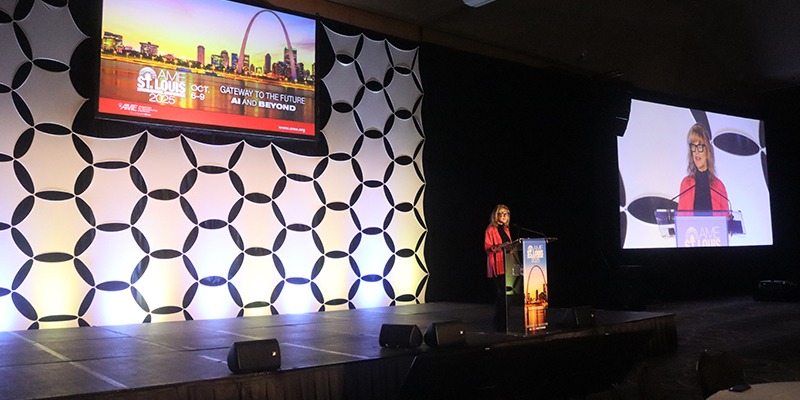
Photo Credit: Amanda Danger Art LLC
Setting the Stage for a Stronger, More Resilient U.S. Economy
The work being done today within the AME community, from operational excellence and people-centered leadership to reshoring initiatives and workforce development, is building a foundation for the future of American manufacturing.
Companies that adopt lean and continuous improvement methodologies are better equipped to respond to change. Companies that prioritize people, not just technology, are more agile, innovative and adaptive. And companies that engage with organizations like AME are plugged into a network of practitioners who know that excellence isn’t a destination, it’s a continuous journey of learning and improvement.
AME’s role in this ecosystem is uniquely valuable. As a convener of thought leaders, practitioners and educators, the organization accelerates the pace of learning and innovation in manufacturing. It amplifies the success stories of companies that are reshoring operations, strengthening supply chains and building high-performance cultures. And it helps ensure that the next generation of manufacturing leaders is prepared for the complex challenges ahead.
As the economy continues to evolve, so must its manufacturing sector. With operational excellence, people-centered leadership, resilient supply chains, responsible automation and robust workforce development at the center of the narrative, manufacturing is poised not just to compete but to build a stronger, more innovative and more resilient U.S. economy.
Click The Cover To View Or Download The Brochure
AT A GLANCE
Who: Association for Manufacturing Excellence (AME)
What: The leading body that advocates, supports and provides the voice for the Manufacturing sector
Where: USA
Website: www.ame.org