Infrastructure First, Community Always
How the Strong Knit Community Is Positioning for Sustainable Growth
In the City of Carencro, growth is being driven by two forces that do not always show up together in fast-moving communities: strong cultural identity and a serious commitment to infrastructure. Mayor Charlotte Clavier describes Carencro as a place defined by its people—volunteer-led, relationship-driven, and rooted in the Cajun and Creole heart of Acadiana. At the same time, the city is experiencing dynamic commercial and residential momentum, supported by strategic planning and large-scale capital projects designed to keep that growth sustainable.
Carencro’s geography shapes its economic story. Bisected by Interstate 49 and positioned between Exit 2 and Exit 7, the city functions as both a local destination and a regional connector. Along that corridor, Carencro has attracted prominent national brands and major logistics-related development, while also maintaining an older “traditional” downtown core along University Avenue that runs toward Lafayette. Leadership sees both hubs as vital—different in character, but closely connected by constant movement of residents, visitors, and commerce.
A Community with Deep Roots and Authentic Landmarks
Carencro’s culture remains one of its strongest assets, reflected not only in food and hospitality but in historic landmarks that still anchor daily life. Mayor Clavier points to two long-standing Catholic churches as examples of Carencro’s enduring heritage. St. Peter’s Roman Catholic Church, located near City Hall, is approximately 150 years old and remains an active congregation. Our Lady of the Assumption, now about 100 years old, is listed on the National Register of Historic Places and continues to serve as a major faith and community hub.
Carencro’s restaurant scene is also a point of pride and a draw for visitors. Clavier references long-standing favorites and well-known destinations that continue to attract strong traffic, reinforcing the idea that Carencro is not simply growing—it is growing while keeping a distinct identity.
Commercial Expansion Along I-49
On the commerce side, the I-49 corridor remains a centerpiece of Carencro’s economic development. Major names such as Amazon, Walmart, and other national anchors have strengthened the city’s profile as a regional business destination, while new additions continue to arrive. Since the last feature, Clavier notes new openings such as Tractor Supply and the addition of new retail options supporting both residents and pass-through traffic.
Carencro also maintains an active business support culture that reflects its small-town accessibility. The city works closely with the Carencro Business Association, a long-standing business organization that functions much like a local chamber of commerce. Clavier describes frequent direct engagement with new businesses, including personal visits and practical efforts to connect owners with local resources, relationship networks, and visibility opportunities such as ribbon cuttings and community events.
The city also operates a TIF district along the I-49 corridor, designed specifically to support necessary infrastructure improvements that enable business growth in that area. While incentives are not the primary driver of Carencro’s momentum, leadership views infrastructure support as a practical tool that helps align development needs with city capacity.
The Unseen Work: Major Infrastructure Investment
The most substantial updates since the previous feature involve infrastructure, particularly water and wastewater capacity—projects that are “not glamorous,” as Mayor Clavier puts it, but essential.
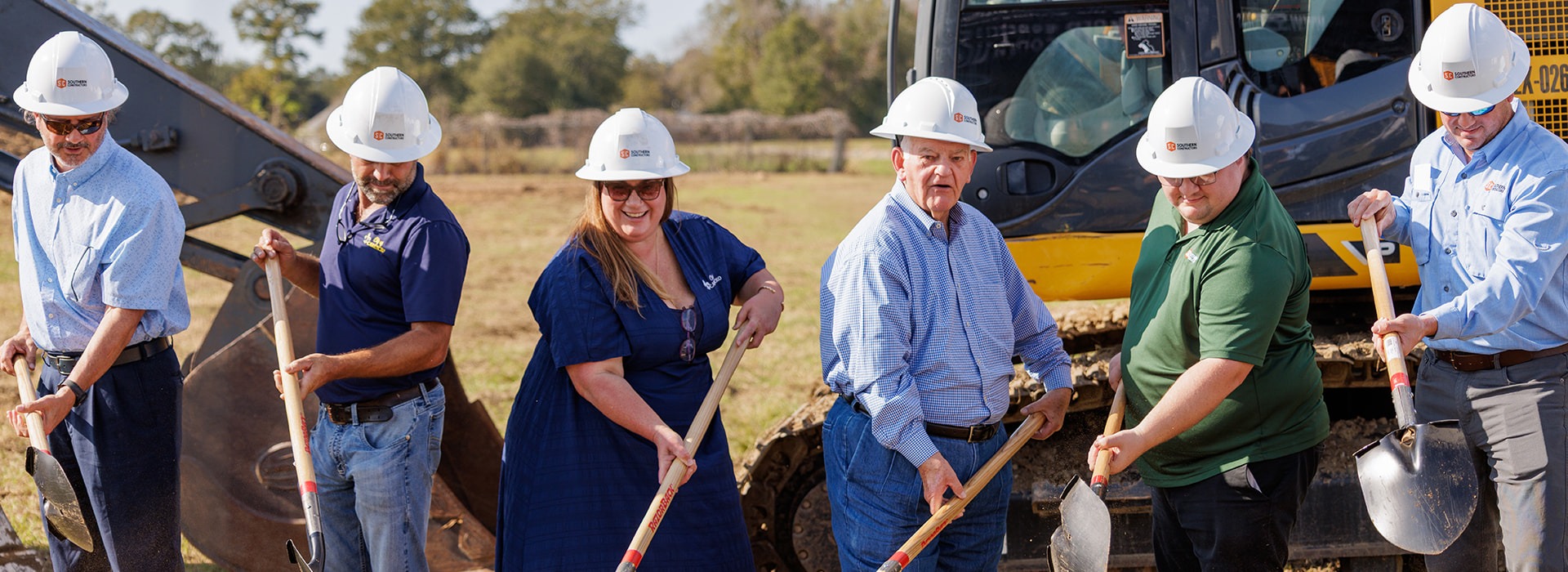
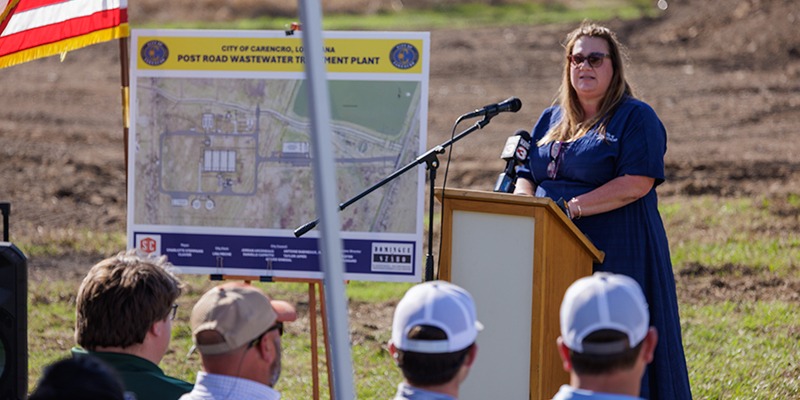
Carencro recently approved construction bids for a new wastewater treatment facility totaling approximately $42.7 million. The project represents the largest infrastructure investment in the city within the mayor’s lifetime and is designed to resolve a critical capacity constraint. Carencro currently operates two facilities capable of about 500,000 gallons per day each, yet the city’s current output demand has exceeded that threshold. The new facility will provide a capacity of roughly 2.3 million gallons per day, creating the foundation needed to support both commercial expansion and continued housing development.
Water infrastructure is also moving forward. The city is preparing to bid approximately $6 million in water line replacement, targeting aging cast iron lines that require modernization. Additional utility work is also in progress, including a separate project focused on cast iron gas line replacement, reflecting a broader push to update underground systems before growth pressures create failure points.
For Carencro, these investments are not simply about keeping up. They are about staying ahead. Without water and sewer capacity, residential subdivisions slow down, commercial projects stall, and economic opportunity moves elsewhere. The city’s focus is clear: build the infrastructure first so development can follow with fewer constraints.
Housing Development at Scale
Residential momentum in Carencro has accelerated significantly. Mayor Clavier notes multiple new subdivisions advancing since the last feature, with many ranging between 60 and 80 homes each. In total, Carencro is seeing approximately 1,600 lots active across ongoing developments—an unusually high number for a municipality of its size.
These subdivisions are not merely planned projects; they are moving. The mayor describes regular municipal coordination tied to development progress, including approvals tied to neighborhood infrastructure such as lighting and related components. The scale of current activity reinforces why wastewater and water investments have become such immediate priorities.
A Logistics Hub by Geography
In addition to national retail and residential growth, Carencro continues to strengthen its logistics role in the region. With proximity to the intersection of Interstate 10 and Interstate 49, the city offers strong access advantages for distribution and transportation operations. Major logistics players and carriers maintain regional facilities within city limits, and Carencro’s location allows freight movement to reach multiple directions efficiently without navigating deeper congestion farther south.
Mayor Clavier describes this positioning as a natural advantage. Carencro sits in a corridor where companies can move goods through Acadiana and beyond more effectively, reinforcing the city’s appeal not only to national brands but to transportation and distribution operations looking for efficiency.
Planning as a Growth Discipline
As the city grows, Carencro is doubling down on structured planning to avoid the risks that often come with rapid expansion. The city is working toward a formal five-year infrastructure plan, moving from an informal shared understanding among leadership toward a documented roadmap that clearly outlines priorities, sequencing, and project timelines. Mayor Clavier sees this as important not only for internal governance but for external confidence. Developers and businesses, she notes, take communities more seriously when they can see a plan and understand where the city is headed.
Beyond infrastructure planning, Carencro is also pursuing broader master planning work across recreation, transportation, and drainage. A recreation master plan is expected to help guide future park investments and community programming based on what residents want, rather than top-down assumptions. The objective is long-term sustainability: growth with purpose, supported by public input and clear frameworks.
Community Life and Volunteer Culture
Even as Carencro works through heavy infrastructure and development cycles, the city continues to emphasize community life—activities that bring residents together and reinforce identity.
Upcoming initiatives include expanded markets and cultural programming, such as a full moon market featuring artists and crafts, farmers market activity at Carencro Park, and seasonal outdoor programming like Pilates and wellness events. Mayor Clavier also highlights the strength of volunteer involvement in the city, including groups such as the “Seasoned Ladies,” who participate in community events, volunteer activities, and initiatives tied to food support and local service.
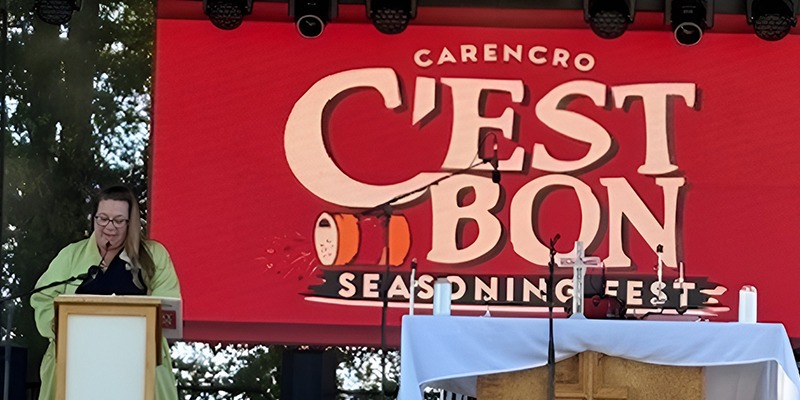
For Carencro, that volunteer spirit is not a side note. It is a core asset—one that helps the community remain connected even as population and development increase.
Looking Ahead
Over the next two years, Carencro’s priorities remain anchored in infrastructure execution and structured planning. With a new wastewater facility moving forward, major water and gas line projects advancing, and a formal five-year infrastructure plan expected to be adopted, the city is building the capacity required for continued housing and commercial activity.
At the same time, leadership is focused on maintaining the people-first culture that defines Carencro. By pairing heavy-duty infrastructure investment with ongoing community engagement, volunteer activity, and cultural programming, Carencro is positioning itself not only for growth, but for sustainable, grounded growth that strengthens the city’s identity rather than diluting it.
AT A GLANCE
Who: Carencro, Louisiana
What: A growing and culturally rich city that puts lifestyle and community first
Where: Lafayette Parish, Louisiana
Website: www.carencro.org
PREFERRED VENDORS/PARTNERS

Lafayette, Louisianan: www.lafayettetravel.com
The Lafayette Convention & Visitors Commission, branded as Lafayette Travel, is a marketing organization created in 1974 to promote Lafayette Parish as a destination for visitors, meetings, conventions, tours, and sporting events. LCVC is funded primarily by a four percent occupancy tax paid by visitors to Lafayette Parish. In 2008, LCVC was the first tourist commission in Louisiana to receive accreditation from the Destination Marketing Accreditation Program.