Powered by Its Residents
Leveraging Sports Tourism, Smart Growth, and Business-Friendly Development
In the City of Loves Park, civic strategy is shaped by a straightforward goal: build a community that works for residents every day while creating experiences that draw people in from far beyond city limits.
Mayor Greg Jury describes Loves Park as a strong, neighborhood-driven city with abundant retail amenities and a deep sense of involvement among residents, schools, and local stakeholders. That foundation is complemented by an economic engine that has become increasingly important to the city’s identity and momentum: sports tourism.
At the center of that tourism story is Mercyhealth Sportscore Two, a year-round sports complex that brings thousands of visitors to Loves Park every weekend. Those visitors support local hotels, restaurants, and retail businesses, creating a steady stream of revenue that is particularly significant given Loves Park’s unique municipal structure.
As Mayor Jury notes, the city does not levy a property tax, a distinction shared by only a small number of municipalities. Yet Loves Park maintains full-time police and full-time fire services—meaning the city must operate efficiently and rely on a diversified revenue model built on commercial vitality, visitor spending, and strategic development.
That balance between community service and economic growth is visible in the city’s current development priorities, led in part by Director of Community Development Nathan Bruck. For Loves Park, the next stage of growth is about enhancing two key areas at once: strengthening the city’s established corridor along North Second Street and building out new opportunities around a signature mixed-use initiative designed to elevate the visitor and resident experience.
North Second Street, also known as Illinois Route 251, runs through the older portion of Loves Park and has long served as a defining corridor. City leadership describes it as a “downtown” identity for many residents, even as it has faced challenges and transition over time. The city is now working on a streetscape project to beautify and improve this strip, a process that has required coordination due to its status as a state highway. The objective is clear: make North Second Street more attractive, more functional, and more aligned with the type of community experience Loves Park wants to offer, while encouraging more business investment and renewed energy along that corridor.
At the same time, Loves Park is advancing a major growth-area initiative known as Riverside Commons. This is envisioned as a live-work-play district designed to create a higher-quality, more connected experience for both residents and the millions of visitors who already come into the city each year. The site offers a relatively open canvas, with significant green space and the potential to build a mixed-use environment that blends housing, hospitality, dining, entertainment, and outdoor connection in one cohesive area.
Riverside Commons is anchored by an advantage few communities can claim: proximity to both national-scale sports tourism and one of the region’s most significant outdoor assets. Mercyhealth Sportscore Two alone is estimated to draw roughly two million visitors per year through tournaments and events, including large-scale soccer activity that brings families from across the country. The facility includes a major indoor soccer venue built in 2016, as well as multiple outdoor fields—some natural grass and others artificial turf—creating year-round utility and weekday community use that extends far beyond tournament weekends.
Just as notable is Rock Cut State Park, located within Loves Park’s municipal boundaries. The park spans roughly 3,000 acres, and city leaders describe it as the largest state park in northern Illinois, attracting more than a million visitors annually for camping, hiking, fishing, and outdoor recreation. Loves Park’s vision is to better connect Riverside Commons to Rock Cut State Park, turning a weekend tournament or a short stay into a longer, more compelling destination experience. Leadership sees clear potential in creating a city environment where families arrive for sports and discover an outdoor recreation ecosystem that makes them want to stay, explore, and return.
This destination strategy is already shaping commercial development. Loves Park is actively courting restaurants, entertainment uses, and hotels to strengthen hospitality options for visitors while also benefiting residents. The city has seen multiple hotel projects move forward, including major national brands such as Home2 Suites, WoodSpring Suites, and a Radisson-affiliated development, with additional lodging interest in the pipeline. In Loves Park’s model, hotel growth is not just an amenity—it is an extension of the revenue ecosystem that supports city services and continues to attract private investment.
Infrastructure planning is another key component of making Riverside Commons truly “shovel ready.” Leadership notes that major utilities and core servicing—roads, water, sewer, and fiber access—are largely in place, which reduces barriers for development. One area requiring focused planning, however, is stormwater. Rather than requiring each individual lot to build separate detention, Loves Park is working on a regional stormwater plan that supports the development area as a unified system. This approach preserves developable land for commercial and mixed-use opportunity while allowing stormwater infrastructure to be integrated more thoughtfully into the environment. The city is also designing stormwater components to feel less concrete and more natural, incorporating walking paths and aesthetic considerations that align with the broader goal of creating a high-quality district experience.
Housing is a central part of Riverside Commons as well, with plans for a mixed residential strategy that transitions from multi-family units within the core toward single-family living as the site connects to an adjacent high-end subdivision. A particularly distinctive element in that transition is the concept of an “agrihood,” featuring larger lots and communal agricultural space where residents can grow food, share outdoor amenities, and support experiences such as farm-to-table programming and farmers markets. While still new to many communities, Loves Park views this model as a compelling way to blend modern residential demand with lifestyle-driven placemaking, creating neighborhoods that feel both functional and uniquely connected to land and community.
Support from residents, especially those closest to the project area, has been a priority. The city has engaged HOA leadership within the neighboring subdivision, keeping them informed and involved in planning and reporting strong support for the direction and vision of Riverside Commons.
Beyond hospitality and recreation, Loves Park’s broader economic base includes healthcare and aerospace-adjacent industry. The city points to major employers and regional drivers such as Collins Aerospace and Woodward, along with the network of subsidiary and supplier businesses that support the aerospace ecosystem. Loves Park continues to pursue lighter industrial opportunities and employment growth through targeted areas that support incentives, including a TIF-supported industrial corridor and additional tools designed to attract investment.
The city’s incentive model is directly aligned with its revenue structure. In addition to the advantage of not levying a municipal property tax, Loves Park can offer benefits such as enterprise zone incentives, including sales tax relief on eligible building materials, and business district structures that can support retail development through targeted sales tax participation. Leadership cited a notable example in the Riverside Commons area: Costco, which opened in 2019 and became an exceptionally strong anchor for sales tax revenue during a period when essential retail remained active. The city structured a sales tax-sharing agreement to bring the project across the finish line, viewing it as a long-term win for both the development and the city’s broader fiscal sustainability.
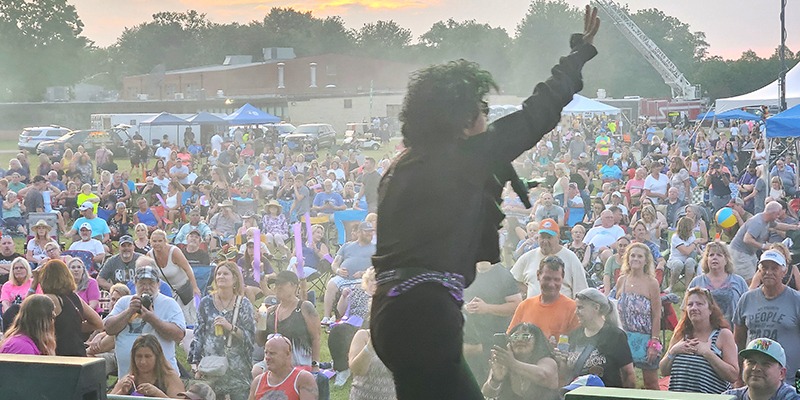
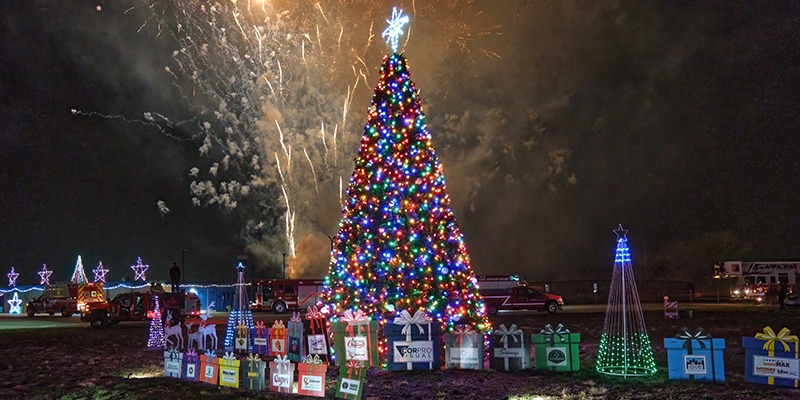
While development and economic strategy are central, Loves Park also prioritizes civic amenities and community life. Signature events bring residents together and build a sense of shared identity. The Light Up the Parks Parade, held in partnership with neighboring Machesney Park, has been a community tradition for nearly three decades, featuring dozens of floats, a tree lighting, and fireworks. The city has also evolved its summer programming into Rhythm of the Heart, a music festival with vendor participation, food trucks, sponsorship support, and attendance that has grown into the thousands. For Loves Park, these events are not simply entertainment—they are part of the community glue that strengthens belonging and pride.
Workforce development is also viewed as a community priority, particularly through alignment with local schools. Mayor Jury and Bruck describe strong support for a trades-focused initiative within the Harlem School District, including community backing and collaboration with building trades and manufacturing partners. They see career-path education as increasingly essential, especially as students and families seek alternatives to traditional four-year routes and local employers face persistent shortages in skilled trades. Programs such as Running Start, which allow students to graduate with both a high school diploma and an associate degree, are seen as a practical and powerful tool for families, creating cost savings while accelerating career readiness.
Looking ahead over the next two years, Loves Park’s priorities are focused on execution and momentum. Leadership emphasizes maintaining a business-friendly culture, strong public safety services, and an accessible city government that is responsive to residents and entrepreneurs. On the project side, the goal is to advance North Second Street’s streetscape improvements, revitalizing what many residents consider the city’s traditional downtown corridor. In the growth area, the priority is to move Riverside Commons from planning into visible development activity, building the “table setting” that will attract the next wave of hospitality, retail, and mixed-use investment.
In Loves Park, the strategy is rooted in a clear understanding of what makes the city distinct. With no municipal property tax, the city has built a model that depends on smart commercial growth, strong visitor appeal, and efficient services. By leveraging sports tourism, investing in placemaking, partnering with business, and strengthening community life, Loves Park is positioning itself to sustain growth while preserving the neighborhood-driven character that residents value most.
AT A GLANCE
Who: Loves Park, IL
What: A city that is invested in smart commercial growth and efficiency for its residents
Where: Northern Illinois, USA
Website: www.cityoflovespark.com
PREFERRED VENDORS/PARTNERS
Thayer Energy Solutions: www.thayerenergysolutions.com
Thayer Energy Solutions, headquartered in Loves Park, Illinois, provides turnkey commercial and industrial energy solutions including LED lighting retrofits, advanced lighting controls, EV charging infrastructure (Level 2 and DC Fast Chargers), and utility procurement management. With more than 100 million square feet retrofitted, Thayer delivers measurable efficiency, cost reduction, and long-term infrastructure performance.
Place Foundry: www.theplacefoundry.com
Place Foundry enables communities, property owners, and developers to create places where people thrive and investments prosper. Our interdisciplinary team of planners, civil engineers, architects, and designers delivers integrated planning, development strategy, engineering, architecture, and place branding—transforming visions into magnetic destinations that generate measurable community impact and enduring value.