Precision, Process, and Growth
How This Leading Manufacturer’s Metal Finishing Is Scaling Quality, Expanding Capabilities, and Entering Aerospace
In manufacturing, the difference between “acceptable” and “exceptional” often comes down to what most customers never see: consistency, process discipline, and the ability to deliver reliably under pressure. For Sapphire Metal Finishing, those behind-the-scenes strengths have become the foundation of a rapid growth story that began with a clear market gap and has evolved into a broader vision for innovation, automation, and expansion into aerospace.
Founded in 2017, Sapphire Metal Finishing emerged from a practical operational challenge. Dwayne Dayley, the company’s founder and a longtime machine shop operator, saw firsthand how long lead times and inconsistent anodizing results were impacting customers and threatening production schedules. Rather than continue to work around those constraints, he made a decisive move: he built a solution. After developing a detailed business plan and working with lenders, Dayley launched Sapphire Metal Finishing with a carefully designed anodizing process and equipment layout tailored for reliability and repeatability.
That early commitment to doing things the right way was reinforced by expert validation from the outset. Dayley brought in a veteran industry consultant, Robert Probert, whose decades of experience gave him a rare perspective on what separates a strong anodizing operation from an average one. After assisting with commissioning and seeing the line design and execution, Probert told the team Sapphire was among the small number of anodizing operations he considered truly well built. For a young operation, it was a powerful confirmation that the company’s foundation was structurally sound.
What followed was an unusually fast ramp. Sapphire achieved positive cash flow within three months of starting operations, a rare milestone for a new manufacturing business. By targeting the market effectively and focusing on the fundamentals of quality and speed, the company helped bring work back into the Boise area that had previously been shipped elsewhere. Growth accelerated quickly, reaching roughly 25 percent annually through the pre-pandemic period.
The company’s emphasis on quality became one of its defining differentiators. Sapphire is not positioned as the lowest-cost provider in its market, but its leadership is clear that the value is in performance and dependability. That commitment is measurable. After an ISO audit, Sapphire’s auditor commented on the company’s exceptionally high first-pass anodizing success rate. In a sector where rework can become an accepted norm, Sapphire’s reported first-pass results were well above 99 percent, reflecting a process built for consistency rather than correction. The outcome is not only improved throughput, but increased trust and loyalty among customers who rely on predictable quality to protect their own deadlines and reputations.
While many manufacturers struggled to maintain operations through supply chain disruptions, Sapphire took an aggressive, proactive approach. In early 2020, as uncertainty grew, the company stockpiled more than a year’s supply of critical chemicals. That decision shielded the business from shortages and extreme lead times that later stretched as far as 18 months for certain inputs. Costs rose, but access to essential materials remained stable, allowing production continuity during a period when many industrial operations were forced into reactive mode.
If supply chain was manageable, labor became the defining challenge. Like many manufacturers, Sapphire faced a severe hiring environment during and after the pandemic. Leadership described an era marked by absenteeism, reliability issues, and behavioral challenges that strained operations and culture. The response was difficult but decisive. Dayley set a clear expectation with the workforce around attendance, conduct, and standards, implementing formal policies and adopting a zero-tolerance approach to behavior that undermined the team. Over the following year, Sapphire reduced its workforce significantly while issuing an unusually high number of W-2s, reflecting a cycle of hiring, training, and separation as the company rebuilt its team around accountability.
Out of that difficult period, Sapphire believes it emerged stronger. With fewer employees but clearer standards, leadership describes a healthier culture and a more cohesive workforce. Operations Manager Shane McGoldrick emphasizes that the key to sustaining culture, especially with today’s workforce realities, is active leadership on the floor. Rapport, consistent communication, and clear enforcement of rules create an environment where strong employees do not become discouraged by uneven accountability. The company’s focus is on shared expectations, transparency, and a team mindset grounded in solving problems together rather than tolerating ongoing disruption.
This cultural reset occurred alongside major wage pressure in the regional market. Sapphire leadership notes that labor costs increased substantially, driving the company to balance compensation adjustments with productivity improvements and pricing discipline. The message is direct: in today’s environment, retaining quality employees requires competitive pay, but sustaining the business requires matching that investment with operational efficiency.
Technology has become a major lever in that efficiency effort. Sapphire has implemented automation in parts of its plant where control systems can remove variability and improve repeatability. At the same time, leadership recognizes that advanced robotics in metal finishing still faces barriers in certain processes, particularly where movement complexity and vision-based handling are required. The company is pricing robotic solutions now, with the expectation that broader adoption will become more cost-effective as vision and AI-enabled robotics advance.
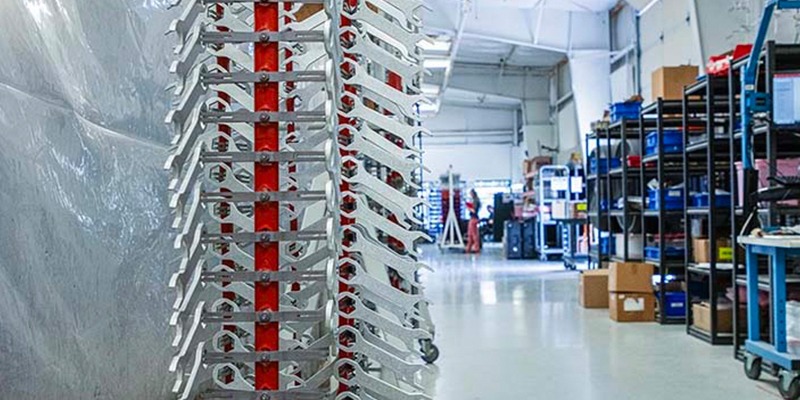
Perhaps the most transformational operational step has been the implementation of an ERP system that has materially changed how the company works. Sapphire describes itself as virtually paperless, with one identifier sheet traveling with material while everything else is managed digitally through tablets used by employees throughout the plant. This system supports time tracking, process documentation, photo and video capture, and consistent work instructions that reduce reliance on tribal knowledge. For a process-driven manufacturing environment, this kind of documentation and repeatability is a competitive advantage, particularly as the business scales.
The ERP platform used to enable this operational shift is Steelhead Technologies, which Sapphire credits as a strong partner in its transition to a modern, data-driven workflow. Leadership described Steelhead as a relatively new company that has delivered significant value and performance in supporting Sapphire’s process management and growth needs.
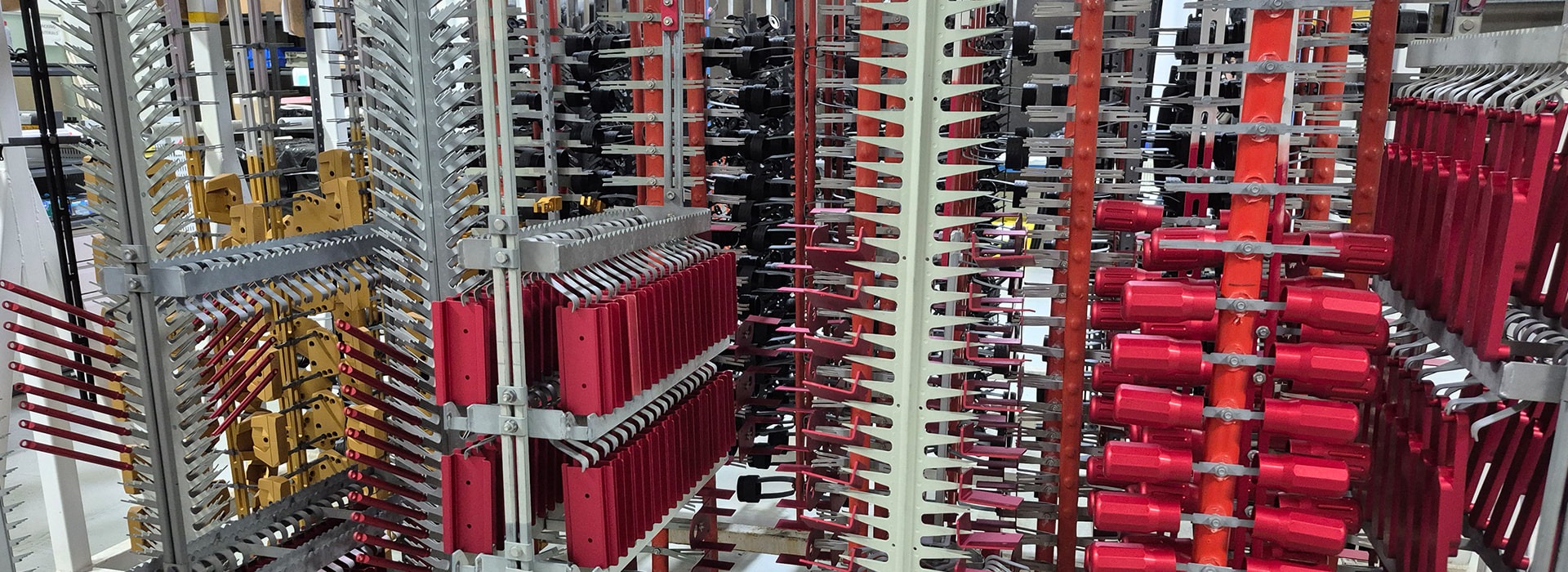
Innovation at Sapphire is not limited to systems. The company is actively expanding its capabilities and product offerings, with a focus on becoming a broader solution provider for customers who prefer fewer vendors and more integrated service. Alongside anodizing, Sapphire has added Cerakote at an industrial level, introduced powder coating, and continues to offer additional metal finishing processes that strengthen its ability to serve diverse customer requirements. The company has also invested in specialized capability, including anodizing photographic images into aluminum, which reflects both technical sophistication and a willingness to explore high-value niche applications.
Industry connectivity is another component of Sapphire’s growth strategy. The company participates in the Idaho Manufacturing Alliance, using that network to stay connected with peers, share best practices, and access conferences and resources related to supply chain, HR, and broader manufacturing trends. While Sapphire does not maintain a dedicated government relations function, leadership stays informed through active reading and monitoring, paying close attention to regulatory environments that can shape the future of metal finishing operations. They view California as a useful leading indicator, watching policies there as early signals of what could eventually influence other markets.
Looking ahead, Sapphire Metal Finishing is moving aggressively toward aerospace, positioning this market as a major growth opportunity over the next two years. The company has completed its Nadcap audit and should receive accreditation in February, anticipating that compliance and quality demands will raise the bar further and push operational efficiency to a new level. Leadership notes strong demand signals from aerospace customers, including overflow needs migrating from the Seattle area into the broader Northwest, as well as opportunities emerging from Texas-based aerospace work.
To support this growth trajectory, Sapphire is exploring capacity expansion, including the possibility of building a new facility within roughly two years, though timing remains dependent on multiple factors. The company is also considering satellite operations in select markets where customers currently ship long distances, evaluating whether smaller lines could handle core needs closer to the point of demand. In parallel, Sapphire is evaluating additional plating capabilities such as passivation, zinc plating, and nickel plating, expanding beyond aluminum-focused processes to serve a wider range of customer requirements.
For Robert Schappert, Sapphire’s success reflects both a smart market move and a calculated risk that delivered meaningful payoff. After spending more than two decades with a previous employer, joining a startup operation was a significant leap, but one he describes as absolutely worth it. With one partner preparing for retirement and leadership transitions ahead, Sapphire’s focus on succession planning, process documentation, and scalable systems is well aligned with its next stage of growth.
From its early days built on solving a lead time and consistency problem, Sapphire Metal Finishing has matured into a process-driven, quality-centered manufacturer that is now preparing to step into one of the most demanding sectors in industry. With strong operational discipline, expanding technical capability, and a clear focus on aerospace and capacity growth, the company is positioned to continue building on the reputation it has established: reliability through precision, and progress through performance.
AT A GLANCE
Who: Sapphire Metal Finishing
What: A process-driven, quality-centered manufacturing that is both innovative and customer focused
Where: Caldwell, Idaho
Website: www.sapphirefinish.com
PREFERRED VENDORS/PARTNERS

CHEMEON Surface Technology,: www.chemeon.com | 888.782.8324
CHEMEON Surface Technology is proud to have our patented, and proprietary chemistry selected as part of Sapphire’s unparalleled metal finishing techniques. CHEMEON is recognized globally for our environmentally responsible chemistry, used by artisans for light metal conversion coating, anodizing and corrosion protection. We support the industry with technical service, lab and part analysis with Keyence 3D Surface Profiler, compliance, and process management. Advanced Chemistry, Sustainable Results