A Student-First Approach
Enriching Learning and Preparing Students for Future Success
In Grand Forks, North Dakota, public education is approached with a strong sense of purpose and a commitment to student growth and achievement. Serving approximately 7,500 students the district is supported by a workforce of approximately 1,700 employees, including more than 750 teachers and over 850 support and administrative staff.
The district pairs high expectations for student performance with a rich curriculum, qualified educators, and strong community involvement. That combination has translated into improved attendance, safe and supportive learning environments, and academic excellence. Superintendent Dr. Terry Brenner summarizes the district’s mission, sharing, “We want to make sure that all of our students are passion focused, passion oriented, and they know what they want to do with their life by the time they are 16.”
Attendance, Engagement, and Well Being
Preparing students for future endeavors also requires keeping them engaged, supported, and present in the classroom. Attendance is crucial to this, and like many districts nationwide, Grand Forks has experienced rising absenteeism, due in part to hybrid learning models introduced during the pandemic. To address this, the district has instituted an attendance practice.
“It basically suggests to students that you need to attend to learn, and we don’t want students to take the easy way out,” Dr. Brenner details. “We have a series of absent thresholds, when we start communicating with parents, when we involve social workers, when we involve a student signing a contract to be in school, all the way to when we drop them from a class at the high school level.” The approach has already produced measurable results, with grades improving, and students becoming more engaged in their learning.
Grand Forks has also taken an innovative approach at Red River High School, redesigning the day to reduce stress on students and teachers. “We’ve basically blown up the schedule,” he describes. “We have two days a week at Red River High School, where we’ve cut back classes by four minutes, and we now have two 25 minute periods twice a week of flex time, where students can go to their content areas, and get extra help from their teachers.”
Dr. Brenner notes that this benefits students who need extra time, and educators, who were previously giving up prep time to try and catch up. “Now, it’s within the schedule,” he highlights. “Students know where to go, and one of our associate principals tracks all of that. If they don’t need additional help, they have two 25 minute blocks of homework time built into the instructional day.”
A Focus on Holistic Development
Grand Forks Public Schools currently operates as a one to one district at the middle and high school levels, with devices also available to younger students. Currently, as part of a $4.4 million budget realignment, the district is reassessing how technology is used. “One of the questions that we’re asking is, is it really that important that we’re a one to one school district and that we provide the technology for all of our students,” Brenner says. “We think we can find a balance, based on research and too much screen time anyway.”
One option under consideration is classroom devices in a cart, and an emphasis on homework that may not require a device to complete. “As it relates to STEM and STEAM, we’re really trying to strike that balance between technology use and how the human mind works,” he imparts.
Alongside academics, fine arts programming is a defining feature of the district and a source of pride in the community. “Whether it’s visual arts or performing arts, it’s a big deal in Grand Forks,” asserts Dr. Brenner. “So, as we’re having these conversations about budget realignment, we also know our public school system could compete with any New York or California private school system where admission is 50 grand a year.”
Each summer, more than 1,000 students participate in performing arts programs that result in sold out productions at both high schools. Central High School, the district’s historic downtown campus, is 118 years old and features a theater that recently underwent a restoration, complete with a balcony, lower level seating for approximately 450, and an upgraded sound system.
At Red River High School, a performance hall supports large scale productions, including technically advanced shows that incorporate trapeze elements, allowing students to participate in high level theatrical experiences. Those who want to work behind the scenes can also get involved, earning academic credit while they gain hands-on experience in areas like lighting, sound, and stage production.
In addition, Grand Forks operates a conservatory style music program that provides a top notch opportunity for students. “Not only do our band, orchestra and vocal teachers stand in front of large groups, but they also have dedicated time for private and small group lessons in band, orchestra and vocal. It’s built into the master schedule.
Aligned with Industry
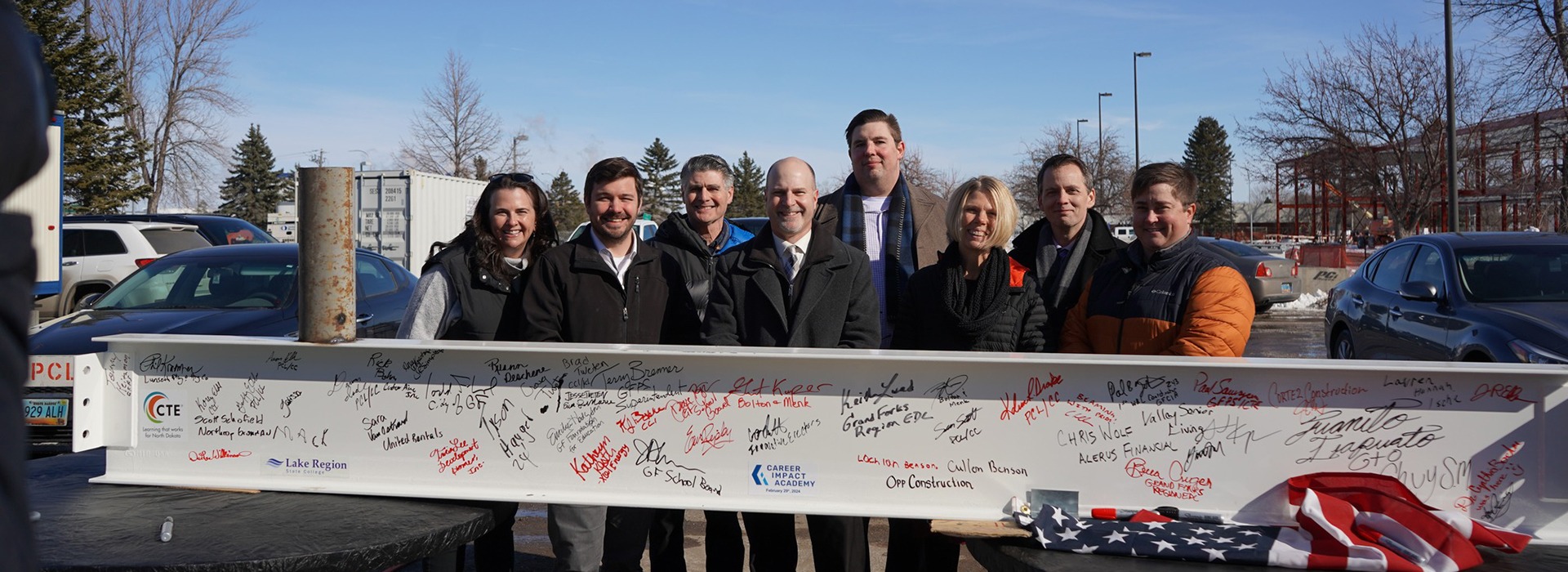
Five years ago, Grand Forks Public Schools secured a $10 million state grant after raising more than $11.5 million in private funding in just 70 days in response to a governor’s challenge. That effort led to the creation of the Career Impact Academy, a purpose built facility designed to align student learning with the workforce needs of local industry.
Pathways at the academy include, aeronautics, meteorology, and pilot licensure,connected to programs at the University of North Dakota. “That is a full class,” expands Dr. Brenner. “Students who want to go into that field, they start to get the feel for that when they’re 16, when they’re sophomores.” The facility itself is designed as a learning tool, with open ceilings and visible systems that allow students in HVAC, electrical, and mechanical pathways to see what they are learning up close.
Other offerings include small engine and automotive repair programs with six professional auto bays, and precision agriculture Advance Manufacturing, Aerospace/UAS, Automotive, Building Trades, Culinary Arts, Engineering/Robotics, Health Sciences (CAN, EMT, OT/PT) and Precision Technologies, giving students a head start when it comes to technology in farming. “Between drones and high tech on these combines, everything is computerized now. So those are introductory courses that we have for our students,” he adds. “John Deere was a major contributor to the Career Impact Academy. Like so many other industries across our community, they saw this as a real opportunity to get people into that workforce as well.”
Healthcare partnerships include Altru Health System and Sanford Health, both early supporters of the academy. “The first check that came to us was a million dollar check,” Dr. Brenner recalls. “That came from Altru Health Systems as they deal with nursing shortages, doctor shortages, you name it. They were the first to write a check. They’re a staple in our community, and they just opened their doors last January of 2025, to a new half billion dollar Hospital here.”
Students in medical pathways learn in a classroom that is set up like a hospital room, and finish with a CNA certification, starting them on the path to further education, or career. “We’ve got students already who are working in elderly care facilities, working in hospitals, getting that experience while they’re also in class, taking these courses,” he details. “So, there are two major medical partners looking to fill pipelines in our careers classes.”
Investing in the Future
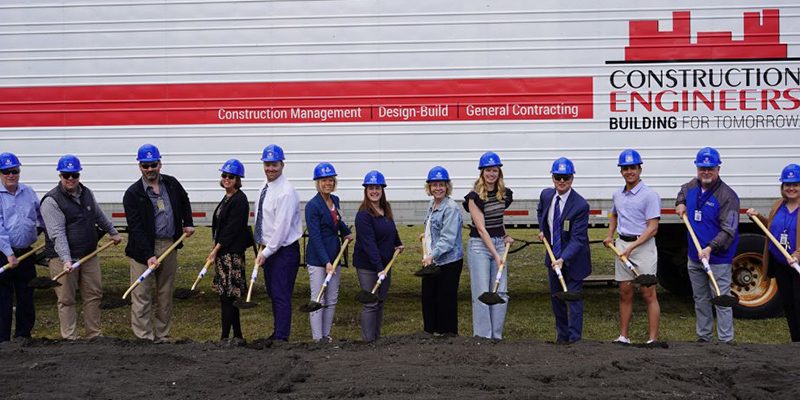
Ongoing investment is required to support the opportunities available to students of Grand Forks Public Schools. Over the past three years, the district has completed or launched nearly $200 million in capital projects. “We’ve had major support from our community,” Dr. Brenner conveys. “They value public education.”
Upgrades include districtwide HVAC improvements, a new Valley Middle School opening in January 2026, a centralized kitchen, and a new pre K through eighth grade school at Grand Forks Air Force Base, which was funded largely through federal impact aid which will break ground in the spring of 2026. Safety upgrades have also been a priority, with eight campuses reorganized and renovated to include secure vestibules. The plan is to extend these enhancements to all schools.

Over the past four years, the district has also made a significant financial commitment to retaining staff, increasing compensation by 19 percent. “We were seeing a mass exodus of teachers during and right after covid,” Dr. Brenner relays. “One of my goals when I became superintendent in 2018, which was shared by our 9 member School Board was to invest in capital, and to invest in people.”
Going forward, Dr. Brenner stresses that academic excellence remains a top priority. While Grand Forks experienced less learning loss than many districts during the pandemic, he underscores the importance of continued progress. “Our strategic plan has a whole bucket built around academic performance,” he emphasizes, noting that clear benchmarks, board level accountability, and a districtwide focus on literacy, math, and graduation rates are guiding the efforts. “Those are the high level goals that we have,” he affirms. “Because at the end of the day, this is about teaching and learning.”
AT A GLANCE
Who: Grand Forks Public Schools
What: A K-12 public school district offering a high quality educational experience
Where: Grand Forks, North Dakota
Website: www.gfschools.org
PREFERRED VENDORS/PARTNERS

PCL Construction: www.pcl.com
PCL Construction, a leading North American contractor, completes over $8 billion USD in annual projects. Serving the Midwest since 1978, its Minneapolis District specializes in education, hospitality, healthcare, manufacturing, and more. As a 100% employee-owned company, PCL fosters innovation and client-focused, cost effective solutions.

Xcel Energy: www.xcelenergy.com
Xcel Energy is a leading energy provider, dedicated to excellence. We make energy work better for customers, helping them thrive every day. That means delivering reliable and sustainable energy. All while keeping bills as low as possible. Every day, we strive to make interactions with us simpler, empowering and impactful.
