A Great Place to Stop and Enjoy
From Bedroom Community to Business Hub, Florida’s Eighth-Largest Palm Beach County City Builds Its Second Century on Local Talent, Strategic Partnerships, and Hidden Gems.
In the heart of Palm Beach County, Greenacres is approaching a milestone that few American cities achieve: its centennial anniversary. Founded in 1926 by Lawrence Carter “L.C.” Swain, who envisioned a community for the working class, the city has spent nearly a hundred years evolving from agricultural plots sold for $225 each into the county’s eighth-largest municipality. Today, approximately 45,000 residents call this diverse, six-square-mile city home, and local leadership has spent the past decade working to fundamentally reshape its identity.
“Greenacres has always been known as a bedroom community, a place where people pass through to get somewhere else,” explains Andrea McCue, City Manager. “Over the last 10 years, the city has made a concerted effort to set ourselves apart and create a destination. We want to be a community where people can live, learn, work, and play.” McCue’s vision aligns with broader efforts to transform Greenacres from a pass-through commuter town into an economically self-sustaining hub where residents no longer need to leave daily for employment or entertainment.
The upcoming centennial celebration, launching in December, serves as both commemoration and catalyst. The year-long festivities will unveil a new brand identity and logo designed to intimate the city’s transformation. For a municipality that has earned Tree City USA designation for 31 consecutive years and houses John I. Leonard High School, Palm Beach County’s largest with 3,278 students, the anniversary marks not just survival but strategic reinvention in one of Florida’s most competitive economic landscapes.
Strategic Economic Development and Business Support
Greenacres operates with a comprehensive plan that guides its redevelopment initiatives across multiple sectors. Dr. Philip C. Harris, Director of Economic Development, oversees strategies designed to attract investment while supporting the city’s existing business base of over 700 small and medium-sized enterprises. The approach balances infrastructure improvements with targeted programs that address the specific needs of local entrepreneurs.
“We’ve implemented a fast-tracked permitting process as an incentive to businesses coming forward for redevelopment,” Dr. Harris notes. “We’re trying to save them money and help them get to do what they do best.” This streamlined approach has yielded measurable results. Juicy Patties, a new franchise opening in the city, reported that Greenacres delivered the fastest build-out among their 14 United States locations. This efficiency stems from deliberate municipal reforms aimed at reducing bureaucratic delays that typically slow commercial construction.
Beyond permitting reforms, the city has cultivated partnerships with business support organizations. Prospera USA provides capital access and marketing assistance to Hispanic and Latino entrepreneurs operating businesses with one to five employees. SCORE offers confidential onsite mentoring for established businesses facing growth challenges, helping owners who may have operated successfully for five or ten years but struggle to scale beyond their current capacity. These partnerships increase the city’s capacity to serve businesses at different developmental stages without expanding municipal payroll.
“We really try to invest in our small and medium-sized business because we want to let them know that they belong here,” McCue emphasizes. “We want our businesses to grow with us as part of our theme and branding concepts.” The focus on retention and organic growth highlights an understanding that sustainable economic development requires nurturing existing assets, not just recruiting external investment.
Local Success Stories
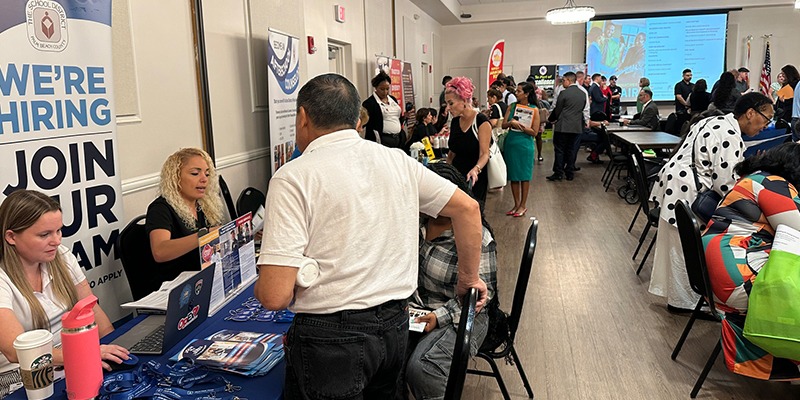
The city’s business support initiatives have produced tangible employment outcomes, documented through recent hiring fairs and commercial openings. Pinecrest Bakeries, which completed a soft opening before its official grand opening, hired all 14 employees from a Greenacres job fair. The bakery joins a growing roster of businesses finding qualified local talent through municipal employment programs rather than recruiting from neighboring cities.
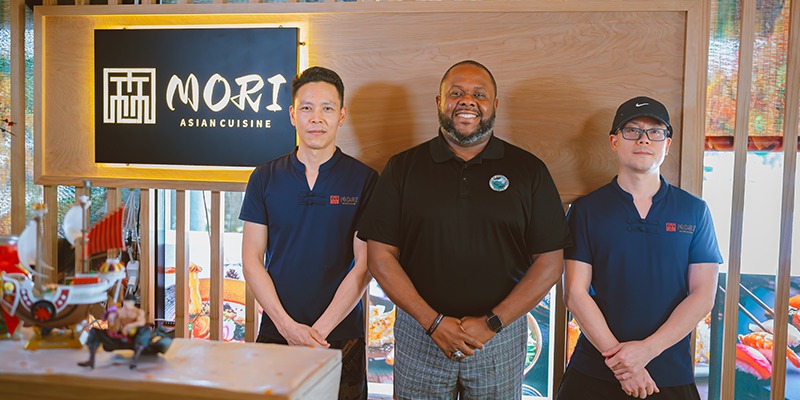
“Winston Barbershop hired two barbers from our job fair, and they came specifically from Greenacres,” Dr. Harris reports. “The cosmetologists at the barbershop, the four top executives for management at Juicy Patties, all these success stories we want to spotlight.” The pattern ties individual hires to broader business performance metrics. More Asian, a local restaurant, experienced significant customer increases after the city launched its “Dine Local Savor” campaign, attracting diners who hadn’t realized the establishment operated within city limits despite competitive pricing and quality offerings.
These outcomes exemplify how concentrated municipal marketing can shift consumer behavior in densely populated areas. With a population density of approximately 7,800 residents per square mile, Greenacres possesses the demographic concentration that makes local commerce viable if residents choose to shop within city boundaries rather than driving to adjacent municipalities. The city’s diversity, with 42.5 percent of residents born outside the United States and significant Hispanic, Black, and white populations, creates opportunities for culturally specific businesses to find customer bases.
“Regardless of the climate of what’s happening, we’re trying to maintain as much local control as a city government of providing business support,” McCue explains. The emphasis on local control acknowledges that smaller municipalities often face constraints when competing with county-level resources, making strategic partnerships and targeted programs essential for achieving measurable economic impact.
Parks, Recreation, and Quality of Life
Despite its compact footprint, Greenacres has invested heavily in recreational infrastructure over the past five to seven years. The city utilized infrastructure surtax dollars specifically for quality-of-life improvements, allocating over half a million dollars to upgrade play structures across multiple parks. McCue describes these facilities as assets designed to provide gathering spaces for families seeking activities that don’t require significant expenditure.
“We have amazing parks, and we’ve invested a lot of money,” McCue says. “Based on feedback we’ve received, our residents like using our parks and are looking for opportunities to gather and spend time with their families without having to pay a lot of money.” The investment priorities come from resident input gathered through community engagement processes. Several parks now feature equipment designed for people with unique abilities, including wheelchair users and individuals with developmental disabilities, making recreation accessible to broader segments of the population.
The city installed what McCue identifies as the first bank shot basketball court in Palm Beach County, adding specialized recreational options beyond standard playground equipment. “Currently, Greenacres is developing its first-ever Parks Master Plan,” he says, “a comprehensive planning process designed to align future amenities with resident preferences as population growth creates new demands.” The planning effort runs parallel to the city’s comprehensive plan, with particular integration into the health element addressing wellness and active living.
“We’re compiling all that information to develop the plan so we can go into the future,” McCue explains. “It can work in coordination with our comprehensive plan to develop spaces that people want to enjoy and attend events at.” The master planning process also accounts for non-resident usage, as people from surrounding areas regularly use Greenacres parks, creating opportunities and capacity challenges that require data-driven planning responses.
Hidden Gems and Community Assets
While many municipalities promote chain retailers and corporate entertainment venues, Greenacres prefers distinctive, locally significant businesses that differentiate the city from regional competitors. Green Acres Bowling Alley is one of only two family-owned bowling centers remaining in South Florida and the sole family-owned facility left in Palm Beach County. Chris, the owner whom Dr. Harris describes as an amazing individual, maintains a business model increasingly rare in an industry dominated by corporate operators.
“There’s only one left in Palm Beach County, and that happens to be right here in Greenacres,” Dr. Harris notes. “He’s an amazing asset of entertainment in our area.” The bowling alley is a category of business that provides family entertainment at accessible price points, filling a niche that corporate chains often abandon in favor of higher-revenue markets. Similarly, Astro Skates holds the distinction of being the highest-grossing location in the Astro Skates chain throughout Florida, despite operating in a city often characterized as a pass-through community.
These entertainment venues succeed in Greenacres partly because of population density and partly because they serve multi-generational families seeking affordable group activities. The city’s median household income of $62,917 is below Palm Beach County’s wealthier coastal communities, creating demand for value-oriented recreation rather than premium experiences. Dr. Harris frames these businesses as existing assets requiring recognition and amplification rather than replacement.
“If we invest and maximize the assets that we have here, which are jewels and gems, the sky’s the limit,” he explains. “The only way here in Greenacres is to continue to go up.” The philosophy emphasizes building on established strengths rather than pursuing development models that erase local character in favor of homogenized commercial districts replicable in any suburban market.
Open for Business
Looking forward to the next two-year timeframe, Greenacres leadership has identified specific priorities that will define the city’s trajectory through its centennial year and beyond. McCue outlines a sequence beginning with the December launch of the hundredth anniversary celebration, followed by the unveiling of the new brand and logo, completion of the Parks Master Plan, and implementation of that plan’s recommendations alongside economic development initiatives Dr. Harris has established.
“Through the relationships that Dr. Harris has developed, we’re hoping to bring redevelopment to the city that will add more heightened density but provide more opportunities for people to live, learn, work, and play,” McCue says. The reference to heightened density indicates that Greenacres, already operating at approximately 7,800 residents per square mile, will pursue vertical development and mixed-use projects rather than horizontal expansion constrained by its six-square-mile footprint.
Dr. Harris frames the city’s posture as fundamentally receptive to innovation and business proposals. “Greenacres is open for business, we’re open for opportunities,” he states. “Don’t just drive through us; stop, ask questions, and bring your innovation to our city because we’re not quick to say no. We’re at a place where we will try to figure it out and make it happen.” This approach puts Greenacres within Palm Beach County’s broader economic ecosystem, which has attracted 2,602 hedge funds and private equity firms and earned recognition as one of the world’s top five fastest-growing wealth hubs.
The city’s governance model emphasizes responsiveness over confrontation. “We’re a municipality and a council and a city manager that hears our residents’ issues and concerns, and we address them,” Dr. Harris explains. “We’re not confrontational here. We are a city that genuinely cares, with empathy at the forefront.” As Greenacres enters its second century, leadership seeks to prove that transformation from bedroom community to destination doesn’t require abandoning the working-class accessibility that L.C. Swain envisioned in 1926, just evolving it to meet contemporary economic realities.
AT A GLANCE
Who: City of Greenacres
What: A diverse municipality of 45,000 residents approaching its centennial anniversary, transitioning from bedroom community to economic destination through strategic business support, infrastructure investment, and community engagement
Where: Palm Beach County, Florida
Website: www.greenacresfl.gov
PREFERRED VENDORS/PARTNERS


Business Development Board of Palm
Beach County: www.bdb.org
The Business Development Board of Palm Beach County is the official economic development organization for the Palm Beaches. BDB attracts, supports, and retains businesses through site selection assistance, market intelligence, and strategic partnerships, helping companies grow while strengthening Palm Beach County’s economy and workforce.

CTS Engineering, Inc.: www.ctseinc.com
CTS Engineering, Inc. is a South Florida–based multidisciplinary engineering firm providing transportation, stormwater, traffic, surveying, and infrastructure solutions. Known for technical excellence and local knowledge, CTS partners with municipalities to deliver practical, compliant, and cost-effective projects that enhance safety, mobility, and community quality of life.

Gehring Group
Part of the Brown & Brown Team: www.gehringgroup.com
Gehring Group, a Risk Strategies Company, specializes in Employee Benefits, Risk Management, and Human Resources Consulting Services for the public sector. Our team of experts works closely with clients to understand workplace composition, governing body, legislative framework, industry-specific insurance product offerings, and member organization groups.

LDC Companies: www.ldccompanies.com
LDC Companies, LLC delivers comprehensive development and construction services across South Florida, serving Broward, Miami-Dade, and Palm Beach Counties. From land planning and site design to consulting, construction management, and building, our multidisciplinary team provides client-focused, innovative, and sustainable solutions. With deep local expertise and a commitment to quality, we efficiently deliver lasting value on residential, commercial, and industrial projects.
