A City of Choice in the Rio Grande Valley
Modern Infrastructure, Inclusive Amenities, and Community-Focused Leadership Shape This Community’s Next Chapter
In the heart of the Rio Grande Valley, the City of Alamo, Texas, is stepping confidently into the spotlight. Being the smallest city within the PSJA (Pharr–San Juan–Alamo) district, Alamo is embracing a new identity as a city of choice – a place where people come not just to live, but to invest, retire, raise families, and put down roots.
For City Manager Bobby Salinas, the vision is both straightforward and ambitious. He wants Alamo to be known across the Rio Grande Valley as a community that offers high quality of life, solid economic opportunity, and sustainable growth, all while preserving the cultural roots and small-town feel that define its character. Historically seen as “the little city in the corner,” Alamo is working hard to change that perception. The goal is to become a destination in its own right, a place where residents feel proud to call home and businesses see clear value in setting up shop.
That transformation is being driven by a deliberate mix of infrastructure modernization, thoughtful land use planning, expanded housing options, enhanced parks and green spaces, and a strong network of regional and economic development partners. Through each initiative, one theme remains constant: residents come first.
Downtown as a Focal Point
The city’s renewed sense of purpose is perhaps most visible in its approach to downtown. Through a new comprehensive plan, Alamo is rewriting the future of its Main Street corridor, imagining it not just as a throughway, but as the civic and social heart of the community.
The plan envisions a more walkable, attractive, and lively downtown, with improved streetscapes, gathering spaces, and programmed activities that draw both residents and visitors. Central Park, already a well-used venue, is set to play an even greater role in that transformation. Events such as the recent Trunk-or-Treat, which saw families and children fill the streets for Halloween festivities, are early examples of how the city is using its core public spaces to build community connection and energy.
The vision includes more opportunities for small vendors, local artisans, and cultural programming. Ideas like art walks and market days are being explored as ways to animate downtown and give local entrepreneurs and creatives a platform. At the same time, beautification efforts, including upgraded LED street lighting and future tree plantings, will enhance safety, comfort, and visibility, turning downtown into a place people seek out rather than simply pass through.
Modernizing the Backbone: Infrastructure and Technology
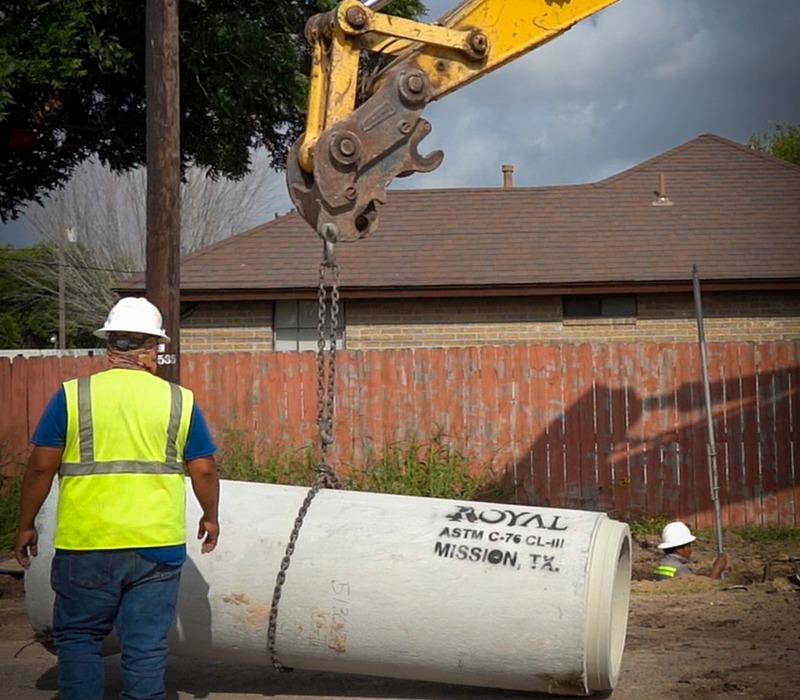
While the revitalization of downtown is important for identity and pride, the city’s leadership knows that true quality of life depends heavily on the infrastructure humming just beneath the surface. From water and sewer to street lighting and digital tools, Alamo has moved swiftly to update systems that residents rely on every day.
One of the most transformative early projects overseen by Salinas was the installation of more than 6,000 digital water meters throughout the city. Replacing traditional manually read meters, these smart devices allow the city to monitor water usage in real time, identify leaks, detect tampering, and flag abnormal consumption patterns. If a home shows continuous water use at two or three in the morning, staff can reach out proactively to homeowners to investigate, often uncovering previously undetected leaks that were wasting water and money.
The new meters have also eliminated the need for meter readers to physically travel from property to property. With a single digital command, the city can capture readings from every meter in the system. The result is increased efficiency, more accurate billing, and a much more sustainable use of a precious resource.
Lighting is another area where Alamo is pushing ahead. The city has committed to converting all municipal lighting to LED and is actively extending this effort across all city-owned buildings and street fixtures. An order for 88 new LED streetlights will see aging high-pressure sodium units replaced with brighter, more energy-efficient fixtures. For residents, this translates into better-lit streets and neighborhoods, an added sense of safety, and lower long-term operating costs for the municipality.
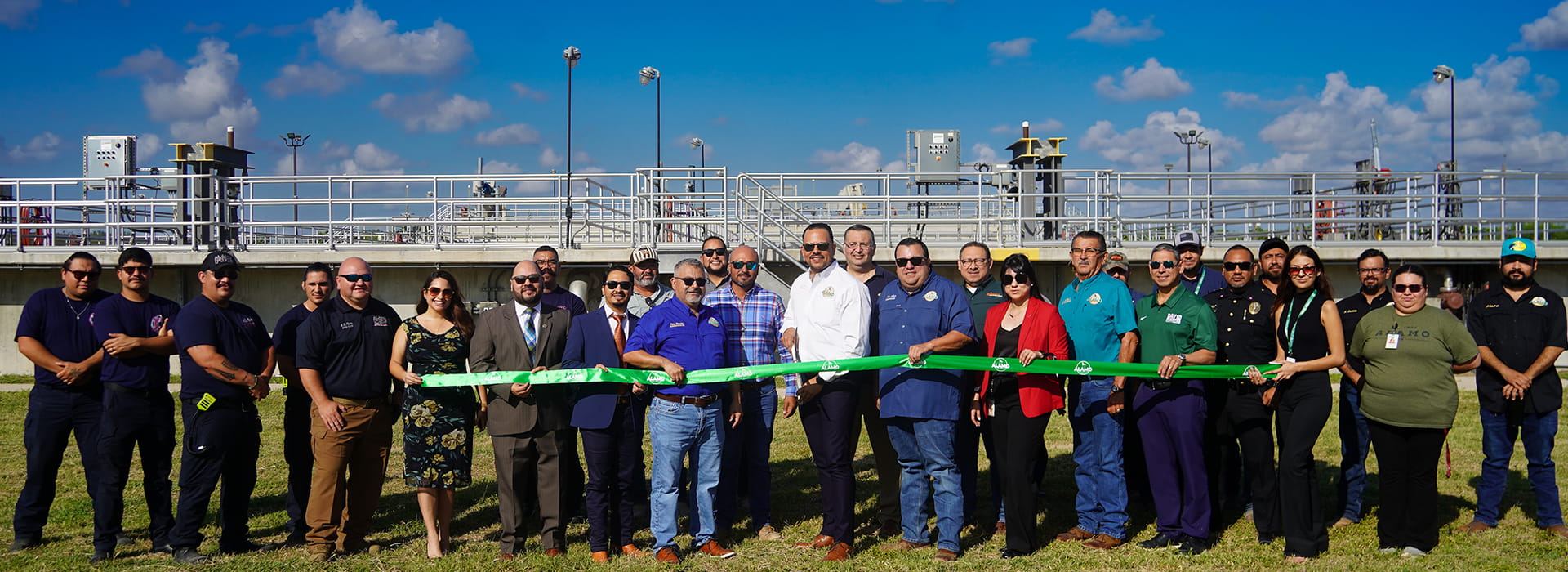
Water and wastewater infrastructure are being treated with the same level of attention. Alamo recently retired its old lagoon-based wastewater system – one of the most antiquated forms of treatment – and replaced it with a modern sequencing batch reactor (SBR) plant. The new facility is one of only two in the entire Rio Grande Valley, placing Alamo at the leading edge of wastewater technology in the region. On the potable water side, the city is upgrading its plant by replacing older metal filter systems with more durable and reliable concrete filters, improving both performance and longevity.
These investments are guided by updated master plans for water, sewer, and drainage, completed in 2022. Those documents serve as roadmaps for future growth, ensuring that as development accelerates, the underlying infrastructure is ready to support it.
Housing for Every Stage of Life
As Alamo’s reputation grows, so too does interest from developers and homebuyers. The city is seeing an increasingly diverse set of housing options, designed to meet the needs of families, investors, retirees, and seasonal residents.
One notable project is an 80-acre development dominated by four-plex units. With approximately 80 percent of its lots already sold, the subdivision is quickly filling in, reflecting strong demand for multi-unit investment and rental properties. At the same time, the city is encountering newer forms of single-family development that challenge traditional planning assumptions.
Historically, a standard single-family lot in Alamo might measure around 6,000 square feet, with typical homes ranging from 1,200 to 1,600 square feet. Newer projects, often described by developers as “garden homes,” are proposing smaller lots, sometimes around 5,000 square feet, while maintaining similar interior living space. For a former planner with more than 20 years of experience like Salinas, the shift from a 60-by-100 lot to a 50-by-90 footprint can be jarring, but the market is responding favorably, with many of these homes selling in the $180,000 to $200,000 range.
Crucially, these newer formats are not displacing more traditional single-family development. Alamo continues to see conventional subdivisions come to market, while also welcoming gated and private neighborhoods that offer enhanced security and exclusivity. For many families, those gated communities represent peace of mind and a safe environment to raise children.
Retirees and seasonal residents, particularly winter Texans, remain a vital part of the local housing ecosystem. The Alamo Country Club stands out as a major draw, blending brick homes and RV sites in a 55-plus community with its own golf course and dedicated security. The mix of amenities and community feel make it a destination of choice for those looking to enjoy their retirement in a warm, welcoming setting.
An All-Inclusive Regional Park for Everyone
Perhaps no project better embodies the city’s resident-first philosophy than its new all-inclusive regional park now under development near the expressway at Tower and Duranta. Recognizing that proximity to the Valley’s main traffic artery makes the site highly accessible, Alamo is designing the park as a regional draw that will serve residents from the city and neighboring communities alike.
The term “all-inclusive” is taken seriously. The park is being built to ensure that children and adults of all abilities can participate fully in play and recreation. That means accessible play structures, thoughtful layout, and surfaces and equipment designed with mobility in mind. Beyond physical accessibility, the park will include sensory gardens that cater especially to children on the autism spectrum and others with sensory processing needs. These gardens will feature a variety of textures and plants, allowing visitors to touch, compare, and experience nature in a more interactive way.
Technology also plays a role. The park is planned with Wi-Fi connectivity so that families who may not have internet at home can use the space to complete homework, remote work, or other online activities. Recreational amenities such as pickleball courts and tennis courts round out the offering, making the park not only inclusive but also dynamic and multi-generational.
This regional park is part of a larger commitment to enhance green spaces citywide. Alamo has set a goal of adding inclusive features, whether a play system, a sensory wall, or a sensory path, in every park within its system. Step by step, the city is ensuring that recreation is accessible and meaningful to as many residents as possible.
Connected by Trails and Green Corridors
Beyond playgrounds and sports fields, Alamo is playing a key role in a developing regional network of hike-and-bike trails. At the Alamo Sports Complex, a major venue in the southern part of the city featuring four baseball fields and regular tournaments, the groundwork is being laid for a long-distance trail link.
Hidalgo County Precinct 1 Commissioner David Fuentes is spearheading a trail along Ridge Road that will ultimately connect Weslaco to and through Alamo, and link into the existing trail system managed by Precinct 2. That network already stretches into McAllen and is among the longest in the region. The long-term goal is ambitious: create a continuous trail that allows users to travel from Weslaco to McAllen and Edinburg using a safe, dedicated path, largely separated from major traffic corridors. When complete, residents and visitors will be able to move between cities by bike or on foot with ease, reinforcing the Rio Grande Valley’s identity as a connected region.
Economic Development and Partnership Culture
Alamo’s progress is underpinned by an impressive array of partnerships that span local, county, state, and federal levels. The city works closely with the Alamo Economic Development Corporation and the Alamo Chamber of Commerce, which share a building and collaborate to attract and support businesses. This tight alignment between city leadership, economic development professionals, and the business community helps ensure that opportunities are identified early and pursued effectively.
Alamo’s position within two county precincts is another unique advantage. Portions of the city fall under Precinct 1, while other areas are in Precinct 2. This gives Salinas and his team two county commissioners to engage with when pursuing infrastructure projects and regional initiatives. At the federal level, the city is represented by Congresswoman Monica De La Cruz. The city has partnered with De La Cruz’s office on a request for approximately $2.4 million in funding to support a new public safety building, reducing the financial impact on local taxpayers for a project estimated at around $8.5 million.
Locally, Freedom Bank serves as the city’s primary financial institution, handling municipal financing and stepping in as a collaborative partner on projects like Alamo’s new LED community sign along the expressway frontage. Major retailers like Walmart and H-E-B are also reliable supporters of community events and initiatives, demonstrating the strong bond between public and private stakeholders in the city.
The industrial sector, while not yet as large as the city would like, includes major players such as CIL, a cotton handling company that stores and ships products nationwide from its Alamo facilities. While the absence of a direct international bridge means the city does not see the same level of logistics activity as some neighboring border communities, Alamo remains keen to grow its industrial and light manufacturing base to create more local jobs and broaden its economic foundation.
Sustainability Woven into Daily Decisions
Environmental responsibility in Alamo is less about grand declarations and more about consistent, practical choices. The city’s phased conversion to LED lighting reduces energy use and emissions. The upgrade of the water treatment plant and the introduction of modern wastewater technology improve environmental performance while increasing resilience. For major capital projects, Alamo builds in green design features whenever possible.
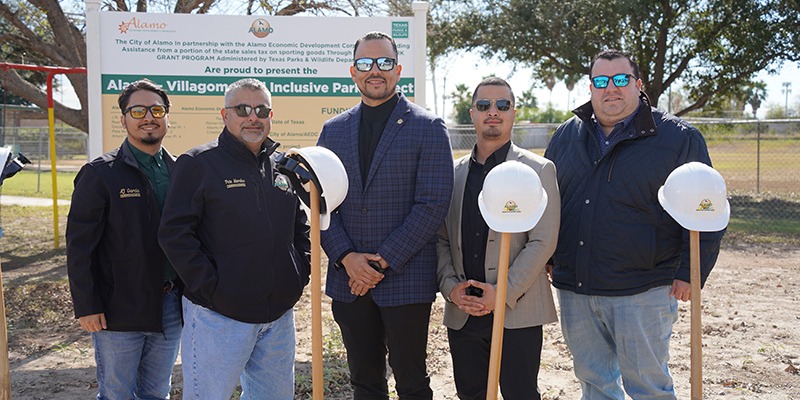
From L to R: Mayor Pro Tem A.J. Garcia, Commissioner Pete Morales, Mayor J.R. Garza, Commissioner Roel “Leon” Moreno, Jr., and Commissioner Okie Salinas
While sustainability efforts remain under the umbrella of priorities moving forward for the City of Alamo, Salinas is laser-focused on exactly what cherished Alamo residents want. While business pushes ahead, and key projects take shape, Salinas never loses sight of who is at the center of such efforts- those that take pride in calling Alamo home.
AT A GLANCE
Who: Alamo, Texas
What: A dynamic city that is investing in commercial, housing and its residents
Where: Rio Grande Valley, Texas
Website: www.alamotexas.org
PREFERRED VENDORS/PARTNERS

Saenz Brothers Construction: Phone: (956) 464-3400
Saenz Brothers Construction, LLC is a family owned business founded by four brothers, each bringing decades of combined experience to the table. Since our establishment in 2013, we have proudly served the South Texas community, specializing in underground utilities such as sewer and storm drainage systems, waterline installation and repair, and ditch work. Our commitment to safety, efficiency, and customer satisfaction drives us to deliver dependable infrastructure solutions you can trust.
