Shift & Transcend
A Future-Ready District Closing Gaps, Powering Pathways, and Building the Next School
In Roselle, New Jersey, the mantra for the 2025–26 academic year is more than a slogan. “Shift & Transcend” is a work plan, a cultural compass, and a promise to prepare every scholar for college, careers, and life. Superintendent Dr. Nathan Fisher describes the aim succinctly: create a safe, positive learning environment where students grow socially, emotionally, and academically—and do it in ways that match the pace of a changing world.
“The things of the past won’t take us where we need to go,” he says. “We’re shifting from traditional approaches so our students can transcend to higher levels.”
That commitment shows up in the district’s daily fabric. Roselle leans hard into social-emotional learning, character education, and family engagement without losing sight of rigorous academics and real workforce skills. The result is a district as focused on belonging and well-being as it is on credentials and pathways—a balance that has earned schools national recognition and positioned Roselle as a small district with outsized momentum.
A Whole-Child Foundation
Roselle’s SEL work is not a side program; it’s the spine. Pre-K–12 initiatives weave character development into grade-level experiences—through assemblies, targeted classroom supports, and districtwide programming aligned with the New Jersey Alliance for Social, Emotional, and Character Development. Several schools hold the National School of Character distinction, and this fall the district will be honored again as one of its elementary schools receives a Blue Ribbon School of Excellence award.
The recognition matters, but the ethos matters more. “We aim to be the safest, most consistent place in a child’s life,” Fisher notes. “That starts with social-emotional readiness and extends into everything else we do.”
Family and community connections are built with intention. In September, Roselle hosted the “Get on the Bus” tour, bringing eighth through twelfth-grade boys face-to-face with Morehouse students and on to a college football game with families invited—part inspiration, part access, entirely community-building.
The district is also realistic about logistics and equity; when transportation or scheduling becomes a barrier to student internships, Roselle brings industry to campus, from healthcare partners to tech professionals, so students still get authentic exposure to work and study pathways.
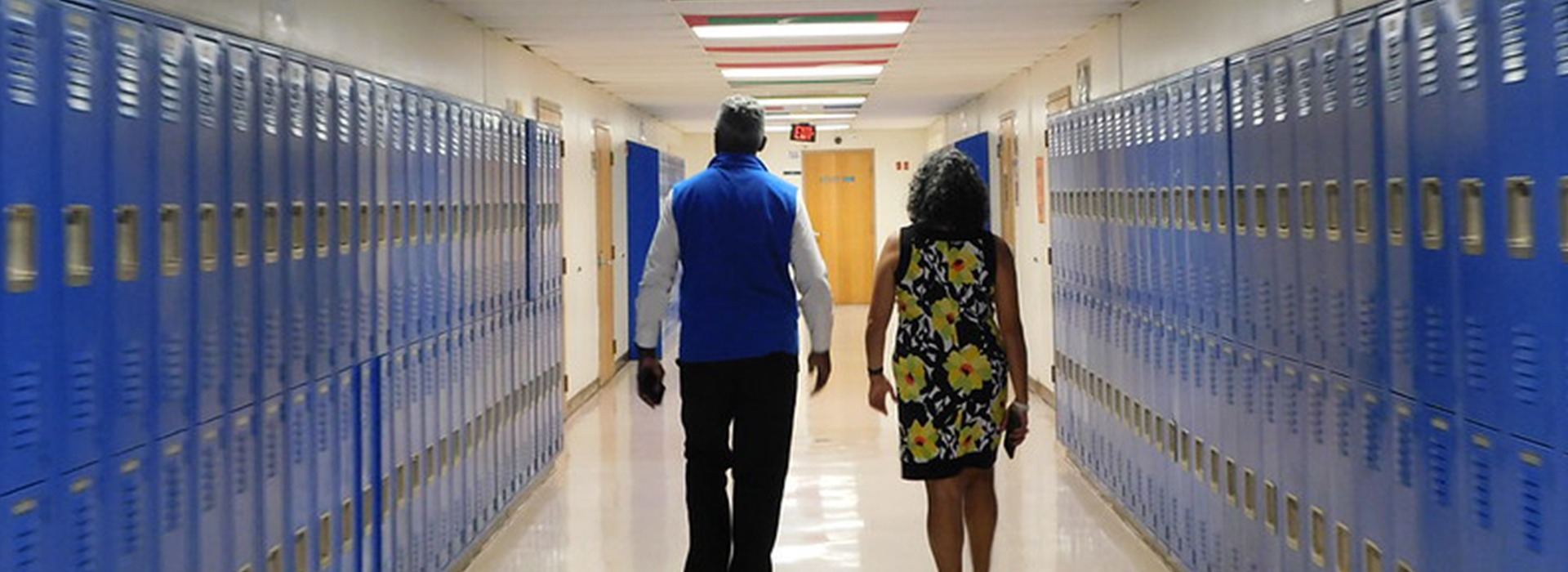
Adults receive support, too. The district treats teacher wellness as essential infrastructure. Back-to-school walk-and-connect events, celebratory breakfasts, and public shout-outs set a tone of appreciation. More importantly, Roselle gives educators voice and choice in professional learning. Twice a year, on “Choice Days,” faculty select from teacher- and administrator-led sessions that reflect their interests and needs.
“We listened,” says Assistant Superintendent Dr. Lizette Gonzalez. “When teachers said they wanted meaningful, relevant PD—and a chance to learn from their peers—we retooled the model. Climate and culture have improved because people are seen.”
Technology That Widens Opportunity—Not the Divide
Roselle is technology-rich by design, and the build is both top-down and bottom-up. The district has modernized its infrastructure to meet FERPA and COPPA requirements, expanded access points, and standardized device management. Through the Verizon Innovative Learning Schools initiative, every student in grades five through twelve carries a Chromebook with LTE and 30 gigabytes of monthly data, a deliberate move to collapse the digital divide after school hours. “Access can’t stop at dismissal,” Fisher says. “If we want equity, we start with connectivity.”
On the classroom side, Roselle is a one-to-one district that treats devices as tools, not ends. Students learn the basics of digital citizenship in the early grades and move quickly into authentic creation—coding, data work, engineering builds, media production—using platforms aligned to state computer science standards.
The district recently updated its acceptable use policy to explicitly allow teachers and students to leverage AI in structured ways, pairing innovation with digital ethics and human judgment. “We want students to know when and how to use new tools responsibly,” says Instructional Technology and CTE Supervisor Evaneede “Evie” Wilson. “Agency is a skill.”
Roselle’s Student Repair Academy turns tech support into workforce preparation. Under the guidance of a district technician, high school students earn industry-recognized micro-credentials and perform minor repairs—replacing screens, keyboards, and hinges—while learning customer service and troubleshooting in a real support environment.
The district’s drone pathway builds from fundamentals to certification, with students learning mapping and survey applications and then visiting the Amazon warehouse to see how drones and data drive logistics, routing, and safety. “The applications are exploding,” Fisher notes. “From construction imaging to public safety, students need to see the work—and the work needs to see them.”
The S.T.E.A.M Machine: A Mobile Makerspace That Meets Students Where They Are
Space is precious in Roselle’s aging buildings, so the district built capacity that moves. The STEAM Machine—a mobile, district-owned makerspace—circulates among schools to supercharge project-based learning. Inside the bus, students and teachers have access to a professional-grade 3D printer, a laser cutter, and a Cricut production station for graphic design.
The model flips the usual constraint on its head: instead of a single room with limited hours, Roselle brings fabrication tools to the units that need them, when they need them, and ties every stop to curriculum. “It’s not a standalone show-and-tell,” Wilson says. “The equipment is embedded in PBL. Students plan, design, iterate, and prototype solutions to real problems, then choose the right tool for the job.”
The district complements the mobile lab with on-site assets. At the junior high, Roselle is building a dedicated esports room to seed a formal pathway in game strategy, shoutcasting, event management, and game development—an academic track that rides alongside a popular after-school program.
Virtual reality kits, classroom drones, and Amazon Future Engineer coursework round out an ecosystem that privileges creation and analysis over passive consumption. “We’re teaching students to be makers, not just users,” Wilson says. “And yes, that includes AI—used thoughtfully.”
Pathways That Respond to Students and the Regional Economy
Roselle’s career and technical education is built with both ears open—one to student interest and the other to labor market signals from the Chamber of Commerce and regional partners. Culinary arts and computer science are established pathways. A health occupations track, once robust, has been paused for restructuring after interest waned, a decision made with candor about what students want and where the jobs are moving.
In its place, the district is developing a digital media pathway that blends journalism, production, social media strategy, and analytics. “Our kids are gravitating to the media-tech nexus,” Wilson explains. “We’re responding with coursework that is rigorous, employable, and creative.”
Partnerships give those pathways altitude. Roselle works with Rutgers University for dual enrollment and with Montclair State University, a designated computer science hub, for exposure and mentoring.
Twenty-five students are headed to Montclair in late October to meet undergraduates and faculty in their chosen areas, walk the labs, and experience the expectations of college-level study. Where traditional internships are hard to scale—transportation is a real barrier in a walking district—Roselle flips the model by bringing professionals to classrooms, staging career days, and coordinating live demonstrations on campus.
The district’s place in the national League of Innovative Schools opens research partnerships and thought-partner networks that accelerate program design. “We want our students opportunity-ready,” Fisher says. “Sometimes that means going out to see work; sometimes it means bringing the work in.”
Professional Development That Models the Future
Roselle’s teacher learning mirrors what it wants for students: agency, relevance, and mastery. Choice Days put educators in the driver’s seat; sessions are taught by respected peers and school leaders; topics reflect what faculty have asked for, from AI-assisted assessment to inclusive PBL.
The district also invests in leadership at every level, elevating teacher talent by turning expertise into shared practice. “One of the biggest SEL supports for adults is letting them showcase what they’re great at,” Wilson says. “It builds pride, spreads skill, and improves culture.”
Capital Investment with an Eye on Equity and Efficiency
Behind the academic work is a deliberate push to modernize a set of facilities that have carried Roselle for decades. In the last two years, the district completed multi-million-dollar HVAC upgrades at the high school and an elementary school, replaced roofs across multiple buildings, and is staging a window modernization program. Sewer systems—often invisible until they fail—are being evaluated and replaced in phases.
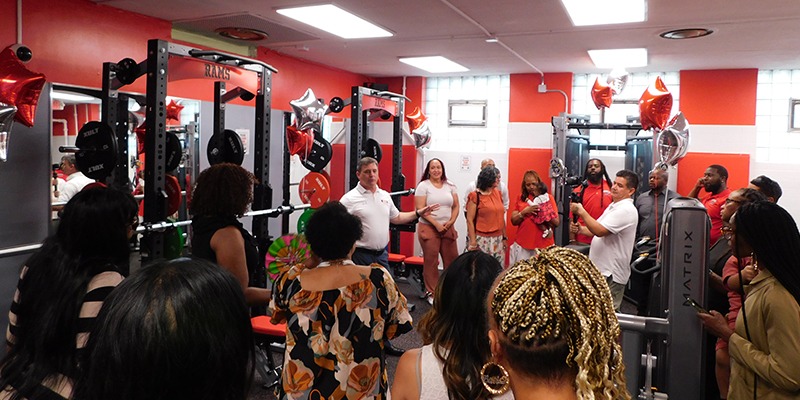
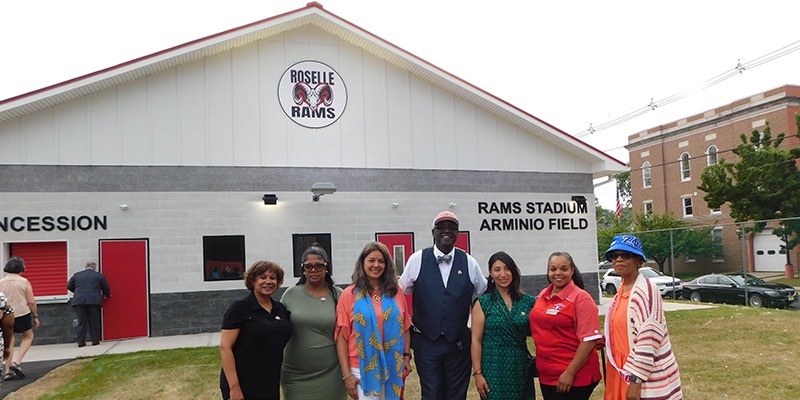
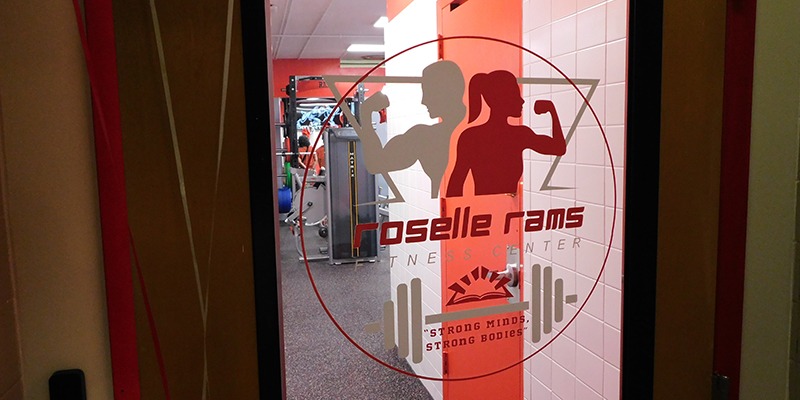
Retrofitting has become a Roselle hallmark: esports rooms, podcast studios, fitness spaces for scholar-athletes, and media labs have been carved out of existing real estate to meet modern needs without waiting for a new building.
Accessibility is non-negotiable. Many schools were built in an era when multilevel access for wheelchair users was not part of the design; Roselle is now methodically adding access solutions so students, staff, and visitors can reach every floor. “Handicap accessibility is a matter of dignity and equity,” Fisher says.
“We are fixing what time and design is left behind.”
The district is also pursuing energy strategies that reduce cost and carbon. Solar expansion is on the near-term agenda, and Roselle is exploring an Energy Savings Improvement Program to lock in lower electricity rates. “We want our dollars in classrooms, not in utility bills,” Fisher says. “Clean power helps us do both.”
Looking Two Years Ahead: From Message to Milestones
Roselle’s priorities for the next 18 to 24 months are concrete. The district intends to keep retrofitting spaces to support media, digital access, and hands-on learning. It will expand solar and pursue ESIP financing to stabilize energy costs. It will deepen partnerships that put students next to working professionals and into university labs. And it will continue to collapse the digital divide through infrastructure investments and device programs, sustaining LTE access alongside robust in-school networks.
Above all, Fisher is working to break ground on a new school—the capstone to years of careful upgrades and the centerpiece of a long-term plan to give Roselle the space its programming deserves. “We’re small but mighty,” he says. “A future school isn’t a wish list item; it’s an equity item. Our scholars need a building that matches their ambition.”
Underneath the strategy is a brand Roselle keeps living into. Last year’s theme was “Targeted with Tenacity.” The year before: “Elevate & Amplify.” None was marketing gloss. Each framed specific work—tightening instruction, celebrating growth, and giving students the tools to make and to lead. “Shift & Transcend” extends that arc, asking adults to adopt new practices and students to reach new heights. It’s a districtwide call to move beyond what is comfortable to what is possible.
In a landscape where jobs change faster than syllabi and opportunities favor those who can adapt, Roselle Public Schools is doing the patient, practical work of readiness. It is teaching children to collaborate and to code, to diagnose needs and repair the hinge that keeps a device working, to fly the drone and explain the ethics of its use. It is bringing college to middle schoolers and industry into classrooms. It is shrinking the distance between aspiration and access—on purpose, with partners, and with a clarity of mission that is hard to miss.
Click The Cover To View Or Download The Brochure
AT A GLANCE
Who: Roselle Public Schools
What: Leading career and academic-focused school district with a progressive approach geared for student achievement
Where: Roselle, New Jersey
Website: www.roselleschools.org
PREFERRED VENDORS/PARTNERS

Pritchard Industries: www.pritchardindustries.com
With your personally managed team, Pritchard delivers facility services you can count on. From daily janitorial care to advanced disinfection, every solution is tailored to your needs. Beyond cleaning, our HVAC, electrical, and plumbing services keep your building running efficiently and reliably. We’re here when you need.