Always Putting the Student Top of the Class
Expertly Focusing on Upgrading Facilities, Strengthening Learning Environments, and Planning for What’s Next
For Superintendent Michael Mai, the purpose of education has never been abstract. It is grounded in a simple principle: do good things for kids. In the Great Meadows Regional School District, that student-first mindset is guiding both academic planning and major capital investment, as the district works to ensure that every improvement—whether inside the classroom or behind the walls—ultimately strengthens the learning environment.
Mai describes the district’s vision as forward-focused and opportunity-driven, rooted in the belief that schools must keep pace with rapid change in technology, innovation, and student needs. Even facility projects, he notes, are not “just buildings.” They are investments in comfort, safety, equity, and student success.
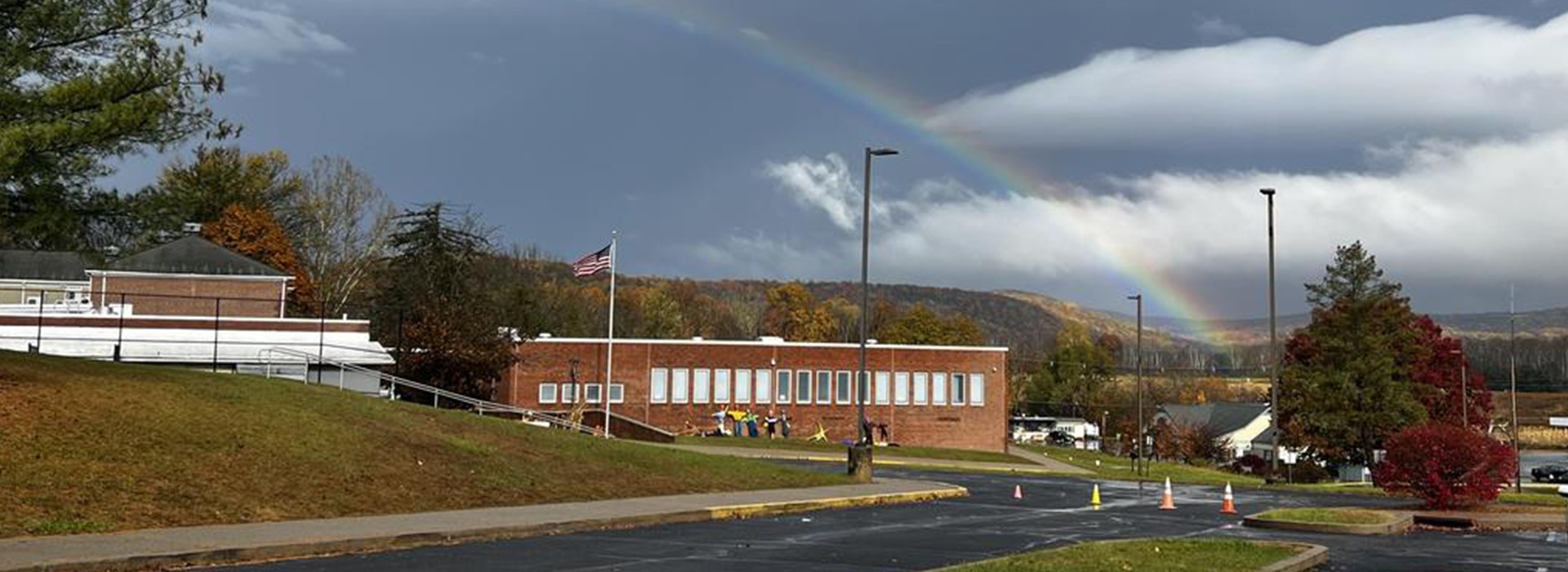
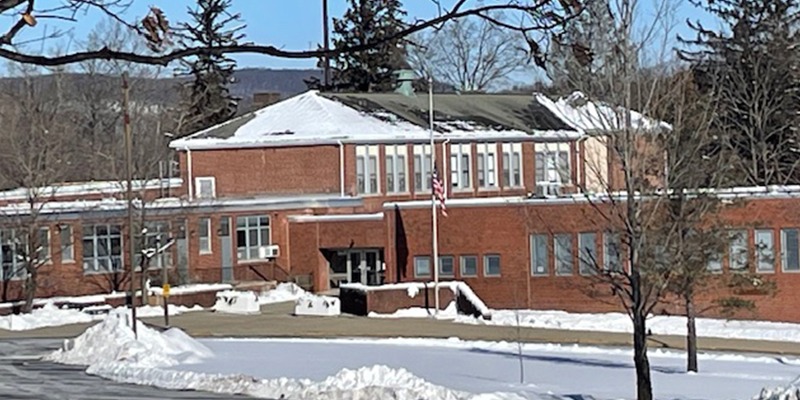
That philosophy is now being put into action through a master planning framework that addresses aging infrastructure, enrollment shifts, and long-term facility utilization. Great Meadows operates three buildings, including one currently mothballed due to declining enrollment in 2019. The district also maintains two active school buildings with vastly different profiles: one facility more than a century old and another roughly 27 years old—ironically, the newer building presenting more urgent system challenges than the oldest.
A major tipping point came when the middle school’s HVAC system failed, forcing the district into emergency mitigation measures to keep classrooms at manageable temperatures. As operating costs escalated and temporary solutions proved unsustainable, the district recognized it needed a long-term answer rather than continued patchwork. Timing helped. A previous bond obligation was coming off the books, creating a window for a referendum that could address the most critical needs without adding entirely new burdens to taxpayers.
The result was a successful referendum project focused on HVAC replacement at the middle school, along with building upgrades that extend across all three district facilities, including security-related improvements and communication system modernization. Business Administrator Samantha Westberg explains that the referendum work is part of a larger strategy that combines planned capital investment with aggressive pursuit of state support and grant funding to reduce taxpayer impact. The district secured a Rod Grant in New Jersey that covered phase one HVAC piping at the middle school, with the state contributing 40 percent of eligible costs. It also received a preschool expansion Rod Grant for Liberty School, supporting a $2.5 million project with approximately $1 million funded by the state. Additional grant applications are underway, including one expected to cover full well upgrades at Liberty, reflecting the district’s emphasis on fiscal responsibility and smart leverage of outside funding.
Westberg notes that while the district is currently project-heavy, the throughline remains consistent: upgrading environments where students learn today while also improving a building that could house students again in the future as enrollment increases. District leadership is monitoring growth trends closely and exploring potential partnerships with neighboring districts that could expand enrollment and strengthen program sustainability, keeping the mothballed building on the radar as a viable option once again.
Alongside buildings, technology has become one of the most important pillars of the district’s strategy for modern learning. Mai and Westberg both bring a unique perspective here, having served previously as principals in the district’s preschool through grade three building. They have seen firsthand how technology integration has evolved from sporadic classroom use to full district-wide dependency.
When Mai began as principal in 2014, many classrooms had only a handful of computers used inconsistently. That gradually shifted with support from the PTO, which helped fund Chromebook carts, allowing the district to move toward one-to-one access in upper grades. The pandemic accelerated what was already coming, forcing the district to ensure device access for every student and to expand training and support for teachers—especially at earlier grade levels where integration had historically been slower.
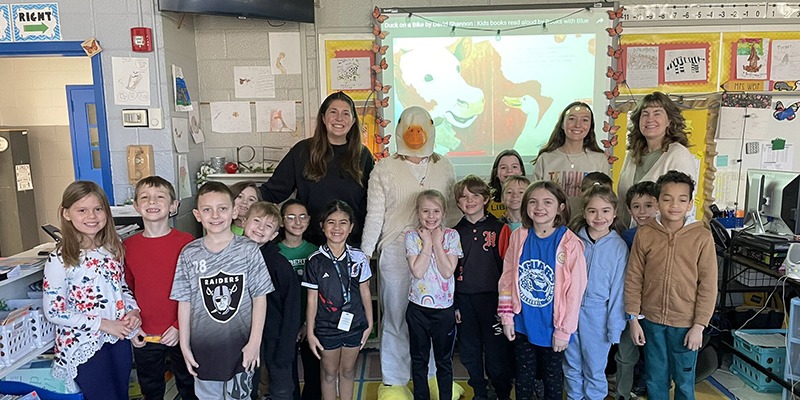
Today, Great Meadows is a fully one-to-one district, and Mai identifies equity as the most important lens through which technology is viewed. Even in a rural, largely middle-class community, there are students receiving free and reduced lunch, English language learners, and families facing connectivity barriers. Ensuring that every student can access instruction and complete work both in school and at home requires not only devices, but hot spots and robust internet infrastructure. During the pandemic era, the district undertook a significant connectivity initiative to improve broadband capability, including fiber optic installation, helping ensure reliable access for students and staff.
Technology’s growth has also changed what a school district requires operationally. Westberg explains that what used to be manageable by a single IT staff member is no longer feasible in a modern one-to-one environment. To build stability and cost control, the district partnered with EduTech, a shared services technology provider that delivers on-site daily support, escalated technical expertise, and strategic budgeting guidance. Westberg notes that the partnership has already resulted in meaningful cost savings through consolidation of redundant services and elimination of obsolete technology expenses, while strengthening core capacity in areas such as servers, camera systems, and cloud-based infrastructure.
For district leadership, technology is no longer treated as an occasional tool. It is an everyday learning platform, and reliability matters. Mai notes that in earlier years, teachers routinely needed backup lesson plans in case technology failed. That expectation has changed. Today, the priority is ensuring digital literacy, internet safety, and staff training remain aligned with how students actually live and learn in a tech-driven world.
That world, of course, now includes artificial intelligence. Mai describes AI as the “elephant in the room,” noting that the district is still in early stages of professional learning and policy conversations. Staff members are becoming familiar with AI tools, but the district has not yet fully “turned it loose” for students. The direction is clear, though: AI is coming quickly, and staying ahead of it will require proactive professional development and thoughtful implementation so that technology remains a force for positive learning rather than a risk that outpaces adult guidance.
Great Meadows is also ensuring that technology supports early exploration and future readiness. Even as a pre-K through grade eight district, it introduces students to STEM and STEAM experiences that can shape later choices. Coding clubs exist even at lower elementary levels. The middle school offers a dedicated technology program, structured alongside other encore classes, and the classroom environment reflects hands-on STEM learning with tools such as 3D printers and applied design activities. Extracurricular clubs provide additional exposure to STEM-related interests, helping students develop early confidence before they transition to high school.
Because Great Meadows students typically attend Hackettstown High School, and because the county offers a technical high school option as well, early exposure matters. Students can begin to see what they enjoy and where their strengths lie before stepping into the larger system, where formal pathways and career programs become more defined.
Inclusivity is another defining commitment. Mai, who also serves as Director of Special Services, has worked intentionally to expand opportunities for students with disabilities to learn and connect alongside their non-disabled peers. Great Meadows is participating in a statewide initiative now known as All In for Inclusive Education, an effort designed to help districts create stronger inclusive practices across academic and social settings. Mai explains that the work involves collaboration with other districts and with program partners to identify and implement strategies that expand shared learning environments, whether through classroom structure, daily routines, or social inclusion in spaces like lunch and recess. The goal is not only access, but belonging, and building a school culture where all students feel part of the same community.
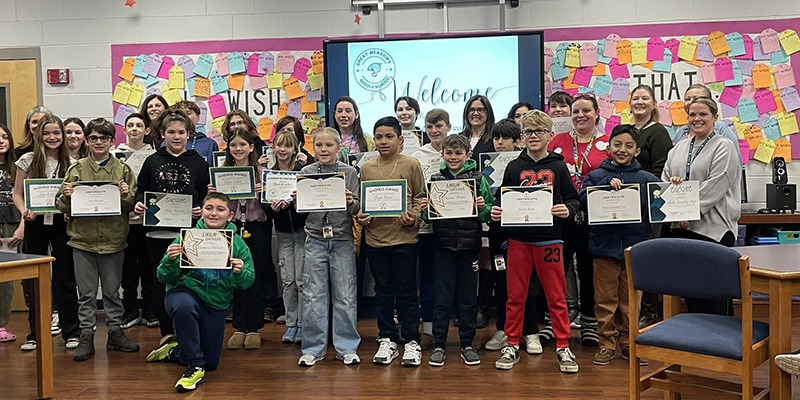
At the same time, district leaders recognize that preparing students for the future requires more than devices, programs, and buildings. It requires soft skills. Mai observes that while students today may be more comfortable presenting publicly—often shaped by video-based platforms and social media—they can struggle more with interpersonal communication, small group dynamics, and one-on-one collaboration. Westberg adds that collaboration is now a fundamental career skill across virtually every field, including technology itself. Great Meadows addresses this through structured group work, classroom discussion, shared problem-solving, and frequent opportunities for students to speak publicly. Student leaders present regularly at Board of Education meetings, and district programming includes concerts, performances, and classroom presentations that build communication confidence and clarity long before high school.
For district leadership, another key to long-term success is transparency. Westberg emphasizes that open communication with residents is central to building trust, especially when taxpayer dollars are involved. The district has expanded its outreach through monthly newsletters, public presentations, attendance at community gatherings, township council engagement, and consistent availability to residents who want to ask questions or understand how funds are being used. Leadership views this transparency as a major reason the referendum passed and as an ongoing responsibility as projects move from planning to execution.
Looking ahead over the next 18 to 24 months, the district’s priorities are both practical and strategic. On the operational side, construction projects will remain a major focus, including continued work tied to HVAC upgrades, preschool expansion, and infrastructure improvements across campuses. The district will also continue exploring partnership options with neighboring districts to strengthen enrollment opportunities and resource sharing, maintaining a long-term view of reopening Liberty School as enrollment rises.
Academically, Mai and Westberg are focused on ensuring staff have the resources and professional development needed to keep learning environments strong, collaborative, and student-centered. Technology will remain a core driver, with emphasis on equity, safety, digital literacy, and measured AI readiness so that students remain empowered without becoming disconnected from the human skills that matter most.
Throughout the conversation, Mai made a point of highlighting what he believes has enabled Great Meadows to accomplish so much in a short period of time: teamwork. He credits Westberg’s rapid growth in a demanding role, along with the operational leadership of Buildings and Grounds Supervisor Marc Desrosiers and district staff, for helping move a referendum, capital projects, staffing restoration, and long-term planning forward at once. Westberg echoes that view, emphasizing that collaboration is not only something the district teaches students, but something the district itself models through a strong administrative team and a shared commitment to serving children well.
In Great Meadows, the story is not simply about upgrades and initiatives. It is about alignment—between fiscal responsibility and facility needs, between technology and equity, and between a student-first mission and the practical decisions required to deliver on it.
AT A GLANCE
Who: Great Meadows Regional School District
What: A fiscally responsible, facility oriented and student centered dynamic school district looking to future student-led success
Where: Great Meadows, New Jersey
Website: www.gmrsd.com
PREFERRED VENDORS/PARTNERS

Arthur J. Gallagher & Co.: www.ajg.com
Gallagher, a globally recognized insurance brokerage, delivers customized solutions designed specifically for New Jersey schools and public sector clients. From comprehensive insurance coverage to innovative risk management strategies and wellbeing programs, we’re committed to protecting assets, reducing costs, and empowering educational institutions and public entities to thrive across New Jersey.