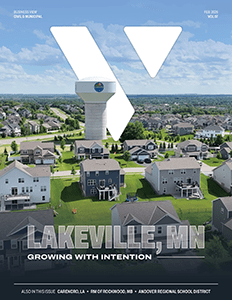
Growing with Intention
How This Lakeside Community Is Balancing Industrial Momentum, Downtown Vitality, and Community-Centered Investment
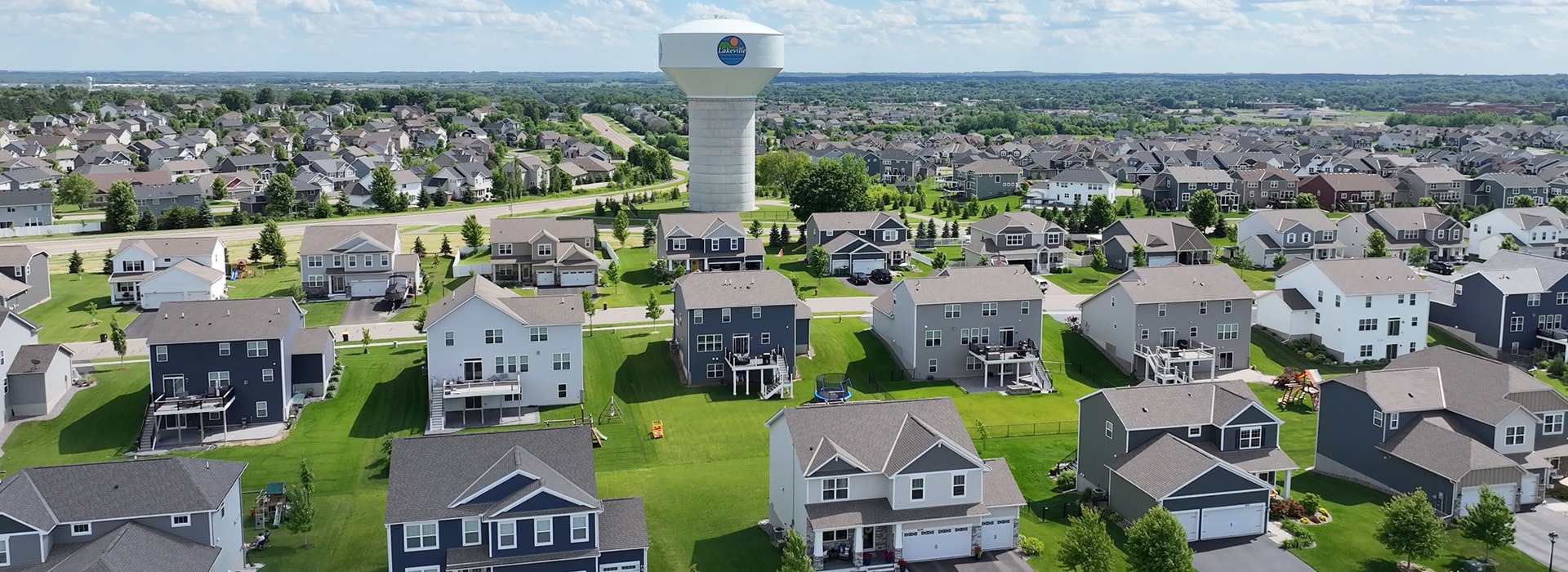
In the City of Lakeville, growth is not a new story—but the way the city is managing that growth has become one of its defining strengths. Mayor Luke Hellier describes Lakeville as a community that has experienced dramatic population expansion over the last several decades, more than doubling since the late 1990s. Yet despite its size and pace, Lakeville continues to project what many fast-growing communities struggle to maintain: a small-town feel rooted in history, relationships, and a strong sense of place.
That balance is reflected in Lakeville’s evolving identity. Once largely viewed as a bedroom community of commuters, the city has seen a noticeable shift over the last five to seven years. Post-pandemic remote work has kept more residents local, while industrial and commercial growth has expanded beyond expectations, creating more opportunities to live and work in the same community. The result is a city that continues to attract newcomers while still honoring its rural roots and historic downtown character.
Downtown Strength Through Local Business and Cultural Anchors
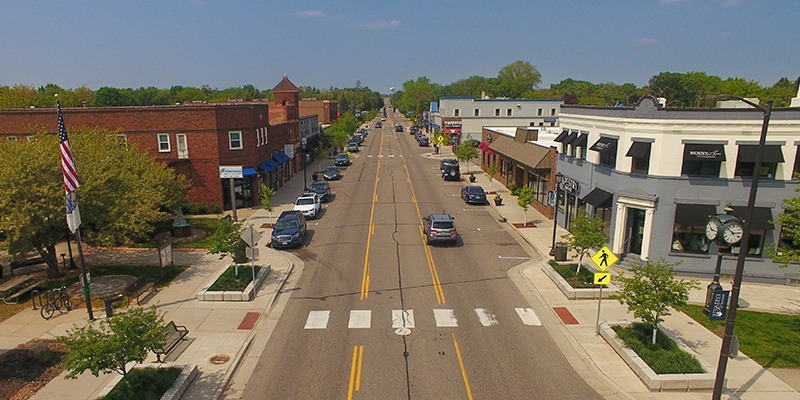
Lakeville’s downtown is not only a geographic center, but a cultural one, Hellier argues.
Community Development Director Tina Goodroad notes that the district’s historic buildings have been well-maintained over time, helping preserve the downtown’s authenticity. Just as important is the presence of locally grown businesses that reinforce the area’s identity, particularly restaurants, breweries, and independent shops.
Hellier points out that one of downtown’s most significant drivers is the city’s arts ecosystem. Lakeville’s Art Center and Fine Arts Building have become true anchors, drawing visitors regionally while creating steady activity in the downtown core. Parks and Recreation Director Joe Masiarchin explains that the Art Center operates out of the former All Saints Catholic Church, a historic 1910 building that has served as an arts destination for nearly 25 years.
Demand has grown to the point where the city acquired the adjacent former parochial school and converted it into an 11,000-square-foot fine arts facility, allowing both performing arts and fine arts programming to expand with dedicated space.
Hellier highlights that the scale of activity is significant. The Art Center attracts audiences from across the state, with annual performing arts ticket sales reaching into the tens of thousands and registrations in the fine arts building numbering in the thousands each year. The facility also serves as a hub for several of Lakeville’s most popular community festivals and events, reinforcing the idea that cultural investment is not simply “nice to have,” but central to a thriving downtown.
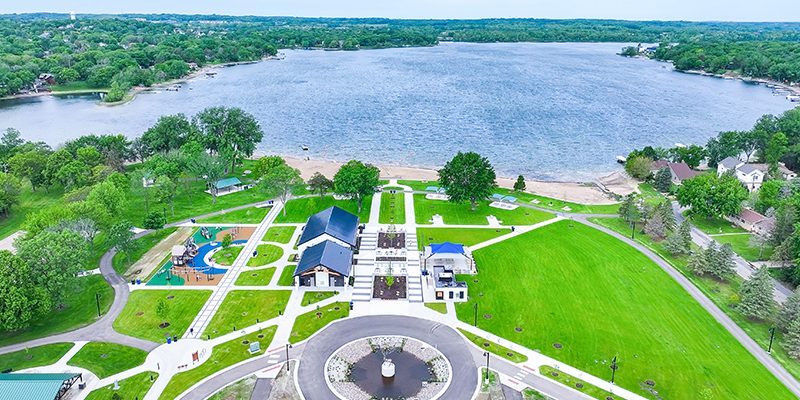
Lakeville continues to strengthen downtown functionality through planning and targeted improvements. The city has implemented a downtown improvement guide and zoning overlay, completed a parking analysis, and is preparing for pedestrian and beautification work, including improvements to sidewalks, trails, walkways, and parking areas that support a stronger visitor experience and more comfortable downtown movement.
Greenway Trails and the Power of Connection
One of the most community-defining initiatives underway is Lakeville’s Greenway trail system. Working in conjunction with Dakota County, the city is advancing trail projects that have been decades in the making. Masiarchin explains that the trails will ultimately form a regional network, including a major connection that will run through downtown. Over time, the Greenway system is expected to create roughly 20 miles of connected trail, linking major parks, amenities, and neighborhoods while also connecting Lakeville to surrounding communities.
This focus on connectivity reflects a larger trend shaping modern city development. Trails, walkable districts, and connected amenities encourage residents to engage more with their community and allow visitors to experience downtown as a destination rather than a stopover. In a growing city, that matters. It preserves identity while strengthening the quality of life.
Infrastructure Investments That Enable Growth
Lakeville’s economic momentum is supported by major infrastructure investment, particularly around transportation and access. Mayor Hellier identifies Interstate 35 as the city’s primary regional corridor and notes that several key county roads crossing over and under I-35 require significant upgrades as traffic volumes increase. One major project involves improving the interchange at I-35 and County Road 50, a change expected to relieve congestion and support continued business growth.
A previously completed project, County Road 70, has already proven transformational. By converting an older county road into a higher-capacity connection between I-35 and Lakeville’s industrial park, the city created new opportunities for industrial development and improved logistics access—one of the key reasons major employers continue to choose Lakeville.
Public safety infrastructure is also a priority. Hellier points to the completion of a regional public safety training facility known as the FiRST Center, supported by both city investment and state participation. The facility is designed to serve multiple agencies and strengthen training capacity. The city is also advancing planning work for a fifth fire station to support service coverage as growth continues.
Economic Development Powered by a State-Leading Industrial Park
Lakeville’s industrial park is one of the most significant economic assets in Minnesota, and it continues to be a major driver of employment and business investment. Economic Development Manager Kati Bachmayer notes that manufacturing represents a meaningful share of local employment, and the city takes pride in supporting that sector through relationship-building, visibility, and active business retention efforts.
The industrial park includes a diverse mix of users, including food manufacturing, custom cabinet producers, and large-scale logistics operations. Bachmayer highlights major employers such as an Amazon fulfillment facility spanning approximately 750,000 square feet, as well as Sweet Harvest Foods, a honey manufacturer producing tens of millions of pounds annually. Sweet Harvest’s growth is also illustrative of Lakeville’s business environment. After initially operating within a multi-tenant space, the company built a dedicated facility that has become one of the city’s largest industrial buildings, reinforcing Lakeville’s capacity to support businesses as they scale.
Goodroad emphasizes that Lakeville has done significant work to prepare land for development rather than waiting for businesses to request it. The city’s approach includes spreading public improvement costs—such as roads, water, sewer, and stormwater infrastructure—across benefiting properties rather than forcing one project to absorb the full burden. In practical terms, the city often carries early infrastructure costs and defers assessment until development occurs, creating a more feasible path for business investment and allowing projects to move faster once interest materializes.
Lakeville also uses traditional Minnesota tools such as tax increment financing and tax abatement when appropriate and continues to develop localized incentives to support smaller business expansions, equipment needs, and broader economic objectives. State-level partnerships through Minnesota DEED can also support projects demonstrating strong employment growth, and Lakeville has benefited from those programs in previous major developments.
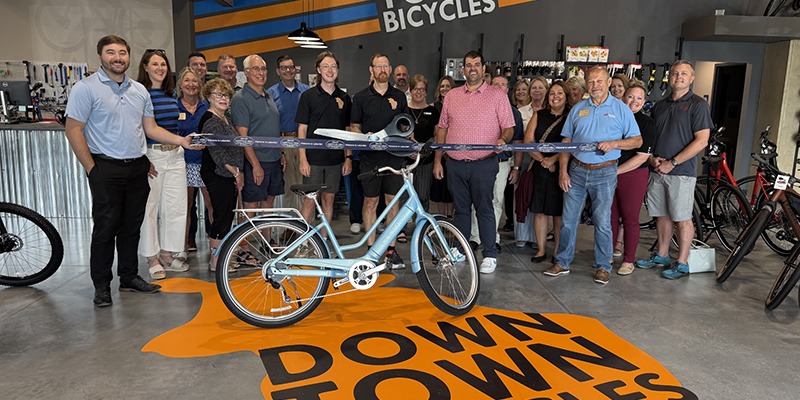
Workforce readiness is increasingly tied to economic development, and Lakeville has built strong partnerships to support that connection. Goodroad notes close collaboration with the Lakeville Chamber of Commerce, which the city views as a critical partner in both business support and local initiatives. One example is a city-led manufacturer appreciation effort that included gift basket delivery with chamber support—small gestures that reinforce a business-friendly culture and long-term relationship-building.
Bachmayer adds that Lakeville Works, a chamber-led initiative focused on career exposure and STEM pathways, has become an important workforce development program. One highlight is a hands-on career exploration event for eighth graders called Stepping Into Your Future, hosted at a local airport hangar. Students rotate through practical activities aligned to different career categories and are then connected back to school-based classes, pathways, and clubs that can build on those interests.
The city also supports Leadership Lakeville, a program designed to connect employees and residents more deeply to the community and encourage long-term retention by increasing civic awareness and engagement.
Lakeville maintains additional workforce connections through Dakota County Technical College, which provides customized training support for employers, and through broader workforce planning participation at the county and committee level.
Housing Growth with Range and Planning
Residential development continues to be a major part of Lakeville’s growth story. Goodroad notes that the city has consistently ranked among the top communities for residential permits in the Twin Cities metro region for more than a decade. Housing supply includes a mix of product types and price points, with continued expansion of both single-family and townhome development. The city has also seen growth in “detached townhomes,” which blend single-family-style living with higher-density planning.
While multi-family development has occurred, some approved projects have been slowed by market conditions such as interest rates and land costs. Even so, Lakeville continues to pursue housing diversity, including a workforce housing project under construction that targets affordability at 60 percent of area’s median income. The city views this range as essential to supporting the workforce required by its industrial base and commercial expansion.
Commercial development has also remained strong, with multiple active projects underway.
New developments such as Marketplace at Cedar are bringing a mix of uses, including grocery, car wash, credit union, coffee, and retail services. Other commercial projects near City Hall and key corridors are adding additional restaurants and convenience uses that complement residential growth and strengthen local amenities.
Looking Ahead
Lakeville’s next chapter is built around the same theme that has shaped its recent success: intentional planning. Mayor Hellier points to continued investment in public safety, parks, and community amenities as essential to maintaining the conditions that attract both residents and employers. City leadership is equally focused on ensuring that industrial expansion continues responsibly, that downtown remains vibrant and locally rooted, and that infrastructure keeps pace with demand.
In Lakeville, growth is not simply measured in population increases or acreage developed. It is measured in the city’s ability to remain livable, connected, and resilient—while building the economic foundation that will support the community for decades to come.
AT A GLANCE
Who: Lakeville, MN
What: One of the fastest-growing cities in the state with dynamic economic development projects
Where: Dakota County, Minnesota
Website: www.lakevillemn.gov
PREFERRED VENDORS/PARTNERS
Likewise Partners: www.likewise.partners
Likewise Partners is a proud to invest in the City of Lakeville through the development of the Lakeville 35 Logistics Center. These state-of-the art industrial buildings offer available spaces ranging from 20,000 to 180,000 square feet with immediate access to I-35.