
Small-Town Pride, Big-Momentum Progress
In Bicknell, community identity is not a slogan—it is something residents live out in the way they show up for one another, invest in shared spaces, and rally around traditions that span generations. Speaking alongside Vice President of the Bicknell Bulldog Development
Corporation Jack Lynn and City Councilman At-Large Wally Cullen, Mayor Thomas Estabrook describes a city that remains rooted in its heritage while deliberately preparing for a new chapter of growth.
“We are small enough to know your neighbors,” Estabrook says, “but large enough where you can get most of the things you need from this community, from businesses owned by people who are in the community.”
That blend of familiarity and self-reliance is felt most visibly during Bicknell’s long-running Labor Day celebration—an annual event that has continued since 1969 and remains a defining cultural touchpoint. Even as the community has shifted over time, local pride has not wavered. Residents still turn out in force, reinforcing the sense that Bicknell’s strongest asset is the people who care about its future.
A Downtown Reset Built on Action, Not Talk
As this updated civic profile makes clear, the last year has brought tangible progress—especially in the downtown core. Estabrook notes that while private investment is the goal, small communities often need public leadership to “take the first step,” whether that means assembling property, clearing blight, or removing barriers that make development difficult.
With assistance from the county’s Redevelopment Commission, the city acquired approximately six-tenths of an acre in the downtown area, including two dilapidated buildings that were demolished to create a clean, development-ready site. Zoned appropriately and supported by existing utilities, the property now stands as a visible signal that Bicknell is positioning itself for reinvestment.
A second major downtown move followed: the acquisition and cleanup of a former gas station site at First and Washington Streets. The city removed structures, pulled fuel tanks, and prepared the parcel—now being considered as a potential location for a future City Hall in the heart of downtown.
In smaller municipalities, these steps can be pivotal. They replace uncertainty with readiness and allow civic leaders to tell prospective partners something many communities cannot: the site is cleaned up, the infrastructure is in place, and the city is prepared to move quickly when the right project emerges.
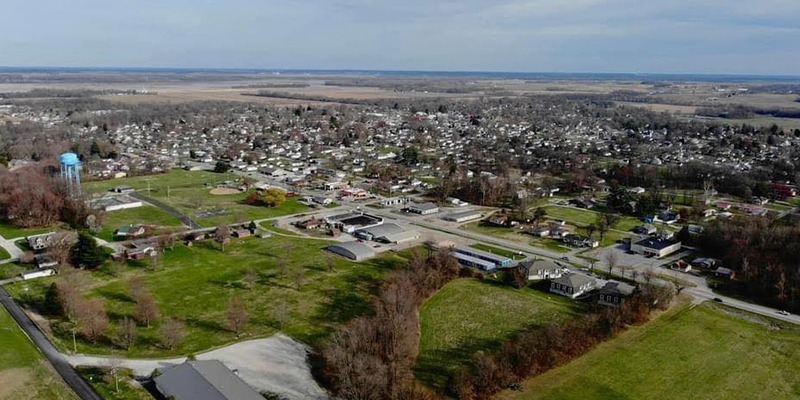
One Mile of Transformation: Walkability and Infrastructure Upgrades
Perhaps the most immediately felt improvements, however, have come through infrastructure—specifically the reconstruction of key corridors and the creation of a continuous, ADA-compliant walking route through the city.
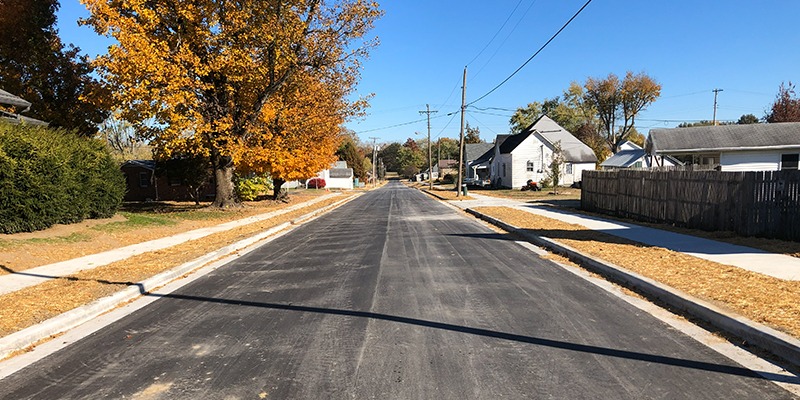
A road reconstruction project on South Main Street—spanning from the southern edge of downtown toward South Side Park—delivered new curbs, sidewalks, street surfaces, and drainage. Completed just ahead of the Labor Day celebration, the project represented roughly $800,000 in investment and was supported through Indiana’s Community Crossings program, which has helped Bicknell secure millions in funding over the last decade.
The result is an accessibility upgrade that goes beyond aesthetics. Residents can now walk on new, compliant sidewalks from South Side Park through downtown and north along Main Street toward the highway—and onward to the county fairgrounds. As Lynn notes, the scale is substantial: the improvements cover roughly a mile of continuous, user-friendly pedestrian infrastructure.
These local upgrades have also been complemented by significant state and federal investment. After years of advocacy beginning in 2017, a major highway corridor project arrived roughly seven years later—bringing approximately $4 million in improvements that included repaving, drainage, updated signals, sidewalks, and striping along the business corridor. Together, those efforts have elevated safety and function, while improving the look and feel of the community’s primary commercial approach.
Councilman Cullen emphasizes that while external partners have played a key role, local leadership has also had to secure and commit matching dollars—proof that progress has been driven by both strategic pursuit of grants and disciplined local budgeting.
Development Readiness as a Competitive Advantage
While new downtown commercial wins take time, the city is building a pipeline by focusing on readiness and relationships. Estabrook describes ongoing conversations with building owners and prospective partners, including outreach intended to put Bicknell on the radar of site selectors and commercial decision-makers.
For many small towns, awareness is the challenge. Larger cities do not need to explain who they are; smaller communities do. Bicknell’s approach is to ensure that when an opportunity appears—whether it is an entrepreneur seeking a building downtown or a small manufacturer needing a buildable parcel—the city can respond with speed and confidence.
“We can now say we’re ready for development today,” Estabrook explains. “Other places can’t say that.”
Industrial Capacity and a Site-Specific Strategy
Beyond downtown, Bicknell continues to pursue economic development opportunities tied to its industrial footprint. Much of the existing industrial park is occupied—a positive signal in itself—while additional commercial ground remains available with water, sewer, natural gas, and highway access.
Importantly, the city’s strategy is grounded in a realistic understanding of scale. Bicknell is not aiming for mega-projects requiring hundreds of acres. Instead, leaders are focused on the types of employers that align with the community’s capacity: companies with modest footprints, practical employment numbers, and a preference for a location where infrastructure and access are already established.
At the same time, the city is actively exploring larger land options near the municipal boundary and encouraging county-level partners to consider investment beyond the region’s traditional focus areas. If a project requires more land—50 acres, for example—the city intends to work side-by-side with partners to find a viable path.
A Story of Reinvention: From Rail Yard to Industrial Park
Bicknell’s economic evolution is inseparable from its history. Cullen notes the city’s founding dates to 1869, with early settlement shaped by wooded terrain so dense it earned the nickname “Stumptown.” Over time, that pioneering spirit turned into a built environment—and later, industrial opportunity.
The industrial park itself reflects that progression. Once the location of a busy railroad yard—including maintenance operations and supporting infrastructure—the area transitioned after the railroad’s departure in the late 1970s. Through subsequent decades, the city and its partners pursued industrial development by upgrading utilities, attracting tenants, and repurposing sites into productive use. The result is an employment corridor that grew out of the city’s transportation roots and continues to offer space for the next phase of growth.
Housing Momentum: “Success, Success, Success”
If one theme stands out from this update, it is housing—both as a reflection of progress and as a deliberate strategy to support long-term sustainability.
Estabrook describes visible new construction, rising sale prices, and an increase in outside interest. Homes selling for $150,000 and above—once unthinkable locally—now signal that Bicknell is increasingly competitive as a place to live. Community leaders credit years of steady work removing blight, improving curb appeal, and turning dormant parcels into viable building sites.
The Bicknell Bulldog Development Corporation has played a practical role in this effort by taking in properties, clearing them when needed, and putting them back into circulation for new construction. The mayor also points to a major recent step: the acquisition of 45 vacant properties through a county certificate sale process, creating a bank of buildable lots intended for new housing.

2025 Labor Day Parade
What has changed, Estabrook says, is demand. Where the city once struggled to attract builders, developers are now coming forward proactively. Local builders have already identified lots they want for 1,200-square-foot, three-bedroom, two-bath homes—an attainable housing product that can serve working families and support broader economic development efforts.
The city is also evolving its model. Rather than simply giving lots away, Bicknell is now asking developers to cover the city’s acquisition costs—typically a few thousand dollars per lot—an amount that, notably, serious builders are willing to pay without hesitation. It is a sign the market has shifted, and the community’s groundwork is paying off.
Parks, Recreation, and the “Sweat Equity” Tradition
Quality of life remains central to Bicknell’s strategy, and local leaders point to a track record of reinvestment in parks and community amenities. While the city’s historic pool—built in the early 1960s and sustained for decades without tax subsidy—could not be preserved indefinitely, Bicknell replaced that loss with a splash pad that continues to serve families well.
South Side Park offers ballfields and a walking track, and the city continues to explore further recreational improvements. Estabrook notes that the community has invested significantly—approaching half a million dollars over the last decade—into park upgrades, utilities, and facility improvements.
One amenity stands out as especially distinctive: the skating rink. Dating back to at least the World War II era, the facility has remained active through a city ownership and lease model that keeps it accessible. Recent investments have included HVAC, electrical, roofing, and flooring work—dollars the city does not expect to recoup directly, but which generate meaningful community returns. The rink hosts weekend skating, parties, and events, drawing visitors from outside the area and reinforcing Bicknell’s family-oriented identity.
As Cullen reflects, this pattern is not new. Bicknell has long relied on community initiative—people stepping up, raising funds, doing the work, and sustaining local assets through participation. It is a model of community engagement that continues to support the city’s forward momentum.
Looking Ahead: Growth as the Engine
Over the next 18 months to two years, Bicknell’s priorities remain consistent: keep pushing housing, continue pursuing infrastructure dollars, and leverage visible progress to attract business development.
For the mayor, housing is not simply a standalone initiative—it is the foundation for everything else. More residents strengthen the tax base, support schools, increase customer demand, and improve the city’s business case to employers. That, in turn, supports the next phase: commercial activation downtown and selective industrial growth aligned with Bicknell’s realistic, right-sized opportunity.
As Lynn observes, the city’s forward progress has been fueled by energetic leadership and a cooperative, supportive council—an alignment that many communities struggle to achieve. With infrastructure upgraded, lots being assembled, and community amenities sustained through both public investment and local pride, Bicknell is demonstrating what a small city can accomplish with focus and follow-through.
In Estabrook’s words, the approach is simple—and powerful: Bicknell intends to keep saying “yes” to its own future, so others can say yes to Bicknell too.
AT A GLANCE
Who: Bicknell, Indiana
What: A growing city welcoming housing, commercial and civic investment through 2026 and beyond
Where: Knox County, Indiana
Website: www.bicknell.in.gov
PREFERRED VENDORS/PARTNERS

Knox County: www.knoxcountyindiana.com
Knox County Indiana Economic Development creates strategic opportunities for business growth, whether in Bicknell, Vincennes or elsewhere. The region offers a high quality of life for talent attraction, strategic incentives and a location within a day’s reach of most of the U.S. population.
