TurningVertical Integration into a Competitive Advantage
A Body Armor Company That is Proving to be an Industry Leader in a Competitive Sector
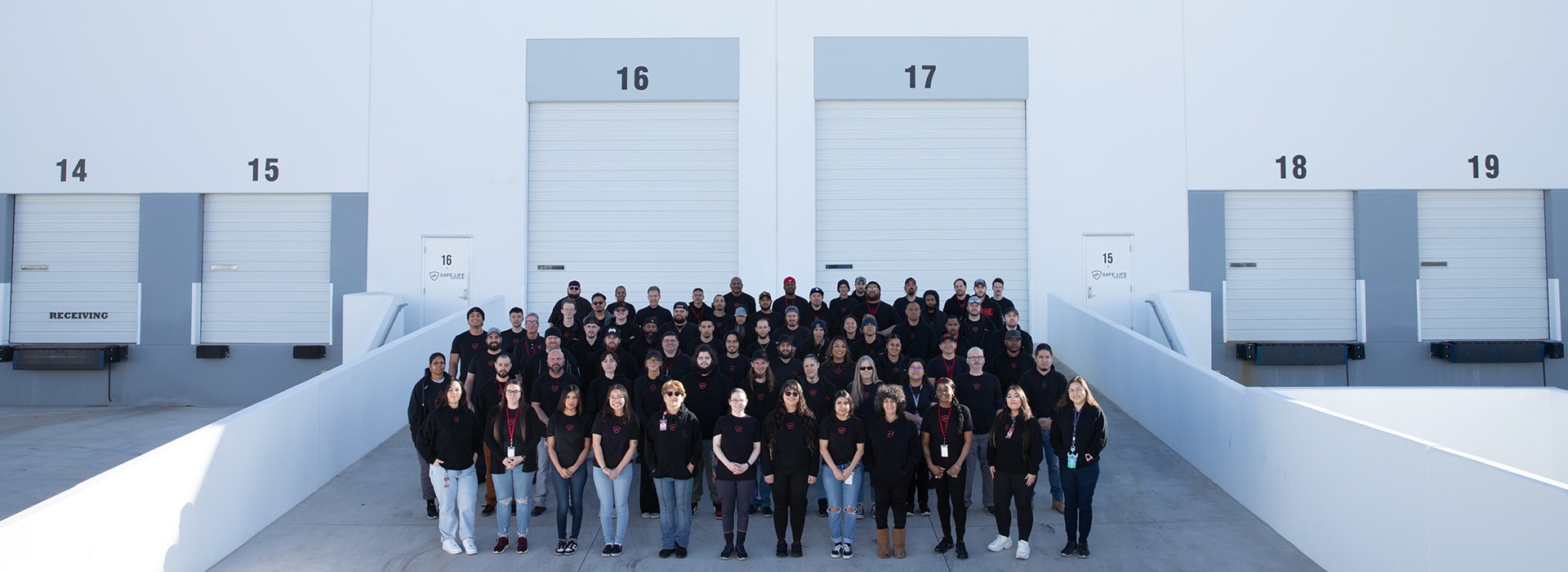
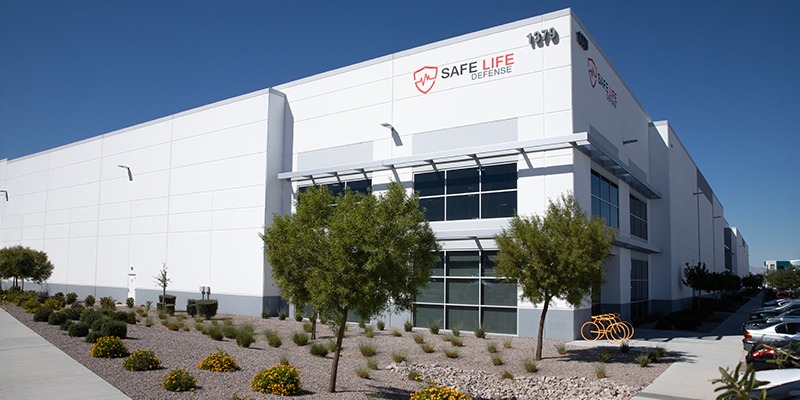
What began at a kitchen table in 2016 has grown into a 140,000-square-foot manufacturing operation that’s reshaping the body armor industry. Safe Life Defense, founded by Nick Groat in Henderson, Nevada, identified a critical gap that most manufacturers had overlooked: security personnel and emergency medical services had virtually no access to quality protective gear. While the global body armor market was valued at $2.69 billion in 2023 and projected to reach $4 billion by 2030, most manufacturers restricted sales exclusively to law enforcement, leaving first responders dangerously exposed.
“We originally started specifically to create high quality body armor for security and EMS, which at the time had zero options available to them,” Groat explains. “Most armor manufacturers were very private and would only sell to law enforcement. So, a lot of the people that were actually on scene first were out there without any protection.” Recognizing this market void, Groat developed products specifically designed for these underserved professionals. The focused approach proved transformative. “Both security and EMS now routinely wear armor, and if you see them, it’s almost always us,” he notes.
The company’s growth trajectory earned it the #282 spot on Inc. Magazine’s list of America’s 5,000 fastest-growing private companies in 2020, with revenue growth approaching 1,600%. From that initial focus on non-law enforcement markets, Safe Life Defense expanded into law enforcement and developed an entirely new product line for special forces and military applications. The company now employs between 120 and 200 people and has had six facility relocations to accommodate explosive demand.
The Foundation of Operational Excellence
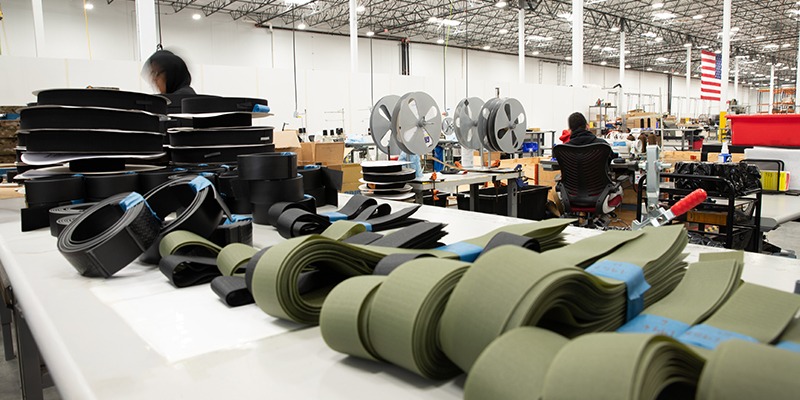
Safe Life Defense’s operational efficiency stems from an unconventional approach in an industry that typically relies on third-party vendors. The company manufactures nearly everything in-house, from ballistic panels to specialized machinery, giving it control over quality and production timelines that competitors struggle to match.
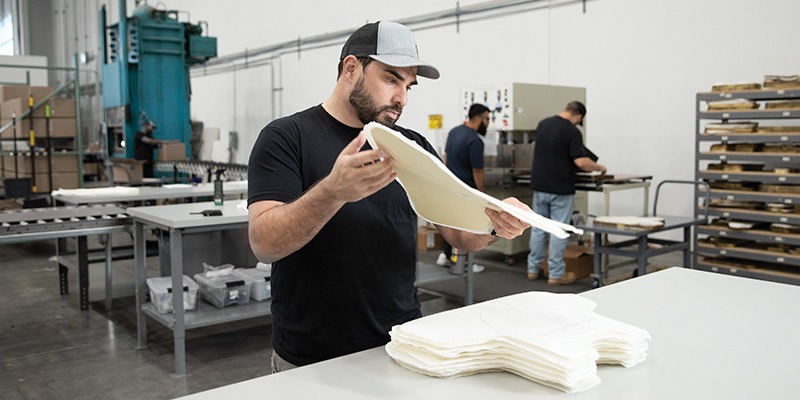
“We’re incredibly vertically integrated,” Groat says. “Instead of relying on vendors and third parties that we’re constantly trying to handle projects, we do almost all of that. We have a fantastic but small engineering department. We create a lot of our own machinery; we create a lot of our own automations.” This self-reliance runs throughout the Henderson facility, where all ballistic inserts are constructed and tested on-site, including batch testing in their own ballistic laboratory alongside NIJ certification at Oregon Ballistics Lab.
Managing such breadth comes with challenges. The company experimented with multiple third-party customer relationship management systems but found them prohibitively expensive and difficult to customize for their complex manufacturing processes. The solution came from an unexpected direction. “We’ve been developing our own sort of software system using publicly available software,” Groat explains. “Through its capabilities we are able to monitor and automate each step of every one of our processes within the company and get a lot of data on those.”
The impact proved immediate. Every station now has a monitor displaying the next steps, allowing employees to work independently while management oversees the process rather than micromanaging individuals. “Everybody’s been much more self-reliant, we have better quality, everything is happening much faster,” Groat says. This shift from managing people to managing systems marks a fundamental change in how the company operates.
Focusing on Innovation from Within
Safe Life Defense operates on a principle that sets it apart in the body armor industry: innovation comes from looking inward rather than monitoring competitors. This philosophy has led to products that don’t merely compete on price but fundamentally change how protective gear is conceived and marketed.
“We’re not really always looking outward for innovation. We’re looking more inward,” Groat explains. “We’re not really focusing on what other people are doing or what else is out there. We’re always looking on how we can improve and how we can create something that we think will be industry changing.” Every product launch aims to disrupt rather than duplicate. The company’s exclusive Level IIIA+ armor, for instance, remains the only soft body armor offering NIJ level 1 spike protection combined with defense against armor-piercing ammunition like Liberty Civil Defense 9mm and FN 5.7×28.
However, market disruption requires more than product development. Safe Life Defense invested heavily in educating security and EMS personnel that they were legally permitted to purchase body armor and explaining why protection mattered. “It took a while to get adoption, but since there was such a large uptick in that adoption, we’ve saved many lives with our products, and we’ve started to see other companies following suit as well,” Groat says.
The approach similarly encompasses vendor relationships. Drawing from early manufacturing experiences overseas where partners emphasized “friends first business later, no friends, no business,” the company built partnerships with industry giants Honeywell and DuPont based on collaboration rather than extraction. “It really is about a partnership and building up one another and trying to find new things that we can do with their materials that they may have never known about,” Groat notes.
Mastering the Supply Chain
The supply chain disruptions that crippled many manufacturers during and after the pandemic have become a distant memory for Safe Life Defense. A dedicated logistics team now monitors inventory daily, projects future needs, and coordinates closely with suppliers to prevent stockouts. This collaboration also supports the marketing department, ensuring production aligns with anticipated demand spikes.
“Our logistics department monitors what we have in stock, projecting what we need, working very closely with suppliers to make sure that everything is scheduled,” Groat says. The system has proven remarkably effective. “It’s been very, very smooth for the past year where we haven’t really had any supply issues and that’s taking on a lot of new vendors as well.”
Aside from solving immediate logistics challenges, the company has pursued a larger strategic shift: bringing manufacturing back to American soil. Approximately three to four years ago, Safe Life Defense acquired a new building specifically designed to enable domestic production of items previously made offshore. The move addresses operational control and market requirements. “That is very important, especially for our newer segments, which are US military because that’s a requirement,” Groat explains.
The Henderson facility now produces Berry Compliant products meeting federal procurement standards for military contracts. All ballistic inserts are constructed and tested on-site, with the company maintaining its own testing facility for batch testing alongside NIJ certification processes. The transition follows years of planning and investment, but the payoff isn’t just about meeting regulatory requirements. “It allows us to have much more control over our processes as well,” Groat notes. The company has been realizing the full benefits of this domestic manufacturing capability since 2024.
The Entrepreneurial Spirit Behind the Armor
For Groat, Safe Life Defense embodies a lifelong pattern of building and creating that traces back to elementary school, when the concept of entrepreneurship existed only as instinct rather than ambition. “I love what I do. It doesn’t feel like a job at all,” he says. When asked about exit strategies or long-term plans, his answer remains consistent: “I just love building and growing things and this is what I love, so I can do this forever.”
The path to body armor manufacturing followed an unexpected route. Groat grew up wanting to work in law enforcement, specifically investigations with agencies like the FBI or CIA, and earned a college degree in the field. Throughout his education, he ran his own businesses, a parallel track that eventually overtook his original career plans. “After graduating I was looking to make something or do something new and body armor just kind of came to me,” he recalls. “I think it was a subconscious way of merging everything that I wanted to do and something that I was very interested in if I wasn’t an entrepreneur.”
Over the years, the company has donated approximately 400 vests through its Guardian Angel program, with numerous documented cases where the armor saved lives from vehicle strikes, falls, and stabbings. Medical professionals have confirmed in multiple instances that survival would have been impossible without the protection. “It feels like it was always meant to be; just follow what I enjoy and what I’m good at, and this is where we are,” Groat reflects.
Looking Ahead to The Next Generation of Protection
Safe Life Defense’s future strategy defies the typical two-year or five-year planning horizons that dominate business thinking. For Groat, the primary focus remains constant regardless of timeframe: developing products that fundamentally alter the industry landscape. “Whether it’s two years, 10 years, or even from the past, my personal biggest focus is always creating and developing things that change the industry,” he says.
The company’s latest achievement exemplifies this approach. After two years of intensive design work and manufacturing line development, Safe Life Defense has begun shipping its Unity™ Hybrid Armor System at scale. The 100% USA-made, Berry Compliant carrier system marks a departure from existing military gear, developed with direct input from Special Operations Forces and law enforcement officers. The system features a proprietary, patent-pending mounting system that locks modular placards in place with precision measured in thousandths of an inch, allowing users to customize four configurable zones for mission-specific requirements.
“We’re just releasing a new military carrier system that is unlike anything else that is out there,” Groat says. “The last two years of my life have been designing that, getting the manufacturing lines up, and we’re just now finalizing and starting to ship at scale.” Development won’t stop with the initial release. The company plans to continue developing complementary products that work within the Unity system while pursuing better automations, improved efficiencies, and new manufacturing equipment.
The philosophy driving this perpetual innovation remains straightforward. “I think the second that you stop creating and doing that research and developing new things, that’s when you’re going to fall behind,” Groat concludes. For a company that transformed an underserved market into a thriving business segment, staying ahead means constantly reimagining what protection can achieve.
AT A GLANCE
Who: Safe Life Defense
What: NIJ-certified body armor manufacturer specializing in multi-threat protective gear for security, EMS, law enforcement, military, and civilian markets
Where: Henderson, Nevada
Website: www.safelifedefense.com
PREFERRED VENDORS/PARTNERS

DirecTex: www.directex.com
DirecTex is a leader in supplying USA manufacturers with superior raw materials at competitive pricing. We would welcome the opportunity to introduce our diverse product line that includes fabric, webbing, hook and loop, plastic hardware, thread, elastic, zippers, sub-assemblies and custom metal and plastic components.
Orange County Industrial: ryan@ocisewing.com
Orange County Industrial Sewing Machine Co., Inc. boosts efficiency and profitability with expert automation solutions. Serving the U.S, Canada, and Mexico since 1979, we offer leading brands, including Brother, Juki, Pegasus, Durkopp Adler, Pfaff, and more. We also maintain a vast parts inventory. Our knowledgeable Technical staff ensures you get the right parts quickly to keep your operation running.