Preparing a Life-Ready Workforce for a Rapidly Evolving Economy
This Dynamic School District Leverages Strategic Infrastructure and Deep Industry Partnerships to Empower Students for Success in the Modern Workforce
Westfield currently ranks as the fastest-growing city in Indiana and the sixth fastest-growing municipality in the United States. With the population surging toward 50,000 residents, the local school district manages a rare combination of rapid expansion and high academic performance. Dr. John Atha, Superintendent of Westfield Washington Schools, explains that the district’s fundamental mission centers on measurable progress. “We focus on ensuring high levels of learning and growth for each student, and we partner with parents as the primary educators of their children,” he says. He describes a culture where educators work daily to remove systemic barriers to student achievement.
The district adopts a “Life Ready” outcome, a strategic initiative designed to prepare graduates for a volatile global economy. Dr. Atha notes that traditional metrics of success must evolve to meet modern workforce demands. “Our vision is that every student is life-ready on graduation day. Whether they choose a four-year university, a trade school, or the workforce, we want them to have the skills to chase their specific passion,” he says. The administration aligns this vision with regional economic goals by ensuring every diploma represents a versatile set of competencies rather than just hours spent in a classroom.
Beyond academic rigor, the district prioritizes specific core values to foster resilience in a post-pandemic landscape. Dr. Atha identifies “seeking joy” as a critical component of the organizational framework. “We believe that connection and purpose are essential. We find joy through building relationships because those connections facilitate the high-level learning we expect from our students,” he says, maintaining that this focus on human connection improves retention for both students and staff. This philosophy supports a stable environment as the district prepares for an eventual enrollment of 17,000 students.
The Professional Learning Community Framework
The district operates through Professional Learning Communities, an organizational framework mirroring high-performing corporate teams. In this model, educators move beyond isolated classrooms to share resources and accountability. “We believe in a professional learning community where teachers work in collaborative teams. We take collective responsibility for the learning of all our students,” Dr. Atha says. He notes that these teams meet during the standard workday to assess current data. “Our teachers analyze student progress and share effective strategies. It is not just about one classroom, but how we support every child in a grade level.”
The framework facilitates job-embedded professional development, allowing staff to refine skills while remaining in the classroom. Constant focus on instructional quality is maintained by integrating training into the daily schedule. “We provide ongoing professional development for our staff. This ensures our educators have the tools to address diverse learning requirements within their teams,” Dr. Atha says. He explains that these teams include specialists such as school counselors and mental health experts. “Our collaborative groups include specialists in the English language and special education. A network of support ensures we meet the needs of our multilingual learners,” he adds.
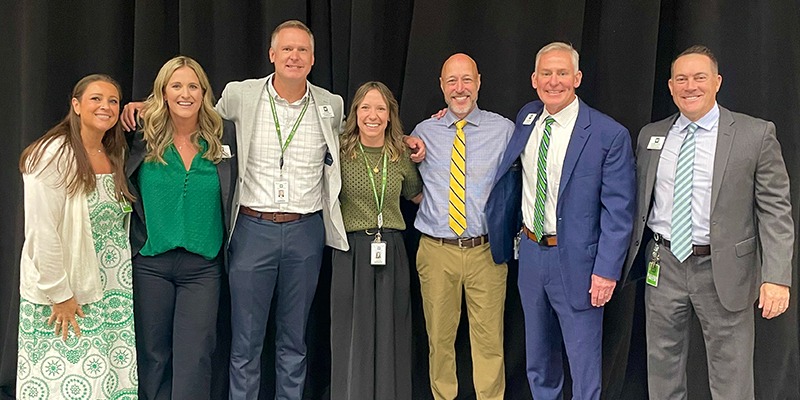
Administrative philosophy emphasizes decentralized solving of problems, empowering those closest to students to make critical decisions. Modern management principles align with this approach by reducing the time between identifying a challenge and implementing a solution. “We want to empower our frontline educators. When a student struggles, the team works together for a solution rather than waiting for a centralized mandate,” Dr. Atha says, emphasizing that this collaborative ecosystem is essential for developing versatile graduates. “Our goal is to ensure our students are well educated. We want critical thinkers who can adapt to any professional environment.”
Accelerating the Classroom Experience
Westfield Washington Schools integrates technology as a functional tool rather than a standalone objective. Students utilize 1:1 devices, including Chromebooks and interactive touchscreen boards, to facilitate daily lessons. Dr. Atha explains that hardware serves to enhance instructional methods. “We use technology as an accelerator of learning, not as the focus itself. It allows our students to engage with material in new ways.” This early exposure includes specialized STEM curricula like Project Lead the Way. “At the elementary level, we have makerspaces and robotics programs. We want students to experience hands-on learning from their first years in school,” Dr. Atha says.
Regarding emerging technologies, the administration adopts a pragmatic stance on artificial intelligence. Rather than implementing restrictive bans, the district focuses on digital literacy. Dr. Atha notes that the speed of technological change requires a flexible policy framework. “We are moving away from having a 40-page regulation book on artificial intelligence. Our students are digital natives, and we want to teach them how to use these tools properly,” he says. “We encourage students to use AI for revision and editing. It provides real-time feedback that helps them refine their work.”
Instructional leaders prioritize the ethical implications of automated tools alongside technical benefits. Students learn to verify information and maintain academic integrity. Dr. Atha asserts that understanding the limitations of technology is as vital as mastering its functions. “We teach our students about the importance of citations and the ethical use of information. They must understand where data comes from to be responsible citizens,” he says, adding that these skills prepare students for the local tech sector. “Our aim is to provide an environment where technology supports critical thinking. We want our graduates to be comfortable with change.”
Bridging Academics and Industry
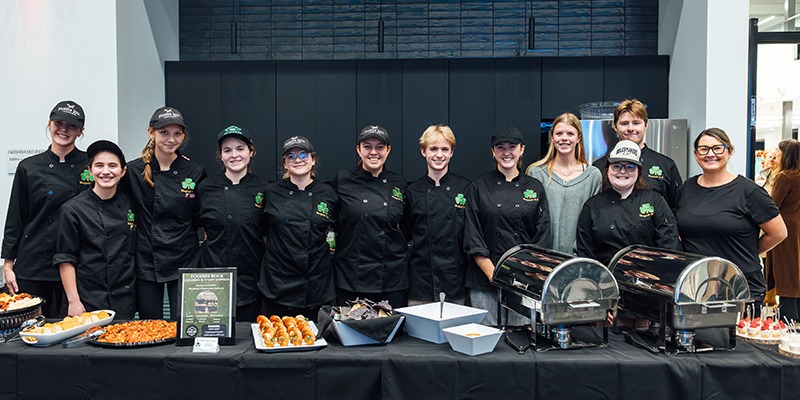
Westfield Washington Schools differentiates between a merely trained workforce and one that is well-educated. Dr. Atha argues that foundational knowledge allows for greater adaptability in a shifting market. “We focus on a well-educated workforce. While we want students to have specific skills, we prioritize the ability to learn and adapt to new challenges,” he says. Modern instructional goals take physical form at Shamrock Station, a 37,300-square-foot facility created from the former public library. “Shamrock Station is a community event and conference center. It houses our culinary arts program and a full commercial kitchen where students manage hospitality operations.” Westfield High School also offers Foodies Rock, a Career Technical Education (CTE) class that involves students in hands-on learning around catering, cooking, and event management.
Beyond hospitality, the station serves as an incubator for student-led enterprises. It includes Rocks Media House, a content studio, and a retail space for district apparel. Dr. Atha explains that these ventures operate with a business-first mindset. “We have a student-run apparel shop and a media production house within the facility. Such programs provide hands-on experience in marketing and retail management,” he says. The 250-seat event space also functions as a revenue-generating asset. “Shamrock Station is a district-owned property that generates income. We host community events, giving students real-world exposure to the hospitality industry.”
Strategic alliances with local organizations provide students with vocational pathways in high-demand fields. The district collaborates with entities like Chariot Automotive and emergency services to offer certified training. Dr. Atha notes that such partnerships often include paid work-study opportunities. “Our students participate in internships with Riverview Health and the Westfield Fire Department. Such experiences allow them to earn certifications in healthcare or fire and rescue before graduation.” He notes that connections support the local economy. “We partner with local businesses to place students in real positions. They gain experience, helping them decide their post-secondary path,” Dr. Atha says.

Expanding for Unprecedented Growth
Westfield currently implements approximately $500 million in capital improvements to address its status as a top national growth destination. The district operates under the Destination Westfield plan, which recently received Phase 3 approval for long-term expansion. “We are one of the fastest-growing districts in the country, and our infrastructure must keep pace with that reality. This requires significant capital investment to ensure our facilities remain state-of-the-art,” Dr. Atha says. He points to the recent construction of a $35 million transportation center as a critical logistical foundation. “A reliable transportation infrastructure is essential for a district of our size and growth trajectory.”
A primary component of the expansion involves restructuring the elementary system to a K-5 model by the 2026-2027 academic year. This shift intends to alleviate capacity constraints by moving fifth grade out of the intermediate schools. “We are transitioning our elementary schools to include grades kindergarten through five. This move allows us to maximize our current footprint while preparing for future enrollment spikes,” Dr. Atha says. The reorganization coincides with a 10-year master plan designed to support a total population of 17,000 students. “Our structural changes are data-driven and focused on creating the most effective learning environments for our younger learners,” he emphasizes.
To accommodate the surge in the secondary student population, the district is constructing a second middle school slated for completion in 2027. This facility aims to maintain manageable class sizes. “We are building a new middle school that will serve as a cornerstone for our expanding community. It is designed to foster the same high levels of learning we expect across the district,” Dr. Atha says. He highlights that facility design influences educational outcomes. “Our new buildings are not just about space; they are about providing the specialized environments needed for modern curricula.”
Regional Partnerships and the 10-Year Master Plan
Westfield Washington Schools extends its influence through regional partnerships designed to serve students and the broader community. “We are working with the YMCA on our Life Ready Center, which will house various career and technical education courses and dual credit opportunities,” Dr. Atha says. He explains that this facility serves a dual purpose by offering community services. “The partnership includes built-in childcare, which provides a critical resource for our staff and allows us to expand our educational reach.”
Education at Westfield Washington Schools involves collaboration with higher education institutions to bridge the gap between high school and career. “We partner with IU Kokomo to bring degree programs and industry certifications directly to our community. This allows us to offer adult education and night school for those looking to enter the workforce,” Dr. Atha says. He adds that the district functions as an educational leader. “Our goal is to provide any adult in our community with the preparation they need to be successful.”
The administration views these initiatives as drivers for the local economy. By strengthening industry connections, Westfield Washington Schools ensures its curriculum aligns with market needs. “We are shoring up our industry connections so we can place our students in real positions where they gain valuable experience,” Dr. Atha says. He maintains that these experiences help students refine career goals. “Ultimately, we want to help grow our economy by ensuring our graduates are prepared for what they want to do beyond high school.” This comprehensive approach secures the district’s role as a vital economic partner.
AT A GLANCE
Who: Westfield Washington Schools
What: A high-performing K-12 public school district in Indiana’s fastest-growing city, recognized for its innovative “Life Ready” curriculum.
Where: Westfield, Indiana
Website: www.wws.k12.in.us
PREFERRED VENDORS/PARTNERS

CSO Architects: www.csoinc.net
CSO is one of Indiana’s leading architecture and interior design firms, known for innovative, client centered work. With decades of experience across diverse project types, the firm values collaboration, clear communication, and creating adaptable design solutions that strengthen communities and deliver lasting value.

FORTÉ: www.ourforte.com
FORTÉ is a leading audiovisual solutions provider delivering next generation visual collaboration systems with a people first approach. With extensive technical expertise and a global footprint, FORTÉ designs, tests, and deploys customized AV environments that elevate workplace communication and empower organizations to achieve better outcomes.

Sexson Mechanical Company: www.sexsonmechanical.com
Since 1999, Sexson Mechanical has been a recognized leader in Central Indiana’s mechanical contracting industry. We are a one stop, full-service contractor for commercial and industrial clients, delivering excellence in HVAC, refrigeration, plumbing, mechanical piping, preventive maintenance, water and wastewater, and construction services.