Building Lasting Success on Small-Town Values and Strategic Vision
From a Single Branch in Leon to 10 Communities Across Kansas, This Century-Old Institution Proves Community Banking can Thrive Through Character-Based Lending and Genuine Local Engagement.
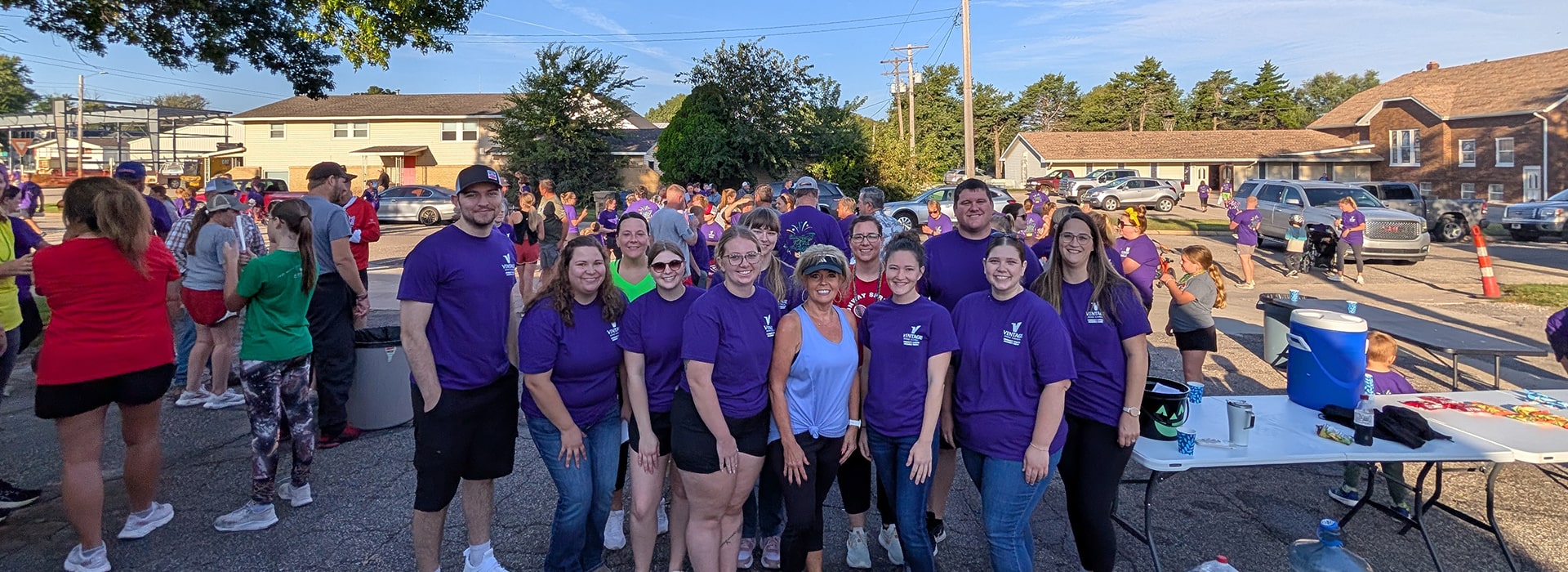
When Steve Worrell, President and CEO of Vintage Bank Kansas, and majority owner Wink Hartman purchased The State Bank of Leon in 2011, they acquired more than a financial institution. They bought into a legacy dating back to 1902, rooted in a town of just 657 residents where everyone knows your name. What started as a single branch with $9.5 million in assets and five employees has grown into a 10-community network with $260 million in assets and 70 employees. The transformation required a clear vision for what community banking could be in an era of consolidation.
“We’re very community bank oriented,” Worrell explains. “All three of us in this room grew up in small communities in Kansas. Our approach has been looking at towns, small towns that have community banks that don’t have family or ownership that can buy the bank, but they want them to be very involved in those communities.” The strategy targets a specific need in rural Kansas, where many community banks face succession challenges but resist absorption by regional or national chains.
The growth trajectory indicates deliberate acquisition planning rather than opportunistic expansion. Worrell, who has worked in and around community banking since 1974, starting in public accounting, brings institutional knowledge to each transaction. “We ask that our people be very involved in those communities,” he says. “What we’ve tried to do is take off the regulatory burden that they have and let them focus on their customers more to take care of them.”
A Culture of Flexibility – For Customers and Employees
Flexibility isn’t just marketing rhetoric at Vintage Bank Kansas. The institution has built systems that allow customers to conduct full banking transactions from anywhere. “We have what’s called VBK Chat, which is where a customer can be sitting at home or they can be riding in their tractor with their phone,” Worrell says. “They can call us and they can be sitting right in front of our loan officer or a customer service representative talking to them face to face and doing what they need to do. They can sign documents online with that customer service rep or the loan officer.”
The technology addresses a fundamental challenge in agricultural communities where timing matters. Farmers can’t always wait until 5 p.m. to handle financial transactions, nor can they necessarily make it to a branch during standard hours. DocuSign capabilities further augment this accessibility, allowing customers to complete paperwork after hours when their workday finally ends.
This customer-focused flexibility mirrors the bank’s approach to its workforce. Jenalee Stucky, Executive Vice President and Chief Operations Officer, explains the employee value proposition. “While 10 of those communities are not within the Wichita metropolitan area, they certainly are close enough where they could work in downtown Wichita with a 30 minute or 40 minute drive, but they would prefer to stay in their communities so they can go to muffins with mom in the morning or donuts with dad and then get into work a little bit later.”
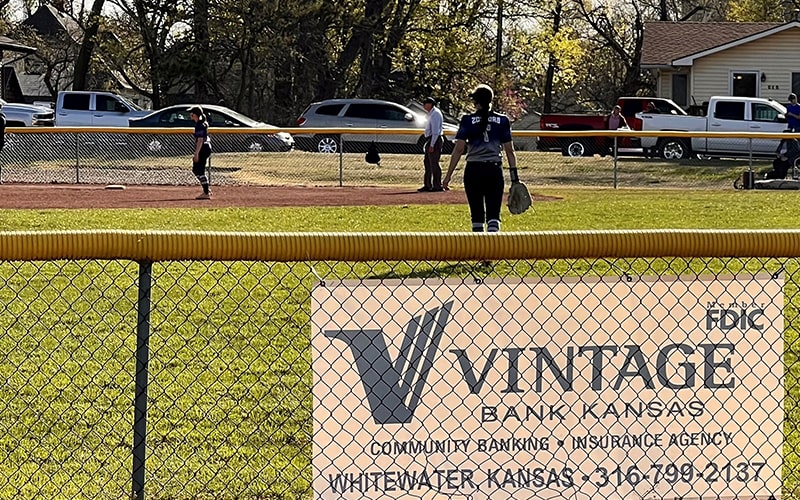
The retention strategy proves particularly important given that most employees came with the acquired banks, bringing established customer relationships and local knowledge. “We don’t want to lose them to a downtown Wichita bank,” Stucky says. “We would like to keep them in their communities.”
Investing in Financial Literacy
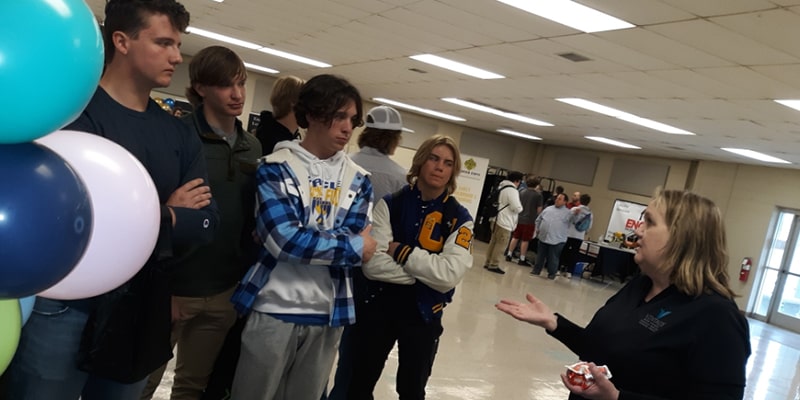
Financial education programs at Vintage Bank Kansas cover elementary schools through college campuses, addressing knowledge gaps that traditional curricula often miss. Candace Wolke, Chief Credit Officer and Market President of Conway Springs, oversees initiatives that teach practical money management before students face real financial decisions. “We go into the schools and do financial literacy classes,” Wolke says. “We start in elementary school doing some very basic things, the difference between needs and wants and just how to save money.”
The curriculum becomes more sophisticated as students age. High school programs introduce checking accounts, credit basics, and budgeting fundamentals. By the time students are seniors in high school, the focus shifts to loans and credit. “We go into the school and do classes for seniors on how to manage your student loans, how credit actually affects you in real life, not just your credit score but how you use it when you’re trying to get a loan to purchase a home or to purchase a car,” Wolke explains.
Conway Springs, located 30 miles southwest of Wichita in Sumner County, maintains a population of approximately 1,086 residents where agriculture remains central to the local economy. The bank’s educational approach recognizes that many students will eventually manage farm operations or small businesses requiring substantial credit understanding. These early interventions aim to prevent costly mistakes that can shadow borrowers for years.
The programs also serve a relationship-building function, introducing the bank to future customers while they’re still forming financial habits. “It’s just a kind of life skill that we try to teach them,” Wolke adds. The investment in education is a longer view of community banking, where customer relationships can bridge generations rather than quarters.
Understanding Agricultural Banking Cycles
Agricultural lending requires a fundamentally different evaluation framework than standard commercial banking. Wolke describes an industry reality that larger institutions often struggle to accommodate. “It’s a boom-and-bust business, but if you’re familiar with the ups and downs as a financial institution, then it’s easier in terms of being able to provide that financial support where you can,” she says.
The Kansas agricultural economy has faced significant headwinds recently. Farm finances and credit conditions continued weakening through the second quarter of 2025, with deterioration most pronounced in areas dependent on crop revenues. Farm debt at agricultural banks grew approximately 7 percent from the previous year as weak profit margins for key crops reduced working capital and increased loan demand. Against this backdrop, character-based lending becomes not just philosophy but practical risk management.
“That’s how we’ve received some of our best customers,” Wolke explains. “Some of the bigger guys, no offense to them, but they can only look at the numbers, and they don’t have the ability to look at the character of the customers much. So, when there are downtimes, that is typically when they’re not getting great treatment. And so, if you can take on a customer during downtime, then when they have the boom, you are at the bank behind them.”
The approach includes mortgage servicing, where Vintage Bank Kansas maintains control rather than selling loans to third parties. “On the home loans that we sell, we do them to the Federal Home Loan Bank, and we maintain the servicing of those loans,” Worrell says. “We want the customers, if they have an issue, they don’t have to call a one 800 number, they just call their local community banker, and we’ll take care of it for them.”
Infrastructure for the Future
Capital investment at Vintage Bank Kansas flows into multiple channels simultaneously. Technology, human resources, physical infrastructure, and strategic acquisitions all receive attention in a balanced approach to sustainable growth. “Yes, yes on all of those,” Worrell confirms when asked about investment priorities, though the emphasis on efficiency remains paramount for community banks operating with tighter margins than their larger counterparts.
One unconventional initiative pairs institutional knowledge with emerging perspectives. Worrell established what he calls the “young guns” group about 18 months ago, bringing younger employees together with the executive team. “I wanted to know from the younger generation, what’s going on out there? What do we need to be thinking about?” he says.
“So I put together and brought in several of our younger people into what I call the young guns and married them with the exec team so that they could mentor us and help us see what we weren’t seeing from the younger generation to make sure we were meeting the needs in these communities for those kids that are growing up and going to college, and hopefully coming back home to those communities.”
Physical infrastructure improvements have included installing ATMs in all communities where they were previously absent. “We’re starting to put digital signs in every one of our communities so that we can advertise on those signs,” Worrell explains. “If the community’s got events going on, they can advertise on those digital signs so that the whole community can see what’s happening.” Meanwhile, Stucky confirms the bank’s ongoing acquisition strategy. “We are always looking for another acquisition that we may potentially make,” she says, indicating growth plans remain active despite the challenging agricultural credit environment.
Staying Rooted in Kansas Communities
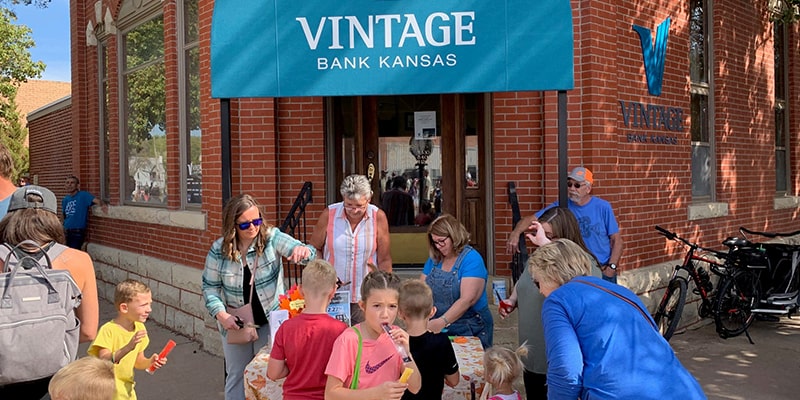
The bank’s strategic direction for the next 18 months centers on deepening existing relationships rather than dramatic expansion. Worrell frames the priorities around customer needs and sustainable growth. “Over the next 18 months, we will continue to find ways in the community to help our customers with whatever the need is, continuing to try and grow our loans,” he says. “I mean, that’s where we generate most of our money for our bank.”
Community support includes more than individual customer relationships. The bank finances equipment and infrastructure that small towns need but struggle to afford independently. “We support our communities for, they have equipment and stuff for the different things in the community that they need to borrow against,” Worrell explains. “So, we try and help out with that, whether it’s fire trucks, police cars, et cetera.”
Geographic focus remains intentional and unwavering. “We’ve said we’re going to be a Kansas Community Bank,” Worrell says. “That’s what we’ve been, that’s what we want to continue to be.” The statement carries weight in an industry where consolidation frequently erases regional identity. With the Kansas Bankers Association reporting 98 percent statewide participation among member institutions, Vintage Bank Kansas operates within a collaborative ecosystem that values local ownership.
From a single branch in Leon to a network serving 10 Kansas communities, Vintage Bank Kansas continues to show that community banking can thrive through strategic acquisition, technological investment, and genuine local engagement. The model depends on people who understand both spreadsheets and small-town life, where a banker’s handshake still carries weight and customer relationships are measured in generations rather than quarters.
Click The Cover To View Or Download The Brochure

AT A GLANCE
Who: Vintage Bank Kansas
What: Community bank serving 10 Kansas communities with $260 million in assets, 70 employees, and a focus on community lending, financial literacy and personalized customer service.
Where: Leon, Kansas (headquarters)
Website: www.vintagebankks.com
PREFERRED VENDORS/PARTNERS

Miracle Signs: www.miraclesigns.biz
Miracle Signs is a full-service custom electric sign company and fellow Kansas Bankers Association member. We provide in-house design, fabrication, installation, and service for community banks across Kansas. From LED monuments to ATM canopies, we deliver high quality signage that strengthens visibility and reinforces brand identity.

FHLBank Topeka: www.fhlbtopeka.com
FHLBank Topeka provides liquidity and funding to our diverse financial institution members throughout Colorado, Kansas, Nebraska and Oklahoma. Because we’re owned by our member banks, thrifts, insurance companies, credit unions and community development financial institutions, we’re able to provide the products and services that give them a competitive advantage.

Data Center Inc (DCI): www.datacenterinc.com
DCI is the developer of the award-winning iCore360® core banking software, plus iCoreGO® digital banking and fintech processing solutions for community financial institutions nationwide, including those using other core platforms. DCI offers private ATM network/card management, FrontLine teller software, custom analysis, risk/vendor management, and more. Visit www.datacenterinc.com or contact info@datacenterinc.com.