A City on the Rise
A Bold Plan for Smart Growth, Housing Diversity, and a Thriving Workforce
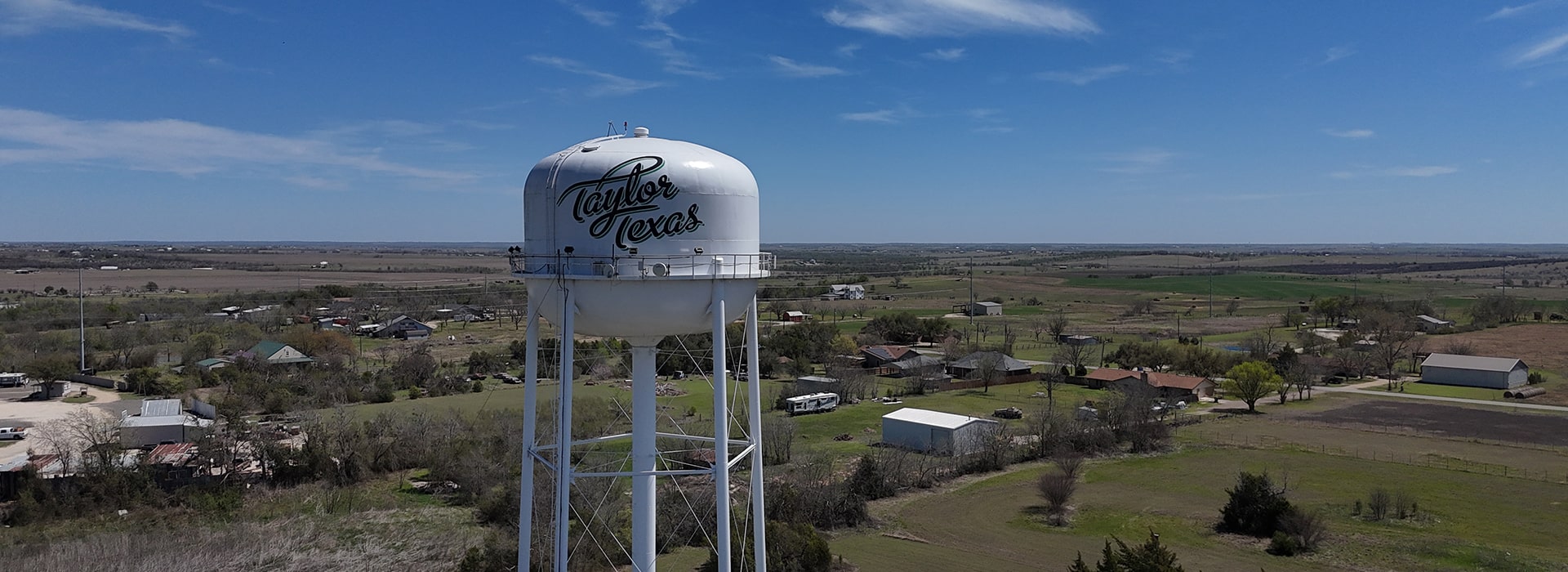
For Mayor Dwayne Ariola, Taylor, Texas, is still the same friendly town he grew up in—just with a lot more happening. “We’re only about 17,000 people, but it’s still a village,” he says with a laugh. “You can’t go out and about without seeing someone you know. But there are more and more new faces these days, and that’s exciting. We’ve embraced the growth that’s coming, and we’re making sure we do it right.”
Taylor’s transformation is being guided by one of the most significant economic catalysts in Texas: Samsung’s new semiconductor campus, a multi-billion-dollar investment that’s redefining opportunity across Central Texas. Yet, Mayor Ariola, the City Council, and the Taylor Economic Development Corporation (TEDC)—led by President and CEO Ben White—are ensuring that growth doesn’t outpace planning.
Their approach emphasizes balanced development, infrastructure investment, and community preservation, making Taylor —located in eastern Williamson County—one of the most closely watched cities in the Austin metropolitan area.
Building a Foundation for Smart Growth
At City Hall, multiple long-range initiatives are moving forward in lockstep. Taylor is currently updating its Downtown Master Plan, conducting a citywide water and wastewater study, and preparing a new comprehensive plan that accounts for the sweeping impact of Samsung’s arrival.
“The previous [comprehensive] plan was approved right before Samsung selected Taylor,” Ariola explains. “It didn’t anticipate that level of growth. The old approach was to grow from the inside out—fill in the open lots first. Now, with Samsung, we have to plan for the ETJ [extraterritorial jurisdiction] and surrounding acreage that’s suddenly viable for near-term development.”
The city’s new affordable housing study—the first phase of that larger comprehensive plan—will define what affordability means specifically for Taylor’s workforce. “We need housing for everyone,” Ariola says. “First-year teachers, first responders, skilled workers, and executives. The mix has to reflect the diversity of the people who are moving here.”
The TEDC has taken the lead in funding and coordinating much of the infrastructure planning. “The water and wastewater master plan will give everyone—from staff to developers—a clear view of where future lines are going,” says White. “It’s about giving the city, the business community, and our residents a roadmap for sustainable growth.”
Strengthening the Heart of Taylor
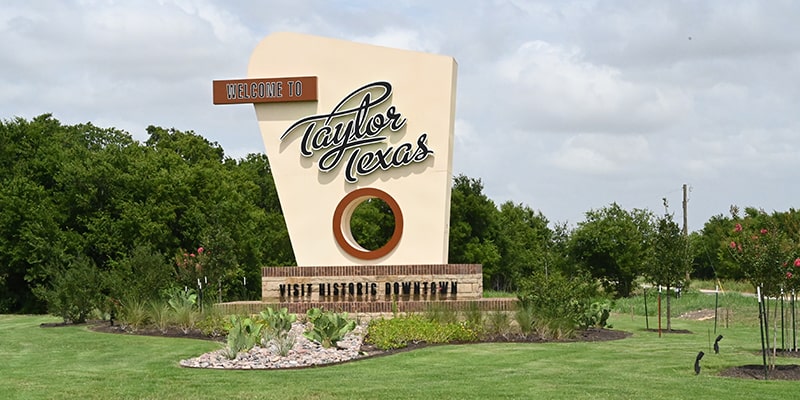
While planning for new neighborhoods and industrial zones, Taylor is also investing in the places that define its identity. The Heritage Square redevelopment downtown has become a vibrant community gathering space, complete with a splash pad, amphitheater, and covered farmers market. “It’s been a huge success,” Ariola says. “It’s given us a central hub for events that used to shut down Main Street, which was expensive and complicated because it’s a [Texas Department of Transportation] road. Now we have a space that’s beautiful, functional, and accessible.”
To ensure continued downtown vitality, the city has hired a dedicated downtown coordinator—someone with an economic development background who can work hands-on with small businesses. “We can’t forget about our existing business owners,” Ariola emphasizes.
“They’ve been here through thick and thin. As property values rise, we’re helping them with façade grants, signage, and marketing to keep foot traffic strong.”
Samsung and the Power of Partnerships
No discussion of Taylor’s growth is complete without Samsung. The company’s first fabrication plant, Fab 1, will begin operations in 2026, bringing thousands of high-tech jobs to the area. “Samsung has already moved between 500 and 1,000 employees into their office section,” White says. “They’ll have several thousand people on-site during the equipment installation phase next year, which will create a surge in local business activity.”
But Samsung’s impact extends beyond direct employment. The company’s community and educational partnerships have made it a model corporate citizen. “Samsung is required to provide internships to Taylor ISD students as part of their incentive agreement,” White explains.
“They’ve already been doing that for two or three years. They’ve also given a $1 million grant to support education programs, and we’re exploring externships so teachers can experience the technology firsthand and bring that back into the classroom.”
Samsung’s commitment has also attracted additional investment in education. The University of
Texas recently announced a 68-acre satellite campus just half a mile from the new fabrication facility. “That’s a game-changer,” says White. “It’s going to produce the future workforce for Samsung and for Taylor’s growing economy.”
Diversifying Beyond Semiconductors
Even as Taylor rides the wave of semiconductor expansion, its leaders are intent on avoiding over-reliance on a single industry. “When I arrived two years ago, some people wanted to chase all 150 Samsung suppliers,” White says. “But I don’t believe in putting all our eggs in one basket.”
The city’s first Economic Development Strategic Plan—completed under White’s direction—lays out a clear vision for diversification. In addition to attracting semiconductor suppliers, Taylor is pursuing opportunities in defense and aerospace, advanced manufacturing, logistics, rail-served industries, and downstream chemical production.
“Our goal is to make Taylor a hub for multiple sectors,” White says. “If one sector slows, others keep the economy strong. And we’re the only city in Central Texas with a rail park, which gives us a major logistical advantage.”
Housing for Every Resident
Growth brings housing challenges, and Taylor’s leadership is tackling those head-on. New single-family homes, apartments, and mixed developments are already under construction inside the city limits and beyond the ETJ, but the goal is balance.
“We use the term workforce housing rather than ‘affordable housing,’” White explains. “We’re talking about the teachers, nurses, police officers, and paramedics who keep the community running. We want them to live here, not commute from elsewhere.”
At the same time, the city is pursuing executive-level housing and amenities to attract company leaders to put down roots in Taylor. “When executives live in the community, they become part of it,” White says. “They join boards, volunteer, and run for council. They become the fabric of Taylor.”
To that end, the TEDC is exploring a hotel and conference center project with an 18-hole golf course and surrounding executive housing—a development that would diversify both the housing market and the local economy.
Infrastructure: Planning for Generations
Behind every headline project is a massive investment in infrastructure. Taylor’s wastewater treatment plant has been modernized to handle up to 4 million gallons per day, with room to expand as growth continues.
“We’re currently using 1.5 million,” Ariola says. “But as development increases, we’ll hit those thresholds that require us to start planning for the next facility. We’re already looking at potential sites downstream of Samsung and talking about oversized infrastructure so we’re not replacing it in 30 years.”
On the transportation side, the partnerships with TxDOT and Williamson County are transforming regional mobility. The East Wilco Highway—a new connector linking Taylor to SH 130 and I-35—is under construction, while Samsung Boulevard will form a southern loop around the city. Expansion of Highway 973 to six lanes will further improve north-south access.
“These roads are critical,” White says. “They open up entire corridors for commercial, industrial, and residential growth. They’re also what make Taylor the emerging hub for the northeast side of the Austin metro area.”
Parks, Recreation, and Quality of Life
For Mayor Ariola, growth isn’t just about infrastructure—it’s about livability. The city recently completed a recreation center feasibility study and continues to update its Parks and Recreation Master Plan, ensuring eligibility for future grants and guiding future amenities.
“We lost a YMCA vote years ago,” he says. “Now everyone wants a recreation center. We’re not ready yet, but we’re planning for it—an indoor pool, training facilities, walking tracks, all of it. We’ve also invested in ADA upgrades to our pool, new trails, and park expansions. Every new development we approve includes connectivity to our hiking and biking network.”
White adds that amenities are as much about workforce development as they are about leisure.
“The next generation of workers cares about quality of life,” he says. “They want trails, outdoor spaces, and family-friendly parks. Those things are part of what makes Taylor competitive.”
The Future of Taylor
Both Ariola and White see the next decade as the most transformative in Taylor’s history. “When you have major anchors like Samsung and UT, combined with infrastructure, housing diversity, and great partnerships, the future is limitless,” White says. “Taylor is becoming the hub for business, education, health care, and recreation in northeast Austin.”
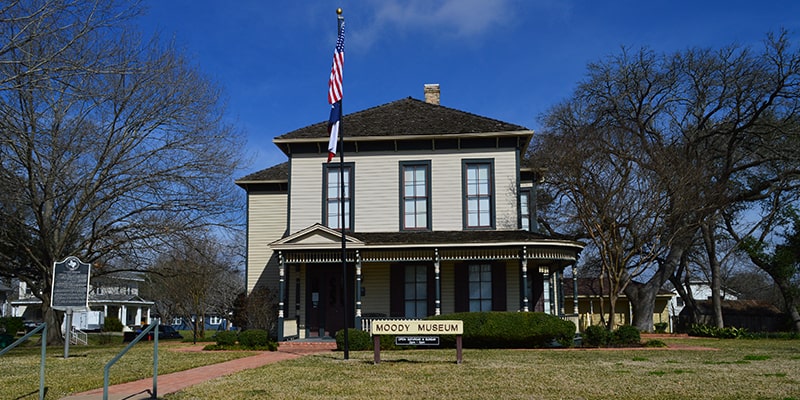
For Mayor Ariola, the focus remains personal. “I was born and raised here,” he says. “We’ve gone from a small farming community to a city on the national map. Growth is here, not coming—it’s here. Our job is to manage it smartly, keep our small-town spirit alive, and make sure every decision we make today sets Taylor up for success tomorrow.”
With its strategic vision, strong partnerships, and unwavering community pride, Taylor is not just growing—it’s thriving.

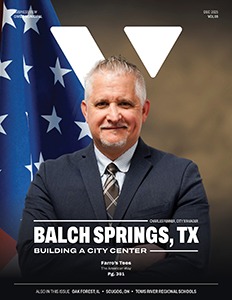
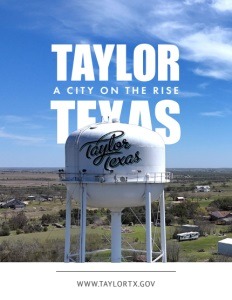
Click The Cover To View Or Download The Brochure
AT A GLANCE
Who: Taylor, Texas
What: A thriving small city that feels more like an economic engine of growth
Where: Williamson County, Texas
Website: www.taylortx.gov
PREFERRED VENDORS/PARTNERS

Metropolitan Development Company: www.metropolitandevco.com
The Metropolitan Development Co. brings together over a century of combined experience in real estate development, construction, finance, and strategic planning, with a focus on complex urban, multifamily, mixed-use, and industrial projects across emerging Texas markets. As experts in urban in-fill MDC is developing “the Missing-Middle” multi-family and condominiums in Taylor and across Texas Triangle.