A Rural District Building Real-World Readiness
Strategic Planning, Student Support, Modern Security Upgrades, and Patriot Manufacturing are Expanding Opportunity Across Owen County
In a rural community where students often face barriers that extend far beyond the classroom, Spencer-Owen Community Schools is working from a clear premise: opportunity must be intentional. For Superintendent Andy Cline, the district’s purpose is straightforward—help students learn, achieve, and succeed, then graduate ready to enroll, enlist, or be employed.
What makes the district’s work especially notable is the way it has built a foundation of support and pathways that connect students to real careers, real skills, and real confidence—particularly in a community where poverty rates can range from 55 to 75 percent.
“We want to make sure kids understand there is more out there than what they see every day,” Cline explains. “Education is the leveler. It opens doors, and we have a responsibility to create those opportunities.”
With Director of Communications Kris Samick supporting district storytelling and engagement, Spencer-Owen’s recent progress reflects both a strategic approach to long-term planning and a practical focus on what students need right now: safety, belonging, mentorship, and pathways that translate into the real world.
A District Culture Grounded in Social-Emotional Support
For Spencer-Owen, student success starts with wellbeing and relationships. The district has built layered social-emotional supports designed to meet students where they are—whether that means peer-led intervention, counseling access, or partnerships with local service agencies.
At the student level, a key initiative is Hope Squad, a student-to-student support model that gives students another pathway to reach out when they need help, especially if they are not ready to approach a counselor, teacher, or administrator directly. The district also staffs counselors at the high school and middle school levels, with counseling support embedded at the elementary level as well. In Spencer-Owen’s two larger elementary schools, counselors are onsite, while a home-to-school advisor supports students across the district’s smaller elementaries.
The district also partners with community providers such as Hamilton Center and Centerstone, which provide counseling services to students and families, with professionals working in and out of school buildings as needed.
Social-emotional learning begins early. Samick notes that elementary students participate in life skills instruction—often delivered in the library setting—where they learn language and strategies tied to emotions, conflict resolution, and appropriate responses to challenging situations. Importantly, the district sees evidence that these lessons “stick.” Students use the language they learn in real time, reinforcing the idea that SEL should be lived daily, not taught in isolation.
Support also extends to staff. Spencer-Owen has a formal mentoring program for new teachers and teachers new to the district. Cline describes the model as collaborative, supported by a team that includes Samick, a curriculum director, and building-level educators who help guide mentoring throughout the year and beyond the first year of employment. In addition, the district’s insurance trust provides staff with counseling services through both tele-counseling and in-person support options.
Technology as a Tool—and a Real-World Bridge
Spencer-Owen’s approach to technology is practical and consistent: it should supplement instruction, not replace it. The district is one-to-one with Chromebooks, with devices assigned across K–12. Students in grades seven through twelve take their devices home daily, while K–6 devices remain classroom-based and are used as needed to support learning.
Technology is used to support common formative assessments, curriculum alignment, and instructional feedback loops tied to state standards. The district has also worked to strengthen infrastructure, ensuring all school buildings are Category 6 wired for modern connectivity and classroom reliability.
While technology is integrated across instruction, Spencer-Owen is also working to expand STEM engagement. The district maintains stem labs, and leadership recognizes the need to strengthen utilization, especially after participation in elementary robotics and VEX-style competitions declined during the pandemic years. The resources exist to re-engage those programs, and district leadership views that as a clear growth opportunity as it continues expanding its K–12 pathway approach.
At the secondary level, technology becomes more applied. Middle school maker space programming and high school project-based learning programs allow students to use tools in ways that translate directly to real-world contexts, including communications and broadcast initiatives through Owen Valley TV (OVTV). OVTV students record and live stream concerts, school events, and athletics—providing families access to major events even when they cannot attend in person, while giving students direct experience in media production and communications pathways.
Patriot Manufacturing: A Work-Based Learning Model with Measurable Outcomes
One of Spencer-Owen’s most distinctive initiatives is Patriot Manufacturing, a work-based learning program created through the district’s Ready Schools regional opportunity work. Patriot Manufacturing emerged from a deep community listening process. The district interviewed approximately 1,200 individuals, including staff and community members, and the message was consistent: students need hands-on, real-world learning that prepares them for employment after graduation.
Patriot Manufacturing was designed to meet that need while aligning with grant requirements tied to advanced manufacturing. Students produce real products—custom apparel, screen-printed shirts, vinyl designs, and laser-engraved items such as mugs, awards, and promotional materials. The program is structured around the idea that advanced manufacturing is not just physical production—it is the result of technical design, programming, process control, and business operations.
The program integrates multiple pathways, including advanced manufacturing, business and marketing, communications, and family and consumer sciences. Students engage in design work, machine programming, production workflows, quality control, and customer-facing processes. Community partners such as Cook Incorporated and Boston Scientific helped inform early planning and contributed to building a stronger business model and operational approach.
What has made Patriot Manufacturing particularly notable is its scale and maturity. It now impacts more than 100 students daily and generates consistent sales at a six-figure level annually. Students routinely present on internal controls, workflow, and production systems, and the program has become recognized statewide as a model—often hosting visits from other school corporations seeking to learn from Spencer-Owen’s approach.
The program’s value extends beyond product output. It builds communication confidence, professional habits, and public speaking skills in students who may not have otherwise developed those capabilities through traditional instruction. Those outcomes matter, not only for careers, but for life beyond school.
Expanding Pathways: Healthcare, Law Enforcement, and Regional Career Center Access
Spencer-Owen’s work-based learning approach also includes internships aligned to student interest. Students have been placed at local organizations and institutions including the Owen Valley Health Campus, Limestone Fabricators, and other community-based employers. Internship availability shifts from year to year depending on student demand and partner capacity, but the district’s focus remains consistent: connect interests to experience.
A new development is the launch of a law enforcement pathway taught by the district’s school resource officer, who is also leading reinvigorated D.A.R.E. programming at the elementary level. The officer, a retired Indiana state conservation officer, obtained the necessary workplace specialist license to teach one class daily, introducing students to law enforcement as a viable professional pathway. Early enrollment interest has been strong, with at least 15 students participating as the program develops.
Spencer-Owen also partners with the regional career center Hoosier Hills Vocational School, located about 15 minutes away. Currently, around 40 to 45 students—primarily juniors and seniors—attend daily to access pathways such as welding, culinary, EMT, hospitality, automotive repair, and collision repair. These programs provide industry certifications that strengthen immediate employability after graduation.
Security and Infrastructure Investments Built for Long-Term Readiness
Alongside student programming, Spencer-Owen has made significant investments in facilities and operational infrastructure.
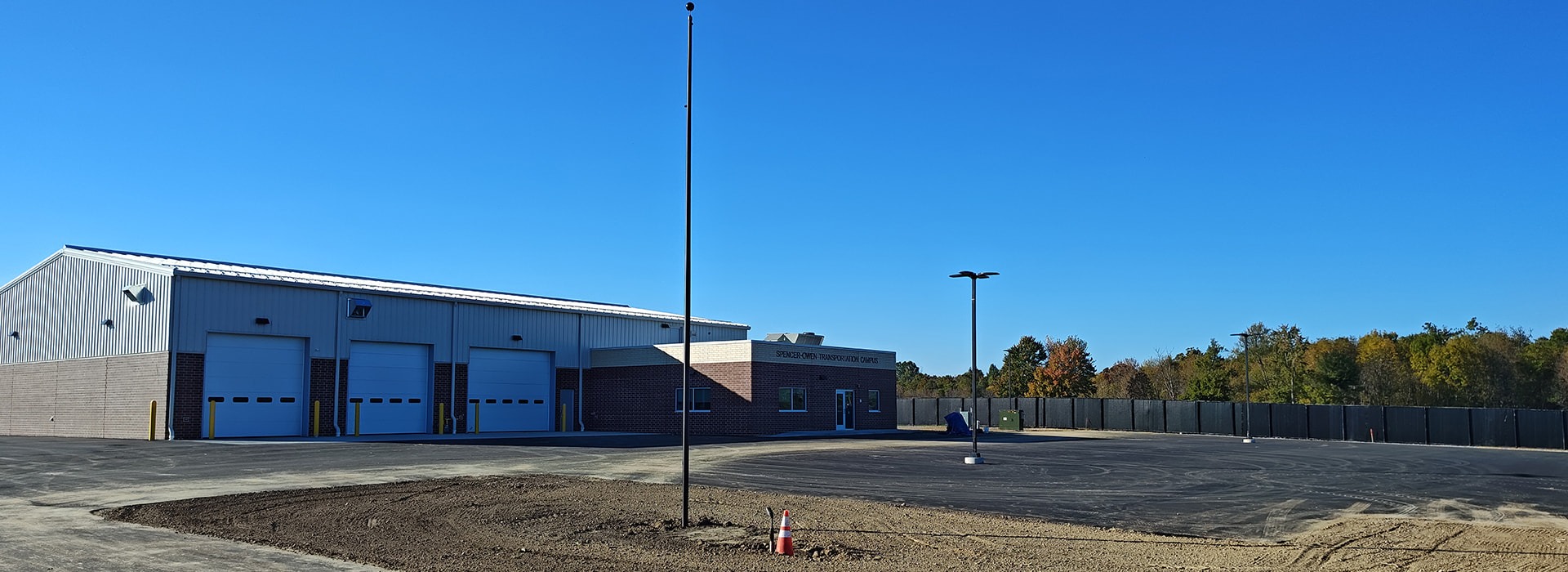
A major current project nearing completion is a new transportation facility, funded through a bond. The facility was designed with future demand in mind. As contracted route providers age out of the system with fewer replacements coming behind them, the district anticipates taking on more routes directly, requiring increased bus ownership, maintenance capacity, and operational space.
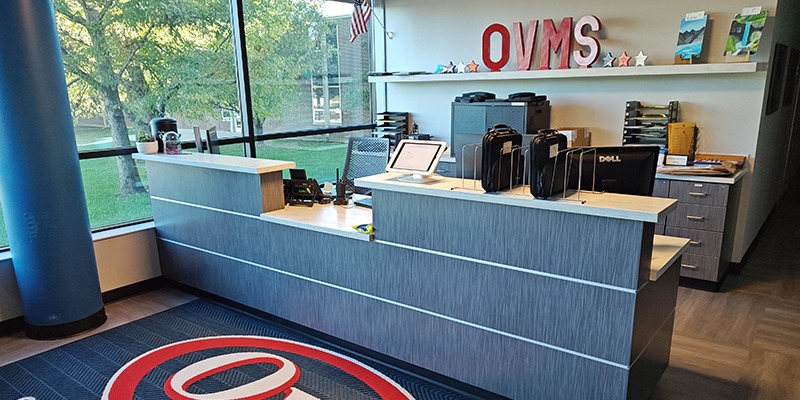
The district has also prioritized secure entry upgrades. Owen Valley Middle School recently completed renovations that created a secure entry structure and improved office flow. Similar secure vestibule improvements were completed at elementary schools, eliminating open access and establishing controlled entry points.
Spencer-Owen has also modernized its visitor management system. The district replaced outdated sign-in clipboards with a technology-based process that includes badge printing, time stamping, and a screening step tied to national child protection databases. This system has improved visibility, accountability, and peace of mind for staff and families.
Security camera improvements are underway, with plans to provide remote access for administrators and school resource officers to monitor buildings efficiently without unnecessary travel. Technology-driven building management upgrades are also in progress, replacing legacy HVAC control systems and strengthening energy efficiency. District leadership notes that the improvements represent both modernization and financial stewardship.
Academic and extracurricular facilities have also received attention. Recent years have included improvements to track and field facilities, synthetic turf, press box updates, greenhouse construction to support horticulture and agricultural pathways, and ongoing maintenance upgrades across older buildings.
Cline describes the district’s facilities approach through a simple metaphor: the three-legged stool of academics, arts, and athletics. If one leg is neglected, the whole system becomes unstable. Spencer-Owen’s capital investment strategy reflects that belief by balancing core learning environments with spaces that support student identity, pride, and engagement.
Looking Ahead: Strategic Planning, Work-Based Learning, and Continued Opportunity-Building
Over the next 18 to 24 months, Spencer-Owen Community Schools is focused on refining strategic planning priorities, maintaining facilities with intention, and continuing to expand pathways that translate into real careers.
Key emerging areas include expanding work-based learning structures in response to evolving Indiana diploma requirements, strengthening internship partnerships, and exploring new programming where student interest and workforce demand intersect. Leadership has also identified potential future pathways in areas such as cosmetology, reflecting the district’s commitment to meet students where they are and offer options aligned to real-world opportunity.
At the same time, the district is mindful of broader state-level changes that may affect long-term funding—especially property tax policy shifts that could influence school operating resources and local government capacity. In that environment, Spencer-Owen’s commitment to proactive planning, partnership development, and program sustainability becomes even more important.
In a rural district with significant economic challenges, Spencer-Owen is demonstrating what is possible when a school system builds support early, invests in relevance, and treats pathways as doors—not detours. For students across Owen County, that approach is not just preparing them for graduation. It is preparing them for life.
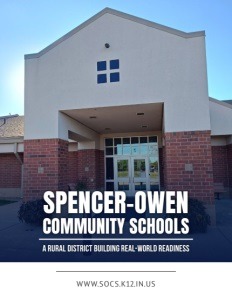
Click The Cover To View Or Download The Brochure
AT A GLANCE
Who: Spencer-Owen Community Schools
What: An innovative district focused on its strategic plan, work based learning and providing the right opportunities for its students
Where: Spencer, Indiana
Website: www.socs.k12.in.us
PREFERRED VENDORS/PARTNERS

Harrell-Fish Inc. (HFI): www.harrell-fish.com
Harrell-Fish Inc. (HFI) is a leading mechanical contractor with 40 years of experience delivering results, providing solutions, and acting with urgency. Guided by our mission to make a difference for employees, clients, industry, and community, HFI serves healthcare, education, industrial, commercial, and residential sectors with trusted expertise and responsive service.
