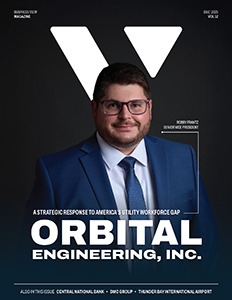
A Strategic Response to America’s Utility Workforce Gap
Meeting Trade Workforce Challenges by Leveraging AI-Powered Safety Systems, Digital Twin Technology, and Aggressive Talent Development to Meet the Moment.
On July 20, 1969, as astronauts Neil Armstrong and Buzz Aldrin took humanity’s first steps on the lunar surface, Bob Lewis watched from Earth with a vision that would shape an industry. The Apollo 11 moon landing inspired Lewis to found Orbital Engineering, Inc. (“Orbital”), naming the company after the space race that had captured the world’s imagination. “Bob was really in awe of what science and engineering made possible,” Robby Frantz, Senior Vice President of Utility Services, explains.
“This event was a pretty profound moment for Bob and his interest in starting an engineering company inspired by the entire space race and all the creativity and innovation that occurred for making that happen.”
The Pittsburgh-based firm began modestly in Pennsylvania’s Rust Belt, supporting the steel and heavy industrial sectors with shop print updates, drawings, and inspection work. Over the following decades, Orbital expanded its services throughout heavy industrial markets before making a strategic pivot in the early 2000s toward electric and natural gas utilities.
The shift proved prescient. Today, the veteran-owned company employs over 650 engineering and support staff across the country, serving industrial clients as well as both investor-owned utilities and cooperative clients with transmission, substation, distribution engineering, and natural gas services.
“In 2023, Orbital executed a major reorganization, abandoning its location-based structure in favor of industry-focused vertical divisions,” says Frantz. “Previously, general managers oversaw all engineering disciplines within their geographic regions. The new model separates operations by market sector, allowing specialized teams to focus exclusively on their industries,” he adds. The restructuring positioned Orbital to better serve clients across its diverse portfolio while maintaining the agility that has defined its near 6 decade trajectory.
A Comprehensive Utility Services Portfolio
Orbital’s utility services division operates across a sprawling geographic footprint, with employees stationed across the United States and internationally supporting diverse client needs. The company provides full-spectrum engineering and design for transmission, substation, and distribution systems, alongside natural gas transmission and distribution services. Beyond design work, Orbital delivers project management and construction oversight, ensuring that engineering solutions translate effectively into operational infrastructure.
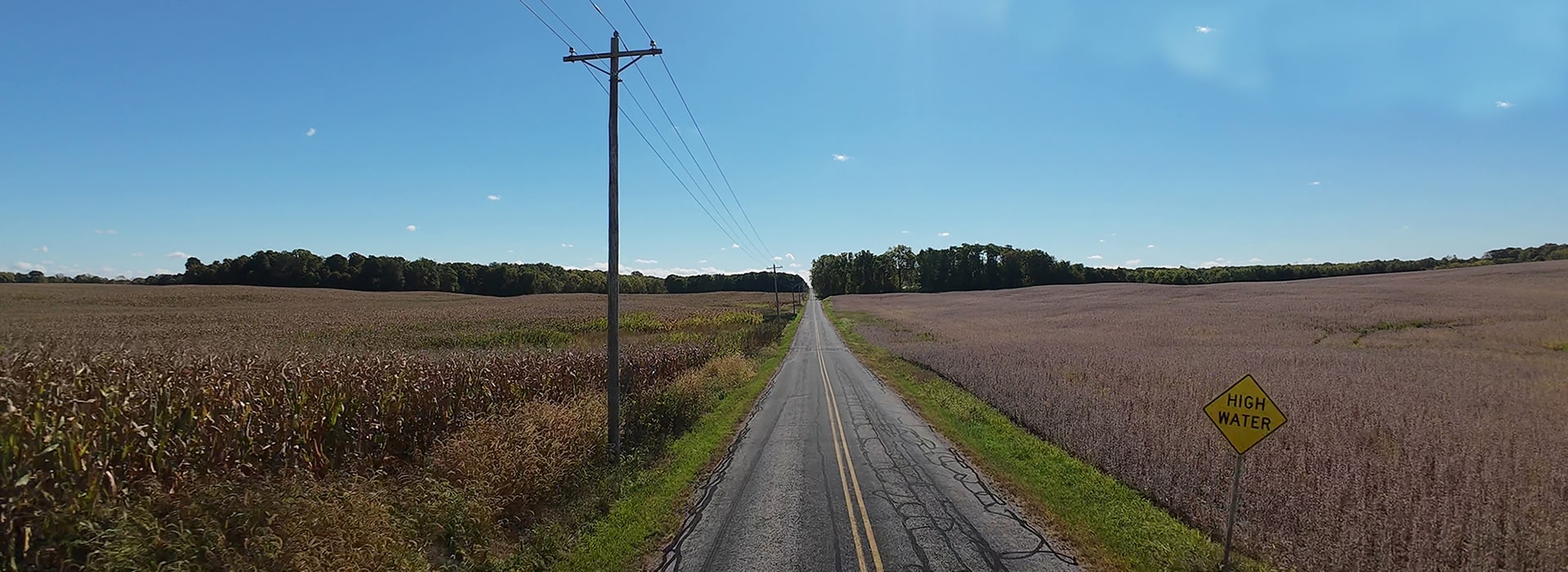
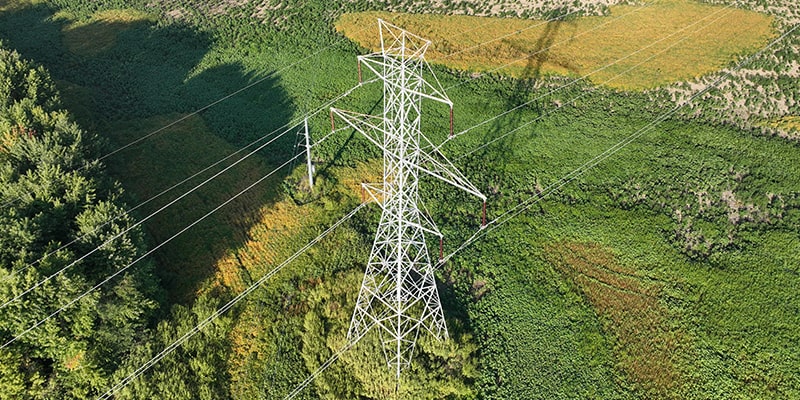
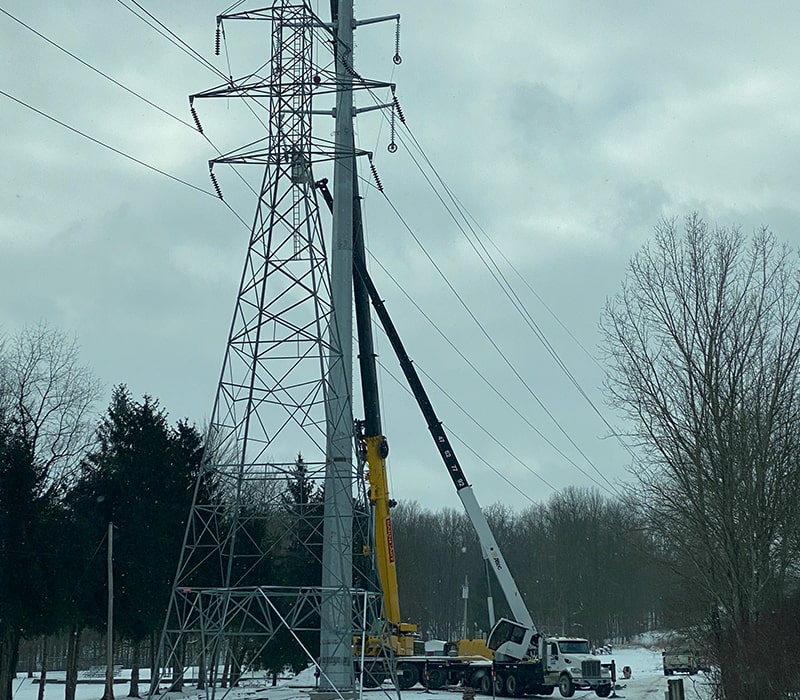
A recent 69 KV transmission line extension project in Indiana illustrates the complexity of modern utility work. “The scope encompassed designing 15 miles of transmission infrastructure with 400 new steel direct embed poles, supporting new conductor and static wire installations,” Frantz explains. “We were working with limited roadside right of way, so typically that’s only a couple of feet off the edge of the curb or the roadway. The project required acquiring easements for the utility while incorporating distribution line assets below the transmission lines within the same design package.”
Geographic Information Systems (“GIS”) played a central role in overcoming site constraints. “Orbital’s GIS team conducted extensive overlays to identify easement and right-of-way issues, tree trimming limitations, and optimal pole placement throughout the design corridor,” Frantz reports. “The comprehensive approach delivered detailed engineering models, structure analysis from civil and structural perspectives, and complete construction packages ready for implementation.”
With U.S. utilities allocating 42 percent of their $174 billion in capital expenditures to transmission and distribution systems, according to industry data, projects of this scale have become increasingly common as the grid modernizes to accommodate renewable integration and rising demand from data centers and electrification efforts.
Building Success Through Collaboration
Orbital’s approach to project delivery centers on collaborative strategies that bring stakeholders together early in the process. Integrated design-build and construction manager-at-risk methodologies have become central to the company’s operations, producing measurable improvements in project outcomes and client satisfaction. “They greatly improve our overall project results and client satisfaction for our organization overall, mainly by encouraging early alignment, transparency, and shared responsibility among every stakeholder involved,” Frantz says.
The collaborative model addresses potential obstacles before they become costly problems. Orbital’s teams work to identify project risks and hazards during initial planning phases, incorporating constructability principles directly into engineering design. “Really trying to incorporate constructability and engineering design from the very beginning, understanding what permitting limitations might be there if you’re going over a railroad or any type of easements you might need from a utility perspective,” Frantz explains. Integration encompasses safety and risk management considerations, ensuring that designs account for real-world installation challenges.
Strategic partnerships amplify Orbital’s capabilities across specialized domains. “We maintain transparent relationships with partners including Valve 48, a Pittsburgh-area firm providing specialized services for acquiring, staging, and programming medium and large valves for rapid deployment,” Frantz notes. “These partnerships enable Orbital to deliver complete solutions while maintaining focus on core engineering competencies.” As infrastructure complexity grows and project timelines compress, the ability to coordinate multiple specialized providers under unified project goals has become essential for successful utility infrastructure development.
Leading with Advanced Technology
Orbital positions itself at the forefront of technology adoption in utility engineering, deploying an extensive fleet of drones for data collection across client sites. The unmanned aerial vehicles capture lidar data, create digital twins, and generate high-resolution aerial imagery, enabling rapid assessments that previously required weeks of manual fieldwork. “We’ve been flying drones for over a decade and using them to collect data very quickly for our utility clients or industrial clients,” Frantz says.
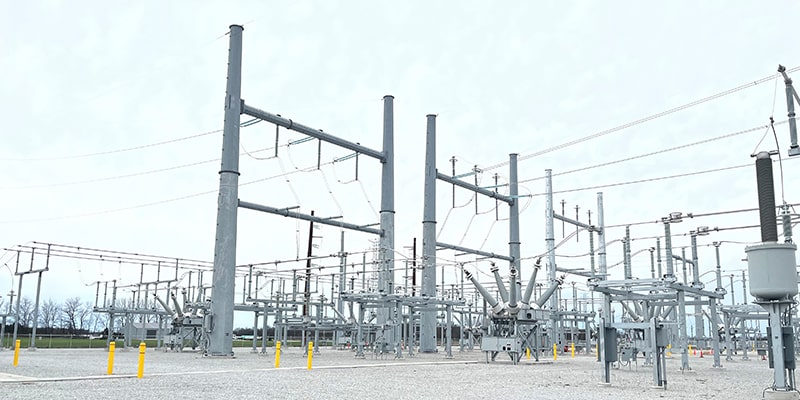
Digital twin technology addresses a persistent challenge in utility infrastructure management. Frantz explains: “Substations often lack current, accurate documentation despite having original design prints, as modifications accumulate over decades without corresponding record updates,” he says. “Orbital’s teams use lidar to scan entire substations, converting the captured data into precise engineering prints that reflect actual field conditions, thus eliminating discrepancies between historical records and physical reality, providing utilities with reliable documentation for planning and maintenance decisions.”
Artificial intelligence applications are applied to active safety monitoring. Orbital deploys AI-powered site monitoring trailers equipped with solar panels and camera systems mounted on elevated masts. “It can send real-time alerts to management personnel, informing them of potential safety issues on-site, such as a worker not wearing a hardhat or other safety gear,” Frantz notes. The systems also function as security platforms, with capabilities to designate restricted zones and trigger alarms when boundaries are breached. Meanwhile, internal AI development continues across multiple applications as Orbital works to streamline processes and procedures at par with industry-wide trends, as utilities integrate information technology, operational technology, and Industrial Internet of Things devices to achieve unified views of asset health and grid performance.
Resolving Regional Complexity Through Strategic Engagement
Operating across the nation and internationally requires sophisticated systems for tracking regulatory variations and regional requirements. Orbital attends at least 15 national conferences annually focused on electric and natural gas utility sectors, ensuring leadership remains current on evolving regulatory frameworks. ”Whether it’s myself, members of the executive team, or any of my directors and operations leaders, we attend these to understand the regulatory frameworks being released or required in each region,” Frantz says.
Organizational structure supports regional responsiveness while maintaining national consistency. National directors oversee individual disciplines across the country, including transmission and substation work, distribution and joint use design, and construction oversight. Below these national leaders, senior managers located regionally connect with local events and maintain relationships within their specific markets. The multi-tiered approach ensures both strategic coordination and local market intelligence.
“Conference participation serves dual purposes as regulatory monitoring and business development,” Frantz notes. “Orbital exhibits at many of the conferences it attends, setting up displays and hosting evening events to expand brand awareness among utility decision makers,” he adds. The strategy has proven effective as utilities increase capital expenditure by a median of 17 percent, according to industry projections. “A significant portion of our annual sales budget is allocated to the brand, engaging with existing partners, attending conferences, meeting new clients, and conducting follow-ups,” Frantz explains.
Recognition and Company Culture
Orbital’s leadership views industry recognition as an indication of organizational values and workplace quality rather than merely accolades for display. Over the past two years, the company has accumulated 18 industry awards and recognitions, including placement on the Inc. 5,000 list of fastest-growing companies in the engineering sector. “Our team takes a lot of pride in earning industry rewards, and our leadership team believes it’s a great way of reflecting our company culture and why Orbital is an excellent place, not only to work at, but also to do business with,” Frantz says.
Individual recognition within the organization holds particular significance for leadership. Two of Frantz’s directors recently earned prominent honors. One received the 2025 Women Worth Watching in STEAM award, while another was named among 20 people to know in engineering within the Pittsburgh region. Best Places to Work awards have also featured in Orbital’s recent recognition portfolio.
The engineering sector faces acute talent competition as workforce shortages intensify across utility industries. According to Department of Labor estimates, nearly half of the current power sector workforce will retire within the next decade, creating unprecedented demand for qualified professionals. In this environment, workplace quality becomes a strategic differentiator rather than a peripheral concern. “Employees are clearly showing their preferences through their actions, aiming for a truly supportive work environment rather than merely benefits,” Frantz observes. Engineers and technical professionals increasingly wait for positions that offer genuine professional development and supportive cultures, making reputation excellence essential for recruitment and retention.
Addressing Industry Transformation Through Workforce Development
The utility sector faces converging pressures that are reshaping infrastructure requirements and operational models. Grid modernization, enhanced resiliency against extreme weather events, and decarbonization initiatives dominate utility planning discussions. “Utilities are increasingly expected to strengthen their infrastructure against extreme weather, promote widespread electrification initiatives, integrate renewable energy sources, and do so while maintaining affordability and reliability for their customers,” Frantz says. Data centers alone are projected to consume 12 percent of total U.S. electricity by 2030, representative of just one dimension of surging demand.
Orbital’s response centers on workforce investment and multidisciplinary integration. “We are focusing on assembling teams with diverse expertise across civil, structural, electrical, and gas engineering disciplines to deliver streamlined solutions,” Frantz avers. “Advanced technology platforms enable rapid data collection and analysis, providing utilities with multiple engineering options tailored to specific initiatives, so making sure that we have the right people with the right experience from a civil, structural, electrical, or gas perspective to try and provide streamlined solutions is paramount,” he explains.
The generational workforce transition poses particular challenges. Years of minimal utility hiring created a significant experience gap, with many organizations now facing simultaneous retirement waves among senior staff while lacking mid-career professionals. “The industry has individuals at the retirement stage of their careers, while others have only five to seven years of experience. Very few people fall into that 15-to-20-year experience gap,” Frantz notes from his prior utility experience.
In response, Orbital has developed robust internal training programs and an emerging leader’s initiative to address these gaps. The programs aim to accelerate professional development while building retention through mentorship and career growth opportunities. As the utility industry confronts unprecedented infrastructure demands alongside workforce constraints, companies like Orbital that invest in talent development will lead through the transformation ahead.
Click The Cover To View Or Download The Brochure
AT A GLANCE
Who: Orbital Engineering, Inc.
What: Full-service engineering firm specializing in utility transmission and distribution, natural gas infrastructure, heavy industrial asset integrity, and construction management services.
Where: Pittsburgh, Pennsylvania
Website: www.orbitalengr.com
PREFERRED VENDORS/PARTNERS

Valve48: www.valve48.com
As a veteran-owned business, we’re focused on the mission: getting you the parts and expertise you need to get the job done quickly. With 40+ years of experience, we’ve built strong connections with top manufacturers, allowing us to provide what you need from our extensive on-site inventory.