Educating Students to Succeed in a Changing World:
Inside a Leading School District 27’s Collaborative Model
Northbrook School District 27, nestled in the north suburbs of Chicago, is crystal clear about its purpose. The mission statement is short enough to remember and broad enough to guide every decision: “Educating students to succeed in a changing world.”
For Superintendent Dr. John Deiter, that simple sentence is both a promise and a challenge.
“Times will change,” he reflects, “but student success will remain the focus, and we always want to make sure our students are ready for that next step.”
From expanding early childhood services to integrating AI and upgrading facilities through a community-backed referendum, District 27’s leadership team is leaning hard into that mission—together. Collaboration isn’t a buzzword here; it’s the operating system.
“As a district, we are a close-knit team,” Dr. Deiter says. “It was important to have everyone at the table for this conversation, because that’s how we lead every day.”
Starting Strong: Early Childhood as a Strategic Priority
Although District 27 is an elementary district serving students from pre-K through grade eight, its leaders see those earliest years as absolutely pivotal. The district’s preschool program, now in its second year, grew out of both necessity and vision.
“We are required to provide services for children with special needs as soon as they reach age three,” explains Heather Miehl, Director of Special Education. “When some of our external partnerships began to dry up, we knew we needed to create capacity in-district.”
What emerged is a multidisciplinary, inclusive preschool class that serves both students with disabilities and community peers.
The program is anchored by a teacher with triple certification—early childhood, special education (Learning Behavior Specialist), and English language learner endorsement. Around that classroom, District 27 has built a robust support team that encompasses a speech pathologist in the classroom three days per week, an occupational therapist one-and-a-half days per week in addition to a school psychologist one day per week, focusing on social-emotional learning and co-teaching.
Curriculum-wise, the district uses Creative Curriculum, a widely respected early childhood framework, and supplements it with early learning components of Heggerty and Jolly Phonics, both of which feed seamlessly into the district’s kindergarten literacy programming.
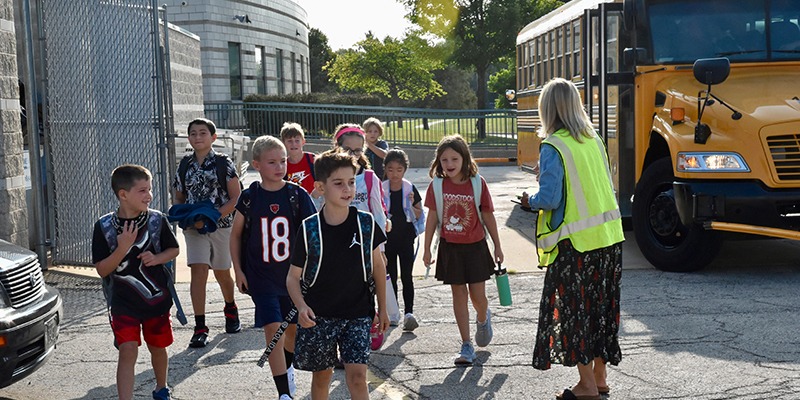
“The early childhood years are the most formative,” Dr. Deiter emphasizes. “We’re already seeing a real difference in students who’ve been in our preschool program as they move into kindergarten. That early start really matters.”
The community has backed that commitment. A recently passed referendum includes plans to expand Hickory Point School (pre-K–2) with purpose-built preschool and special education space—providing room to grow both early childhood and support services in the years ahead.
STEM and STEAM from the Earliest Grades
In District 27, STEM—and more broadly STEAM—doesn’t wait until middle school. It’s woven into the fabric of the elementary science curriculum.
“We’ve integrated the engineering design process across grade levels, aligned with the Next Generation Science Standards,” explains Dr. Katharine ‘Kathy’ Olson, Assistant Superintendent for Curriculum, Instruction and Assessment.
That looks very concrete—and very fun—in the classroom. Dr. Olson points out that kindergarten students explore the concepts behind a pinball machine, designing, testing, and refining a model, while first graders work on set design for a puppet show, thinking through lighting, structure, and function as part of a hands-on engineering experience.
These age-appropriate projects are early building blocks, preparing students for deeper STEAM opportunities as they move up.
By seventh grade, students can choose from a rotation of STEAM-focused electives, including Robotics I and II (tied to VEX competitions), a 3D printing class, CAD, and a hands-on Makerspace course. At the same time, all students in grades six through eight experience applied technology courses, where 3D printing and design are introduced in sixth grade as part of a broader technology toolkit.
It’s a continuum—starting with cardboard, tape, and imagination, and scaling up to robotics, CAD, and competitions.
Technology and AI: Tools, Not Replacements
If technology is going to be essential to students’ futures, District 27 wants it to be purposeful, not just present.
Students use Chromebooks beginning in kindergarten and first grade for guided lessons, and from grades 2 through 8, the district operates a 1:1 model—each student is issued a Chromebook that goes home with them every day.
“Technology should be an essential tool,” says Dr. Deiter. “We want it to become part of the critical thinking process and the learning process, not something separate from it.”
The district has invested heavily in teacher capacity since 2016, recognizing that devices only make a difference if staff know how to leverage them. District 27 employs two certified technology coordinators who push into classrooms and co-teach, and a technology specialist stationed in each building for day-to-day support, troubleshooting, and classroom setup.
As Dr. Olson puts it, “A lot of districts go wrong when they introduce technology but don’t increase the capacity of staff. That’s not the case here.”
A Thoughtful Approach to AI
With artificial intelligence rapidly reshaping the educational landscape, District 27 has moved quickly—but carefully.
Last year, the district rolled out a staff AI usage policy to ensure that AI tools are used safely and appropriately with students. This year, that work expanded to include a student AI policy, clarifying expectations and guardrails.
“We want AI to enhance learning, not replace it,” says Dr. Deiter. “We want it to assist students and serve as a coach and a tool—but not think for them.”
On the staff side, District 27 has adopted Brisk, an AI-powered tool enabled on teacher devices. Brisk supports teachers with: lesson planning and unit design, drafting and refining communications, and transforming content into different formats—including podcasts for students.
Alongside the tool implementation, the district launched an AI cohort—a group of teachers and administrators working together over the course of more than a year to determine how AI should ethically and effectively “play out” in the schools.
This year, professional development for all staff is focused on AI throughout the first semester, with a strong emphasis on pedagogy.
“As our older students encounter AI writing coaches, for example, we want a shared understanding of where AI belongs and how it should be used to support content learning rather than short-circuit it,” Dr. Olson explains.
It’s a model rooted in collaboration, experimentation, and shared responsibility.
Supporting the Whole Child: SEL, Inclusion, and Student Services
District 27’s commitment to student success is holistic. Academics matter deeply—but so do mental health, emotional well-being, and inclusive practices.
“We’re very intentional about building social-emotional support around our students,” says Dr. Rob McElligott, Director of Student Services.
Each building in the district offers students access to two social workers, a school psychologist, as well as access to specialized behavior support.
The district has invested in additional behavior specialist FTE, currently one-and-a-half positions, to address both crisis situations and prevention. Those specialists coach classroom teachers on building strong structures, routines, and community.
District-wide, students benefit from the Second Step social-emotional learning curriculum, and the district is implementing the RULER approach developed by the Yale Center for Emotional Intelligence—an evidence-based framework that supports emotional literacy for both adults and students.
One of the district’s most beloved initiatives is its facility dog program.
“We recently launched a full-time facility dog in District 27,” notes Miehl. “He supports across all tiers—doing whole-class lessons, working with small groups in speech or social work sessions, and being present during moments of crisis to help calm and de-escalate.”
At the classroom level, the district leans heavily into differentiation, inclusive practices, and data-driven problem-solving. Teams meet regularly to review student data and determine who might benefit from additional interventions or supports.
Like AI, inclusive practices are being advanced through a cohort model and focused professional development. An upcoming PD day in January is dedicated entirely to inclusive practices, ensuring that staff across the system share a common language and toolkit for meeting diverse learning needs.
Investing in Facilities for the Future
Behind the scenes, Northbrook School District 27 is backed by a community that believes in its schools and proves it at the ballot box.
“We’re extremely fortunate to be in an area that generates strong revenue through property taxes and has a long-standing relationship of trust with the district,” says Dr. Kimberly Rio, Assistant Superintendent for Finance and Operations.
For years, District 27 operated on a 13-year building addition and renovation cycle, reinvesting fund balance reserves directly back into its facilities to support student learning and staff.
Recently, voters approved a referendum establishing a debt service extension base, giving the district sustainable capacity to issue debt for capital improvements both now and in the future.
The current capital plan includes priorities that include: health, life safety improvements across buildings—roof replacements, mechanical system upgrades, and electrical upgrades, the completion of work at Wood Oaks Junior High (6–8), where upgrades have largely been funded from reserves, major investments at Hickory Point (pre-K–2) and Shabonee (3–5) to align with those same standards as well as the new addition space at Hickory Point dedicated to early childhood and support services, including new classrooms and a multi-purpose space.
That multi-purpose space is being envisioned as a shared community asset, with hopes of partnering with the local park district for broader community use.
Additional site improvements are planned at the junior high, including traffic reconfiguration and parking lot enhancements, all with an eye to safety, efficiency, and the overall student and family experience.
“Our community has been 100% supportive,” Rio notes. “That continued trust in the board’s fiscal responsibility is really outstanding, and these improvements will be an added benefit for our students and families for years to come.”
Looking Ahead: Collaboration as a Core Strategy
Asked to define his top priorities for the next 18–24 months, Dr. Deiter doesn’t hesitate.
“We need to continue with our mission of educating students to succeed in a changing world,” he says. “To do that, we must navigate our referendum and construction projects well, continue our work with artificial intelligence, and deepen our inclusive practices, which tie closely into social-emotional learning.”
The Common Thread? Collaboration.
“When we take on new initiatives, we often do it through a cohort model of volunteers—teachers and administrators working together to chart the future,” he explains.
“That’s how we’re approaching AI, inclusive practices, and so much of our work. It’s about collaborating with our staff, our community, and our parents to maximize our resources and be ready for the future with our kids.”
In Northbrook School District 27, that future is already taking shape—one preschooler, one pinball machine prototype, one AI-informed lesson plan, and one collaborative team at a time.
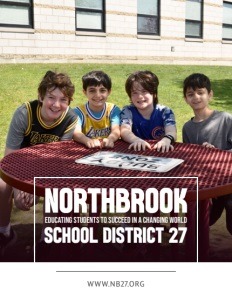
Click The Cover To View Or Download The Brochure
AT A GLANCE
Who: Northbrook School District 27
What: A leading school district emphasizing collaborative learning, pathways and routes to student success
Where: Northbrook, Illinois
Website: www.nb27.org
PREFERRED VENDORS/PARTNERS

ARCON: www.arconassoc.com
A full-service firm specializing in educational facilities, offering comprehensive expertise in architecture, roof and masonry consulting, interior design, and construction management. We partner with school districts to deliver thoughtful, efficient, and future-ready environments that support learning, enhance safety, and reflect each community’s unique vision.