Built on Neighborhoods, Sustained by Reinvestment
Maintaining a Tight-Knit Community Focus While Welcoming Strategic Growth
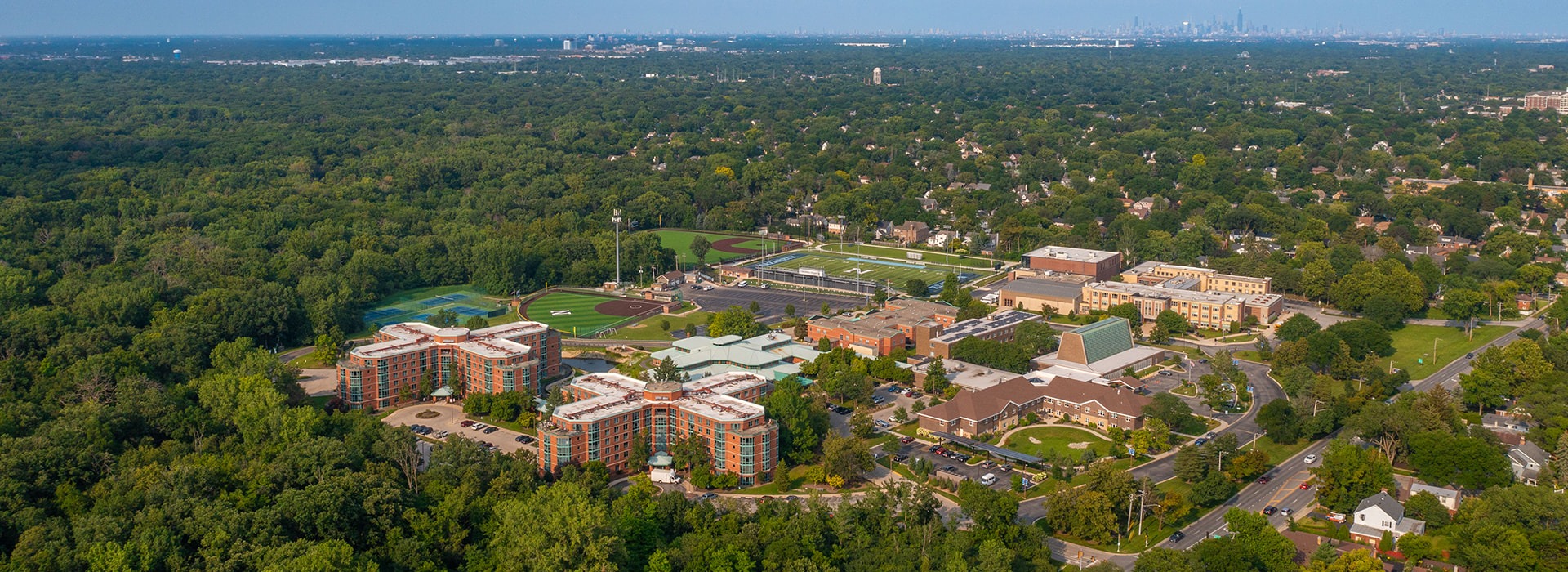
Tucked just west of Chicago and bordered by forest preserves on three sides, the Village of La Grange Park, Illinois, offers something increasingly rare in metropolitan regions across the country. It blends small-town charm with urban accessibility while maintaining a deeply rooted sense of community pride. With tree-lined streets, walkable business districts, and neighborhoods shaped by generations of families, La Grange Park continues to evolve thoughtfully, guided by a leadership team committed to honoring the past while planning responsibly for the future.
“La Grange Park is a community of neighborhoods,” says Maggie Jarr, Deputy Village Manager. “We are a bedroom community surrounded by forest preserves on three sides, which is a very unique quality for a suburb of Chicago. While we have a tight-knit community full of small-town charm, we are very close to Chicago and all the dining, shopping, and cultural opportunities that come with it.”
That balance between tranquility and access defines daily life in La Grange Park. Residents enjoy green space, walkability, and community events, while remaining connected to the region’s broader economic and cultural engine. It is a place where neighbors know one another, families return after time away, and civic leadership works closely with residents to protect the village’s character.
Designing Business Districts for Walkability
Though La Grange Park is primarily residential, its two compact business districts play an essential role in shaping the village’s identity. Centered along La Grange Road and 31st Street, these corridors serve as gathering places where residents shop, dine, and connect.
“All of the above is happening in our downtown areas,” says Jim Discipio, Village President. “We are working on two streetscape plans, one for La Grange Road and another for 31st Street. The goal is to increase vibrancy with tree-lined streets, new branding, flowers, signage, and a very family-friendly atmosphere.”
The village’s business districts are intentionally woven into the surrounding neighborhoods, allowing residents to walk or bike safely to shops and restaurants. Memorial Park, one of the community’s largest green spaces, anchors a district and serves as a social hub.
“Memorial Park is one of the most important gathering places in our community,” Discipio explains. “It’s where neighbors connect, families spend time together, and community life comes alive. The Community Park District of La Grange Park does tremendous work investing in neighborhood parks that support a healthy and inclusive community and positively impact physical, social, emotional, and environmental well-being for residents of all ages.”
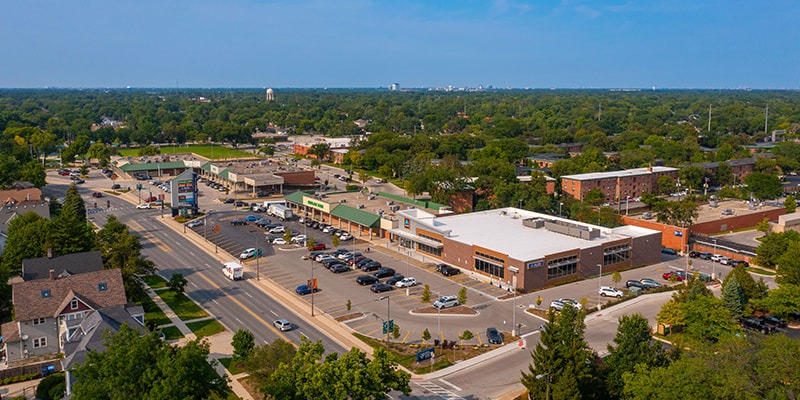
The La Grange Park Public Library also plays a key role along the La Grange Road corridor. Its recently renovated, architecturally distinctive building draws steady pedestrian activity and offers neighbors a welcoming place to meet and interact, while outreach partnerships, off-site programming, and even an electric book bike extend library services throughout the village.
Small Businesses as Community Partners
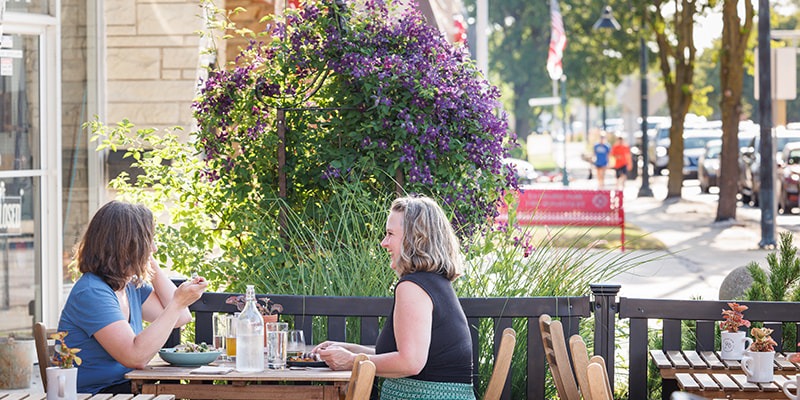
La Grange Park’s small businesses are not only economic contributors but also active partners in community life. From ice cream shops to fine dining, breweries to specialty retailers, these establishments are deeply embedded in the village’s social fabric.
“Andy’s Frozen Custard is a favorite,” says Discipio. “Posto 31 is a fine dining restaurant that people love, and Hop District Brewing has become a place where residents gather, talk, and connect.”
Village Manager Julia Cedillo notes that what truly sets these businesses apart is their commitment to giving back.
“These businesses do so much for the community,” Cedillo says. “They support charitable causes like the Illinois Special Olympics, partner with the village on fundraising initiatives, and actively support the local La Grange Park Chamber of Commerce. They support one another, and that collaboration strengthens the entire business community.”
One standout example is Phillip’s Flowers, a family-owned business that has operated in La Grange Park for over 70 years.
“They have been here for over seventy years,” Cedillo explains. “It is one of the most unique and beautiful flower shops you will ever visit. They specialize in ways that make them truly exceptional.”
Another beloved institution is La Grange Park Ace Hardware, which recently celebrated its 40th anniversary.
“This is not your average hardware store,” Cedillo adds. “It includes an extraordinary greenhouse that creates an incredible shopping experience. The owners take their role in the community very seriously, and all proceeds from their anniversary celebration went to Lurie Children’s Hospital.”
These businesses reflect the village’s broader values of gratitude, generosity, and neighborly connection, reinforcing why La Grange Park is often described as a hidden gem.
Housing Choices Across Life Stages
As housing affordability and availability remain challenges nationwide, La Grange Park distinguishes itself through a diverse housing stock that supports residents at every life stage.
“La Grange Park has a really diverse housing mix,” Jarr explains. “We have single-family homes, apartments, senior living, and housing that dates back to the 1800s alongside new construction.”
Recent developments include an eight-home subdivision on the west side of town and major investments in senior living communities. Plymouth Place, one of the village’s largest senior living campuses, recently completed the first phase of its Arboretum Villas.
“These new units focus on independent living with exceptional amenities and green space,” Jarr says. “It allows residents to age in place while staying connected to the community.”
Discipio adds that the village provides housing options that appeal to everyone from first-time homebuyers to those seeking new custom home construction.
“We have housing at nearly every price point,” he notes. “We see continued reinvestment and redevelopment that keep the community vibrant without losing its character.”
Despite being just two square miles and home to approximately 13,500 residents, La Grange Park remains open to growth that aligns with its values.
“We are very fortunate,” Discipio says. “Residents care deeply about their homes and neighborhoods. That pride shows in how well the community is maintained.”
Thoughtful Economic Development
Economic development in La Grange Park is guided by strategic planning tools that encourage reinvestment while enhancing public spaces. The village uses Tax Increment Financing districts and business development districts to support improvements that benefit both businesses and residents.
“These tools allow us to reinvest in our community,” Discipio explains. “They help businesses improve their properties while allowing the village to create safer, more accessible environments.”
Cedillo notes that these investments prioritize pedestrian safety, aesthetics, and connectivity, especially along state-managed roads.
“We need to improve public spaces so people can cross safely, shop comfortably, and feel proud of their commercial areas,” she says. “Streetscape studies help us prioritize where to spend limited resources.”
While retail and dining remain a focus, the village has also expanded access to essential services. Pillars Community Health recently opened its new integrated health center along La Grange Road. Its presence adds to the mix of retail, dining, and services in the area, further strengthening the Village Market as a convenient and active community hub.
“Pillars Community Health opened in the former Loyola clinic,” Cedillo explains. “They provide low-cost medical and dental services, especially for underinsured residents. It is deeply rooted in our community and aligned with our values.”
Investing in Critical Infrastructure
As an older, landlocked community, La Grange Park faces infrastructure challenges common to many established municipalities. Rather than delay action, village leadership has taken a proactive approach.
“One of our biggest challenges is flooding,” Cedillo explains. “We have a combined sewer system that is undersized, and heavy rains have caused repeated issues.”
To address this, the village is undertaking a storm sewer separation project valued at more than $14 million that will span several years.
“This project will provide relief to about 23 blocks and benefit the entire community,” Cedillo says. “It has been a passion project for President Discipio for many years.”
Securing funding required persistence and collaboration with state, regional, and federal partners.
“We received funding from the Metropolitan Water Reclamation District, congressional support, and state assistance,” Cedillo adds. “Without those partnerships, this would not be possible for a community our size.”
Another major undertaking is the replacement of lead service lines, mandated by the state of Illinois.
“This is a $23 million effort over 17 years,” Cedillo explains. “It is a massive challenge, but we have a plan, and that makes all the difference.”
Green Infrastructure and Measurable Impact
Beyond large-scale infrastructure projects, La Grange Park has embraced innovative green solutions to manage stormwater and improve sustainability.
“We have implemented green intersections that capture and store stormwater,” Discipio explains. “Each one holds about 30,000 gallons of water, and they are strategically placed to reduce flooding.”
The village was the first in the region to incorporate green infrastructure directly into intersections rather than parking lots or alleys, earning the Greentelligence Award from the West Central Municipal Conference.
“These projects may seem small compared to larger investments,” Discipio says, “but they are already making a big difference.”
Governing with Intention
Clear priorities continue to guide the village, including infrastructure investment, economic vitality, and long-term financial sustainability. “One of the things I am most proud of is the trust our residents have in local government,” Discipio says. “That trust allows us to do the hard work that needs to be done.”
Cedillo adds that careful planning underpins every initiative.
“We always ask, what is the issue and what is the plan,” she says. “Whether it is roads, water systems, or economic development, planning is essential.”

The village is looking ahead to a community-wide recognition in 2026 to mark Zip Code Day on June 5, celebrating the 60526 ZIP code that uniquely identifies La Grange Park and the shared sense of place it represents.
“It is a chance to reflect on what makes La Grange Park special,” Cedillo explains.
Throughout every project, the village remains committed to honoring its history.
“We develop with our past in mind,” Cedillo says. “That sense of identity matters deeply to our residents, especially those who return to raise their families here.”
In La Grange Park, progress is measured not only by new projects but also by the strength of relationships among residents, businesses, and the local government. It is that shared commitment that ensures this small village continues to thrive as one of the region’s most quietly exceptional communities.
AT A GLANCE
Who: La Grange Park, Illinois
What: A compact, residential village defined by strong neighborhoods, thoughtful reinvestment, and long-term planning.
Where: West of Chicago in Cook County, Illinois.
Website: www.lagrangepark.org
PREFERRED VENDORS/PARTNERS

LRS.: www.lrsrecycles.com
LRS is a leading independent waste diversion, recycling, and portable services provider serving millions across five Midwest states. Founded in 2013, LRS operates 60+ facilities, employs nearly 2,000 people, and delivers innovative, sustainability-driven services recognized with multiple national and regional awards.