Resilient by Design
How This Dedicated School Division Puts Wellness, Inclusion, and Innovation at the Heart of Student Learning
In Alberta’s northernmost urban center, the Fort McMurray Public School Division (FMPSD) has become a model for resilience, innovation, and student-centered learning. With a mission “to educate all students for personal excellence” and a vision to “inspire and engage students for lifelong learning,” the division serves more than 8,300 students across a wide geographic region.
Within that student body, roughly 20 percent are English language learners, another 20 percent have complex needs, and 10 percent identify as Indigenous. “Every decision we make comes back to what’s best for kids,” says Superintendent Annalee Nutter. “That’s not just a tagline—it’s how we operate.”
Board Chair Linda Myberth reinforces the point: “We actively seek input from our students. The Board visits schools every month, and our Student Advisory Council gives us direct feedback on what’s working, what’s needed, and what inspires them.” That feedback loop has shaped everything from classroom programs to professional development and community partnerships.
Early Foundations: Literacy, Numeracy, and Readiness
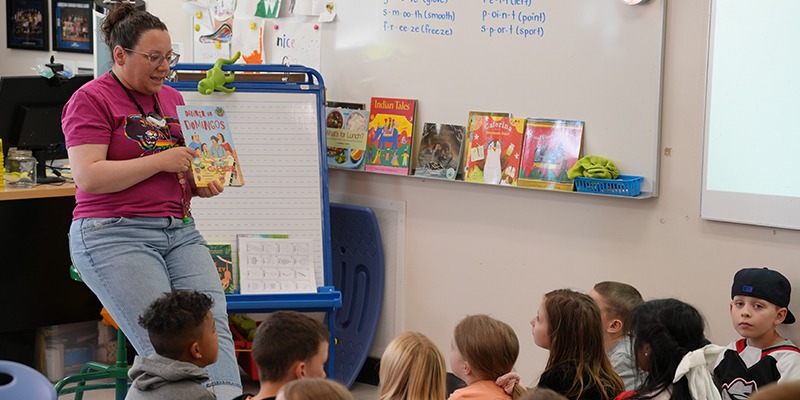
Early childhood learning is a key pillar of FMPSD’s long-term strategy. The division’s Early Childhood Development Program (ECDP) welcomes children as young as three years and eight months into a play-based environment that builds foundational social, emotional, and cognitive skills. “Early intervention changes trajectories,” says Cynthia Shelley-Lewis, Director of Inclusive Learning. “Through ECDP, we can identify speech, language, or developmental needs early and provide the supports that help children succeed when they enter kindergarten.”
Literacy and numeracy form the backbone of those early years. The division has placed additional emphasis on ensuring that all students reach grade-level proficiency by the end of Grade 3. “We run targeted six-week learning sprints, where a specialist teacher works alongside classroom educators,” Nutter explains. “Those interventions have raised achievement in some cohorts by as much as 24 percent.”
To further support young learners with complex needs, FMPSD partners with Family supports for Children with Disabilities (FSCD) to deliver specialized services in rehabilitation therapies in the area of speech, language and occupational therapy. Approximately one-fifth of all students in the division now receive some form of differentiated support, reflecting both demographic diversity and an evolving understanding of student wellness.
Supporting the Teachers Who Support the Students
Like many jurisdictions across Canada, Fort McMurray has faced recruiting and retention challenges. Yet FMPSD has consistently maintained full staffing on opening day—a testament to both careful planning and strong professional culture.
“We invest heavily in our people,” says Associate Superintendent of Business and Finance, Kallal. “Every year, we bring in teachers from across Canada. What makes us stand out is our professional learning commitment.” The Board provides 13 professional learning Fridays each year, days when students stay home and staff strengthen their practice through professional learning and collaborative development.
“It’s one of our best recruitment tools,” Nutter adds. “Those days help teachers build capacity, share expertise, and connect as professionals. Teaching today involves far more than academics; our staff need time and space to support not only student learning but also their own wellness.”
That philosophy extends beyond pedagogy to emotional intelligence and regulation. Shelley-Lewis explains that FMPSD has focused deeply on “student dysregulation and adult co-regulation,” training educators to model calmness, empathy, and restorative practice. Teachers have also participated in learning around executive function skill development—learning how to help students develop organization, self-monitoring, and focus. “You can’t get to the learning,” Nutter says, “if you don’t first address emotional safety and readiness.”
Technology with Purpose
Technology in the classroom has evolved quickly in Fort McMurray, but not recklessly. This year, the division launched a technology audit and is forming a committee to develop clear guidelines around artificial intelligence, usage standards, and digital wellness. “We’re gathering information on what students and teachers are already using,” Nutter says. “From there, we’ll craft policy that balances innovation with responsibility.”
In the meantime, we were mandated through a Ministerial order to ban cell phones during instructional time. “Teachers couldn’t believe how much more work got done,” she laughs. “They were actually caught off guard—students finished tasks faster, and engagement soared.”

Technology remains a powerful tool when used intentionally. Students collaborate on group projects through Google Workspace, use Chromebooks for research and reading comprehension, and access assistive technologies that level the playing field for diverse learners. The division maintains a 3:1 device ratio and a loaner system in school libraries for families without personal devices. “Technology is a tool, not a crutch,” Kallal notes. “We teach balance.”
From Coding to Careers: Pathways for Every Learner
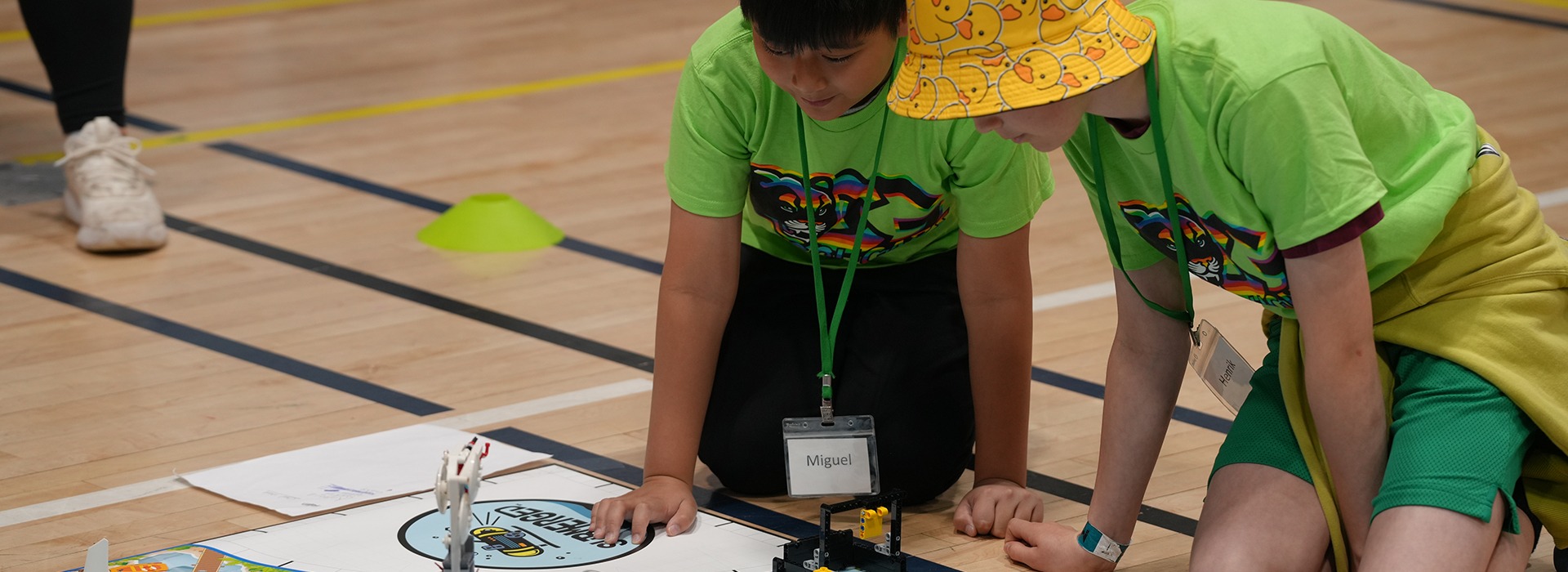
Fort McMurray has been a pioneer in coding and robotics, integrating these subjects well before they became mainstream. “We’ve had students competing in international robotics tournaments for more than a decade,” says Mywaart. “When you see elementary students programming LEGO robots, you understand how far we’ve come.”
That early start leads naturally to advanced opportunities in high school. Students can earn dual credits through Keyano College or Grant MacEwan University, taking courses in sociology, policing, and law, among others. Partnerships with organizations such as Careers: The Next Generation and the The Educational Partnership Foundation connect students to apprenticeships in high-demand trades, including welding, heavy equipment technology, and electrical.
Nutter calls it “a clear line from classroom to career.” Registered apprenticeship programs (RAP) allow seniors to spend their final semester working on-site in local industries, transitioning seamlessly into employment after graduation. “The myth around trades has finally broken,” she says. “We’re seeing students and families recognize these as high-skill, high-reward careers.”
A Culture of Connection: 200 Partnerships Strong
Community partnerships are central to FMPSD’s strength. “We have more than 200 active partnerships,” Nutter says proudly. “It’s one of our greatest assets.” Those collaborations range from local businesses to Indigenous organizations, postsecondary institutions, and community agencies.
Students regularly attend major industry events such as the Oil Sands Conference and the Northern Alberta Aboriginal Business Association (NAABA) Summit, where they meet professionals, explore machinery, and often find mentors. Each fall, FMPSD also hosts a large career fair, which drew more than 45 local organizations last year. “We’re extending those opportunities to all learners, including our neurodiverse students through the Life Skills Program,” Shelley-Lewis adds. “Inclusion means ensuring that every student can be seen and valued by others, as contributing to the community.”
Investing in Infrastructure and Transportation
Despite serving a vast region, FMPSD has streamlined transportation logistics through a blend of contracted busing and urban transit integration. Approximately 25 percent of students use buses, while the remainder walk, cycle, or take city transit to their community schools. “Our geography is large, but our schools are well placed,” says Kallal.
Capital investment has kept pace with growth. Over the past fifteen years, the division has added nearly 3,000 new classroom seats through modern facilities. With enrollment climbing again, FMPSD is once more advocating for provincial funding to build additional schools.
Security upgrades and technology infrastructure have also advanced dramatically, with all enterprise systems now operating through cloud-based platforms—a decision that proved essential during the 2016 wildfire and subsequent 2020 flood.
“Those experiences taught us how to protect data, maintain continuity, and stay operational under extreme circumstances,”Kallal explains. “Technology was what kept us connected.”
Recovery, Resilience, and Wellness
Few school divisions have faced as many disruptions as Fort McMurray—wildfire, flood, and pandemic among them. Yet each challenge has strengthened the division’s collective resilience. “After the wildfire, we collaborated with colleagues in Slave Lake who had gone through similar events,” Nutter recalls. “That partnership helped us establish support quickly—counseling, therapy, and trauma-informed practices—that became the model for how we respond to any future crisis.”
The division’s mental health staffing model has since expanded to include therapists and counselors in every school, a partnership with CASA classroom for clinical classroom programming, and ongoing training to help educators recognize trauma and dysregulation. “We’re moving toward a formal wellness framework that supports students, staff, and families,” Shelley-Lewis says. “Wellness isn’t an add-on—it’s part of lifelong learning.”
Red Cross funding and local collaboration have ensured that post-traumatic stress support remains available years after the fire. When small evacuations occur, the emotional aftershocks are still felt, but the division’s ability to respond has become instinctive. “We’re better at taking care of each other,” Mywaaart says. “That’s the foundation of our resilience.”
Looking Forward
Over the next two years, FMPSD will continue to strengthen its focus on diversity, equity, and inclusion, embedding these principles into policy, curriculum, and culture. A new restorative practices initiative, developed in partnership with the RCMP, is training educators to replace traditional disciplinary approaches with restorative circles and relationship-building strategies. The goal is to expand this model from high schools to elementary schools, creating consistency across all campuses.
At the same time, FMPSD is preparing for the arrival of CASA House in 2027, a specialized facility that will expand access to mental health programming for students with complex mental health needs. “Our future is about connection—between staff and students, between schools and community, and between wellness and learning,” Nutter says.
“Education in Fort McMurray has changed over the past decade,” she reflects. “We’ve faced adversity, but each challenge made us stronger, more innovative, and more compassionate. Our mission remains the same—doing what’s best for kids—but our understanding of what that means keeps growing.”
In Fort McMurray, that evolution is more than policy. It’s a living practice—one that continues to educate, inspire, and heal an entire community.
Click The Cover To View Or Download The Brochure

AT A GLANCE
Who: Fort McMurray Public School Division
What: A thriving, community focused school division that focuses on what is best for its students
Where: Northern Alberta, Canada
PREFERRED VENDORS/PARTNERS

ASEBP: www.asebp.ca
ASEBP is a trusted health and wellness provider for Alberta’s publicly funded K-12 education sector. ASEBP’s health benefits and services support covered members throughout their careers into retirement. As a not-for-profit organization, ASEBP is proud to be the tailored, comprehensive option for more than 150,000 Albertans.