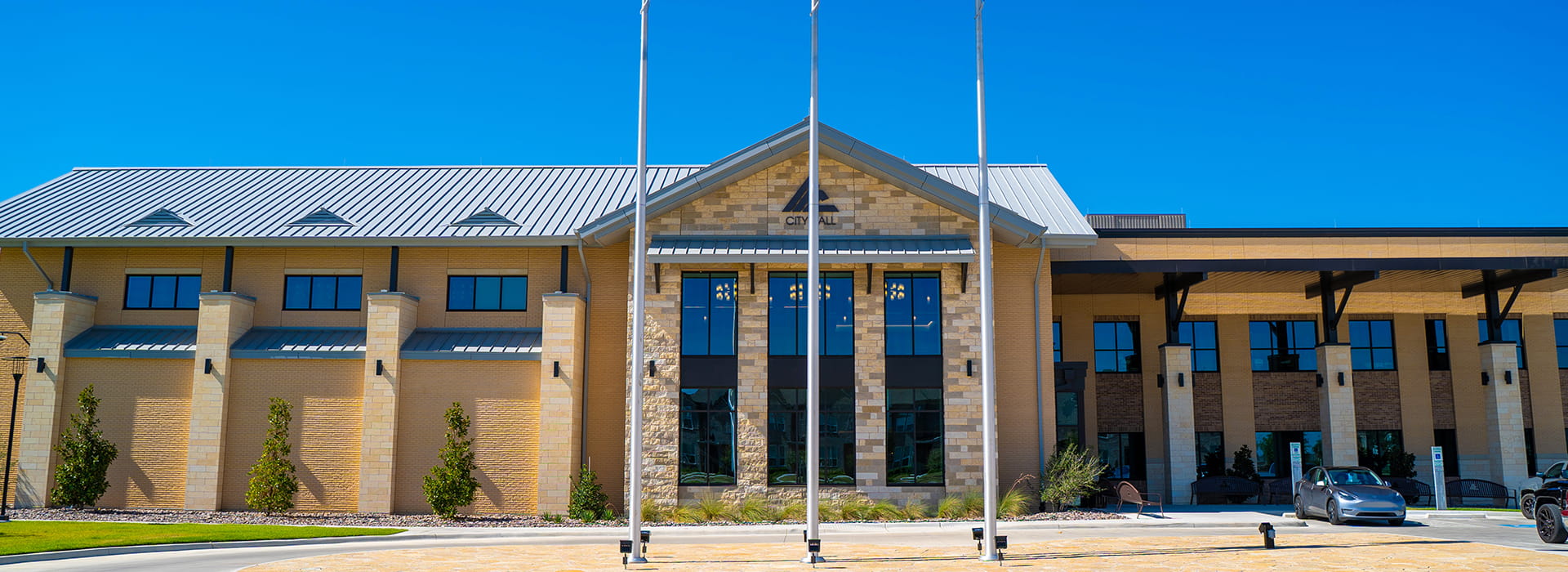
Rewriting Its Story Through Strategic Development and Fiscal Discipline
This Texas Municipality Has Transformed Itself into a Competitive Economic Player Through Infrastructure Investment, Diversified Revenue Streams, and Major Commercial Projects.
A genuine civic success story has unfolded in Haltom City. Founded in 1932 on grassland belonging to rancher and jeweler G.W. Haltom, the city had previously fallen from its post-war origins and needed an injection of revitalization to bring it back to its former glory, while playing to a great future ahead. What followed has been a deliberate, strategic pivot that began transforming perceptions and attracting the kind of development that had long eluded the community.
“We set out to make ourselves more competitive, more attractive,” Rex Phelps, City Manager explains. The approach required more than cosmetic fixes. City officials focused on infrastructure improvements, particularly along the Northeast Loop 820 corridor, installing utilities and constructing landscaped frontage roads that signaled serious intent to developers. Robert Briggs, director of economic development, notes the city worked to “diversify economic makeup” beyond its historical reliance on manufacturing. The strategy was straightforward: broadening the tax base through retail and mixed-use development, reducing dependence on property taxes that had long burdened residents.
The momentum has become self-reinforcing. With $155 million in new construction and capital improvements recorded in a recent year, and sales tax revenue growing 4.4% year-over-year, Haltom City now ranks in the top 100 of Texas’s 1,221 cities for sales tax generation. Mayor Dr. An Truong frames the transformation simply: “This is a true comeback, a true revitalization.” The progress follows years of disciplined execution, but city leaders acknowledge the work remains ongoing as they position Haltom City to compete with neighboring Northeast Tarrant County municipalities.
Location, Infrastructure, and Economic Diversification
Haltom City’s geographic position offers advantages that city leaders have worked methodically to exploit. The city is located at the intersection of major transportation corridors including Hwy 377, NE Loop I-820 and Hwy 121, with DFW International Airport just 20 miles away. “We’re centrally located between Dallas and Fort Worth, and we’re right off several major highways,” Briggs says. “We have great access to the airport; we have great access to the Alliance corridor.” The Alliance corridor reference points to the industrial powerhouse anchored by Fort Worth Alliance Airport, billed as the world’s first purely industrial airport.
Beyond highways, Haltom City participates in Foreign Trade Zone #39 (DFW) and #196 (Alliance), allowing companies to defer customs duties on imported goods until they leave the zone. For manufacturers and distributors, this creates tangible cost advantages. The city’s connectivity includes the DFW metroplex’s explosive growth, with the region adding people daily and surpassing 8.3 million residents. “474 people move to DFW every day according to the North Texas Commission,” Briggs notes, describing the influx as a renewable resource for labor and consumer spending.
Economic diversification drives current development strategy. Phelps explains the city had become “overly dependent on manufacturing” and needed to broaden its revenue base. The solution involved attracting retail, restaurants, and mixed-use projects that generate sales tax rather than relying predominantly on property taxes. “We’re really trying to diversify our tax base,” Briggs says. “We want to make sure we have a good mix of retail, commercial, industrial.” This diversification positions Haltom City to compete effectively with neighboring municipalities like North Richland Hills, Watauga, and Richland Hills, all vying for development dollars in the crowded Northeast Tarrant County market.
Major Projects Reshaping Haltom City
The H Mart Plaza anchors Haltom City’s development ambitions. This 50-acre mixed-use project at NE Loop 820 and N. Beach St. covers 193,000 square feet and features the seventh Texas location of H Mart, America’s largest Asian-owned grocery chain. The plaza reached 100% leased in December 2025, months ahead of its spring 2026 opening, with over 40 tenants signed including restaurants, cafes, bakeries, and specialty retailers. “H Mart Plaza is a perfect example of the kind of vibrant, community-focused development we aim to bring to Haltom City,” Phelps says. “With all spaces leased and a great mix of businesses, this development is a significant milestone for the city.”
The project’s impact isn’t just retail. The broader 50-acre site includes 653,000 square feet of distribution and logistics centers, capitalizing on the city’s transportation access and proximity to e-commerce supply chains. Mayor Truong expresses particular pride in landing H Mart: “We are particularly excited and humbled that H Mart has chosen to locate their seventh Texas store in our city.” The development partnership includes Mercantile Partners LP, KBC Advisors, Velocis, and Haltom City Forest Properties LLC.
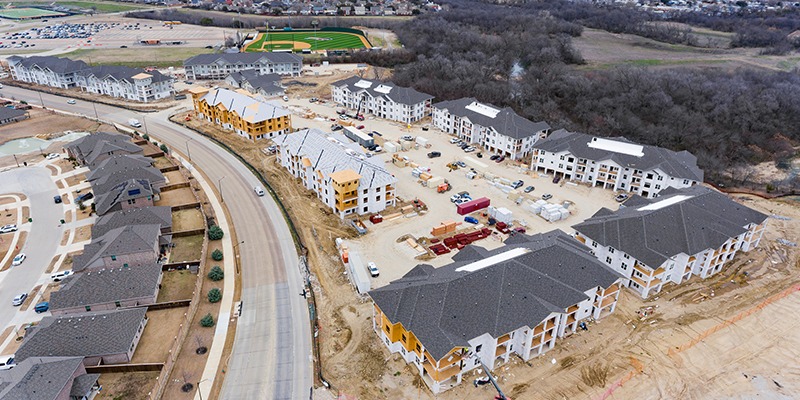
Residential density follows commercial development. Alpine Fossil Creek, a 296-unit luxury apartment community overlooking Big Fossil Creek, expects completion in early 2026. Alpha-Barnes Real Estate and Alpine Construction are constructing what will eventually total over 1,000 luxury multi-family units across multiple phases. “This new residential development will bring the density necessary to feed our new record economic growth and future retail in the area such as restaurants, entertainment, retail stores,” Briggs explains. Hotel construction complements this growth, with a Holiday Inn Express recently completed and three Marriott properties approved for development.
Fiscal Discipline in a Growth Environment
Haltom City operates with conservative budgeting principles that contrast with its ambitious development agenda. “We make sure when we go through our budget cycle every year that any recurring costs have recurring revenue to cover that,” Mayor Truong explains. “The largest majority of that is with personnel costs. That’s something we probably pay the most attention to.” The approach indicates financial caution born from leaner years when infrastructure crumbled and resources were scarce.
Staffing efficiency stands out among regional competitors. “Last time we checked, we were the lowest number of employees per capita of any of the northeast Tarrant County cities,” Phelps says. The city may hold this distinction across all of Tarrant County, though officials verified only their immediate competitive set. This lean operation occurs while the city provides full municipal services including police, fire, municipal court, sanitation, parks, library, and water and wastewater systems.
The fiscal restraint has created room for tax relief. Haltom City’s current property tax rate is $.557290 per $100 of assessed valuation – the lowest tax rate obtained in the last 20 years. Phelps frames this as remarkable given the infrastructure investments completed during the same period. “The recent record economic growth helped us broaden the tax base to a point where we were able to take care of capital needs while significantly lowering the tax rate,” he notes. Sales tax and development fees now point to growing revenue streams that reduce reliance on property taxes. “These added revenue streams are finally starting to outpace our property tax revenue, and as a result they are helping to offset residential property taxation,” Briggs says, describing a deliberate strategy to shift the tax burden away from homeowners as commercial development accelerates.
Water, Energy, and Workforce
Water infrastructure is the most pressing issue for Haltom City and the broader Texas region. “Long-term concern is probably the cost of water infrastructure to the state as a whole,” Mayor Truong says. “It’s not just the cost of water itself; it’s the cost of the infrastructure that’s needed to move the water to our citizens.” Haltom City purchases 100% of its water from Fort Worth, as do many Northeast Tarrant County communities. As Fort Worth expands its own infrastructure to meet regional demand, those costs cascade to municipal customers.
Phelps emphasizes water’s fundamental importance to city operations. “The most important thing that a city does for its citizens, the most important thing on a day by day, minute by minute basis, there is nothing more important than safe consistent water coming out of your faucets,” he says. “Without safe, consistent water, things would collapse, there’d be health hazards.” Growth compounds the challenge, requiring continuous infrastructure expansion on both intake and wastewater treatment sides. November 2024 brought some relief when Texas voters approved Proposition 4, allocating $20 billion in state funding for water infrastructure through competitive grants.
Electricity and workforce round out the three-pillar challenge. The 2021 freeze exposed vulnerabilities in Texas’s power grid, though subsequent investments by Oncor and other utilities have strengthened the system. Workforce development relies on partnerships Briggs maintains with Tarrant County College, Workforce Solutions of Tarrant County, and local high schools. “What they need to know is the boots on the ground, if you will, of what the businesses need in the workforce,” Briggs explains. “Then they can create that pipeline to fill those jobs in the future.”
The Metrics That Matter
Haltom City tracks progress through dual lenses: business development statistics and fundamental fiscal indicators. Briggs monitors job creation, capital investment, and sales tax growth while maintaining regular contact with existing businesses. “I track business visits and then the jobs that they retain,” he says. “I keep an eye on the regional economic data that comes through the various data sources because it allows us to plan for the future.” The city’s ranking among the top 100 Texas municipalities for sales tax generation validates the diversification strategy.
Phelps relies on a visual approach centered on property valuations and tax rates. “I’m a visual guy and most people learn visually,” he says. “What I look at is our property valuations. If you’re going to be a prosperous community, you want your valuations going up.” The key lies in the relationship between rising valuations and falling tax rates. As property values increase, the city can legitimately lower rates while maintaining or expanding services. “As long as that’s happening, I know that we’re going to be a prosperous community,” Phelps explains.
The inverse scenario represents economic danger. “When you have a situation where the values are low and continue to lower and you become too dependent on a property tax rate and there’s no space there, then that becomes a socioeconomically depressed area,” Phelps says. “If it stays like that too long, then it just might not ever come out of that kind of situation.” Haltom City experienced this inversion during its decline years, making the current trajectory particularly meaningful.
The city’s transformation from struggling mid-city suburb to competitive economic player highlights years of strategic focus and disciplined execution. With major developments under construction and fiscal fundamentals strengthening, Haltom City is poised to sustain growth while managing the infrastructure and workforce challenges inherent in rapid expansion. The metrics suggest a municipality that has successfully rewritten its narrative.
AT A GLANCE
Who: Haltom City
What: A 12.4-square-mile municipality in Northeast Tarrant County undergoing significant economic revitalization through strategic infrastructure investment, commercial development, and fiscal reform
Where: Texas
Website: www.haltomcitytx.com
PREFERRED VENDORS/PARTNERS

Creation: www.creationequity.com
Creation is a nationally recognized real estate development and investment firm delivering innovative, experience-driven projects across the U.S. With $4.4 billion in active developments, the company integrates design, construction, and venture incubation to create places and partnerships that deliver lasting value and push boundaries.
Karmali Holdings: www.karmaliholdingsinc.net
Karmali Holdings and affiliates have developed 35+ hotel projects, evolving from economy brands to premium developments with Hilton, Marriott, IHG, and Hyatt. The platform manages over 630 hotel keys, with a pipeline exceeding 1,100. Beyond hospitality, the portfolio spans retail, office, industrial, residential, and mixed use developments, executing complex projects from concept through long-term operations globally.

Star Industries: www.starindustries.com
Based in Haltom City, Star Industries manufactures rugged, made-in-the-USA attachments for telehandlers, skid steers, excavators, and more. Built “rental tough” and backed by unmatched customer support, Star helps equipment rental companies, heavy equipment dealers, and contractors get the job done faster and safer without cutting corners.

Concentric Technology Solutions: www.ctscorp-usa.com
Concentric Technology Solutions (CTS) is a Fort Worth, Texas–based premier provider of RF shielding and electronic test solutions. We design and manufacture both custom and standard RF shield boxes, enclosures, test fixtures, antennas, and accessories, as well as integrated test equipment, enabling global electronics manufacturers to streamline testing, reduce costs, and accelerate time to market.

Neel-Schaffer: www.neel-schaffer.com
Neel-Schaffer is a multi-disciplined engineering, planning and construction management firm that was founded in 1983, operating out of 39 offices across nine states. Our Texas presence includes offices in Arlington, Dallas, Fort Worth, and Houston. We also operate offices in Alabama, Florida, Georgia, Louisiana, Mississippi, South Carolina, Tennessee, and Arkansas.

Linebarger Goggan Blair & Sampson: www.lgbs.com
As Linebarger Goggan Blair & Sampson, LLP celebrates 50 years of service, we’re proud to support Haltom City and communities nationwide in strengthening local infrastructure and economic growth. Representing more than 2,600 public-sector clients across the country, we help governments recover over $1 billion annually in public funds for a stronger future.

Velocis: www.velocis.com
Velocis, in partnership with KBC Advisors, recently delivered a best-in-class business park through the Mercantile 820 Logistics Park — an infill, Class A logistics hub in Haltom City, Texas. The project offers premier freeway access, modern distribution design, and strategic connectivity to the DFW distribution network and beyond.
