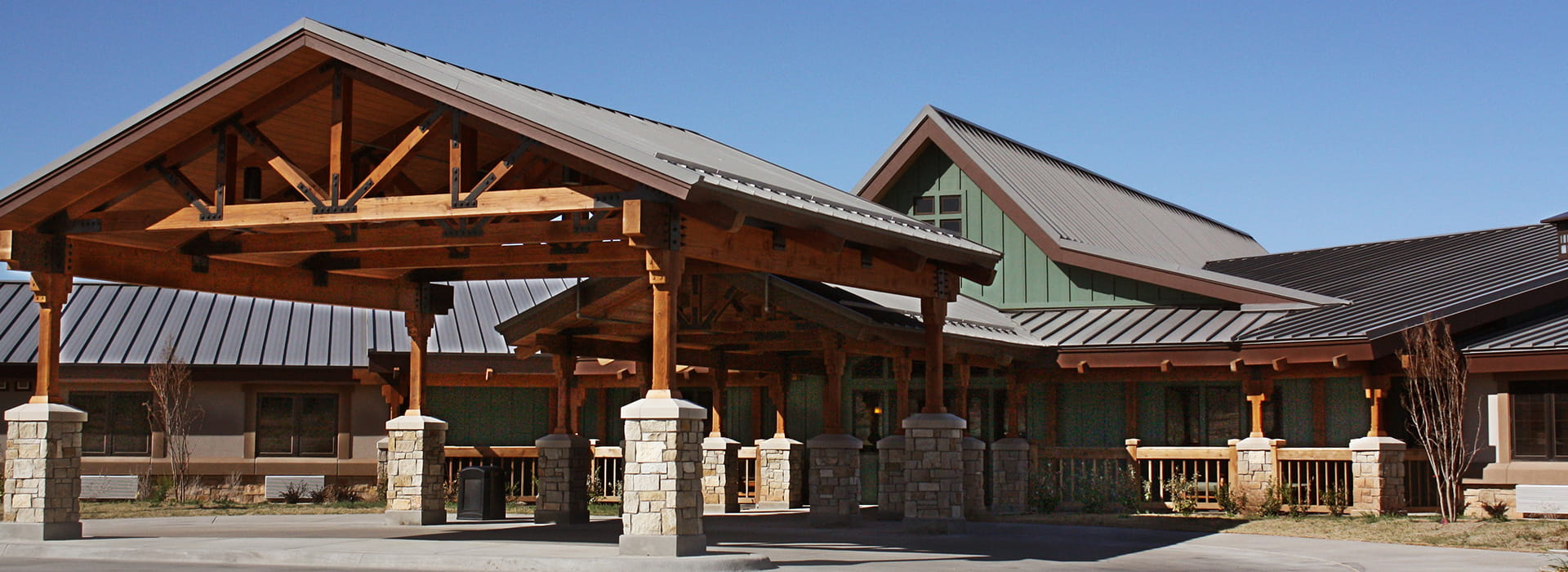
Anchoring Care, Workforce, and Community in Rural Texas
Built on Healthcare Delivery, Workforce Development, and Trusted Local Leadership
In rural communities, a hospital is rarely just a hospital. It is an employer, a training ground, a stabilizing economic force, and often the most visible expression of a community’s commitment to taking care of its own. In Canadian, Texas, the Hemphill County Hospital District (HCHD) fulfills all of those roles—and more—with a model built on adaptability, trust, and a deep understanding of what rural healthcare truly requires.
As a critical access hospital serving Hemphill County and surrounding areas, HCHD operates at the intersection of healthcare delivery, workforce development, and economic sustainability. Under the leadership of Chief Executive Officer Kelsey Haley, Chief Operating Officer David Godino, and Director of Talent and Strategic Development Kristen Mauldin, the district continues to expand services while remaining firmly rooted in the needs of the community it serves.
A Broad Scope of Care in a Rural Setting
Hemphill County Hospital District offers a comprehensive range of services that would be notable in any market, but are especially significant in a geographically isolated region. Core offerings include inpatient and swing-bed care, laboratory and radiology services, GI procedures such as colonoscopies, sleep studies through its Sleep Disorder Center, and a full continuum of therapy services encompassing physical, occupational, and speech therapy.
Beyond the hospital itself, the district operates home health and hospice services, a growing behavioral health program, two rural health clinics—one in Canadian and one in Pampa—and manages Mesa View Senior Living, which provides independent living, assisted living, and skilled nursing care. HCHD also owns and operates emergency medical services across Hemphill County, Gray County, and parts of Carson County, further extending its reach and responsibility.
Taken together, these service lines reflect a deliberate strategy: keep care as close to home as possible while ensuring quality, continuity, and access for a population that would otherwise face long travel distances for even routine services.
Healthcare as an Economic Driver
From an economic standpoint, Hemphill County Hospital District is the single largest employer in the county, with approximately 260 employees, up from roughly 220 just a few years ago. Those employees represent a broad cross-section of professions—from clinicians and therapists to administrative staff, EMS personnel, IT professionals, and food service workers.
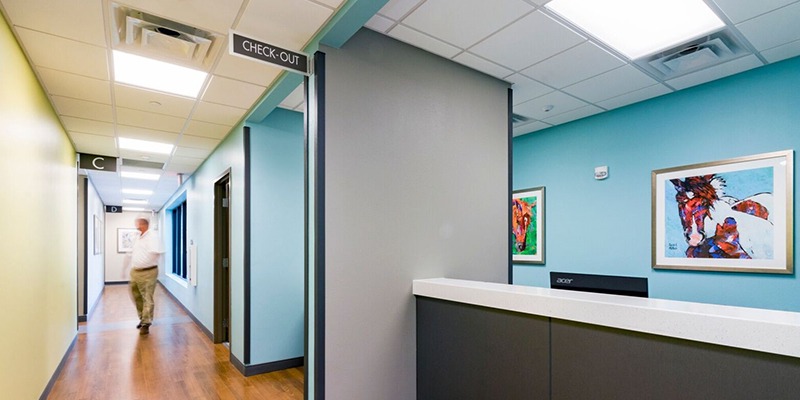
The economic impact extends beyond payroll. Employees living both inside and outside the county contribute to local commerce, support schools and community fundraisers, and sustain businesses throughout Canadian. In a rural economy, that stability matters.
“Healthcare is central to our community,” Haley explains. “We provide stable jobs that support families, but we also create ripple effects across the local economy. When people work here, they’re investing back into the community every day.”
Building a Workforce Pipeline That Stays Local
One of the district’s most impactful contributions lies in workforce development, particularly its close partnership with local education systems. Through collaboration with Canadian ISD, HCHD helps students begin healthcare careers before they ever graduate high school.
Seniors on a healthcare track can earn CNA and Patient Care Technician licensure, completing clinical rotations at Mesa View Senior Living while simultaneously working part-time within the district. Those students then graduate and are positioned to move directly into the Rural Nursing Education Consortium (RNEC) LVN program, which is offered locally in Canadian.
This earn-while-you-learn pathway allows students to remain in their hometown, avoid relocation costs, and build long-term careers without leaving Hemphill County. It also provides the district with a sustainable response to nursing shortages that challenge rural hospitals nationwide.
“We’re creating a pipeline where students graduate, work for us, and continue advancing their credentials,” Mauldin says. “That continuity benefits both the individual and the organization.”
In addition, the district offers a work practicum program that allows students to shadow across departments—from therapy and EMS to administration—expanding awareness of healthcare careers beyond bedside roles.
Community Connection and Shared Resilience
Operating in a rural setting means more than managing distance; it means understanding people. Godino notes that geographic isolation has fostered a culture of interdependence in Hemphill County, where residents are accustomed to stepping up for one another.
“That mindset carries over into the hospital,” he says. “Our staff is resourceful, flexible, and deeply committed. People wear more than one hat, and they do it because they care about their neighbors.”
That sense of trust is critical in healthcare, particularly when providers are treating friends, family members, and longtime community members. It is also reflected in the district’s willingness to respond collectively during times of crisis. After a catastrophic wildfire last spring, HCHD partnered with the county to bring in mental health professionals specializing in first responder support, offering services to EMS staff and volunteer fire departments to help process trauma and build resilience.
Expanding Therapy and Behavioral Health Services
Addressing healthcare gaps remains a constant priority. One major initiative now moving forward is the expansion of the district’s therapy department. Approved by the board after extensive planning, the project will grow therapy space from approximately 700 square feet to more than 2,200 square feet, significantly increasing capacity for physical, occupational, and speech therapy.
“This has been in the works since early 2023,” Godino notes. “Therapy services are not only critical for patient outcomes, but they’re also an important revenue generator that helps support other services.”
Behavioral and mental health services have also expanded. In addition to an existing licensed clinical social worker, the district recently hired a licensed marriage and family therapist, broadening access to counseling services for residents. Through a formal agreement with Canadian ISD, HCHD provides on-site behavioral health support for students and school employees multiple days each week—a partnership that reflects growing awareness of mental health needs across all age groups.

Supporting Caregivers as Well as Patients
Healthcare work is demanding, particularly in small communities where staff shortages can stretch resources. To support its own employees, HCHD offers an Employee Assistance Program that provides free mental health services, along with targeted interventions following high-stress events such as natural disasters.
“Supporting our staff is just as important as supporting our patients,” Mauldin emphasizes. “If we want people to stay, grow, and thrive here, we have to invest in their well-being.”
Technology, Telehealth, and Fiscal Realities
Technology investment at HCHD has focused on strengthening infrastructure and efficiency rather than chasing trends. The district’s IT systems have been largely migrated to the cloud, reducing on-site vulnerability and bringing the hospital in line with best practices that many rural facilities still struggle to achieve.
Telehealth remains an area of cautious optimism. HCHD currently offers telepsychiatry, which has been made possible through grant funding. Previous telehealth offerings in cardiology, neurology, and endocrinology demonstrated clear value but were difficult to sustain once grant dollars expired, largely due to reimbursement challenges.
“We see the benefit, especially given our distance from larger medical centers,” Haley explains. “But telehealth has to be financially viable. Right now, grant funding is what makes it possible.”
In clinical settings, the district is also exploring AI-supported documentation tools to improve billing accuracy and reduce administrative burden, while recognizing that adoption must be measured and aligned with operational capacity.
Recruitment in Rural Healthcare
Like many rural systems, HCHD faces ongoing recruitment challenges, particularly for licensed providers and therapy professionals. Incentives such as relocation assistance, student loan repayment, and continuing education opportunities are part of the strategy, but leadership agrees that exposure is the key differentiator.
Once clinicians experience Canadian and the hospital district’s culture, retention improves dramatically.
“The hardest part is getting them here,” Mauldin says. “Once they arrive, they see the community, the relationships, and the quality of work-life balance, and it resonates.”
Looking Ahead with Intention
Over the next two years, Hemphill County Hospital District’s priorities are clear: strengthen the workforce pipeline, expand therapy services, continue behavioral health integration, improve recruitment visibility, and pursue grant funding to support new service lines.
At the same time, leadership remains committed to fiscal discipline, operational efficiency, and thoughtful growth. Expansion is not about size; it is about sustainability and service.
As Haley reflects, “Rural healthcare creates challenges, but it also creates something special. The relationships are deeper. The impact is more personal. And when you’re taking care of your neighbors, the work means something.”
In Hemphill County, healthcare is not just delivered—it is lived, shared, and sustained through trust, partnership, and a collective commitment to the community’s future.

AT A GLANCE
Who: Hemphill County Hospital District
What: The medical hub of the county built on responsive healthcare, community access and positioned as the county’s largest employer
Where: Canadian, Hemphill County, Texas
Website: www.hchdst.org
PREFERRED VENDORS/PARTNERS

Texas Tech University Health Sciences
Center: www.ttuhsc.edu
At Texas Tech University Health Sciences Center, we strengthen health care and uplift rural communities through innovative research and training passionate, adaptable health care professionals. Guided by purpose and service, we work to expand access to exceptional care across Texas and help define the future of health for all.
