Moving People and Connecting Community
A Transport System That Loves the Community It Serves
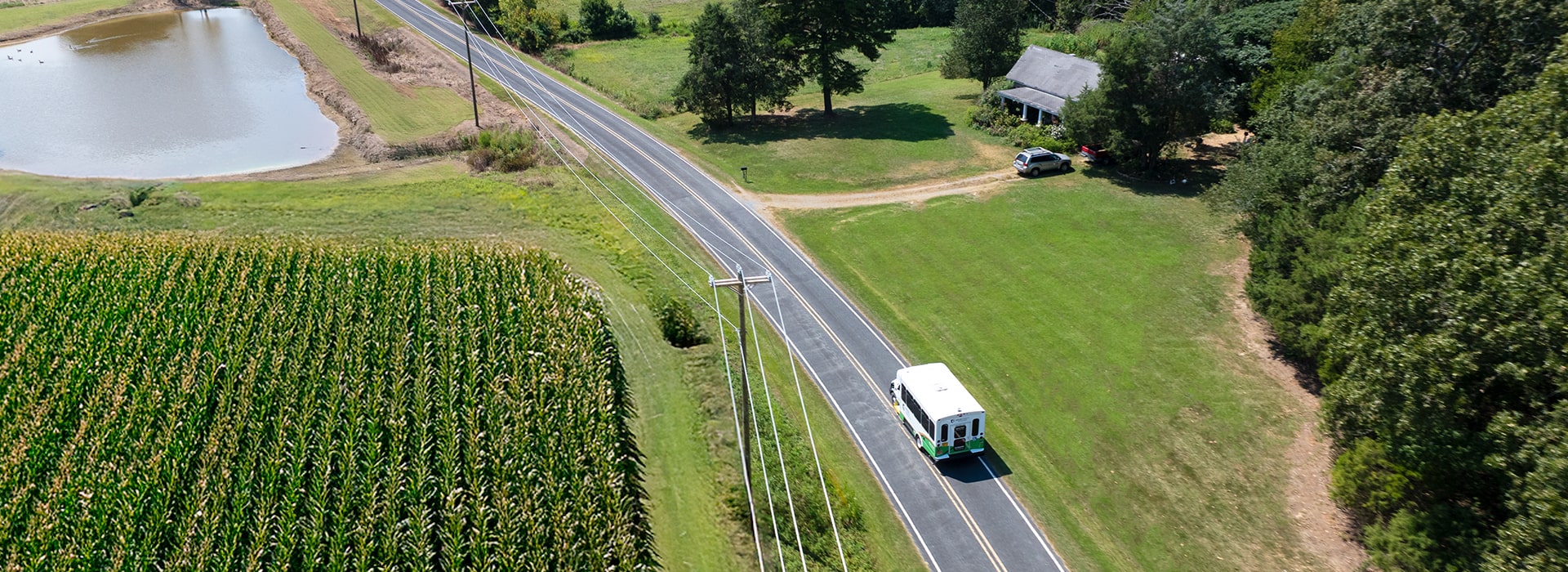
Union County Transportation is more than a transit service. It is a lifeline connecting residents of Union County to medical appointments, work, school, shopping, and more. This essential service plays a vital role in maintaining independence, access, and opportunity for hundreds of riders each day.
Director Theresa Torres expands, “Our county is about 640 square miles. We transport over 400 passengers daily using about 25 vehicles. We travel all over Union County, we go into Charlotte for medical and VA (Veterans Affairs) appointments, and to Salisbury for VA appointments.”
The transit agency is a demand-response system and does not operate fixed routes. Instead, rides are scheduled as needed, and passengers are provided with curb-to-curb service, with door-to-door assistance as needed. “The fleet consists of minivans, transit vehicles, and 20 and 22 foot LTVs equipped with wheelchair accessibility,” Torres describes. “Our passengers call us 48 business hours in advance for appointments.”
Technology Upgrades Designed for Riders
Union County Transportation has recently upgraded to the QRyde software platform, marking an important step toward modernizing its transit operations. “Our hope is that by leveraging QRyde’s advanced technology, we can shift schedulers away from manual trip assignments and toward more strategic oversight,” says Torres. “While hands-on scheduling remains part of the process, we see this platform as a foundation for greater efficiency, improved service coordination, and a more adaptable system as our transportation needs continue to evolve.”
The plan is to eventually offer same day booking, and a customer portal will also be introduced, allowing riders to book online, view upcoming rides, cancel trips, and track arrival times. Torres relays, “We think this will be better for our clients. We want the process to be easy and accessible so they can schedule appointments when it’s convenient for them.”
Explaining that the prior system sometimes took five hours to finish scheduling, she adds, “Our goal for the new system is to handle roughly 98% of the scheduling automatically, and we’re actively working toward that. Our passengers have always understood our scheduling process and have never had difficulties with it. This change is driven by our desire to operate more efficiently.”
Passenger Judy Kinlaw praises the current system, noting, “Being able to call ahead of time and schedule out a month of appointments was quite easy to do. I got a confirmation call back to make sure that everything was correct, and all I had to do was be ready the day and time of the appointment, and it was taken care of.”
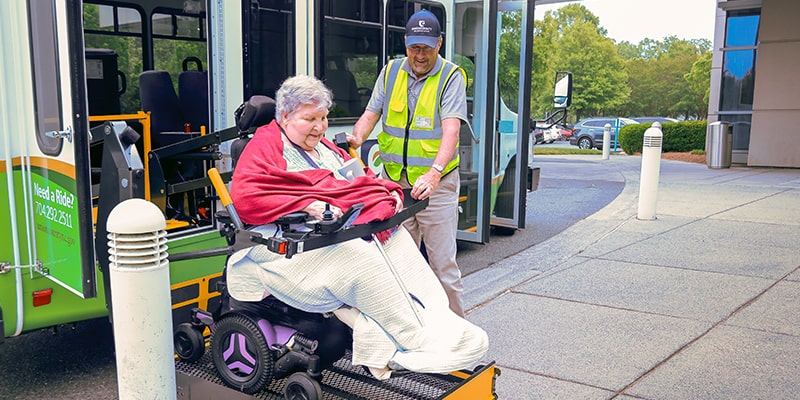
She says she is looking forward to the enhancements, which will allow her to book her trips online.
“The most important thing to me is that, because I’m wheelchair bound, I’m able to maintain some independence,” she shares.
Investing in Safety, Efficiency, and Facilities
Union County Transportation is intentional in the way it allocates its grant funding. Torres details, “Most of our funding is operational, which means it goes directly toward providing trips. Our passengers don’t pay towards those rides. We cover that cost through the funding we receive and with local dollars.” Capital funds, meanwhile, are dedicated to vehicle replacement, safety improvements, and facility upgrades.
Vehicle safety is top priority for the agency. “Any vehicle that reaches 100,000 miles is considered for replacement. As soon as it hits those mileages, we start the capital replacement process” she reports. “We make sure our passengers are always traveling in safe, reliable vehicles. We also have a 0.75 safety requirement with our 5307 grant, which helps fund safety improvements such as the cameras on our vehicles.”
There are also plans to bring in equipment for drivers to do safety training exercises. Additionally, investments have been made in exterior lighting, security enhancements and safety arms on wheelchair equipped vehicles.
Growing staff needs have also prompted renovations to the facility. “We moved into our current building about a year and a half ago, and we are already outgrowing the administrative office,” Torres acknowledges.
“So, we are spending some of those capital dollars to renovate the warehouse area. We will be putting a driver’s hub in that area where they can come in, have lunch, and relax.” This new area will include a kitchen area, lockers, and collaboration pods designed to encourage teamwork and provide a comfortable space for the team.
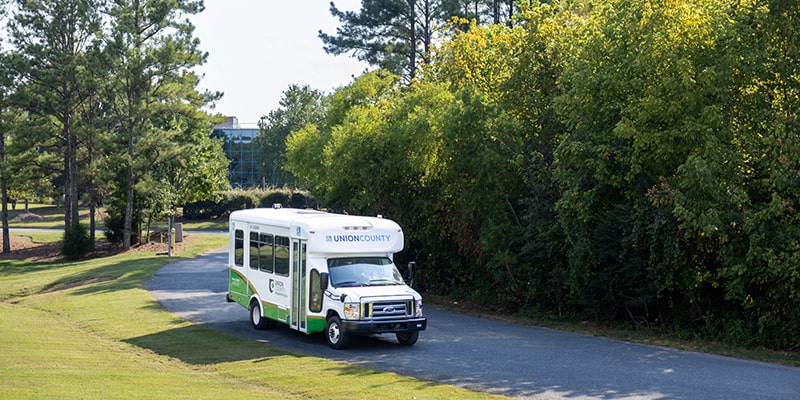
Another major upgrade for the agency is the transition to bi-fuel vehicles. Thirteen vehicles have already been converted, a decision that Torres says has significantly reduced fuel costs. “The vehicles start on gasoline, and once they’re warmed up, they switch over to propane, and they’re run on propane for the majority of the day” she conveys.
“It is very efficient. Our vehicles were going to the gas station every day, and at over $3 per gallon for about 50 gallons of gas, that’s a lot of money at the pump. We actually have a propane site at our facility, which reduces the need to go to the gas station.”
This shift has also streamlined the daily routine for drivers. Torres highlights, “That is time not wasted going into the gas station. They come into our facility, they fuel up, and then they come into our warehouse. We have a warehouse that houses our vehicles, which includes indoor cleaning bays, allowing drivers to clean the vehicles without worrying about weather conditions.”
A People First Culture
Behind every ride are people who genuinely care about the passengers they serve. Operations Manager Brandon Earp underscores, “We are very much a mission-driven team that connects vulnerable neighbors and commuters to the essential services and opportunities within our community. We have county backing, we have steady leadership from the top down, and we aim to put the riders first.”
With this in mind, Union County Transportation works to retain existing drivers, through driver recognition and motivation efforts. These include Driver Appreciation Day, a Family Fun Day, and participation in the North Carolina Public Transit Association’s (NCPTA) annual rodeo.
“The NCPTA holds a conference every year that includes a rodeo where drivers can showcase their skills,” depicts Torres. “Those drivers are able to attend a gala in their honor and enjoy some friendly competition with their fellow drivers from across the state. Our drivers were so appreciative and just loved the camaraderie and the closeness that it brought.”
Recruitment and training of drivers is a careful process. “This is a very specific job,” says Earp. “You have to be a certain type of person with a certain attitude, a willingness to help, and a servant mentality to be able to do this job.” To ensure they are fully prepared, training has been expanded from just a few days to nearly two weeks, including a full week on the road with an experienced driver. New hires get hands-on experience learning technology, customer service, and wheelchair securement long before they drive solo.
Change and Expansion on the Horizon
Looking ahead, Union County Transportation has its sights set on reducing administrative burdens and expanding service. Torres points out the challenges for small rural agencies who follow the same oversight requirements as large metropolitan transit systems. “The amount of administrative burden that is put on us is huge,” she says. “Going forward, we hope those requirements can be reduced so we can focus more of our time on improving service for our passengers.”
A shift from a 50/50 operational funding match to an 80/20 match is another priority. “We are not asking for more funding. We are just asking for more coverage, so that the federal government would cover 80% and the local government will cover 20%,” Torres clarifies. She says greater flexibility in how grant dollars are used would also help the agency direct funds where they are most needed.
She also emphasizes the need to identify unmet transportation needs within the county. “We would like to look at expanding our transportation services,” she elaborates. Expansion could involve longer hours, fixed routes, microtransit, or other models. “We have to get out into our community and ask where we are not meeting their needs and what we can do to address those gaps.”
One thing is clear. The people behind Union County Transportation genuinely like what they do, and that dedication is what drives the organization forward.
“To love it is the key,” Torres concludes. “Our transportation team, from the drivers to the office staff to management, are very passionate about what we do and who we serve.”
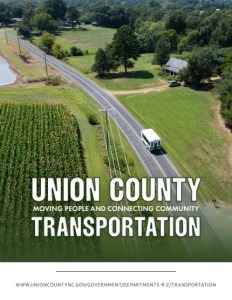
Click The Cover To View Or Download The Brochure
AT A GLANCE
Who: Union County Transportation
What: An on-demand transportation service serving 400 passengers daily
Where: Union County, North Carolina
Website: www.unioncountync.gov/government/departments-r-z/transportation
PREFERRED VENDORS/PARTNERS

Sӧlvante: The Solution Store: www.solvante.io
Sӧlvante, formerly known as The Solution Store, is a seasoned boutique technology company founded in 1990, with activities involving industrial automation and communications. Over the years we have evolved to include network engineering, construction and fleet electronics. Our expertise brings us into many technical environments; we look forward to working with yours.

QRyde by HBSS: www.qryde.com
QRyde is a cloud-based mobility management platform that helps public and private transportation providers streamline booking, dispatch, billing, and analytics. Powered by AI, QRyde automates scheduling, optimizes fleets, and enhances efficiency—delivering smarter, lower-cost transit solutions. Trusted by over 700 entities, QRyde offers custom installations for each entity’s operational sensitivity.