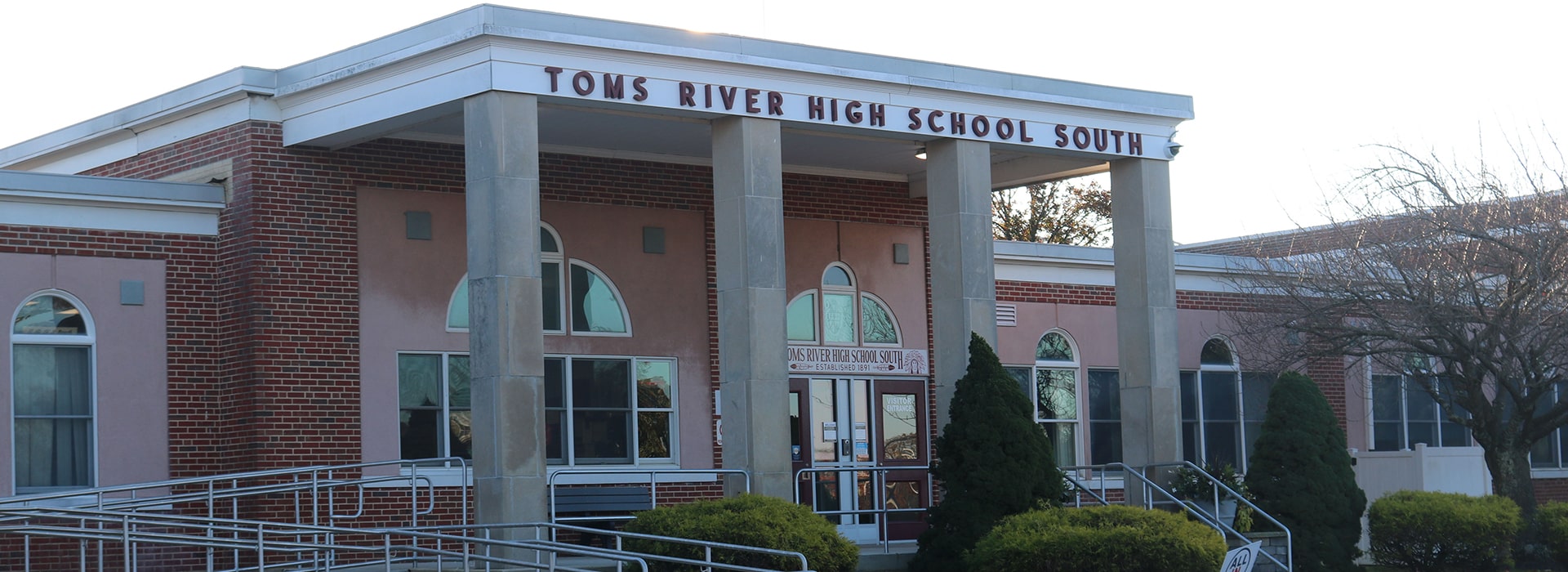
Entrepreneurial by Nature
Preparing Gen Z for a Future They’re Ready to Build
Toms River Regional Schools is not just keeping pace with change in New Jersey education; it is leaning into it. In a district with deep roots and an eye on what’s ahead, every decision really comes down to one simple question: what will create the most opportunity for students? Superintendent Michael Citta puts it plainly. “Our goal is to create the most opportunities for our children to have success, whatever that looks like. It’s our job to help facilitate their dreams.”
With more than 14,500 students, the seventh-largest district in the state carries both a historic legacy and the needs of a modern, fast-changing economy. Founded in 1891, Toms River has educated multiple generations, yet it has never lost the small-town feeling that grounds its approach. “We may be city-sized in population, but our schools operate like tight-knit neighborhoods,” Citta says. “Eighty percent of our staff are graduates or residents of Toms River. That inherent buy-in is built into everything we do.”
Creating a Culture of Belonging
One of the strongest themes across Toms River is its commitment to student and staff well-being. At Toms River High School South, Assistant Principal and Business Academy Principal Chris Peck explains that support begins with connection. “The most important thing is the family feeling,” he says. “Students need to feel like they’re never alone and that whatever help they need will be there for them.”
That philosophy shows up in practical ways. The school’s student mentorship program is entirely voluntary, staffed by teachers who sign up because they care. “More than half our faculty volunteers,” Peck shares. “Nobody gets paid for it. They do it because they believe in the kids.” Monthly gatherings bring students and staff together over pizza, board games, and conversations, offering a safe, welcoming environment that naturally improves engagement and, ultimately, academic performance.
Peck notes that this sense of belonging directly translates into teacher support as well. “Our teachers feel that same efficacy. When the adults feel supported, the students feel it too.”
Where Generations Grow Together
Toms River’s size is often surprising given the warmth of its culture, but Citta explains that it’s intentional. “We have twelve elementary schools, three middle schools, and three high schools, each centered around neighborhoods. You truly get that small-town feel as students move through the feeder patterns.”
Generational roots run deep. “A lot of people in our community are second, third, even fourth generation,” he says. “That pride carries forward. You see it in everything from attendance to local involvement.”
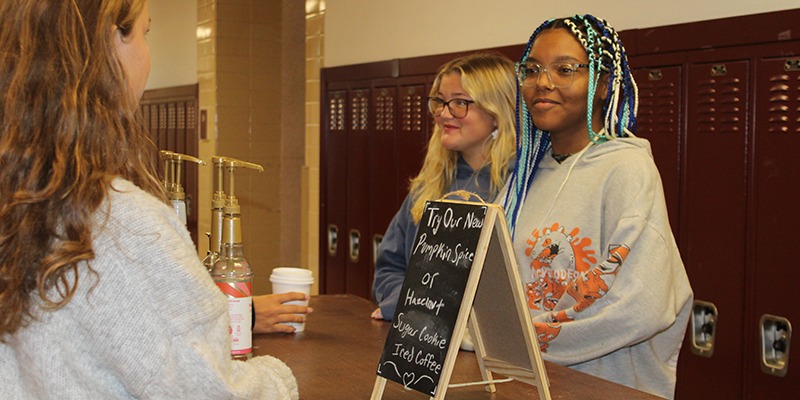
TR Grind, a student-run pop-up coffee shop, was the idea and capstone business project of High School South seniors who graduated in 2025. The business, however, lives on, with current South seniors selling coffee to students and staff and other potential customers in the building.
Photo Credit: Toms River High School South student Gabrielle Carvalho
This environment supports both high achievers headed to Ivy League universities and young entrepreneurs launching their first business ideas. For Citta, the key is exposure. “It’s our job to expose kids to as many opportunities as possible. Students drive the bus in shaping their pathways. We help open the doors.”
The Business Academy: A Hub of Innovation
If there is one program that captures Toms River’s forward-thinking vision, it is the Business Academy at High School South. Designed around the needs and interests of Gen Z, the academy merges entrepreneurship, technology, and hands-on learning.
Peck recalls how the idea came to life. “When we looked at Gen Z research, the word that kept coming up was entrepreneurial,” he says. “These students want flexibility, creativity, and meaningful work. We knew we could build something special.”
A partnership with the Hovnanian Corporation provided a crucial seed grant of $150,000 to renovate what was once a shop room. Teachers collaborated to design a cutting-edge space based on the Learner Active Technology Infused Classroom model. “Everything is on wheels,” Peck says. “Furniture, smart boards, partitions. Every class transforms the room into what they need. It’s like walking into a different facility every period.”
The space features a stock market ticker, dual smart boards, LED lighting, collaborative work areas, and a conference-style environment that mirrors a business incubator. “The idea was to build a facility students would want to be in,” he explains. “Now the kids and the programming are the attraction.”
Real Skills for the Real World
The Business Academy promises students three things: meaningful field experience, access to unique college credits, and industry-recognized credentials.
Students earn certifications such as Bloomberg Market Concepts, a rigorous financial training program typically used by professionals. “That certification means something beyond high school,” Peck explains. “It’s meaningful once you walk out our doors.”
Entrepreneurship students also complete the Certiport ESB certification, solidifying their understanding of small business fundamentals.
But experience matters just as much as credentials. Seniors complete a 10-hour internship with a business of their choosing, supported by partnerships with The Greater Toms River Chamber of Commerce, the Toms River Business Improvement District, and organizations across the downtown core. For students without personal connections, these groups open doors.
“We work with real business people, not just teachers grading papers,” Peck says. “They help our kids build realistic business plans, use actual financial software, and even compete in a Shark Tank style challenge with scholarships for the winners.”
The district’s connection to JBJ Soul Kitchen, a nonprofit community restaurant founded by Jon Bon Jovi, offers an additional avenue for students to volunteer or complete internships. “We have about six to eight students working there right now,” Peck notes.
Pathways for Every Student
The entrepreneurial pathway is one of several emerging tracks across the district. Citta highlights the district’s expansion into trades education. “We’re now working with local union 172 to create an apprenticeship pathway for students heading into the trades,” he says.
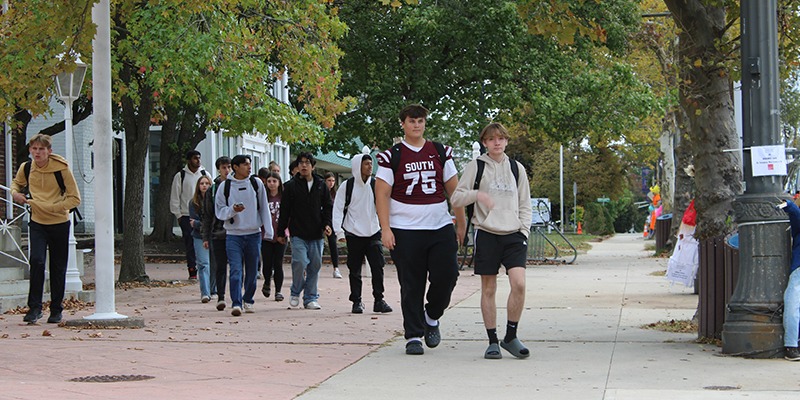
The Business Academy was strategically implemented at High School South, in no small part because the school sits in the heart of downtown Toms River, and students utilize their lunch, school, and free time to both patronize and partner with the bustling local business community.
Photo Credit: Toms River High School South student Gabrielle Carvalho
The program, Project SPEAR-IT, began with a United Way grant to support students struggling with attendance. Michael Kenny, Coordinator of the Office of Grants and Communications, recalls how it evolved. “We started with freshmen and sophomores who weren’t engaged,” he says. “We exposed them to the trades, and it grew into six classes with more than one hundred students. It’s become one of South’s signature programs.”
Kenny adds that many of these initiatives thrive because grants, community partnerships, and substantial student input support them. “You lend us support, and we’ll run with it,” he says. “That’s what makes Toms River unique.”
Student-Led Businesses and Real Entrepreneurship
The Business Academy has already produced student-run ventures that continue long after graduation. One standout is the TR Grind, a fully operational coffee shop inside the school. “It started as a senior capstone project,” Peck says. “Today it’s a real business. I bought my coffee there this morning.”
Students manage budgeting, inventory, customer service, and operations. “Each year we train a new crew to keep it going,” he explains. “It’s a legacy piece.”
The school store, another student-led initiative, follows the same model. Peck sees these experiences as essential to the district’s vision. “We want students to be able to stay in Toms River if they want to,” he says. “If we give them the skills to launch a business or work remotely in an evolving economy, then they can stay here, build their lives here, and reinvest in the community.”
Innovation That Extends to Infrastructure
Behind the scenes, the district manages massive operational responsibilities. “We have twenty-one locations and many aging buildings,” Citta explains. “Infrastructure is huge for us.”
A recently completed 160-million-dollar referendum project added air conditioning and updated essential mechanical systems across schools. But Toms River stretches its dollars creatively. “We’re the lowest spending per pupil district in New Jersey,” Citta says. “We take that seriously because our taxpayers are part of our educational family.”
The district supplements its budget with several enterprise operations. A large air-supported structure hosts state track meets and regional events, generating significant revenue. At High School North, the district partnered with RWJ Barnabas Health on a $600,000 naming agreement for a 4,000-seat arena that hosts sports, concerts, and trade shows. These revenues offset capital costs.
Project SPEAR-IT students even assist with campus improvements, learning HVAC and hands-on trades skills while updating their own facilities. “We’re reinvesting in ourselves every day,” Citta says.
Listening, Learning, and Leading
As Toms River advances its programs, the district’s priorities remain clear. Expanding pathways, strengthening community connections, developing real-world experiences, and ensuring students of every background have a place to thrive are all at the forefront.
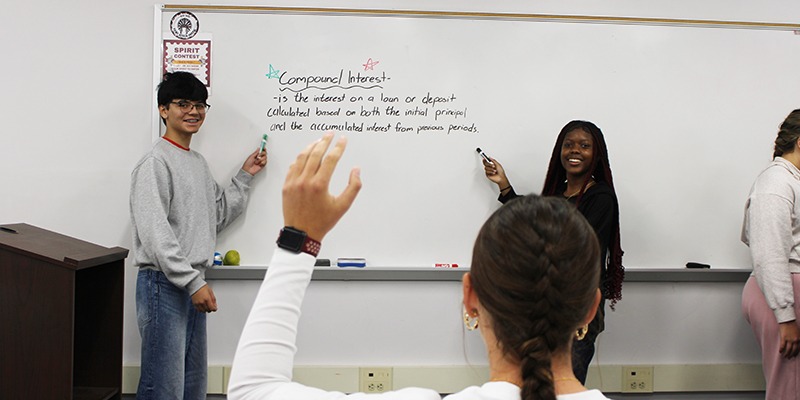
Students teach and learn from each other at the Business Academy in Toms River, New Jersey.
Photo Credit: Toms River High School South student Gabrielle Carvalho
Citta frames the district’s future. “Learning doesn’t happen until there’s a connection,” he says. “We want every student to find their hook, whether that’s the trades, business, technology, the military, a four-year college, or something we haven’t even imagined yet.”
What Toms River proves is that when a district listens to its students, invests in its community, and embraces innovation without losing its roots, the results are transformational. “We’re really on to something,” Citta says. “And it’s our students who show us the way.”
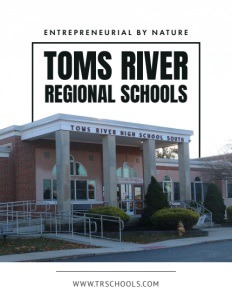
Click The Cover To View Or Download The Brochure
AT A GLANCE
Who: Toms River Regional Schools
What: A large, community-driven district that blends deep local roots with forward-looking programs to create meaningful opportunities for every student.
Where: Toms River, New Jersey
Website: www.trschools.com
PREFERRED VENDORS/PARTNERS

Farro’s Tees: www.farrostees.com
Farro’s Tees is your one-stop shop for custom apparel and promotional products, operating from two New Jersey locations. We specialize in screen printing, embroidery, DTF printing, business printing, web stores, banners, varsity jackets, and a wide range of promo items. Everything is designed to help organizations elevate their brand.

Brilliant Environmental Services, LLC: www.brilliantenvironmental.com
Brilliant Environmental Services, LLC (Brilliant) provides comprehensive environmental consulting, remediation, and compliance solutions for commercial, industrial, and municipal clients. We combine technical expertise, innovative methods, and a commitment to sustainability to deliver safe, efficient, and regulatory-aligned results that protect communities, support responsible growth, and preserve natural resources for the future ahead.