A Day at the Fair
A Proud Iowa Tradition since 1918
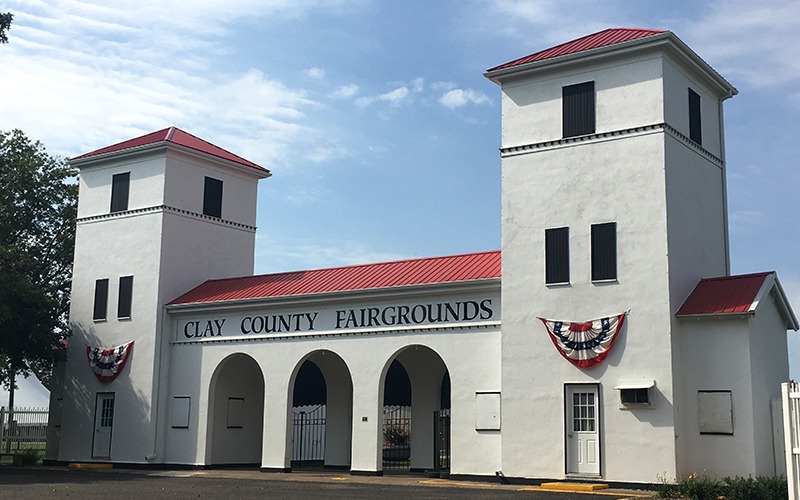
The Clay County Fair & Events Center, located in Spencer, Iowa, is a longstanding community institution. Through its evolution, what was once a classic fairground has grown into a dynamic, year-round destination for events, education, and entertainment, welcoming thousands of visitors through its gates. While firmly grounded in the traditions that shaped its early years, the facility has expanded to meet the needs of the community and the region.
“Our first fair was in 1918,” shares CEO and Manager Jason Brockshus. “A very passionate group of local farmers and business people got together and started the fair.”
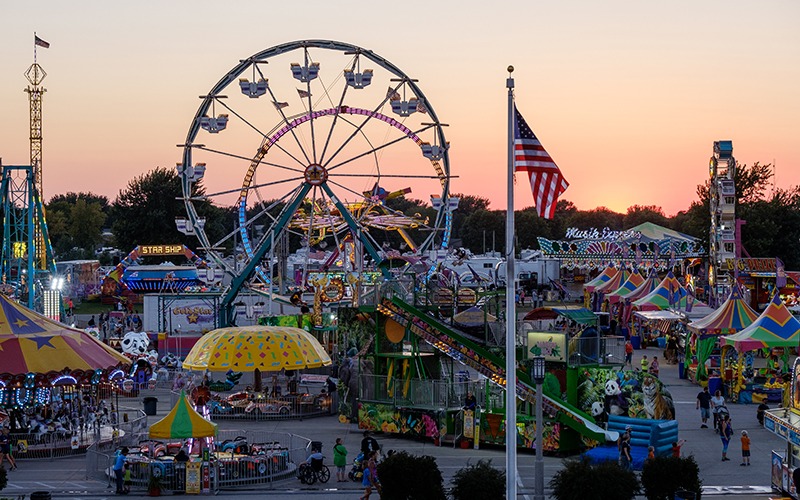
More than a century later, it is widely known as the “World’s Greatest County Fair,” a title bestowed by radio reporters in the 1920s. While the flagship September fair remains the heart of its identity, it now operates as a year-round venue.
“We have over 300 non-fair events that we host throughout the year in our event center and on the grounds, including graduation parties, wedding ceremonies and receptions, business meetings, expos, trade shows, as well as produced events like craft fairs and car shows,” Brockshus continues. “We also host a summer race series, concerts, entertainment events, and festivals throughout the year.”
A Flexible Venue
One defining feature of the Clay County Fair & Events Center is its adaptability. From air-conditioned indoor pavilions to outdoor arenas and racing facilities, the grounds are designed to accommodate a wide range of uses year-round. That flexibility was further enhanced in 2017 with the addition of the Tower Gate Pavilion, a 12,000-square-foot, climate-controlled space that can accommodate vendor shows, receptions, and special events.
“We also have livestock facilities and host livestock shows throughout the year. Our livestock facilities are also flexible because all of our pens can be disassembled, and those livestock barns can turn into an exhibit space, which we’ve done for different touring groups, for tractors and such,” Brockshus expands.
Outdoor amenities add another layer of opportunity, and the Clay County Speedway hosts approximately 20 races each summer, running from spring through fall. In addition, the outdoor arena supports horse shows, rodeos, and other seasonal happenings. Combined with in-house catering, the fairgrounds can host a wide array of events. “We have lots of flexibility and a unique business model, because we have our hands in lots of different things, and we try to make the best use of the resources that we have,” he says.
Agriculture and Education at the Core
Despite this diversity, agriculture remains at the forefront of the Clay County Fair & Event Center’s mission. The fair hosts the largest agricultural equipment and farm machinery show of any county fair in the United States, with more than 160 ag vendors participating each year.
“Education is important, both for bringing producers up to speed on new technologies and informing the general public,” Brockshus says. “Many individuals are generations removed from production agriculture, so we help tell that story. And, of course, people can immediately connect to food with items like corn dogs, bringing it all together in a fun way.”
Educational outreach is woven throughout the fairgrounds, beginning with Grandpa’s Barn, an interactive agricultural education facility developed in partnership with community organizations, the Farm Bureau, Buena Vista University, and local FFA chapters. “It houses animals of all sorts of species and allows education and interaction with different groups that come through there,” he describes.
Through Iowa State University Extension, the fair also offers a program called Ag-Citing, which brings in 1,300 elementary students from area schools to learn about agriculture in a fun way.
For high school students, initiatives such as FFA Day provide leadership workshops and college exploration opportunities, along with direct engagement with agricultural professionals. “We happen during school time,” notes Brockshus. “So, we figure out how we can be their field trip for a day. We partner with the local schools to get kids on the grounds for some educational pieces, and I think we’ve really leaned into that.”
A Community Economic Engine
The city of Spencer may have only 11,000 residents, but during fair week, the population swells dramatically. “It makes no sense that over 300,000 people join us in the nine days every September, but they truly do, decade in and decade out,” Brockshus says, noting that the small population can be a challenge when it comes to marketing to future vendors. “But they get here, and they see that we have amazing attendance.”
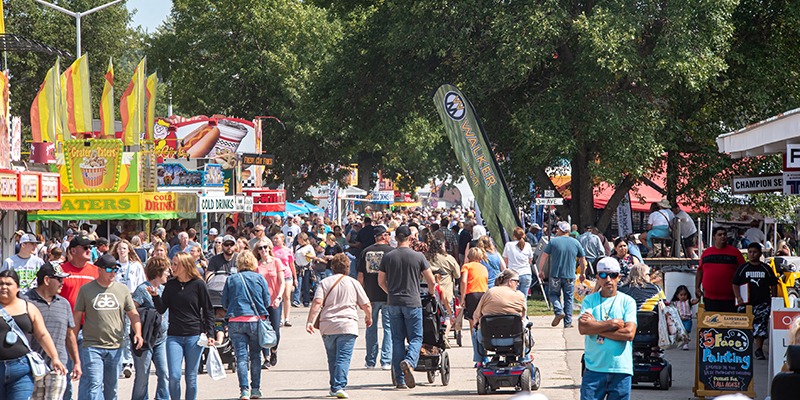
The fair also supports over 13 nonprofit organizations that operate food stands and services on the grounds as fundraising opportunities. Organizations such as the Clay County Pork Producers, the Spencer Jaycees, Clay County Cattlemen, Kiwanis clubs, the YMCA, Shriners, and other community groups all participate, generating nearly $900,000 in gross revenue in 2024 alone. “A lot of local people volunteer for those groups, and what that means is, after they pay all their bills, all those dollars really, truly do go back to local initiatives, whether that’s supporting youth or supporting other causes in the area,” he touts.
Technology and Innovation
From connectivity to marketing and entertainment, technology has become increasingly important across the fairgrounds. Internet infrastructure is provided by Spencer Municipal Utilities, the fair’s presenting sponsor, ensuring a smooth transaction experience for attendees and vendors. “We are known as a buying fair; we have a waiting list of vendors, which I know that many fairs don’t, so I feel very blessed and fortunate to have that,” Brockshus affirms. “But keeping up with technology to help our vendors be able to close the deal is something we’re always working on.”
Technology also plays a role in agricultural education and entertainment. In 2025, the fair hosted its first drone show, one of only a few in Iowa at the time. “As far as technology goes we use lots of different things. A fair is all about education and new things and trying to show that. So, we look for different ways to do that too.”
Investment for the Future
Sustaining a historic facility requires ongoing investment, and recent years have underscored the importance of long-term planning. In 2020, COVID forced the cancellation of the fair, at a time when more than 70 percent of annual revenue depended on those nine days. In response, the community launched the Save the Fair campaign, raising more than $1.6 million.
“Our goal was not just to save the fair for one year,” Brockshus asserts. “We talked to fair goers that have been here for 50 years. We have a vendor who’s been here for 99 years, the same vendor business has been here. People have a really strong tie to this fair and want to see it happen year in and year out. So, saving the fair is creating sources that keep generating revenue for future fairs.”
Funds have been directed towards improvements such as air conditioning, upgraded power and drainage infrastructure, and enhanced camping facilities. Those investments proved themselves during severe flooding in 2024, when the fairgrounds served as an emergency resource for the community. “We were high and dry,” Brockshus recalls. “We housed the Red Cross and FEMA on grounds, and we were still able to have a fair in 2024. That’s the role that we play in the community, and that infrastructure needs to be updated and maintained all the time so we can be that facility.”
Looking ahead, priorities include phased improvements to the grandstand, which is approaching its 100-year mark, continued maintenance of aging HVAC systems, and long-term planning for livestock facilities. “When we look at capital improvements, we want to see something we’re going to see a return on, because we’re stewards of these grounds and we want to leave it better than what we found it. We want to do those capital improvements that will be here and be usable for a long time down the road,” he stresses.
Looking Ahead
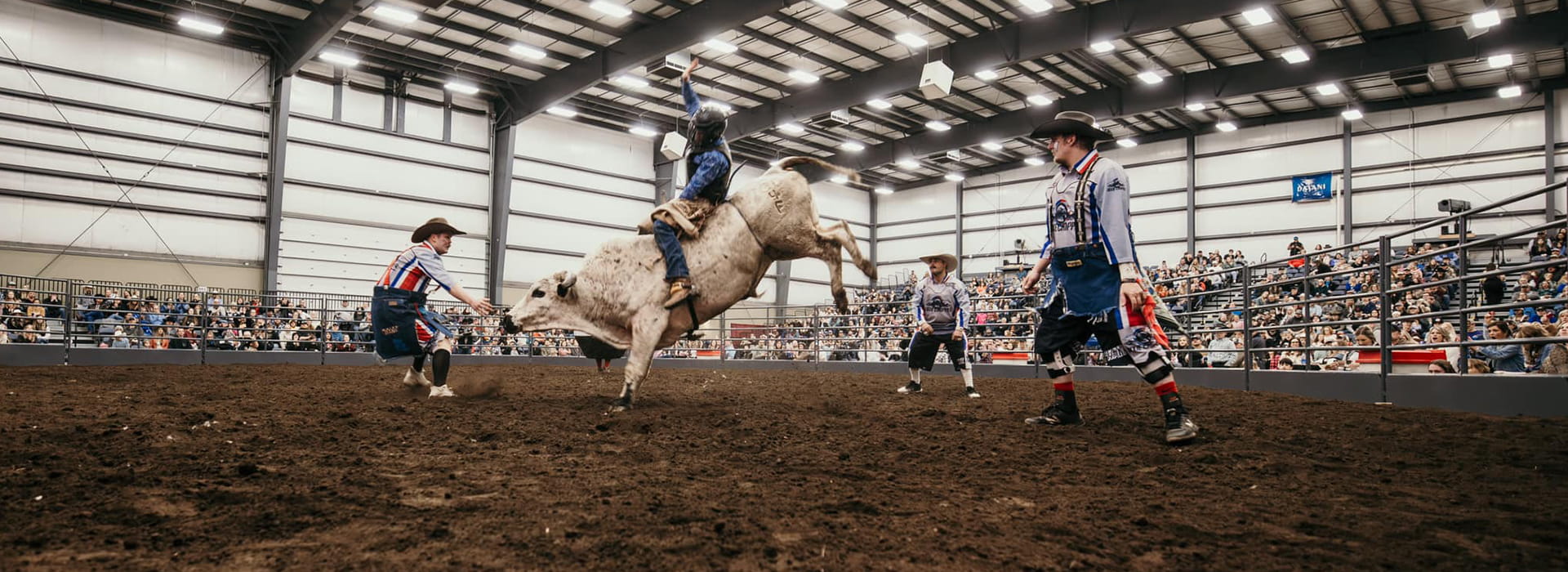
As the Clay County Fair and Events Center looks to the future, the focus remains on expanding programming while staying true to its mission. Recent additions focus on Western-style entertainment, from indoor bull-riding events to roughstock competitions, and include plans for a full outdoor rodeo in partnership with the Spencer Chamber of Commerce.
Along with this, concerts, comedians, and touring entertainment continue to grow in the event center and arena, offering audiences new reasons to visit Spencer year-round. “Our mission is pretty awesome,” concludes Brockshus.
“We’re dedicated to creating a welcoming, memorable space where families can relax and truly enjoy themselves. Our role is to keep making that possible for everyone who visits.”
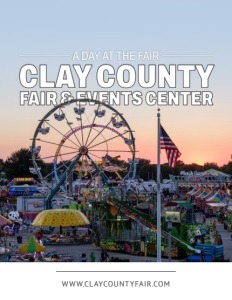
Click The Cover To View Or Download The Brochure
AT A GLANCE
Who: Clay County Fair and Events Center
What: An iconic fairground with over a century of history and innovation
Where: Spencer, Iowa
Website: www.claycountyfair.com
PREFERRED VENDORS/PARTNERS

Good Health Saunas: www.goodhealthsaunas.com
Good Health Saunas offers advanced full spectrum infrared saunas built for superior health benefits, comfort, and long-term reliability. Each sauna features low-EMF technology, premium craftsmanship, and 360-degree infrared coverage, all supported by unmatched customer service and a lifetime warranty. Trusted nationwide for proven infrared wellness.

RJ Thomas Mfg. Co. Inc. (Pilot Rock): www.pilotrock.com
Since 1959, R.J. Thomas Manufacturing has designed and built Pilot Rock® park, street, and campsite furnishings in Cherokee, Iowa. A third-generation family business, we combine innovative design, durable construction, and advanced manufacturing to deliver safe, vandal resistant, commercial-grade products trusted by parks, designers, and communities worldwide for over six decades globally.
